


Dr David Cheesman is a distinguished historian and policy advisor whose transnational perspective was shaped by an upbringing in India, West Africa, and Europe. After lecturing at the University of Constantine in Algeria, he earned a PhD in South Asian History from SOAS, University of London.
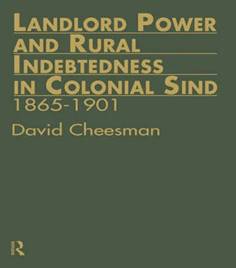
His seminal work, Landlord Power and Rural Indebtedness in Colonial Sind, 1865-1901, interrogates the strategic alliance between British administrators and the Muslim landed gentry. The study provides a critical genealogy of the elite families that continue to dominate Pakistan’s contemporary political landscape. Beyond Sindh, his scholarship addresses African decolonisation, UK community cohesion, and the secular-Islamic discourse in Europe.
A Fellow of both the Royal Society of Arts and the Royal Statistical Society, Dr Cheesman currently serves as a Director of Equality in Diversity and as a senior policy advisor in financial regulation. Spanning five distinct parts, this in-depth interview by Dr Zaffar Junejo offers a rich tapestry of Dr Cheesman’s life and legacy. The journey begins with an intimate look at a childhood shaped by the shifting borders of India and the geopolitical tensions of the Cold War. The story then transitions to his early professional years in Algeria, capturing a world defined by the fierce idealism of the Non-Aligned Movement (NAM) and the violent friction between the FLN and the Pieds-noirs.
The dialogue eventually pivots to Dr Cheesman’s evolution as a historian, centring on his deep immersion into 19th-century colonial Sindh. He provides a searing analysis of the fluctuating fortunes of Sindhi Hindus and the systemic hardships of the haris (peasantry). Dr Cheesman dissects the influence of banias (moneylenders) on rural credit. However, the interview concludes with a powerful reflection on the British Empire’s lasting imprint on modern Sindh.
***
Zaffar Junejo (ZJ): Could you kindly delineate your parental lineage, their names and their ancestral origins? It would be of great value to understand whether your heritage is rooted in a singular English, Scottish, Welsh, or Irish tradition, or if it represents a nuanced mixture of these distinct backgrounds.
David Cheesman (DC): My father was Jack Cheesman, my mother was Joan (Hawkridge) Cheesman. Both English, though my mother was partly Scottish (MacLeod from the island of Lewis).
ZJ: Public records show that you were born in India during a very important time in history. What are your first memories of life there?
DC: Yes, I was born in New Delhi. But we left India in 1955 when I was 5. We lived near Connaught Circus. I have a wide range of memories. The earliest memory I have of eating is chapati. Our bearer sometimes took me to his quarters and shared his chapatis with me, which he made on an open fire with a hot stone. I also remember being on the roof during Holi, with people spraying red water through hosepipes everywhere, which was quite alarming for a 4-year-old.
ZJ: How did your parents’ book reading preferences shape who you are today? Are you more like your father or your mother?
DC: I have never chosen between them. They were both voracious readers. My mother’s favourite author was Jane Austen. She was a seminal English novelist whose sharp-witted social commentary and mastery of “the novel of manners” makes her one of the most popular authors today, continuing to influence and intrigue contemporary authors and filmmakers.
My father preferred history, especially the 17th-century diaries of Samuel Pepys. Samuel Pepys’s diaries are a vivid, firsthand account of London in the 1660s, detailing major historical events like the Great Plague and the Great Fire. They remain the most famous and intimate personal journals in the English language, blending national history with candid daily life. But Jane Austen is one of my favourite authors and our bookshelves are full of history books. Our library includes my mother’s set of Jane Austen novels and my father’s 10 volumes of Pepys.
ZJ: Since your father was in the diplomatic service, your family moved to many different countries. Could you please tell us which places you lived in and the years you stayed there?
DC: My father was in the British Diplomatic Service so we moved around. He started in the UK Trade Commissioner Service (which was set up under the Board of Trade in the seventeenth century to promote trade within the empire and later the Commonwealth. In the 1960s it was merged into the Foreign Office. It has now been revived since we left the European Union (EU)). In his long career, he was posted at various countries, in different continents: India (New Delhi, 1949-55), Gold Coast/Ghana (Accra, 1955-57), Nigeria (Lagos, 1957-61), United Kingdom (London, 1961-63), East Pakistan (Dhaka, 1963-66), Turkey (Istanbul, 1966-1971), East Pakistan/Bangladesh (Dhaka, 1971-73) and Cyprus (Nicosia, 1973-76).
In 1963-66, he was the UK Trade Commissioner in East Pakistan. I don’t know his job titles before then. In Istanbul, he was the British Consul. He was Head of Mission in Dhaka from August 1971 till early 1972. He was awarded an Officer of the Most Excellent Order of the British Empire (OBE) by Her Majesty the Queen for his service during the creation of Bangladesh. In particular, he negotiated a temporary cease-fire between India and Pakistan so that British residents could be evacuated by the Royal Air Force (RAF). I think he was Commercial Councillor in Cyprus.

ZJ: What was it like growing up moving from country to country? Do you have any special memories about a place you visited or a favourite city?
DC: These were all diplomatic postings. Like any child, I assumed this was the normal way of living. It is quite useful in terms of remembering things, because I can file my memory according to country. For example, I remember being fascinated by a beautiful wall of inlaid white marble, so that must be India, therefore before I was 5 – most likely the family trip to the Taj Mahal when I was 4.
I can give both a date and a time to one of my most important memories – midnight on 5/6 March 1957 when the British Crown Colony of the Gold Coast became the independent state of Ghana. My parents were at the independence ceremony but I could not sleep because of the excitement, so I crept downstairs just before midnight, switched on the radio and listened to Dr Kwame Nkrumah’s iconic speech at the stroke of midnight as the first black African country gained independence: ‘At long last, the battle has ended! And thus, Ghana, your beloved country is free forever!’
The main difficulty with diplomatic life was that we moved on as soon as I had started to make friends. From the age of 13 I was in boarding school in England so only visited my parents during the holidays, whether they were overseas or in the UK. Me and my older brother, John, took the view that home was wherever our parents were. That covered East Pakistan, when I was 13-14 and Turkey from 16-19. By the time we left Turkey, I knew Istanbul like the back of my hand as I used to walk around it for hours on end. Because it is built on hills overlooking the Bosphorus, the Golden Horn and the Sea of Marmara, it is impossible to get lost. Once you have a view of water, you can immediately work out where you are, and it was easy to make your way around because you could catch a dolmuş (taxi with a fixed route) to take you to a familiar place. Since Istanbul is a popular tourist destination, friends and relations often visited us or passed through, and so I also became an expert tourist guide for them. When we were in Turkey, I grew tired of flying out there, so I used to take the train from Paris. This took one through a whole range of countries so the journey, which took two nights, became more interesting – the route went through France, Switzerland, Italy, Yugoslavia, Bulgaria and then Turkey.
ZJ: How did you experience the Cold War personally while travelling across borders?
DC: Yes, it was the time of the Cold War, so the moment we crossed the border into Yugoslavia, the atmosphere changed and the train became quieter because security police in leather jackets started patrolling it, looking for dissidents among the Yugoslavian and Bulgarian workers returning home from Germany and France. The moment we crossed into Turkey, everyone relaxed and became cheerful. It made me really appreciate the significance of democracy in Turkey. The Iron Curtain may not have been physical, but it was real. Turkey, of course, was and is on the front line between East and West, however those terms are defined.
ZJ: When crossing international borders, how did the local money serve as your first introduction to a new country? What did the faces on the coins and banknotes teach you about the people and history of those nations?
DC: Currency has always fascinated me because it is an introduction to a country – you see the heads of unknown people on coins and banknotes and this helps you to understand the country – like seeing Ataturk on Turkish currency – or else a familiar face suddenly becomes more personal – like Jinnah on Pakistani currency. Jersey uses its own version of British currency and, at the time we were in Ghana and Nigeria, they used British West African pounds, shillings and pence, all with sterling values. Although we left Ghana after it became independent, as far as I recall, it was before they introduced their own currency.
ZJ: With all your moves, what was your common school life’s experience?
DC: Each school had its own preference for handwriting styles, so they always insisted on changing my handwriting, which was most confusing.
ZJ: Are you still in contact with some of your school friends, who were/are located in various countries?
DC: I’m not in touch with any friends from my schooldays in West Africa. Still in touch with some friends from Dulwich College, mainly in the UK, though time has taken its toll on them.
ZJ: In such a rush, how did you develop your reading habits?
DC: I used to start by borrowing books from libraries, and then I would buy (or put into my birthday/Christmas present list) the authors I was most interested in. In West Africa, we used the British Council Libraries, then public and school libraries in Jersey and the UK.
ZJ: Why did you move to Jersey?
DC: My mother took my brother and me to Jersey because I would have had to go to boarding school if she had stayed in Nigeria and she thought (correctly) that Jersey would be a good environment for us. Jersey is one of the Channel Islands, off the coast of France. It is not part of the United Kingdom. It has its own Parliament, known as the States General, and was originally owned by William Duke of Normandy when he conquered England in 1066 to become its King. The rest of Normandy was reconquered by France after the Hundred Years War ended in 1450 but the Channel Islands remained loyal to the English Crown. They were the only British territory seized by Germany in World War II and memories of the Nazi occupation were still very fresh when we were there. Channel Islanders still speak their own Norman French as well as English. We were in Jersey from 1959 to 1961 then moved to London.
ZJ: When and why did you move to London?
DC: In 1961-63 when my father was given a home posting. From September 1963, when he was posted to Dhaka. From 13, I was boarding at Dulwich College, a private school in London, and only went home for school holidays. Spending 7 days a week at school, including weekends, made me extremely independent, resilient and self-reliant. When people ask me where I come from within England, I always say London because it’s easy to understand, but I actually mean Dulwich College. I remained there until 1969 when I started University.
ZJ: After finishing your college, what were your courses/subjects in BA, and Masters, name of college/university?
DC: I studied for my BA (Hons) in English and Related Literature at the University of York (1969-72). I studied for my MA in South Area Studies at the School of Oriental and African Studies (SOAS), University of London.
PART II
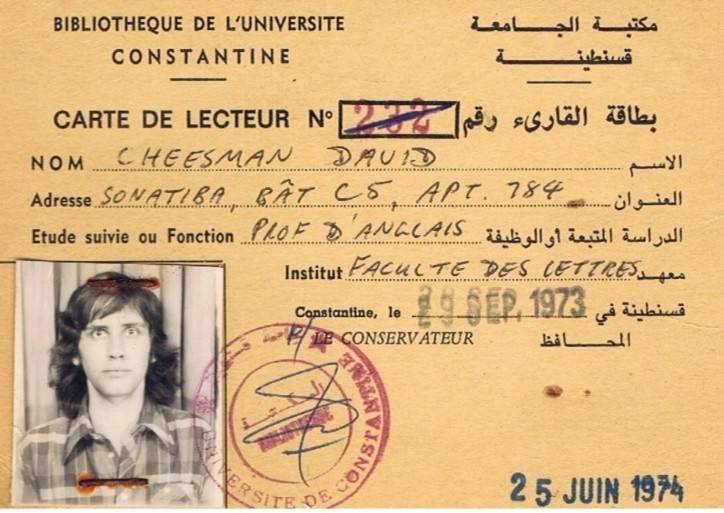
ZJ: How did you get your first teaching job at an Algerian university before you had even finished your degree?
DC: In July 1973, I answered a newspaper advertisement for Lecturers in English at Algerian Universities, with a minimum qualification of an MA. I had not yet completed my MA but applied and was interviewed at the Algerian Embassy. I don’t remember much about the interview except that I assured them I would pass the MA – as indeed I did.
ZJ: What do you remember about the interview?
DC: Yes, I recall that one of the interviewers told me the lecturers would be teaching British social and political history as well as language. He said it was important not to cover up the reality, but to talk about real social issues such as strikes and – he apologised that he couldn’t remember the English word – chômage. Unemployment, I told him correctly, and I think scored a point because he later commented that anyone who didn’t understand French would find it difficult in Algeria.
ZJ: What did you gather from the interview?
DC: I gathered that the undergraduates would already have a strong command of English, and so the objective was to expand their vocabulary and familiarise them with idiomatic English, while introducing them to English-speaking culture, society and politics.
ZJ: When did you get the appointment letter?
DC: A few days later, I received a letter appointing me to the University of Constantine.
ZJ: Had you heard of Constantine before?
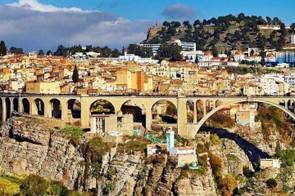
DC: I had never heard of Constantine but Chambers’s World Gazetteer assured me that it was ‘one of the world’s most romantically situated cities, on a high plateau, cut off on all sides except the West by a deep ravine.’ They were right. I have never seen such a spectacular city.
ZJ: Did you decide to accept the offer immediately?
DC: The offer was alluring and the little I knew about Algeria sounded pretty exciting so I accepted by return, and flew out in September, hurriedly submitting my MA dissertation early. This was the only application I made, and it was my first full-time job. I was desperately excited.
ZJ: How do you look back on your travels now?
DC: The world was a larger place in the 1970s than it is today. Travel was more restricted. I could find no introduction to Algeria in London, except for a Guide Bleu published in 1930 in the second-hand section of Foyles Bookshop. This presented a picture of the country as it had been four decades previously. Armed with my Guide Bleu, I was off.
ZJ: You have always spoken fondly about going to Algeria. What was the motivation?
DC: I was delighted to go to Algeria because, in 1973, it was a country with charisma. Having ended French rule in 1962 after a bitter eight-year war of independence, Algeria had become a champion of international resistance to colonialism. It could plausibly claim to be the leader of the developing world. A few days before I arrived in Algiers, President Houari Boumédiène had been elected Secretary-General of the Non-Aligned Movement (NAM). He was hosting the Fourth Summit of Non-Aligned Nations as I flew in. Heads of government from across the world were arriving in Algiers, from Fidel Castro in the west to a delegation of Viet Cong in the east - and Indira Gandhi the only woman.
ZJ: Reflecting on the 1970s, what were your thoughts on newly independent countries?
DC: The 1970s marked a turning point in the development of the international order. The European empires which dominated the world since the sixteenth century had been wiped off the map during the previous quarter-century and replaced by over 60 newly independent states. When the United Nations (UN) was established in 1945, it was a small club of 51 members. One of the founder members was India but that was of course British India so encompassed what is now Pakistan and Bangladesh, as well as the Republic of India. By 1973, there were 136 members. The transformation of Africa was especially dramatic. In 1945, five European countries spoke for Africa – France, Britain, Portugal, Belgium and Spain. There were only four African members of the UN, and one of these was the white settler state of South Africa. The others were Egypt, Ethiopia and Liberia. By 1973, there were 42 African member states, including Algeria. This represented a revolution in world governance. However, most of the new states had been in existence for only a few years – no less than 44 had become independent during the single decade of the 1960s. They had political independence but lacked sovereignty. Their economies were frail and had been structured by and for the European powers which ruled them. Many possessed valuable raw materials which generated great wealth, but the profits were syphoned off by multinational companies headquartered in Europe and North America.
ZJ: In what ways did the Cold War contribute to the rise of the Non-Aligned Movement across Africa and Asia?
DC: In those days the Cold War was at its height. If they wanted investment and aid, emerging nations were forced to choose sides between the Western bloc and the Soviet bloc. In April 1955, the pioneers of colonial independence launched the Non-Aligned Movement at the Asian-African Conference in Bandung, Indonesia. This was an attempt to create a space for smaller countries who found themselves caught between the competing superpowers. The leading figures were President Sukarno of Indonesia, Prime Minister Nehru of India, President Nasser of Egypt, President Tito of Yugoslavia and, following Ghanaian independence in 1957, President Nkrumah of Ghana.
ZJ: To what extent did former colonial powers recognise the shift toward political change and the desire for economic sovereignty in their former colonies?
DC: Sir Arthur Creech-Jones, who had been Colonial Secretary in Britain’s Labour government, was one of the first people to recognise the significance of the Bandung Conference. He hailed it as confirmation that ‘colonialism is obsolete today as a driving force.’ He explained: ‘There is a new political awareness in the world, which will not countenance any claim of superiority or the practice of racial discrimination. … We are living in a world that has profoundly changed. … These great political movements … cannot be held in check.‘ The direction of history was clear, and the former colonial powers had to re-evaluate their position in the world. As Harold Macmillan, Britain’s Prime Minister, put it in his historic ‘Wind of change’ speech in South Africa in 1960: ‘The wind of change is blowing through this continent. Whether we like it or not, this growth of national consciousness is a political fact.’ The following year, he submitted Britain’s application to join the European Common Market (now the EU). The need to adjust to the loss of empire was one of the main drivers behind Britain’s eventual accession to the EU in 1973. There is still a debate about the rational basis for Britain’s vote in 2016 to exit the EU.
ZJ: How did the 4th Summit of the Non-Aligned Movement, commonly known as the 1973 Algiers Conference, represent a historic turning point where developing nations moved beyond seeking political independence and began demanding economic independence?
DC: The 1973 Algiers conference was a product of this new political awareness, twenty years on from Bandung. Its theme was control over natural resources, the great Algerian achievement of the time. When Algeria gained independence in 1962, it fitted the classic pattern of a squeezed ex-colony. It had massive reserves of oil and natural gas, but the price France had extracted in exchange for independence was continued control over those natural resources. In 1971, Algeria broke the mould. It seized economic independence by nationalising its oil and natural gas. All rights over the exploration and production of reserves within its territory were now held by the state-owned oil company, Société Nationale pour la Récherche, la Production, le Transport, la Transformation, et la Commercialisation des Hydrocarbures (SONATRACH). SONATRACH became a major oil consortium in the world and is still the biggest single company in Africa.
ZJ: What were the views of the Algerian intelligentsia regarding economic independence during the 1970s?
DC: Algerian opinion-formers viewed control over natural resources as the next logical step in their war against colonial domination. Economic independence should follow political independence. The nationalisation of oil put Algeria in the economic front rank of developing countries. It had control over its assets and the revenue derived from them. This was where the money for its social and economic development came from – including paying for people like me to extend Algeria’s competence in English – Algeria was one of the first countries to recognise that English had become the language of world trade. Fluency in English was essential to its economic development and the government had set an objective for English to replace French as Algeria’s second language.
ZJ: How did President Houari Boumédiène translate the resolutions and aspirations of the Algiers Summit into concrete political and economic actions?
DC: Within weeks of the Algiers summit, Boumédiène put its slogans into action. He took the leading role in persuading his colleagues in the Organization of Petroleum-Exporting Countries (OPEC) to launch an oil embargo of Europe and North America. The trigger was Western support for Israel in the Arab-Israeli War of October 1973 but all the Algerians I ever spoke to saw it also as an extension of the war against France. Having defeated one colonial power, Algeria was now taking on the global fight against neo-colonialism. The oil weapon – ‘l’arme de la pétrole,’ which is the only way I have ever been able to think of it – drove Europe and North America into recession, ushering in a decade of unemployment and rampant inflation – running at over 25% in the UK by the mid-1970s. In Britain, the shock of the oil embargo gave the final push to the tottering Conservative government of Edward Heath, left its successor Labour government struggling to maintain the crumbling UK economy and prepared the ground for the triumph of Margaret Thatcher in the UK in 1979 and Ronald Reagan in the USA the following year. In the 1980s, Thatcher and Reagan restructured the international economy, formulating the globalised neo-liberal model which has dominated the world ever since – until, perhaps, the coming of Trump.
ZJ: What was the morale of the common Algerian people, even though they had lost roughly one million lives in the struggle for independence?
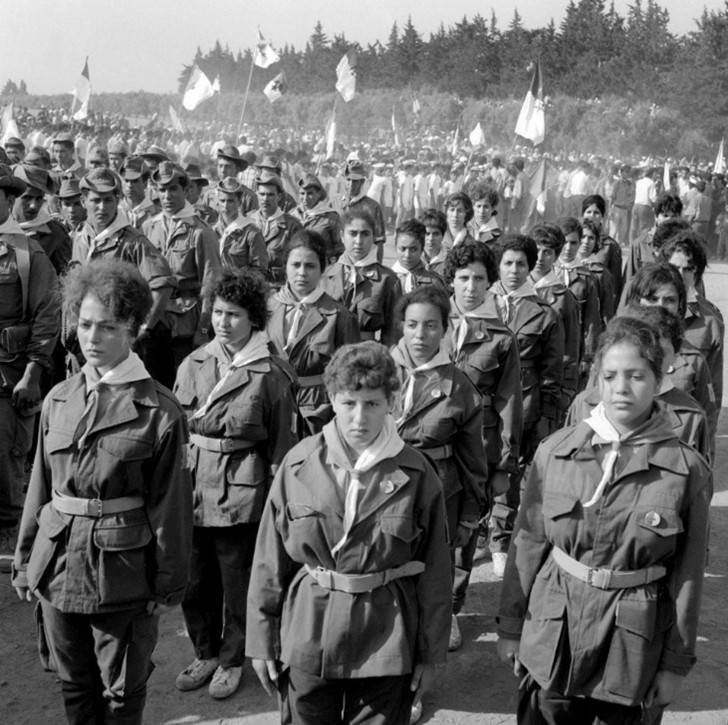
DC: In Algeria in the 1970s, everything seemed possible. The war and the ensuing disruption of the first few years of independence were behind it. With control of its oil production, it had the economic power to take action where other countries could only talk. Its moral power was even greater, derived from its epic war of independence against France from 1954 to 1962. As the country of a million martyrs – 10% of its population - its prestige was unrivalled. It had beaten France and now it was ready to take on the world.
ZJ: How do you look at the Front de Libération Nationale (FLN), Organisation Armée Sécrète (OAS) and Settlers (pieds-noirs)?
DC: Most of us know that the FLN was founded in November 1954 with one goal: to gain independence from France through armed struggle. When a cease-fire was established between the French government and the FLN in 1960, the sinister OAS was formed in 1961 (near the end of the war) by a group of French military officers and settlers (known as pieds-noirs – black-feet – the theory is that this slang term was prompted by the black boots worn by nineteenth-century Europeans).
ZJ: What was the slogan of the OAS?
DC: The slogan of the OAS was "L’Algérie est française et le restera" (Algeria is French and will remain so). Their goal was to stop Algerian independence through terrorism and sabotage. Some of my students used to call them, l’Organisation des Animaux Sauvages – the Organisation of Wild Animals.
ZJ: How did the OAS sabotage the cease-fire agreement between the French Government and the FLN?
DC: The OAS didn’t succeed in sabotaging the cease-fire. They conducted a psychotic terrorist campaign designed to provoke the Arab population to retaliate against the French. The theory was that this would force the army to crack down and prolong the war. Despite OAS atrocities such as the machine gunning of children as they left school, the FLN succeeded in persuading the people not to resist. After Algerian independence, the OAS turned their fire against President de Gaulle of France as a traitor. They made over 30 assassination attempts against him. The 1973 film, The Day of the Jackal, was based around a fictional OAS plot to assassinate de Gaulle.
ZJ: How did the FLN leadership handle such brutal actions and provocations?
DC: The FLN successfully persuaded its supporters that in this case non-resistance was their most powerful weapon and would achieve independence more quickly.
ZJ: How long were you in Algeria?
DC: I was in Algeria from September 1973 to August 1974.
ZJ: In those times, you regularly wrote letters to your mother.
DC: Yes, I did, but I have only found letters up to May 1974 – I don’t know what happened to the rest.
ZJ: You published these letters in a book, National Resources: Letters from Algeria 1973-74
DC: Yes, I did.
ZJ: What is your general comment on the book?
DC: The book gives an impression of Algeria as it seemed to me at the time. Whether it was an accurate impression, I do not know. It was true to my own experience.
PART III
ZJ: How did you choose to study history?
DC: After returning from Algeria, I worked as a teacher in London at Tottenham and Willesden Colleges of Technology for a while and then was persuaded by the Head of the Department at SOAS, Professor Kenneth Ballhatchet, to give that up and go for a PhD. Because he knew I was interested in Partition, he suggested I should work with Dr Zawwar Hussain Zaidi, who was pulling together a programme of work on the Muslim League and provincial politics in the 1920s-1940s. Since my parents were in India only a couple of years after independence and colonial independence was of course a critical issue in Africa in the 1950s, I grew up with discussions in the background about Partition and the experiences of their Indian and British friends/colleagues. To maintain continuity, almost all of the British diplomats in India at that time had been officers in the Indian Civil Service (ICS) and the same was true when we went to East Pakistan in 1963, so this was a very live topic for me. Naturally my interest increased when the second Partition took place in 1971, especially since my father was sent to Dhaka in August 1971.
ZJ: What motivated you to focus your doctoral research on Sindh?
DC: My MA dissertation was on AK Fazlul Huq, but I felt Bengal was over-researched and I was unlikely to say much that was new. I was attracted to Sindh because I had stayed in Karachi for a couple of days on one of my flights out to East Pakistan so there was a slight connection, because the more I heard about Sindh the more fascinating it sounded – and, critically, because I was told that very little had been written about Sindh (in fact, one person even tried to warn me off because of that, but that increased the challenge for me!). I started by researching provincial politics in the 1930s (MA Khuhro, GM Syed, Allah Bux Soomro, etc), but I found that the arguments about whether Sindh should support the Pakistan movement referred back to questions around the transfer of land from Muslims to Hindus in the 19th century. So that’s why trying to understand the creation of Pakistan in 1947 led me back to 19th-century Sindh.
ZJ: Could you tell us a little about your thesis supervisor, Dr Zawwar Hussain Zaidi?
DC: Yes, Dr Zawwar Hussain Zaidi my supervisor was, who is probably best known as the Editor-in-Chief of the Quaid-i-Azam Papers. When I was doing my research, he was still at SOAS. He was born in the United Provinces (now Uttar Pradesh in India) and went to Pakistan after Partition, so he had lived through the turmoil of that period and was keen to extend scholarship on the Pakistan movement, the Muslim League and of course the key role of Jinnah. He was editing the Jinnah-Ispahani correspondence at that time. He was very enthusiastic about my original thesis topic, Sindhi politics in the 1930s and 1940s, since that matched his area of expertise. When I told him that I wanted to take it back 100 years, this was out of his comfort zone, but he was extremely enthusiastic and encouraging. He enjoyed the challenge. Because Dr Zaidi was not familiar with nineteenth-century Sindh, he used his profound general knowledge of South Asian society to challenge me. Justifying and reviewing my arguments and assumptions made them clearer in my own mind, and so I believe his supervision helped to strengthen my thesis.
ZJ: The renowned Sindhi scholar Ghulam Rabbani Agro, in his book Manhun Shahr Bhanbhore Ja, has referred to your research. How did you come to meet him?
DC: SOAS gave me letters of introduction to open doors to the appropriate institutions and people while I was carrying out fieldwork in Pakistan. For example, the SOAS letter gave me access to the Commissioner’s Record Office in Karachi which at that time held all the records of the British Sindh’s Commissioners. This collection now forms part of the Sindh Archive.
The University of Sindh at Jamshoro was of course one of the places at the top of my list. When I made my first visit, I showed my SOAS letter at Reception. After waiting for some time, I was told that the Pro-Vice Chancellor wanted to see me. I was most impressed to get such high-level interest and that is how I was introduced to Ghulam Rabbani Agro, who had only recently been appointed. We immediately liked each other. Rabbani Saheb was extraordinarily helpful, giving me access to the university library and introducing me to academics and scholars. He gave me profound insights into Sindhi society, particularly Waderos and the rural social system. He was a warm and compassionate man, with a deep understanding of the soul of Sindh, insatiable curiosity about the world beyond Sindh and a strong sense of humour. He took me to Bhitshah so that I could feel the power of Shah Abdul Latif, and we used to have long conversations into the night in the garden of his home in Jamshoro.
ZJ: Could you recall those evenings in Jamshoro?
DC: Yes, we used to sit in the garden of his house in Jamshoro. Under a canopy of stars, we discussed life, the world, Sindh and, inevitably, the state of Pakistan. Rabbani Saheb’s conversation helped me to confirm that in many ways the Wadero’s role in the nineteenth century was not so different from the twentieth century. The nineteenth-century British officials, he told me, had been absolutely right to stress the importance of izzat to Waderos – that is to say, their ‘honour,’ or their standing in the local communities.
ZJ: You have mentioned elsewhere that Rabbani often shared many jokes and anecdotes about Waderos. Could you share a few with us?
DC: Yes, anecdotes and jokes were Rabbani Saheb’s special art, a concise way to convey something important or relevant that might otherwise demand pages of explanation. In the tranquil evenings of Jamshoro at the University of Sindh, beneath dim lights and amid the soft glowing air, none of his conversations ever closed without an anecdote about Waderos or a personal glimpse into Sindhi society. In one of his anecdotes, he emphasised that, whatever the politicians might say, a Wadero’s power was not based on physical force, even though they had to have that force and some of them made ruthless use of it. It was all about izzat. Rabbani Saheb compared it to a balloon. ‘The Wadero,’ he told me, ‘looks very big, because he is puffed up like a balloon, and so long as he stays puffed up, everyone will do as he says. But one pin-prick and, like a balloon, he is gone!’
ZJ: How did British colonial policies mix with traditional power structures in rural Sindh, and what long-term social changes did this cause?
DC: I think the most important long-term result of British rule in Sindh was the maintenance of traditional power structures in order to keep social change to the minimum.
Empires are usually won by force, and the threat of force remains in the background, but they cannot be maintained by force alone, or they will fall apart. One of the most successful ways to run an empire is to have as little impact as possible on local society. The colonial power places itself at the top of the social structure and leaves society to run itself. The izzat of the colonial power depends upon presenting itself as above local society.
ZJ: How would you characterise the relationship between British colonial officials and the Sindhi Hindu community, and Muslim Wadero?
DC: The British conquest of Sindh in 1843 was assisted by local Hindu merchants, and in the early years British officials saw Hindu traders as their potential allies against the Talpurs and the Muslim ruling class who they regarded as the defeated enemy. Their prejudice may have been influenced by the fact that the officials had been transferred from the Bombay Presidency, where they were accustomed to working in a Hindu majority environment and society was mostly structured on a raiyatwari system – ie peasant farmers with very few big zamindars. They anticipated replicating that structure in Sindh but it did not take the British administrators long to realise it was not going to work because social power lay with the Muslim Waderos. These were the people they had to do business with. This change in policy was reinforced by the Great Rebellion (Indian Mutiny) of 1857, when Britain nearly lost its empire in Northern India because of its aggressive approach towards big zamindars in Agra and Awadh. The lesson the British Indian government took from that disaster was that it must preserve the traditional power structures at all costs, to avoid upsetting the status quo. In Sindh, this meant supporting the Muslim Waderos.
ZJ: How did the British colonial administration co-opt and sustain the 'Wadero' institution to maintain social and political control in Sindh?
DC: No doubt, from the mid-nineteenth century onwards, the priority was to keep the Waderos content with British rule and to preserve or indeed increase if possible their economic and social power. Consequently, the British set up structures to prevent big zamindars from losing land to Hindus. They created a system of honours to enhance the social standing of Waderos – ceremonial swords and lungis, the right to remain seated in the presence of senior officials, etc. They interfered as little as possible in the way Waderos conducted their business and effectively contracted out the administration of law and order to them. The police always went through the local Waderos when they investigated crimes in the countryside and generally relied on their advice about who the local criminals were. The Government of Sindh never contemplated giving security of tenure to haris.
Instead of giving security to haris, the British set up structures to prevent big zamindars from losing land to Hindus. They created a system of honours to enhance the social standing of Waderos – ceremonial swords and lungis, the right to remain seated in the presence of senior officials, etc. They interfered as little as possible in the way Waderos conducted their business and effectively contracted out the administration of law and order to them. The police always went through the local Waderos when they investigated crimes in the countryside and generally relied on their advice about who the local criminals were. The Government of Sindh never contemplated giving security of tenure to haris.
PART IV
ZJ: How did the British objective of maintaining control over the rural 'Wadero' class condition a policy shift that reframed Sindhi Hindus as 'foes' of the colonial administration?
DC: From the start, the British played Muslims and Hindus off against each other. As I mentioned earlier, they saw the Hindus as their potential allies when they conquered Sindh but they soon realised that was not realistic because Hindus had no social power over the bulk of the population who were Muslim and lived in the countryside, where the Waderos controlled the land and the people working on it. Hindus were for the most part traders and moneylenders, based in the towns. Some had great wealth but, with a few exceptions, they did not have landed property. Even if they did own land, it was extremely difficult for a Hindu to acquire the izzat that was needed to earn the respect of the Muslim cultivators and to deal as equals with local Waderos.
ZJ: How do you evaluate the role of property rights legislation in facilitating the political transition of Sindhi Hindus from strategic partners to colonial outsiders?
DC: Having started off seeing Hindus as allies, as the nineteenth century went on, the British officials started to regard them as a problem. The British had introduced property rights which meant zamindars could mortgage the land itself. If they were unable to pay their debts, the courts could seize their land and pass it to the Hindu lenders. This would have meant not just losing their livelihoods but the large estates which gave them status and power over the rural population. This could not have happened under the Talpurs who followed Mughal legal conventions. Zamindars could borrow money against the value of their crops, so they might get into debt if the harvest was bad, but they could not lose their land. The British became increasingly concerned that their legal system was causing agricultural land to pass from Muslim Waderos to Hindu traders, and they feared this would undermine the Sindhi social system.
ZJ: In your PhD research, you evaluated land records; what conclusions did you draw from your analysis of these documents?
DC: After looking at the land records, I found there was some evidence of land passing to Hindus, but on a very small scale. However, we have the benefit of hindsight and there were a few high-profile cases where Waderos did lose land to Hindus. This caused serious alarm among the British. They were afraid that they might inadvertently trigger a social revolution in Sindh. If the Waderos lost their land, the British would have no allies. However, they were fully aware that Waderos would not sit passively while their power and wealth slipped away. If they started to believe their position was threatened by laws introduced by the British, they might conclude it would be better for the British to leave. The 1857 Rebellion had shown what could happen when people like the Waderos turned against the British. Therefore, it hardly mattered whether the land was actually passing to Hindus or not. So long as the Waderos believed it might, the British had to reassure them that they were here to help and were dealing with the problem.
ZJ: In what ways did the British colonial government secure the landholdings of the Waderos, and what mechanism was placed?
DC: The British government therefore set up a structure to intervene when Waderos’ estates were threatened with foreclosure. British officials would run these ‘encumbered’ estates themselves, paying allowances to the owners, then pass them back once the debts were paid off and the estates were operating economically. This saved a few individuals but, much more importantly, gave Waderos the strong message that they could rely on the British as their allies.
So long as the Waderos were reasonably content, there was no serious threat to British rule in Sindh. It was in the interests of the British to show they were on their side. In the process, British rule aggravated tensions between Muslims and Hindus.
ZJ: What economic weaknesses did Sindhi Haris (landless workers) inherit that made them vulnerable?
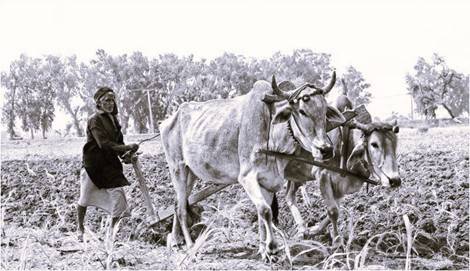
DC: The economic weakness of Sindhi haris derived from their lack of legal rights. Unlike the majority of agriculturists elsewhere in India, they were not small tenant farmers or zamindars with title deeds for particular plots of land. That was the model under the Bombay raiyatwari system which so many of the British officials in Sindh were familiar with and mistakenly thought applied in Sindh when they first took over. Hari literally means ploughman and that says it all. Their only property was their agricultural tools and their physical strength. Each season, they would present themselves for work to the local big zamindars. They would be allocated a plot of land to cultivate and agree the portion of the crop they would be allowed to keep at the harvest. They would not necessarily have the same plot from season to season, nor work for the same zamindar. However, it must be noted that this was not a simple employer-employee relationship. Most haris had been living in the same area for generations and had developed long-term relationships with individual big zamindars or Waderos. These went beyond economic or contractual relationships – they were based on familiarity, favours exchanged, social and religious interactions. A zamindar’s good will was worth more to a hari than any legal or economic status.
ZJ: What were the real-world conditions that led Haris to become dependent on Zamindars and Banias?
DC: First of all, the hari had to give the big zamindar the majority of the crop – often as much as 75%. This did not leave much capacity for the hari to build up savings, especially since all the costs of cultivation fell to him – seeds, tools, cattle, etc, as well as subsistence while waiting for the harvest. Depending on the family’s own resources, then, the hari might have to borrow before getting down to work. In some cases, the zamindar made a loan which would be repaid as a deduction from the hari’s share of the crop. Alternatively, the hari might go to a Hindu moneylender – again, repaying as a share of the crop. If haris borrowed from a moneylender, they would usually seek the zamindar’s help to get a good deal on the loan. Whether borrowing from a moneylender or a zamindar, the repayments might come to as much as or more than the hari’s share of the crop, in which case the loan would have to be carried forward to the following season, along with the costs of subsistence in the meantime. Very often, therefore, the hari’s annual income consisted of accumulated debt set against the value of his share of the harvest from season to season. I am using income here in the sense of resources, since most of these transactions were in kind rather than in cash. I’m also using the masculine gender because that reflected the reality of nineteenth-century Sindh, and to a large extent twenty-first-century Sindh as well.
Whether the hari was in debt to a Hindu moneylender or a Muslim zamindar, or both, it could be a stable arrangement so long as the lender was getting a reasonable cash flow from year to year.
If there were problems – for example bad harvests, bad luck or ill health – the hari would invariably turn to the zamindar for help and support, and this would depend on the reputation of the hari with the zamindar, built up through meeting wider obligations – eg turning out to reinforce bunds, helping to track down stolen cattle and supporting the local police, showing appropriate respect to the zamindar at social, family and religious occasions, etc. If a hari did not have a good name with the appropriate zamindar, he was on his own or might even face obstacles or sanctions.
ZJ: What is your comment that in the British Sindh Waderos were Local kings, Colonial allies or collaborators?
DC: The Waderos were first and foremost local kings. I doubt whether they had a great deal of interest in the British rulers and so it is I believe questionable whether they can be described as colonial allies. People sometimes describe local elites like the Sindhi Waderos as collaborators with imperialism but in my opinion that overstates the power of the colonial empires. The British needed the Waderos. The Waderos did not need the British. The Waderos were in charge of Sindhi society when the British took over in 1843 and they were still in charge when the British left in 1947. The way I would put it, they tolerated British rule so long as it did not conflict with their own interests. They also enjoyed many of the trappings and by-products of British rule, such as honours, ceremonial swords, etc, but these were incidentals. When the British left in 1947, it caused no inconvenience to the Waderos. None of them asked the British to stay.
ZJ: How did Waderos control rural people, and how did the British use this traditional leadership to run their administration?
DC: As described earlier, the Waderos had enormous economic power because they owned the land that the haris cultivated, enjoyed most of their harvests and, if they did not themselves directly own haris’ debts, they had influence over the terms of their debts to Hindu moneylenders. In addition, they had wider social influence and power. Waderos had around them the equivalent of a royal court - large numbers of staff, retainers and relations who supported them and were dependent on them. The retainers would often include people from the various hari families – this was one of the ways haris could make themselves useful to the Waderos and earn their favour. In short, the Waderos provided the rural infrastructure.
ZJ: Why did the British administration retain the Wadero-structure?
DC: They had no choice. British administration rested upon this infrastructure. British officials relied on Waderos to keep Sindhi rural society stable and peaceful. When crimes were committed, they turned to the Waderos for help. If there was a murder or an assault, the local Waderos would arrange for witnesses to come forward to the police and would often present the police with the suspect before the investigation had even started. If they were pursuing dacoits or cattle thieves, it was the Waderos who would provide the men to join the police hunt. If a canal embankment was breached, it was the Wadero who would turn out the manpower to fix it. When the government wanted to collect its land revenue, it was the Waderos who made sure it came through.
ZJ: How did villages’ social structures (human settlements, social relations, kinship, same surname or braderi) support Waderos to play their role and how did colonial officials build on this opportunity to govern?
DC: This is a key question. Of course, it is true that a Wadero’s status ultimately relied on his economic power. In order to be a Wadero, he had to be wealthy but this was just the baseline. In the end it was all about human relationships. Haris worked for Waderos and did not have legal security of tenure, but it was not a crude economic contract like the engagement a factory owner made with workers. Haris and Waderos would often share the same tribal names. Even if they did not, they thought of themselves in a way that was similar to a kinship group. Haris would bring small gifts to Waderos on special occasions, and Waderos would in turn give gifts to hari families, especially for their weddings, when a gift which seemed quite small to a Wadero could become the most cherished possession of a young married couple from hari families. Waderos would provide feasts for their retainers, including many haris, at celebrations such as Eid. In fact, a good part of their status depended on the lavishness of such occasions. If haris felt a Wadero was not generous, his status would trickle away. Many Waderos gained authority from their religious connections. Some were themselves Syeds or Pirs, others were devotees or sponsors of important religious figures. All of this made up a complex society. Haris would automatically pay due respect to their Wadero, and if they fell out of line or challenged him, they would soon realise that there was real power behind the Wadero’s friendly face, but most haris, most of the time, relied upon – and received - their Wadero’s favour and support.
ZJ: Why did the British rely on Waderos?
DC: As I have said, the British relied on the Waderos. They knew there was more to the Waders’ power than their estates and so they did whatever they could to reinforce their status. The honours they gave were intended to enhance Waderos’ standing in the local community. Haris’ respect for a Wadero would increase, for example, if they knew he had the right to be seated in the company of a senior official. They would take pride in being associated with such a high-status Wadero. This was also a way of reminding Waderos of the advantages of British rule.
And as with Waderos and haris, in the background the British always had the threat of force if it was needed. A British administrator could summon the full force of the army or the police. And from time to time, it suited the British to make an example of an unco-operative Wadero to demonstrate their power, by withdrawing honours or even threatening him with arrest.
PART V
ZJ: Did British revenue policies create economic stability in rural Sindh, if yes, how?
DC: No, British revenue policies had the opposite effect because, when they first took over the government of Sindh, they did not understand the tenure system. They thought it was primarily a country of small farmers who owned their own land. As a result, they introduced property rights which allowed land to be treated as an asset which could be bought, sold and mortgaged. Under Talpur/Mughal rule, it was the crops grown on the land which formed the asset – so zamindars as landholders might well get themselves into serious debt by borrowing against the value of harvest and then finding they had to hand over the entire harvest to their lender. But they could not lose the land on which their livelihood depended. British property rights meant that zamindars could lose everything – their land and their homes.
Since moneylenders were Hindu and almost all zamindars were Muslim, this was potentially a threat to social stability, so British officials spent the rest of the nineteenth century trying to undo the consequences of the reforms they had introduced.
ZJ: How did Banias (Hindu moneylenders) cause and keep rural debt going through their business model?
DC: Moneylending was and is a fairly straightforward business model. Banias’ basic business model was not much different to a modern credit card. Demand was high so they offered easy credit with high interest rates. Compound interest could mount up over the years until it exceeded income. In those cases, the debts might never be repaid. Agriculturists had to borrow in the planting season, increasing their existing debt, and so by the time of the harvest they might hand their entire crop to the bania who would then give some of it back as an allowance (and additional debt) till the next season. This model applied to many Waderos as well as the smaller zamindars and haris. As with credit cards, the lender often preferred not to have the debt repaid because that would end their cash flow. It was a stable arrangement so long as the debtors kept their repayments up to date.
This was a business model which had been around for centuries. The difference introduced by the British was that, if the debtor had land, that could now be secured against the debt. If the creditor foreclosed, therefore, he could then have all of the income from the land, without having to pay an allowance to keep the debt serviced. Since that would result in land passing from a Muslim debtor to a Hindu lender, it was bound to cause communal friction and anger.
ZJ: In what ways did rural indebtedness contribute to Hindu-Muslim tensions in colonial Sindh?
DC: Nobody likes the person they borrow money from and, when the lender was always Hindu and the borrower was almost always Muslim, the build-up of resentment was bound to create communal tensions. In practice, the amount of land transferred from Muslims to Hindus was not large. That is partly because most banias considered that taking charge of a farm was more trouble than it was worth. It made better economic sense to leave the farmer to deal with all the practical problems of cultivation, dealing with haris, etc. The bania simply lived off the interest as they had done in the past. Also, Hindu banias probably felt exposed in the Muslim countryside. They were more secure in the towns.
However, the threat of foreclosure was always there in the background and must have been a serious cause of anxiety to Muslim cultivators large and small. The fear of land passing to Hindus was very real, and it only needed a few real-life examples for that fear to grow. By the twentieth century, there was a widespread feeling among Sindhi Muslims that Hindus represented an economic threat to them. If the British left India and were replaced by a Hindu-dominated Congress government, that threat might become a reality. Pakistan was the obvious answer once it became clear the British were on their way out.
ZJ: Who was more prosperous in the colonial Sindh of 19th-century?
DC: When one is talking about Sindhi Hindus and Muslims, one needs to be clear who one is referring to. Some Hindus were very wealthy but the wealthiest people in nineteenth-century Sindh were Waderos and they combined their wealth with enormous social power, influence and status which no Hindus could dream of. Hindus and Muslims did share many common social and cultural practices but for the most part they didn’t live in the same areas. Most Hindus lived in the towns. Banias obviously had to move around rural areas in order to conduct their business, but they would return to their urban homes when they could. This may have helped to increase antagonism between Hindus and Muslims. They did not really know each other very well, and so it must have been easy to develop stereotypes. Waderos did use debt as one of their many tools of power over haris, as I have described but Hindu banias were businessmen who were looking to increase their profits. Moneylending provided a guaranteed economic return.
ZJ: It is often argued that in colonial Sindh, the Hindu Bania class utilised debt as a mechanism to acquire political and social power. What is your assessment of this perspective?
DC: The British often talked about the banias using debt to acquire power but I believe that was because they were paranoid about the potential risk to Waderos. There are always exceptions, but I don’t think most banias were looking for power. They were looking for money. Their most secure source of money was to syphon off the profits of agriculturists. Debt is frightening. It can cause anxiety and depression. Even if an agriculturist was able to escape debt, the fear was always there and I believe this applied to Waderos as well as to smaller agriculturists. When the lenders are from one community and the debtors almost all from another, this is a recipe for communal disaster and it’s remarkable that, despite this, Sindhi society was on the whole remarkably stable with Hindus and Muslims getting on well together in their everyday lives. However, the ultimate insecurity of the Hindus was demonstrated when the British left India and Sindh formed part of Pakistan. The great majority of Hindus immediately departed for India. According to the 1941 census, Hindus made up approximately 27% of the population of Sindh. Following Partition, this number dropped drastically. While accurate statistics for the immediate post-Partition period are difficult to ascertain, contemporary estimates suggest a significant majority of the Sindhi Hindu population migrated.
ZJ: How do British colonial policies still affect rural power in Sindh today?
DC: The main social impact of British rule was the emigration of Hindus in 1947. Hindus are no longer a significant part of Sindhi society except in the eastern Thar.
ZJ: Would the Wadero class have maintained its current socio-political status if the British had not annexed Sindh in 1843?
DC: It is not possible to say whether Sindhi society might have developed differently without British rule. What one can say is that British rule actively suppressed any attempts to challenge the status quo and held back social evolution. The objective of British policy from the mid-nineteenth century onwards was to have as little impact on Sindh’s rural power structures as possible and they were successful.
I believe the Waderos would have dominated Sindh whether the British had ruled there or not, but the British made sure of it by actively preventing any social or economic progress which might have given greater economic independence to smaller zamindars and haris. When Pakistan was created, the British legacy was a stable social system which had scarcely changed over the previous century and which kept Waderos in charge.
ZJ: How do you see the status of the Wadero class in Sindh today?
DC: The system of power and patronage exercised by Waderos which the British handed it over to Pakistan in 1947 was as strong and vigorous as when they inherited it in 1843, and the Wadero system continues to flourish.
ZJ: Thank you very much for such an insightful conversation.
DC: You are most welcome. It was a pleasure discussing this with you.