

Narendra Modi’s third term as Prime Minister was delivered by the Bharatiya Janata Party, the political vehicle of Hindutva, an ideology that seeks to define Indian culture and identity through Hindu values. Those values, as expressed in Hindu scriptures and philosophical traditions, include dharma, or righteous duty; satya, or truth; ahimsa, or non-violence; karma, the moral law of consequences; compassion; restraint; and the belief that the same divine reality is present in all living beings. A political movement that invokes Hindu civilisation and its values must also be willing to be examined through the ethical standards of that civilisation.
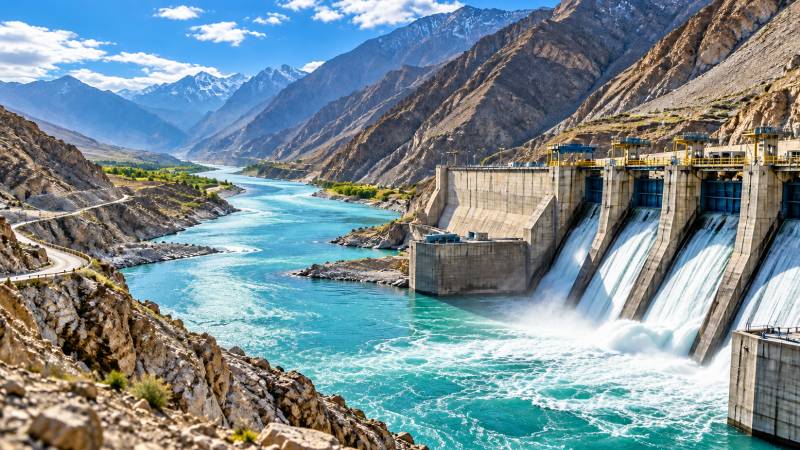
This is why India’s decision to place the Indus Waters Treaty in abeyance and statements about controlling the waters of the Indus, Jhelum and Chenab raise a question much deeper than geopolitics. The question is whether using water as an instrument against millions of people can be reconciled with the highest teachings of Hinduism. We believe it cannot. If water is deliberately withheld from innocent people as a means of political pressure or punishment, such an act stands in profound conflict with dharma, ahimsa, compassion and the Hindu principle that all life is interconnected.
Hindu civilisation itself grew around rivers. The Rigveda contains the celebrated Nadistuti hymn, which praises the rivers and gives special recognition to the Sindhu, the Indus. In Hindu tradition, water is not merely a commodity. The waters are sacred, life-giving and purifying. Rivers such as the Ganga are revered as mothers, and water is repeatedly associated with life, renewal and spiritual purification. The Vedic conception of rita, the cosmic order, reflects the idea that human conduct should remain aligned with a larger moral and natural order. If rivers are gifts of nature and sources of life, they cannot morally be transformed into weapons against those who depend upon them downstream.
The principle of dharma strengthens this argument. In Hindu thought, the ruler is not simply a possessor of power. The ruler carries a duty to protect the people and maintain social order. Rajadharma places responsibility above personal or political interest. Ancient Indian traditions concerning irrigation, reservoirs, wells, canals and agricultural water systems demonstrate that water management was understood as a public responsibility. Kautilya’s Arthashastra, for example, contains provisions concerning irrigation and water infrastructure and recognises the importance of protecting agricultural productivity. The broader lesson is significant: control over water creates responsibility toward those whose lives depend upon it.
Hindu teachings also attach exceptional moral value to providing water. Across the epics and dharmic traditions, constructing wells, tanks and reservoirs and providing water to the thirsty are described as meritorious acts. Water sustains life before it serves politics, borders or strategy. If giving water to a thirsty person is considered an act of virtue, deliberately denying essential water to millions of people presents the opposite moral question. What happens to dharma when the giver becomes the deliberate withholder?
The answer becomes even clearer through ahimsa. The famous Mahabharata teaching, “Ahimsa paramo dharmah,” places non-violence among the highest principles of dharma. Ahimsa is not merely the absence of physical warfare. It is an ethical commitment against causing unnecessary suffering to living beings. A river does not distinguish between a soldier and a child, a farmer and a government official, or a Muslim and a Hindu. Any major disruption of water availability affects households, agriculture, livestock, ecosystems and future generations. The innocent inevitably bear the consequences.
Water sustains life before it serves politics, borders or strategy. If giving water to a thirsty person is considered an act of virtue, deliberately denying essential water to millions of people presents the opposite moral question.
The Bhagavad Gita also teaches responsibility toward the natural order and society. Its teachings on yajna, reciprocity and duty emphasise that human beings cannot simply take from nature for themselves while refusing their obligations to others. The idea that those who consume without contributing to the larger order are acting wrongly has profound relevance to shared rivers. Water originating in one territory may sustain communities far beyond that territory. Geography creates interdependence, and dharma requires responsible conduct within that interdependence.
Satya provides another powerful moral test. Truth is not simply speaking accurately; it includes integrity, reliability and fidelity to commitments. The Indus Waters Treaty of 1960 represented an agreement between two sovereign states over one of the world’s great river systems. It survived wars, political crises and decades of hostility. Its endurance demonstrated that even deeply divided neighbours can create arrangements for sharing natural resources. Treaties, like promises, carry moral weight. The unilateral suspension of such an arrangement therefore raises not only a legal question but also a question about the dharmic value of keeping one’s word.
Karma provides another dimension. Hindu philosophy teaches that actions have consequences. The consequences may be immediate or may unfold across generations. When a powerful state uses its control over a natural resource to impose suffering upon another population, the action does not exist in isolation. It contributes to mistrust, insecurity, environmental degradation and regional instability. The principle of karma reminds humanity that power exercised without moral restraint can produce consequences beyond the original intention.
The four purusharthas—dharma, artha, kama and moksha also provide a useful framework. Material prosperity and political interest have their legitimate place in human life, but artha is not placed above dharma. Wealth, power and security are expected to operate within moral boundaries. Strategic advantage cannot automatically justify conduct that causes grave suffering to innocent people. In the Hindu ethical tradition, the pursuit of power detached from righteousness becomes adharma.
Perhaps the deepest principle is Vasudhaiva Kutumbakam: the world is one family. This teaching challenges the idea that national borders erase moral obligations toward people on the other side. The Hindu prayer, “Sarve bhavantu sukhinah”—may all beings be happy—does not say that happiness should be limited to one nationality. The principle of Atman and Brahman points toward an even deeper unity: the same ultimate reality is understood to exist within all beings. If every person carries that divine essence, then the suffering of a neighbour cannot simply be dismissed because that neighbour belongs to another nation or religion.
The principle of Atithi Devo Bhava, traditionally translated as “the guest is like God,” further illustrates the importance of seeing dignity in another human being. Hindu civilisation has repeatedly developed ethical teachings around hospitality, compassion, charity and protection of life. These values are difficult to reconcile with the deliberate use of an essential resource as a mechanism for collective pressure.
One of us, Engineer Arshad H. Abbasi, has been studying Hinduism precisely to understand more deeply the civilisational and ethical value attached to shared waters, rivers and the natural environment. This study is not an attempt to speak on behalf of Hindu scholars or to claim authority over a faith that belongs to more than a billion people. It is an effort to understand how one of the world’s oldest philosophical traditions approaches humanity’s relationship with nature, duty and other human beings. The more one studies these teachings, the more difficult it becomes to separate environmental responsibility from moral responsibility.
India must also recognise the moral distinction between combatants and civilians. Water is different from a military target. It sustains entire populations. A policy that deliberately threatens the water security of ordinary people can affect farmers, children, women, livestock and ecosystems that have no role in political disputes. Collective suffering cannot easily be reconciled with ahimsa.
This is therefore not an argument against India, Hinduism or the Indian people. India’s religious scholars, spiritual leaders, teachers and ordinary devotees can ask a simple but profound question: Can deliberate deprivation of water to millions of people be reconciled with dharma, ahimsa, satya, karma, compassion and Vasudhaiva Kutumbakam? If the answer is no, then moral courage requires saying so openly.
The suspension of a water-sharing treaty and the deliberate blocking or threatening of water needed by millions of innocent people are, in our view, fundamentally inconsistent with the highest teachings of Hinduism and also a great sin. Dharma calls for righteousness. Satya calls for integrity and keeping commitments. Ahimsa calls for avoiding the infliction of suffering. Karma reminds us that actions carry consequences. Vasudhaiva Kutumbakam reminds us that humanity is one family. Sarve bhavantu sukhinah calls for the welfare of all. The recognition of the divine in every living being demands compassion rather than deprivation.
Water should therefore never become a weapon. The Indus, Jhelum and Chenab should be understood not merely as geopolitical assets but as living systems upon which millions depend. The people of India and Pakistan share rivers, ecology, history and a common human destiny. The most faithful response to that shared inheritance is not to weaponise water, but to protect it, manage it fairly, honour agreements and preserve it for generations yet unborn. To deliberately deny essential water to innocent people would not merely be a strategic decision; judged against the highest teachings of Hinduism, it would be a grave moral wrong and, in humanitarian terms, a profound injustice. The rivers should remain sources of life, not instruments of punishment.