

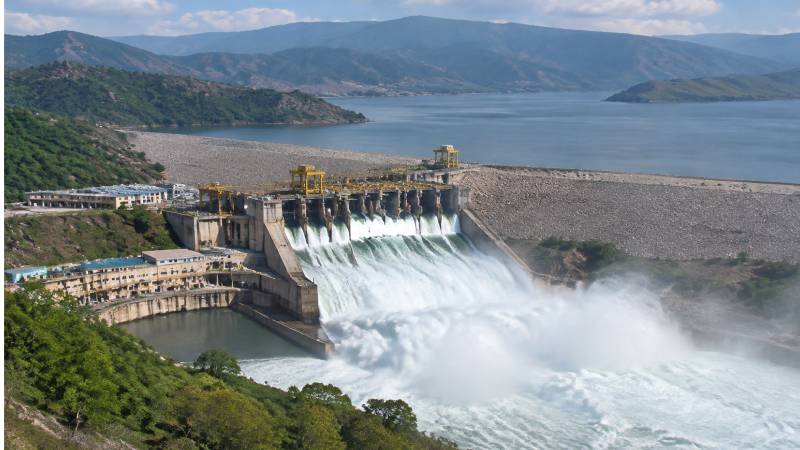
The events of 9 November 2026 at Tarbela Dam have once again exposed the vulnerability of major infrastructure projects when engineering complexity is accompanied by weaknesses in planning, supervision and institutional accountability. A section of rock collapsed during excavation at the Tarbela Fifth Extension Hydropower Project, allowing water to surge into a connecting tunnel and the under-construction powerhouse area. Construction was suspended, emergency measures were initiated and workers were evacuated. Fortunately, no casualties were reported. The Water and Power Development Authority (WAPDA) maintained that the main tunnel, powerhouse structure, tailrace culvert and switchyard remained undamaged. The distinction is important: this was not a collapse of Tarbela Dam itself. Nevertheless, the uncontrolled entry of water into an active construction site represents a serious engineering failure that demands an explanation beyond the immediate geological disturbance.
Situated on the Indus River in Khyber Pakhtunkhwa, Tarbela is among the world's largest earth-filled dams and occupies a strategic position in Pakistan's water and energy infrastructure. Its importance extends from electricity generation to agricultural irrigation, reservoir management and river-flow regulation. The Fifth Extension Project is designed to add 1,530 megawatts through three generating units of 510 megawatts each. Upon completion, it is expected to increase Tarbela's installed capacity from 4,888 to 6,418 megawatts. Rather than requiring an entirely new reservoir, the project aims to extract greater value from existing water infrastructure. In a country struggling to maintain affordable and reliable electricity supplies, its strategic importance is considerable.
However, the latest incident cannot be understood without examining the project's troubled history. In August 2025, a cofferdam protecting the construction works collapsed, flooding part of the site and causing substantial disruption. A subsequent government inquiry identified serious deficiencies in design approval, contractual compliance and engineering supervision. Responsibility was found to be shared among the contractor, consultant and project employer. Particularly troubling was the discovery that an unauthorised modification to the cofferdam's design had been accepted without adequate technical and contractual scrutiny. The resulting structure lacked essential protective features, while the water flows associated with its failure were reportedly within historically experienced conditions. These findings fundamentally change the interpretation of the earlier failure. When a structure fails under conditions it should reasonably have been designed to withstand, the question shifts from the unpredictability of nature to the adequacy of human decisions.
The recurrence of a serious water-related incident in November 2026, approximately fifteen months after the earlier collapse, makes this history especially relevant. The two incidents should not automatically be attributed to the same physical defect. The earlier failure involved a cofferdam, whereas the latest occurred during tunnel excavation when a weak rock mass gave way. Establishing whether they share an underlying cause requires independent technical investigation. Nevertheless, their recurrence within the same project raises legitimate concerns about geological assessment, hazard identification, construction sequencing and institutional learning. A second major incident invites scrutiny not only of what failed physically, but also of what was learned administratively. The scientific dimension of the latest accident deserves particular attention. Excavation in mountainous or geologically complex environments requires a detailed understanding of rock strength, fractures, groundwater pressure and the redistribution of stress caused by excavation. A rock mass that appears stable under one set of conditions may become vulnerable when excavation alters its supporting geometry or water pressure acts through existing fractures.
Safe underground construction therefore depends on geological mapping, rock classification, continuous instrumentation, controlled excavation, temporary structural support and carefully designed water-isolation arrangements. These are not optional refinements; they form the scientific foundation of safe tunnelling. The explanation that a weak rock mass collapsed identifies the immediate physical event without necessarily explaining its underlying cause. Was the weakness identified during preliminary geological investigations? Did excavation reveal an unexpected fracture zone? Were appropriate support measures installed before work advanced? Was the hydraulic connection between the intake pit and excavation adequately assessed? Were monitoring instruments functioning, and did they indicate changes before the incident? These questions cannot responsibly be answered without examining the engineering records and the site itself. However, they are precisely what an independent investigation must address. Identifying the mechanism of failure is not the same as establishing why the system failed to prevent it.
Water pressure adds another dimension to the danger. Water stored behind a large dam possesses gravitational potential energy, and its movement through an opening is governed by hydraulic head, resistance to flow and the geometry of the passage. Even when the main dam remains secure, uncontrolled water entering a construction area can destabilise exposed rock, transport loose material, erode temporary protective works and damage equipment. The Tarbela incident illustrates why the safety of an operating dam and that of construction activities associated with it must be treated as related but distinct engineering responsibilities. Following the incident, water releases into the Indus increased substantially, with discharge approaching approximately 150,000 cubic feet per second. Precautionary alerts were issued for Haripur, Swabi and Nowshera, particularly for communities and activities near riverbanks. Increased discharge should not be confused with evidence of a failure of the main dam. Nevertheless, controlled releases can create hazards for people fishing, operating boats, keeping livestock or living near the river. Timely warnings, coordination among district administrations and continuous monitoring are essential to protecting downstream communities.
The financial implications are equally concerning. The Fifth Extension Project has already experienced extraordinary cost escalation. Its estimated expenditure has risen from approximately Rs82 billion to Rs317 billion, an increase exceeding 285 per cent over the original estimate. Its completion target had already shifted from 2026 to June 2028, even before the latest incident. These figures represent additional demands on public resources in a country facing competing priorities in education, healthcare, climate resilience, flood protection and basic infrastructure. Construction delays can extend financing requirements, increase contractual claims and postpone the economic benefits expected from the investment. The precise additional cost of the November incident remains undetermined, but its potential to complicate an already difficult financial situation cannot be ignored.
A nation does not strengthen its infrastructure merely by constructing larger dams, longer tunnels or more powerful generating stations. It strengthens that infrastructure by ensuring that the knowledge, integrity and accountability behind those structures are equally sound.
The distinction between installed capacity and actual electricity production is also important. The additional 1,530 megawatts represent maximum generating capacity under suitable operating conditions, not a guarantee of continuous electricity supply. Hydroelectric generation depends on water availability, operating head, turbine performance and dispatch requirements. The project is expected to generate approximately 1.466 billion kilowatt-hours annually. Its economic value therefore depends on how much electricity is actually delivered, when it is available and what it costs over the plant's operating life.
An earlier official assessment raised the possibility that the project's levelised cost of electricity could reach approximately Rs27–28 per unit over thirty years. This estimate depends on assumptions involving capital expenditure, financing costs, electricity output and operating expenses, and should not be treated as a final immutable figure. Nevertheless, it challenges the original expectation that the extension would provide relatively inexpensive renewable electricity. The question is not whether hydropower remains desirable, but whether weaknesses in project implementation are undermining the economic advantages that originally justified the investment.
International financing introduces another dimension of responsibility. The World Bank and the Asian Infrastructure Investment Bank have supported the project through substantial lending arrangements. A further financing package approved in 2026 was intended to meet revised project requirements. Such financing makes major infrastructure development possible, but loans ultimately represent public obligations. Their economic justification depends on disciplined implementation, transparent expenditure and credible risk management. Financial compliance without technical reliability offers incomplete assurance.
The latest accident has reportedly prompted the federal government to seek an urgent investigation, including expertise from outside WAPDA. This is necessary, provided the investigation is genuinely independent and extends beyond identifying an individual whose actions preceded the collapse. Major engineering failures often emerge from a chain of organisational decisions rather than a single mistake. Inadequate geological investigations, poorly evaluated design changes, insufficient monitoring, unrealistic construction schedules and ineffective supervision can combine to create conditions in which accidents become increasingly likely.
There is also an important distinction between responsibility and blame. Responsibility involves determining who possessed the authority, information and professional obligation to prevent or mitigate a hazard. Blame, when pursued without sufficient evidence, can produce convenient scapegoats while leaving defective systems intact. A serious inquiry should examine approved designs, geological records, excavation logs, instrumentation data, risk assessments, safety audits and contractual correspondence. It should also establish whether recommendations arising from the August 2025 failure were implemented, independently verified and incorporated into subsequent construction activities. Without this examination, another inquiry risks becoming an administrative ritual rather than an instrument of institutional improvement.
The protection of workers deserves equal prominence. Their safe evacuation is encouraging and suggests that emergency procedures were activated effectively. However, successful evacuation should never be mistaken for sufficient evidence of a safe working environment. Underground excavation exposes workers to rock instability, sudden water ingress, confined spaces and limited evacuation routes. Their protection depends on reliable technical safeguards, communication, training and the authority to suspend unsafe operations without fear of professional or financial consequences. Human lives should never become an acceptable variable in the calculation of construction progress.
Pakistan's exposure to extreme weather and changing hydrological patterns makes robust engineering standards increasingly important. Climate change can affect precipitation, snow and glacier melt, sediment transport and river-flow variability. Although it would be scientifically unjustified to attribute the November rock collapse directly to climate change without specific evidence, these uncertainties reinforce the need for conservative design margins and adaptive operating procedures. Climate resilience must be incorporated into geological investigations, hydraulic modelling, construction planning and emergency preparedness. More broadly, technical expertise must retain its independence from administrative convenience. Large engineering organisations operate under pressure to meet deadlines, manage budgets and satisfy political expectations. These pressures become dangerous when they influence technical judgements about safety. Engineers must be able to raise concerns about design deficiencies, consultants must be able to reject unsafe modifications, and contractors must remain accountable for their construction methods. Engineering ethics is not an abstract academic discipline; it is a practical framework for protecting lives and public resources.
Before construction resumes, the affected areas should undergo a comprehensive geotechnical and structural assessment covering rock stability, excavation support, hydraulic isolation, seepage pathways and the condition of temporary and permanent works. Any remedial design should be independently examined, and the criteria for reopening the site should be publicly documented. An updated assessment of the completion schedule and financial viability should also be made available. The government should establish a mechanism to monitor the implementation of recommendations arising from major infrastructure investigations. Too often, completing an inquiry is confused with resolving the problem it investigates. Reports are prepared, responsibilities identified and recommendations circulated, but the public is rarely informed whether corrective action has actually been completed. An independently monitored compliance process, with clearly assigned responsibilities and measurable deadlines, would help distinguish meaningful reform from procedural closure.
The Tarbela incident is ultimately a test of how Pakistan understands scientific progress and national development. The absence of casualties is a matter of relief, and the reported integrity of the main dam provides important reassurance. Neither, however, should diminish the seriousness of a second major disruption at a project already burdened by delays and escalating costs. Development requires ambition, but ambition without disciplined scientific judgement can become an expensive liability. A nation does not strengthen its infrastructure merely by constructing larger dams, longer tunnels or more powerful generating stations. It strengthens that infrastructure by ensuring that the knowledge, integrity and accountability behind those structures are equally sound. Tarbela should become more than another investigation followed by another promise of improvement. It should be an opportunity to restore the primacy of engineering evidence over administrative expediency. The most important question is not whether Tarbela Dam has survived this incident. It is whether the institutions entrusted with its future are prepared to learn from it.