

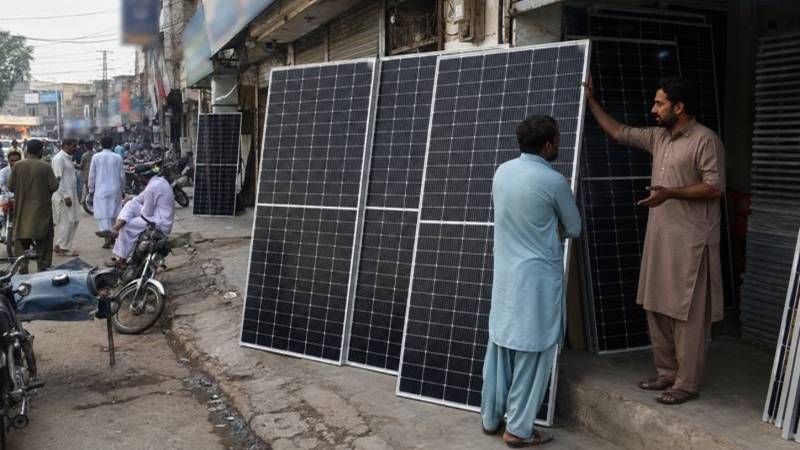
Changes in the global energy sphere are happening at a fast pace. Conflicts, interruptions in supply chains, and instability in international prices of oil and gas are highlighting the vulnerability of dependence on imported fossil fuels. In countries like Pakistan where energy is putting a lot of strain on the economy, these changes make renewable energy not just an environmental issue but rather a matter of energy security.
The International Energy Agency’s Renewables 2026: Analysis and Forecast to 2031 sheds light on this transition. The report claims that by the year 2031, the total capacity of the renewable sector will be by around 4,800 gigawatts higher. This growth is up to 57 per cent higher than the increase in renewable energy capacity during the previous six years. The report expects solar energy growth to be the main contributor to this growth and notes that more than three-quarters of new renewable capacity will belong to the solar energy sector.
This transformation illustrates the increasing understanding of how renewable energy can decrease dependence on international gas and oil markets. According to the report, if renewable energy had not been developed since 2010, the global fossil fuel market would have been approximately 8 per cent greater in 2025. Renewable energy displaces any need for gas equal to about 11 per cent of the total fossil fuel needs.
The statistics prove that renewables are now an important part of the energy industry and not merely an alternative source of energy. By 2031, renewable energy sources will supply nearly 45 per cent of electricity across the globe, which is an increase from 33 per cent in 2025. The share of wind and solar energy will exceed 28 per cent in total.
This change matters for Pakistan in a special way. The state has gone through several situations involving the high cost of imported fuel, the drain on its foreign exchange reserves, and the increase in electricity prices. A transition to green energy could help the country cope with these problems. However, the opportunity will be useful only if the expansion of renewable energy is accompanied by reliable infrastructure and correct policymaking.
Pakistan’s Solar Revolution: A Consumer-Led Response to Energy Insecurity
The growth of solar energy in Pakistan marks an important change in the country's energy sector. Customers have begun utilising solar power to meet their demand for electricity in houses, commercial establishments, industry, and farming.
The expansion has been prompted not only by government-led initiatives, but to a great extent by initiatives from private citizens and businesses responding to high electricity tariffs, unreliable supply, and fairly priced solar panels.
The extent of this transformation can be ascertained by looking at the disparity in the official statistics and the international trade data. For instance, as the report claims, Pakistan has 10 GW of installed capacity of solar photovoltaics (PV) as of March 2026. In contrast, the volume of solar panel imports from China approached 50 GW between 2020 and 2025.
The main issue faced by Pakistan today is no longer increasing renewable energy capacity itself, but rather, integrating renewable capacity into a system that can provide dependable, fair, and financially sustainable electricity
This gap has been identified as a discrepancy in the solar statistics of Pakistan. However, this does not imply that every single imported panel was deployed and generating electricity at the moment. Some products may be stored as inventory, while others may have been distributed in ways that are not registered in the databases but still lead to electricity generation. However, the gap indicates that the real usage of solar energy in Pakistan is much higher than it is reflected in conventional statistics.
This is an important change for the government in understanding the impacts of the photovoltaic projects. What happens is that when households and companies invest in their generation of electricity, the energy system of the country itself changes. Demand from the grid becomes less predictable while the inflow of electricity generated by the distributed generation increases. Therefore, planning only on the basis of official data does not allow taking into consideration the majority of the energy project.
The world picture stays optimistic for this segment of the industry, as it shows signs of further growth, with off-grid capacity expected to rise by almost 80 gigawatts globally in the period from 2026 to 2031, which is nearly two-and-a-half times the growth in the previous five years. Pakistan is among the countries which will play a great role in this expansion.
However, fast solar introduction leads to issues as well. Electricity generated during the day does not mean that demand during peak hours will be met. Unless there is enough storage, flexibility of the grid, and better demand handling, strong solar generation can cause problems at power networks.
As a result, Pakistan should regard its solar revolution as an initial stage of the new energy transformation rather than a final answer.
The Road to 2031: Solar, Wind, and Hydropower Opportunities for Pakistan
Solar energy will continue to dominate global renewables growth, but it is not the only viable technology. Wind and hydroelectric power, as well as other renewable energies, will play their part in the changing power generation landscape. Global forecasts predict an increase of around 70 per cent in onshore wind energy capacity between 2025 and 2031, reaching almost 2,040 gigawatts. This is particularly relevant for Pakistan where wind farms have been built in Sindh, such as the Jhimpir wind corridor, creating opportunities to enhance power generation as well as diversify the renewable energy mix in the country.
At the same time, the development of the wind sector is dependent on variables, including planning considerations, investment security, and transmission network improvements. Indeed, having wind resources is just not enough to ensure a project will be successful; developers need to have stable policies and timely access to the grid. In addition, coordination between energy regulators and transmission developers will be critical.
Hydropower is still an important part of Pakistan's renewable energy sector. In contrast to solar and wind energy, which depend significantly on weather and time of day, hydropower gives the electricity system very useful flexibility, depending on the design and operation of specific projects. The report's updated projection for Pakistan therefore includes many more hydropower power plants, while utility-scale solar power improvements have been made, hence taking away from the total figure.
On a regional basis, economies in the Asia-Pacific region except for China are anticipated to add up to 840 gigawatts of renewable energy projects between 2026 and 2031. Almost half of this contribution is expected to come from India, while ASEAN member states should account for about one-fifth of that number. Pakistan, Japan, and Australia are expected to produce slightly more than one-fifth. About 80 per cent of the whole region's renewable energy capacity growth should come from solar photovoltaic sources.
The projections show that competition for investments and technological innovations in renewable energy will grow across Asia. Pakistan can no longer afford to approach the transition only through short-term responses to power problems. It needs a long-term plan that links solar, wind, and hydropower improvements to economic and national security needs.
There are also other possibilities apart from electricity. The report discusses the perspectives of biogas and some other biofuels like agricultural and organic wastes. Worldwide, waste and residues may create more than 810 billion cubic metres of biogas, which is almost equal to 20 per cent of the total global demand for natural gas in 2024.
As an agricultural country, Pakistan should think more about this field. Agricultural waste, animal waste, and anything else can be used in local energy production if the right technology, collection methods, and investing models exist. These initiatives may lead to an effective waste management system and enhanced economic activity in rural areas. Nevertheless, it is necessary to study local data and evaluate the feasibility of these projects.
From Renewable Growth to Energy Security: The Policies Pakistan Needs Before 2031
The main issue faced by Pakistan today is no more increasing renewable energy capacity. It rather has a bigger challenge, which is integrating renewable capacity into the energy system that can provide dependable, fair, and financially sustainable electricity.
One of the basic prerequisites for this is the improvement of the national grid. Wind and solar energy projects can only be effective if electricity is distributed adequately to consumers through the electricity grid. Furthermore, delays in grid connection, low transmission capacity, and poor planning could result in wasting renewable energy.
This situation is not unique to Pakistan, and something similar is observed globally. For example, the technical curtailment of wind and solar energy reached 200 terawatt-hours in 2025 but could be more than 800 terawatt-hours by 2031. Curtailment means that some electricity generated cannot be supplied due to insufficient network capacity, system shortage, and other factors. The Pakistani authorities should take this warning into account while planning future renewables expansion.
Storing energy will be an equally important element of the solution. Battery systems enable the storage of surplus energy produced during high solar output hours and allow its usage when demand increases. According to forecasts, the global behind-the-meter battery storage capacity will grow nearly six times, reaching over 670 GWh, by 2031. By this time, over one-third of households are expected to have batteries installed together with their solar photovoltaic systems.
Pakistan needs to look for viable storage options for households, commercial buildings, industrial consumers, and the power system as a whole. It should be noted, however, that although energy storage won’t solve all existing problems, the capital cost implications need to be taken into account. A mix of batteries, better forecasting, flexible energy generation options, and smarter electricity management can assist Pakistan in making better use of domestically generated renewable electricity.
Distributed solar energy systems need a more accommodating form of regulation. The networks must be able to inform individuals and companies wishing to install solar panels of the available processes of joining the grid, owning electricity, and selling it. Smart meters and information on the amount of solar energy generated will make it easier to plan for electrical energy. The regulatory authorities will also have to consider the financial implications of distributed solar energy on the power grids themselves.
Finally, Pakistan needs better energy data. The gap between the officially registered solar energy production and the necessary amount of panels shows how vital such information is. An accurate national database that will combine data on rooftop solar energy systems, solar systems without connections to the electric grids, large solar systems, and storage will help to plan for power generation better.
Pakistan has the chance to turn its renewable energy growth into a sustainable national benefit. Its expanding solar industry, available wind farm sites, hydropower sources, and residues from agriculture lead to many possibilities for diversifying energy supply. However, these opportunities do not mean that the country has to enter the market with new technologies or launch new projects.
The time between now and the year 2031 should be utilised for strengthening the grid, expanding the storage, improving regulations, and creating a stable environment for investments. It is important to integrate renewable energy into the system of coordinated national strategies and not treat it as a collection of separate projects.
The global transition is proceeding at a fast pace. Therefore, the challenge for Pakistan is not whether renewable energy will gain more importance, but whether the country is capable of managing this process smoothly. However, with the proper planning, the country could limit its dependence on imported fuels and reduce the prices for energy in Pakistan.