

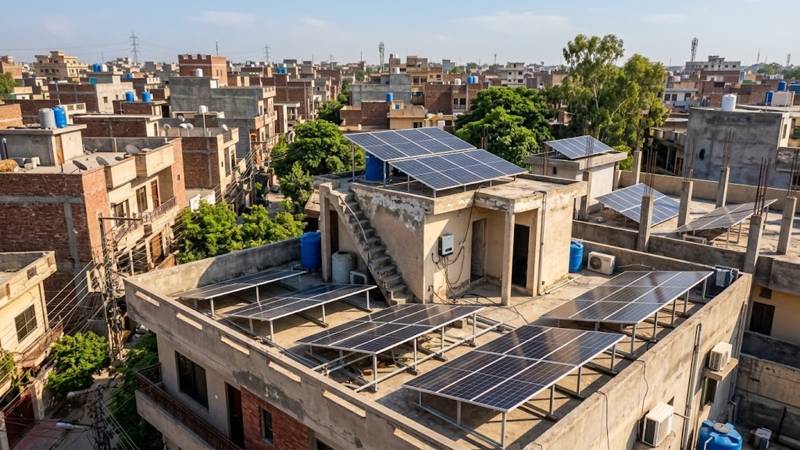
Pakistan’s solar revolution has made the headlines in global media. Residential customers in Pakistan, frustrated for years with high electric rates and high electric bills, have installed solar panels at a rate that has exceeded all expectations.
Panicked, Pakistan's policy makers have ended net energy metering and started peddling the nefarious solar cost shift argument which several others and I have debunked repeatedly in the US.
To lower rates for all customers by lowering the cost of power generation, transmission and distribution, Pakistan should begin rolling out smart rates and not just for solar customers. Of course, it needs to upgrade its analogue electric meters. They should be replaced with smart, digital meters.
Once TVRs are deployed, solar customers will start installing batteries. They will lower the stress on the grid during peak periods. They will also encourage customers to adopt electric vehicles (EVs).
Smart meters use digital technology to track customer usage. They are more accurate than traditional analogue meters. They also detect power theft, thereby preventing unfair cost subsidisation between customers who pay their bills and those who steal power. They lower meter reading costs by eliminating manual reading of meters. They also notify the utility if there is a power outage. And they enable the provision of “smart rates” to customers.
Smart rates convey the cost of electricity more accurately to customers than traditional rates, which are simply based on usage regardless of time of use. For utilities located in hot climates, such as Pakistan, electricity costs more in the summer than in the other seasons of the year. Within each day, electricity costs more during the afternoons than in the evenings, at night or in the mornings. The grid has excess capacity during the other time periods and electricity costs are lower during those periods.
A good example of smart rates are rates that vary with time (TVRs). They promote fairness between customers, and they also promote economic efficiency by lowering peak usage, when the grid is stressed, and raising off-peak usage, when the grid is underutilised.
Customers that use more energy during the peak period are more expensive to serve than customers who are off-peak intensive. Under flat rates, the “off-peak intensive” customers unknowingly subsidise the peak-intensive customers. Thus, flat rates are inherently unfair. This unfairness is corrected when TVRs are deployed.
Peak loads are expensive to serve, requiring the construction and operation of expensive power plants that run for just a few hundred hours a year
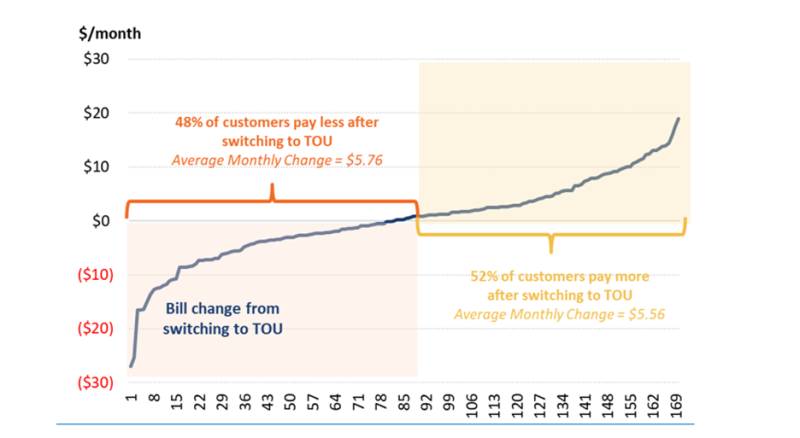
Additionally, customers on TVRs will have an incentive to lower their peak load and shift it to off-period hours. Peak loads are expensive to serve, requiring the construction and operation of expensive power plants that run for just a few hundred hours a year. TVRs will encourage customers to lower their usage during the expensive peak hours, reducing costs not just for themselves but for all customers.
It is worth noting that for many utilities, the top 1% of the hours in the year account for 10% of the system’s peak load. TVRs can consist of simple, static time-of-use (TOU) rates where prices vary over time, and the prices are known in advance. They can also include a dynamic element, where the price for a few hours of the year during the peak period can be much higher than on all other days. These are the days when the grid is stressed because it has insufficient capacity.
By offering dynamic rates on top of TOU rates, the load in those “critical system” hours can be reduced, further reducing the costs of electricity to all customers. The “critical” hours are not set in advance, but their price is known in advance. The customer is informed a day in advance that tomorrow is a critical day. Such rates are called critical-peak pricing rates.
Finally, there are real-time pricing (RTP) rates where neither the price nor the time is known in advance. Such rates have begun to be deployed in Europe and in Australia. They are the most sophisticated form of dynamic pricing.
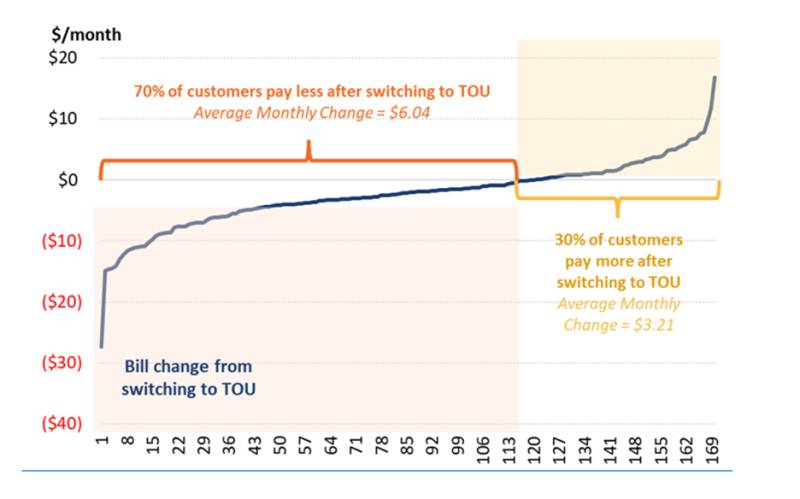
Once customers reduce their peak load, bills will go down for many customers. Will customers lower their peak load? More than 60 experimental trials using scientific principles have been carried out across the globe over the past two decades, including more than 400 TVRs. They have yielded valuable information on how customers respond to TOU rates, with and without enabling technologies, and with and without information on how to take advantage of TOU rates.
Years ago, I carried out a meta-analysis of this data with a team of researchers and created a model, Arcturus. It gave us a conclusive answer: Yes, customers respond to TVRs.
Should Pakistan carry out its own experiments with TVRs? Yes, Pakistan should consider doing its own experiments. These should reflect its unique customer demographics and climate. The rate designs should reflect its cost structure. The recruitment process should mimic the full-scale deployment process – opt-in, opt-out or mandatory. The experiment should include matching control and treatment groups and before and after measurements, as in any good “clinical trial” of a new “treatment.”
Can TVRs help lower the operating costs of charging EVs? Yes. Customers on TVRs substantially lower their charging costs by charging EVs only during off-peak periods at lower cost.
I touched upon these topics in a virtual presentation on September 28. I also shared the results I have achieved at my house in the San Francisco Bay Area by installing solar panels, pairing them with a battery, becoming a prosumager, and buying an EV. The talk was followed by a very interesting and thoughtful series of questions. The dialog was organised by Syed Haider Ali of the Pakistan Institute for Global Environmental Governance & Research (PIGER).
The questions included:
Will smart meters work in Pakistan? Can they be trusted by customers?
Will TVRs work in Pakistan? Would customers welcome them or hate them?
Should TVRs be voluntary, the standard rate or mandatory?
Will low-income customers be harmed by TVRs?
Should Pakistan do its own pilots with TVRs?
Do solar panels have adverse effects on the environment?
Are batteries dangerous?
These questions are not unique to Pakistan. They have arisen wherever I have worked on TVRs and smart meters from 1979 onwards in some two dozen countries located on six continents. I shared my experience in dealing with these issues. Let me address two of these objections here. They pertain to smart meters and smart rates.
There are four major concerns about smart meters. First, unlike analogue meters that were read once a month, smart meters transmit energy usage data in frequent intervals (often every 15 to 60 minutes). Critics argued this high-frequency data could reveal intimate details of daily life—such as when residents wake up, go to bed, use specific appliances, or leave the home vacant.
Privacy advocates also express concerns that utilities or law enforcement could access or aggregate this usage data without a warrant, or that third-party marketers could buy household behaviour profiles. There are also smart meters increase the risk that they could be hacked, raising fears that bad actors could manipulate meter data or disrupt local power supplies.
Second, opponents are concerned about continuous electromagnetic fields (EMF) emitted by the meters' wireless transmitters. Critics claimed this exposure caused symptoms like headaches, sleep disturbances, and fatigue. Of course, this overlooks the fact that cell phones generate radiation as well and are held much closer to the person’s body than smart meters, which are usually located outside the house. Some are also concerned that smart meters tend to get overheated and can cause electrical fires due to poor installation by third-party contractors, faulty meter bases, or power surges.
Thirdly, concerns are raised about the financial impact of smart meters and their billing accuracy. In the early stages of smart meter deployment, some customers reported immediate rate hikes or unexpected spikes in their monthly bills right after smart meters were installed. Opponents claimed digital meters were mis-calibrated or overly sensitive compared to older mechanical meters. Utilities maintained that the higher bills were often due to old analogue meters having slowed down over time, meaning the new meters were simply measuring accurate consumption—or coincided with new time-of-use (TOU) rate structures. Customers objected to paying the increase in rates that were needed to fund the massive infrastructure upgrade required for smart meter networks.
Finally, there are concerns about loss of control, opt-out fees and mandatory rollouts. Many consumers resent utilities installing devices on their private property without explicit consent or prior permission. Some utilities created “opt-out” programs in response to public outcry, but opponents criticised the monthly fees they were charged to retain an old analogue meter, viewing them as an unfair penalty for exercising personal choice over health and privacy. Concerns were raised that smart meters allowed utilities to shut off power remotely with the push of a button, removing human oversight during billing disputes or emergencies.
Smart meters enabled TVRs rates also triggered significant backlash from consumer advocates, lawmakers, and households. The main objections fall into six primary categories. First, they disproportionately punish low-income families, elderly individuals, people with medical conditions, and stay-at-home caregivers. Vulnerable consumers often cannot defer electricity use during peak hours (typically 4:00 PM to 9:00 PM). Running medical equipment, cooling a home for an elderly resident, or cooking dinner for children cannot easily be postponed until off-peak hours. Lower-income households are less likely to own energy-efficient appliances, smart thermostats, or home battery storage that allow wealthier households to automatically optimise energy use and lower their bills.
Second, “Bill Shock” and higher overall costs. Many consumers saw immediate, unexpected increases in their monthly electric bills rather than savings. Peak rates can be 2 to 4 times higher per kilowatt-hour (kWh) than off-peak rates. A single hot summer afternoon spent using air conditioning during peak hours could cancel out weeks of careful energy conservation. Opponents argued that the promised savings were overstated and required extreme behavioural shifts that most average working families could not maintain long-term.
Third, misalignment with daily work schedule. The timing of peak pricing windows directly conflicts with normal working family schedules. Most TOU peak windows occur in the late afternoon and early evening (e.g., 4:00 PM – 9:00 PM), precisely when people return home from work and school. This is when households naturally need to cook, wash dishes, run laundry, and heat or cool their homes. Opponents noted that utilities were effectively penalising people simply for living on standard domestic schedules.
Fourth, poor transparency, complexity, and confusion. Traditional flat-rate billing was simple to understand, whereas TOU rates introduced friction and confusion. Consumers struggled to track seasonal variations, weekend versus weekday rules, and shifting peak hour windows. Without expensive home energy monitors, customers had no way to know how much money they were spending in real time, making it difficult to adjust behaviour effectively before receiving a surprisingly high bill.
Fifth, applying TVRs to all customers. When public utility commissions permitted utilities to make TVRs the standard or default rate structure (requiring customers to manually opt out if they preferred flat rates), consumer groups raised strong objections. Many customers were shifted to TOU rates automatically without realising it, only discovering the change after receiving elevated bills. Critics argued that consumers should actively choose (opt in to) dynamic pricing models rather than being forced onto them by default.
Sixth, during heat waves or extreme winter cold snaps, peak pricing raises public health concerns. Critics warned that high peak rates discouraged low-income or elderly residents from running air conditioning during heatwaves, creating unsafe indoor temperatures and increasing the risk of heat exhaustion or heat stroke.
All these issues arose at a conference that was organised by the Department of Moral Philosophy at Rutgers University in 2010. My talk addressed these issues head on and was entitled The Ethics of Dynamic Pricing.
With the passage of time, these objections have receded into the background. Smart meters and TVRs are being deployed across the globe. England and France were among the pioneers in the field, going back to the 1950s. Decades later, they were followed by Italy and Spain.
Then the TVR revolution went west and crossed the North Atlantic Ocean. It reached Ontario, Canada in the early 2000’s and California later in the decade. Today, TVRs are deployed in large numbers in several other states, including Arizona, Colorado, Michigan, Minnesota, New York, and Oklahoma. They are also being deployed elsewhere, notably in Australia.
Pakistan should make smart meters and smart rates a priority. They will open the door to harnessing the full potential of solar energy by encouraging the installation of batteries, lowering peak loads, and encouraging the adoption of EVs. The latter will lower customer driving costs and reduce Pakistan’s imports of oil from the Gulf, in addition to lowering pollution and improving the quality of life.