

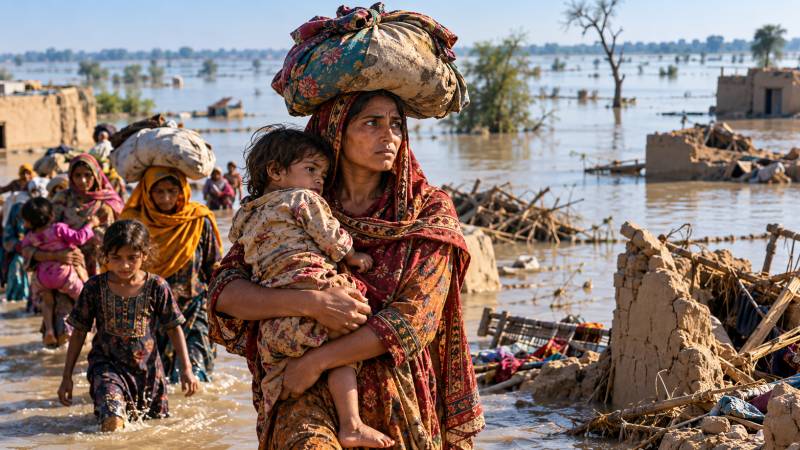
The climate crisis poses a multifaceted threat to women, affecting their livelihoods, safety, health and dignity. The real cost of climate disasters is not always measured in monetary terms. In rural areas, the financial damage caused by floods is often calculated in terms of lost crops, livestock and homes. However, the full impact of climate disasters cannot be captured in monetary terms alone. In Pakistan, women are particularly affected by environmental crises that threaten their safety, health and livelihoods.
Pakistan is characterized with climate-related catastrophes such as droughts, flash floods and heatwaves. The outcomes are not experienced equally. Prevalent social and economic disparity makes girls and women vulnerable in wake of climate hazards. Catastrophic floods of 2022 affected 33 million people of the country in which 8.2 million women of reproductive age have been affected. 650,000 pregnant women according to United Nations Population Fund got affected due to catastrophic floods. They needed maternal health facilities but devastation to the infrastructure hindered healthcare access.
Flooded roads for pregnant women pose a life creating obstacle whereby United Nations Population Fund analyzed women’s cases aiming for medical facilities during labour. It has been analyzed that 1600 health facilities were damaged that disrupted basic facilities. Crisis further goes on beyond childbirth in which displaced and overcrowded settlements deprive females of privacy, access to menstrual hygiene products and sanitation. United Nations Population Fund analyzed issues on gender related violence while flooding period. Devastation of homes and displacement of families led to breakdown of support systems to expose female to more costs.
Although women play a vital role in agriculture, livestock management, food security and community resilience, their labour often remains unrecognised and unpaid, leaving them particularly vulnerable to income loss and economic insecurity in the aftermath of climate disasters.
Climate change further intensifies the load of unpaid work. Women in communities are responsible for preparation of food and water, and roles of caregiving. Environmental hazards and shortage of water further triggers extended unpaid labor based hours. Drought or water shortage according to statistics of climate at the domestic level adds to the burden for women of all age groups.
Agriculture and livelihood gets hampered due to catastrophic floods. Women in village engage in livestock, agriculture and production of household but their work is not recognized or paid on time. Women undergo a major loss in income and economic security due to loss of agricultural yield resulting from climate change. Dependence on unpaid labor of women then increases that is discouraging.
Women are considered to be significant agents of resilience though they also are considered as victims of climate change. Women have a detailed know how of food security, agriculture, water management and community networking resulting in climate adaptation. Work on Pakistan’s climate equity by UNDP signifies women as change agents and significance of their inclusion in climate action is emphasized. Pakistan’s climate policy raises a key question related to it as to whether climate resilience be attained without gender equality. Possibly, reply is no.
Women’s requirements should be a part of disaster preparedness. Relief shelters should include facilities of sanitation, protection and privacy. Maternal healthcare and reproductive facilities should exist in the face of emergencies. Climate financing needs to support livelihood of women to ensure accessibility to economic resources. Women require an impactful voice in water management decisions, emergency responsiveness, urban planning and adaptation of climate. The outcome of climate change is social rather being an environmental problem. The country risks fighting crisis and certainly requires women to be placed at the center of climate resilience.