

Pakistan has become one of the most resilient nations by navigating ongoing situations. Since its independence, the country has faced vicissitudes while maintaining its position in global politics. Encompassing facts in one article is quite difficult. The population of Pakistan has surged exponentially in the last few years. According to the Pakistan Economic Survey, the country’s population is 252.09 million and is growing at an annual rate of 2.07%, with approximately 56.9% of the population falling within the working-age group (15–64 years), reflecting a sustained and relatively rapid pace of population growth. According to Pakistan Labour Force survey, the unemployment rate reached 7.1%, with the total number of unemployed individuals rising to 5.9 million.
Additionally, poverty has become one of the persistent challenges for the incumbent government. The survey reports that the national poverty headcount increased from 21.9% in 2018-19 to 28.9% in 2024-25; however, the current fuel prices have further escalated household inflation, and the majority of middle-class communities are falling below the poverty line. The national Gini coefficient increased from 28.4 to 32.7, which indicates that there has been a big gap between the rich and the middle class and the middle and poorer classes. This inequality in the country has further intensified the fiscal burden on the country. A large working-age population can contribute to a demographic dividend if the government provides sufficient opportunities in education, skills, health, and entrepreneurship.
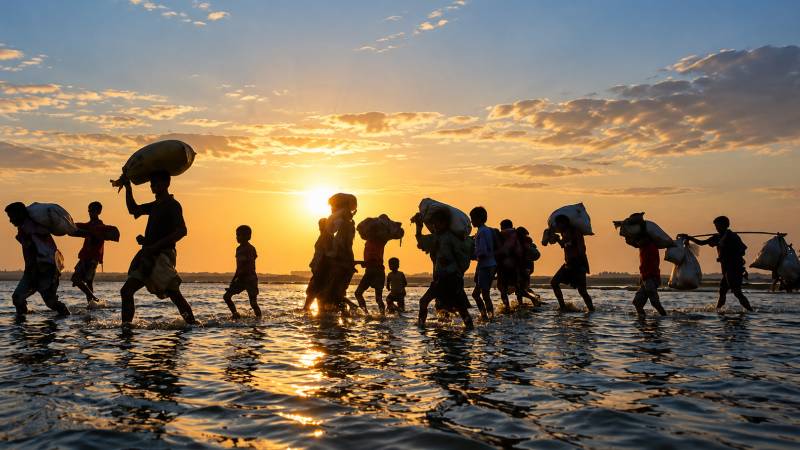
The Survey reported that the GDP has grown from 3.18% to 3.70% in 2025-26, as compared to previous years. GDP, at current market prices, reached Rs. 126.9 trillion, equivalent to US$ 452.1 billion. This has increased the per capita income to US $ 1,901 from US$ 1, 751. The country faced the worst climate disaster, alone in 2025, with a temperature of 23.9°C, while rainfall was 3% below average. More than 822 billion was lost in damages, while 1039 had lost their lives while more than 4 million people were displaced. Astoundingly, Pakistan contributed less than 1% of global emissions but still faces disproportionately high climate impacts. Every flood subsequently brings aftershocks, which bring catastrophe every year.
The question however arises in minds that how to overcome these challenges. Firstly, to control population growth, the government should expand voluntary family planning and reproductive health services, particularly in rural areas. Investment in girls' education and delaying the marriage age are key concerns to reduce population growth. Furthermore, to control family size and child spacing, the government should launch public awareness campaigns in the country. As stated, 5.9 million people are jobless, and there is a huge gap between the employment market and degree-awarding institutions. To scale up employment, the government should train the youth with its technical and vocational education and training programs.
A large working-age population can contribute to a demographic dividend if the government provides sufficient opportunities in education, skills, health, and entrepreneurship.
Moreover, grants and microfinance for youth entrepreneurship will reduce unemployment. All graduates should be engaged in the formal sector with social protection coverage. This step will further incentivize the labor-intensive sectors in textiles, agro, processing, and Information Technology. As poverty and inflation are moving at an alarming rate, approximately 28.9% people are living under poverty lines. This can be reduced by normalizing the current fuel prices. Additionally, for the extremely poor, the government should adopt a transparent mechanism in BISP. Cash transfer is not the solution, the government should provide opportunities for small and medium enterprises, and this will ultimately reduce the poverty. The Gini from 28.4 may be increased to 32.7 by minimizing wage adjustments indexed to inflation.
Moreover, the government must promote financial inclusion through mobile banking and microfinance for low-income groups. Spending on universal health and education can reduce the opportunity gaps. The government should create a national youth policy by linking health, education, and employment pathways to harness the demographic dividend. Expansion of primary and secondary schooling and vocational tracks can further enhance the supply of skilled workers for industrial needs. GDP growth and per capita income can be increased by diversifying exports beyond textiles, halal foods, IT services, and pharmaceutical products. Moreover, the country should improve the ease of doing business and resolve circular debt in the energy sector. The one-window clearance and special economic zones can further attract FDI in the country.
Every year, climate vulnerability displaces millions of people, and the government is spending a huge amount on losses and death casualty. They should adopt an early warning system for floods/heatwaves in the country. Moreover, investing on climate-resilient infrastructure, particularly in water storage and urban drainage, and converting people to renewable energy may reduce long-term exposure. Moreover, the country accounts for only 1% of the global share. Thus, they should access international climate finance for adaptation funds. They must prepare a resilient policy to negotiate with UNFCC for loss and damage funding.
In essence, addressing poor governance and corruption is essential to overcoming these challenges. The government should adopt sustainable policy reforms to strengthen the socioeconomic lives of its citizens. Institutional accountability and effective implementation can strengthen economic resilience and reduce social vulnerabilities. Let us take decisions to put Pakistan on a more inclusive and sustainable path to development.