

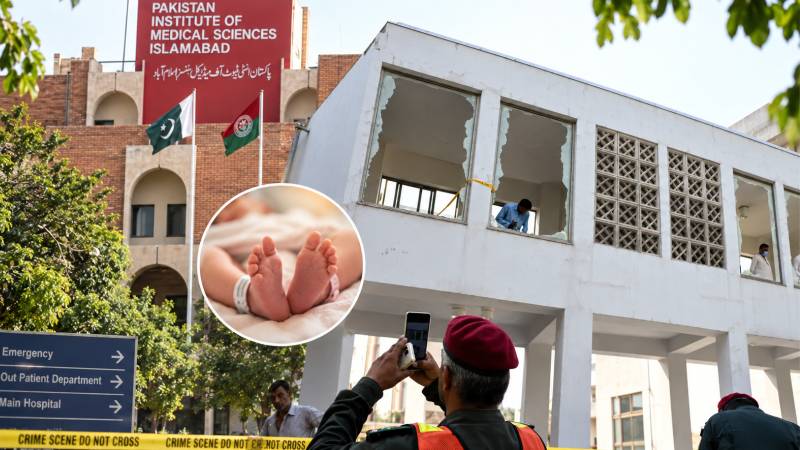
Fourteen newborns went into the PIMS neonatal unit fighting for their very first breath. Instead, they met smoke, flames, and silence because the ward didn't have a single working fire alarm. If that doesn't make your blood run cold, nothing will. To his credit, Prime Minister Shehbaz Sharif didn't just offer the usual condolences and a dusty file-binder. He swung the axe—suspensions, criminal negligence cases, the whole nine yards. For a country that usually just shuffles negligent bureaucrats to a quieter desk, this was a welcome shock to the system. But here's the terrible truth we don't want to admit: you cannot prosecute your way out of a broken system.
Criminal proceedings look back at a tragedy. They punish the guilty. But they don't stop the next preventable inferno, because they don't touch the root of the disease which is ad-hocism. We wait for babies to die before we check if the sprinklers work. That's not governance; that's madness. The interim inquiry report told us the horrifying basics: no fire alarms, no emergency protocols, zero proactive maintenance. And since PIMS is the federal government's flagship hospital, this failure isn't on some distant provincial minister, it sits squarely on the doorstep of Islamabad's own oversight machinery. So, what's the real fix? Not more committees. Not another high-level inquiry that gathers dust.
We need a permanent, statutory National Hospital Safety Board (NHSB); a watchdog with actual fangs. Model it on global transport safety bodies. Give it the absolute, no-questions-asked authority to walk into any ward, unannounced, inspect the equipment, run emergency drills, and if the hospital fails, shut it down until it's safe. But here's where I diverge from the usual policy wonks. This Board's success hinges on one old-fashioned, overlooked tool: formative research.
I know, that sounds like academic jargon. Let me translate: formative research means listening to what's actually happening on the ground. And it works across three gritty realities:
First, give power to the patient. The woman sitting on the hospital floor with her sick infant knows exactly which fan is broken, which nurse hasn't shown up in three days, and which outlet sparks when you plug it in. Formative research institutionalizes that embedding community advocates directly into hospital oversight boards. Turn ordinary families using public wards into active monitors. They are the ultimate early-warning system.
Formative research could turn hospital safety from a reactive exercise into preventive governance.
Second, let's talk money, because governments listen to that. A sprinkler system costs a fraction of a single wrongful-death lawsuit. Rebuilding a burned-down ICU costs millions. We are broke not because we spend too much on safety, but because we spend nothing until we are forced to rebuild from ashes. Formative research uses predictive data to flag equipment failure and optimize budgets. It's preventive medicine for the hospital itself.
Third, kill the formalities and inspect for real. Enough with the "prior notice" visits where directors clean up the mess before the inspectors arrive. We need unannounced, third-party stress tests on ICUs, emergency wards, and neonatal units. If a hospital can't pass a surprise drill at 2 AM, it doesn't deserve to operate at 9 AM. Now, here's the political twist that keeps me up at night.
The 18th Amendment pushed health to the provinces, rightly so. But the federal government kept flagship institutions like PIMS. Instead of being a gold-standard model for the provinces, PIMS has become a monument to toothless federal oversight. And today, we are hearing the political war cry for more provinces, smaller administrative units. But what's the point of carving up Punjab into new maps if we are just going to replicate the same broken, unmonitored bureaucratic models across smaller territories? Creating new provinces won't save a single life. Enforcing enforceable safety rules will. Look, lock up the negligent officials. I won't shed a tear for them. But don't mistake a headline-grabbing suspension for structural reform.
Quality assurance cannot be a secondary priority in this country. It must become a statutory right for every Pakistani who steps into a public hospital. We need a permanent National Hospital Safety Board, armed with data, backed by formative research, and empowered by the very patients it serves. Because if we don't do this; if we just hold a few press conferences and move on, then those fourteen tiny lives won't be the last. They'll just be the next headline. And we will have learned absolutely nothing.