

Systemic incentives (or lack thereof) dictate human behaviour far more than any other factor. Even if we select the right candidates for MBBS and dispense a rigorous course of medical education, dropping them into a broken healthcare infrastructure guarantees burnout and exodus. Therefore, medical education reform is meaningless without delivery reform. Until the state makes practising in peripheral districts a viable, respectable, and safe career, the best doctors from every background will continue to use the degree as a scaffold to exit the system.
The ultimate condemnation of our health governance is not just that basic MBBS graduates abandon practice, but that fully trained clinical specialists are forced into hiding. In many of Lahore's public sector medical colleges, certified clinical specialists are teaching basic science subjects. Most finished their residency in Lahore and have children in school. Lahore's tertiary hospitals have a finite number of sanctioned Senior Registrar and Assistant Professor slots, and they seldom sit vacant for long. So they might be offered postings to specialist positions in districts like Rahim Yar Khan or Rajanpur. But the cost is moving to underserved, socially conservative districts with no quality schooling for their children, and no healthcare they would trust with their own families. They are left with no viable alternative but to refuse the posting.
The Vacancy Crisis
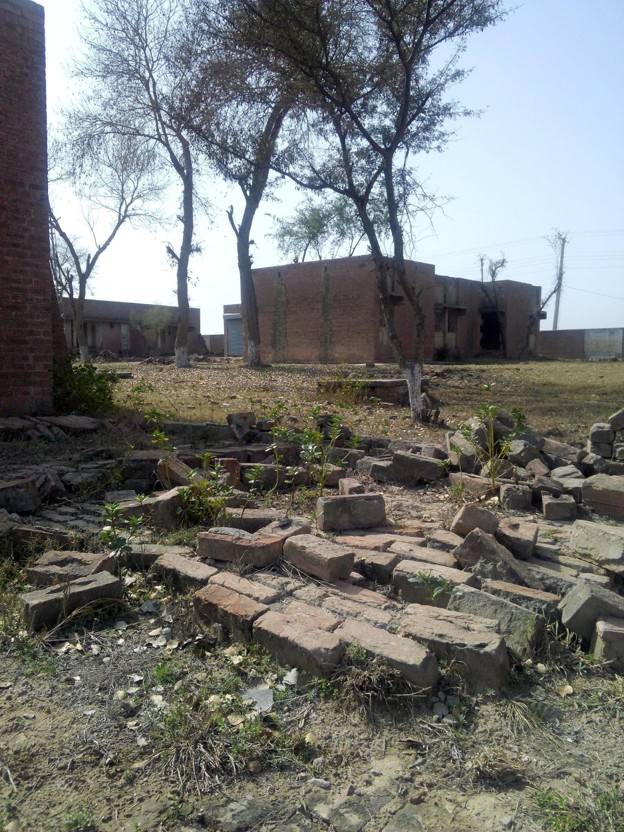
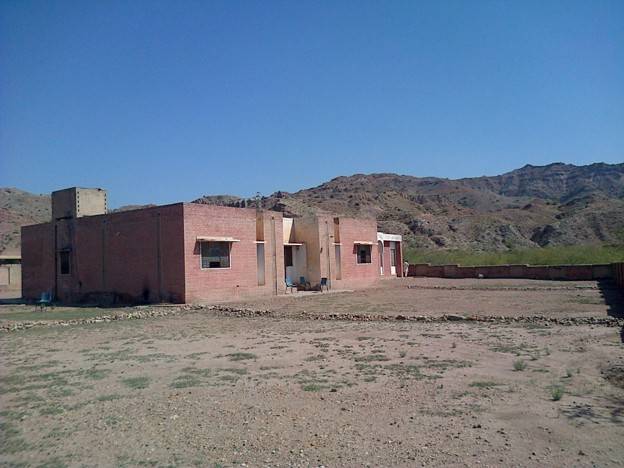
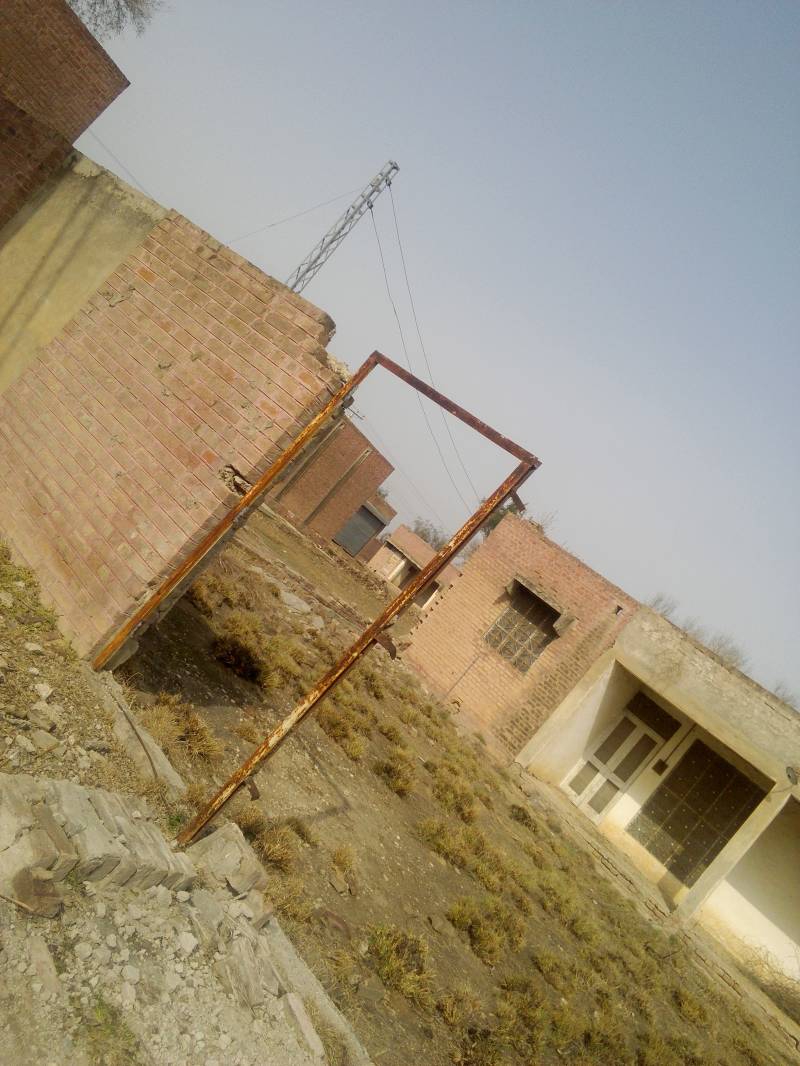
The Punjab health department is unable to fill a significant proportion of its vacancies for doctors. The vacancy crisis gets worse as you move away from Lahore, Multan, and Rawalpindi. At the bottom, Basic Health Units and Rural Health Centres lack basic supplies, security, and housing, turning primary care MO (medical officer) postings into career punishments. One tier up, Tehsil and District Headquarter hospitals have buildings and some staff but no anaesthesia, diagnostics, imaging, oxygen, and blood bank facilities, and not significantly better housing or security. So routine and even emergency surgery and obstetrics get referred upward, to Lahore and Multan, where better facilities and human resources are concentrated.
The state offers both MOs and specialists working in the periphery salaries that don’t look too bad on paper but scarcely compensate for the huge quality of life and professional upheaval a doctor, who trained in a big city centre, faces when suddenly ordered to join a post in a peripheral district. Even doctors originally from these districts do not want to return.
Meanwhile, in the public medical colleges of Lahore, Multan, and Rawalpindi, the basic science departments are increasingly being filled up through a different door entirely. A two-year MPhil—increasingly from low-quality private institutions—is enough to qualify for an Assistant Professor slot. With the right contacts, a vacancy can appear well before it is due. No residency, no clinical training, no years in a district hospital. So a clinician who spent a decade training sits in the same department as a demonstrator, marking attendance, while the faculty chairs above them are occupied by people who took the short route. The specialists are annoyed, and they have every right to be. The system rewards connections over clinical skill and then wonders why nobody wants to serve in the periphery.
The Entry Point: The Medical Officer
Let us now consider the Medical Officer (MO), the entry point to the entire public health system. Every MBBS graduate who joins the state’s clinical health service starts here. MOs staff the BHUs and RHCs that serve most of the province, and also man the emergencies and the OPDs throughout the province at all levels.
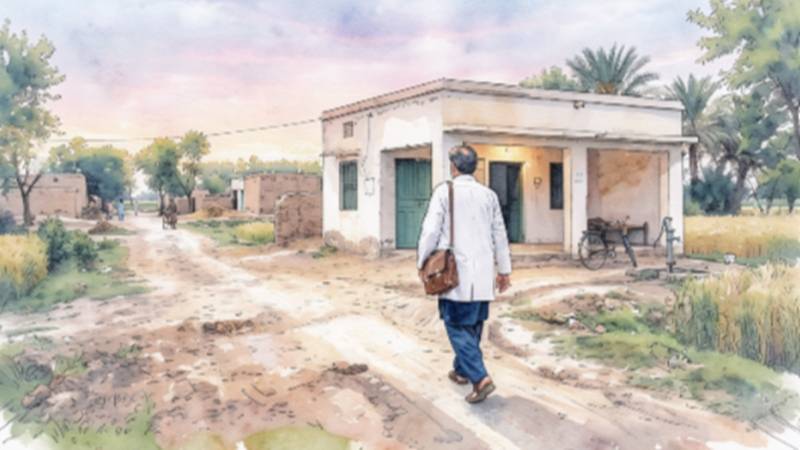
First, the freshly minted MBBS graduate is dumped into a BHU as an MO (Basic Pay Scale 17), where the dispenser has been practising as a doctor for decades and the community thinks him a doctor and her a "miss" who can be a nurse, an LHV, or some fancy assistant to their “doctor,” but not the doctor herself. She might be asked to join the “women” in the Lady Health Visitor's room. She has the degree, but she has no standing in the community and no backing by the state, and that leaves her high and dry unless she herself has political connections in the district administration. She also has no experience working independently as a doctor or as an administrator, the two roles she is supposed to perform concurrently. She is routinely harassed by district admin and political surprise “visits” that have long replaced governance in the province. If she is a professionally ambitious doctor, she will complete her mandatory period of service and leave as soon as she is able, probably with traumatising memories.
The doctor in the BHU who is blamed for the state of the facility was given no drugs, no lab, no nurse, no oxygen, no security, and a salary that does not cover his life
At the other end of this spectrum is the “senior medical officer” (SMO) who heads and staffs the Rural Health Centre (RHC) (Basic Pay Scale 18). If you find him there at all, he will almost always be a man, and hail from the same district, middle-aged, in his 40s or 50s, having spent decades at the present job unlearning everything he learned at the medical college, as he is seldom if ever called upon to use it. He is unambitious or has been made so, professionally at least. He can balance the books and see to the cleanliness of the facility, especially when a “visit” is due. While he can write basic prescriptions for a sore throat, diarrhoea, etc., he has not done a proper physical exam on a patient for decades and hardly ever ordered a test. The former because he has lost all professional motivation, and the latter because his patients don't have access to any lab that might give him the test result, and in all fairness, he has lost touch with diagnostics for so long he cannot be bothered to put in the effort. He comes at 8 am on most days and leaves at two, especially if there is biometric attendance in the facility, but he might leave for a few hours in between to take a patient to his "ultrasound clinic" which is his side hustle. The BPS 18 salary does not suffice, and there is no promotion to wait for.
For both our doctors, the only exit is specialisation, which means leaving the periphery and most certainly leaving primary care. The vacancy numbers are not a mystery once you understand this. They are what rational people do when the only career on offer is a dead end.
Debunking the Myths
The public perception of the lazy or corrupt doctor is not invented. There are doctors who do not show up, who are rude, who ask for money. But this perception has been carefully blown out of proportion by the political class to camouflage and explain away a failure that is theirs. The doctor in the BHU who is blamed for the state of the facility was given no drugs, no lab, no nurse, no oxygen, no security, and a salary that does not cover his life. He was set up to fail, and then punished for failing.
A health system that provides no support, supervision, or meaningful accountability will produce exhaustion in some doctors and predation in others. Both are predictable outcomes of the same design. The state has spent twenty years blaming the people it failed to equip, because the alternative is admitting that the problem was never the doctor. It was the absence of a system that expected everything of him and gave him nothing to work with.
Here we must address the salient objections raised to any appeal to improve the system to facilitate the careers of doctors so we can build a functional state-run healthcare delivery system:
- Doctors have a moral duty to serve rural areas.
The same graduate who "refuses" Mianwali applies for a rural GP post in Yorkshire or Montana or the Australian outback and stays for decades. The deficit is not moral. It is structural. Pakistan is not competing against its doctors' consciences. It is competing against other health systems, and losing.
- We can't afford any of this.
The objection is answered by the budget itself. In FY 2026–27, two Lahore tertiary complexes—the Nawaz Sharif Institute of Cancer Treatment and Research and the Nawaz Sharif Medical District—were allocated Rs 40 billion, against a total specialised healthcare development budget of Rs 43 billion. The department responsible for primary and secondary care, meanwhile, saw its non-salary spending described as nominally stagnant. This is a spending choice, not a funding shortfall.
And the choice is not even irrational on its own terms. The flashy sub-specialty hospitals in Lahore are good publicity and perhaps good politics in the very short term. Building functional primary care or a well-resourced DHQ in Layyah is a longer-term project that might not get votes the next election or the one after that. The budget follows the photograph and the headline.
- The private sector will absorb the shortfall.
It has not, and it cannot. The private sector in Pakistan is not a safety valve but a beast of prey. It has stratified the burden rather than reduced it. Out-of-pocket spending dominates national health expenditure, so it serves the minority who can pay and bankrupts a portion of them. It clusters in Lahore, Karachi, and Islamabad, reproducing the maldistribution it is supposed to correct. Regulation exists on paper and is enforced almost nowhere: no accreditation with teeth, no price transparency, no accountability for outcomes. And it pulls the same doctors out of the public system, in the cities where they already cluster.
Punjab has already experimented with handing primary care governance to NGOs, and the results are not encouraging. The PRSP experience is not a verdict on outsourcing per se. It is a verdict on attempting micro reform inside a broken system. You can change who manages, funds, or monitors a BHU—none of it matters, because the BHU sits inside the same dead-end career structure, the same absent referral system, the same district administration that governs by visit. The state tried to fix a room while the building was on fire. There is no version of this where the state gets out of the job.
A Blueprint for Delivery Reform?
So, what would it take to make a peripheral posting, in both primary and tertiary care, worth a doctor's life?
Certainly not more exhortation, and not another recruitment drive.
It would need four things, in order: a facility that functions, a career with a future, a salary that reflects the ask, and security that is enforced rather than promised. Everything else is downstream of these.
Upgrade primary care into small functioning hospitals
Solar-powered facilities with a well-furnished doctor’s office and waiting room, reliable water, a minor operating theatre, a basic haematology and chemistry analyser, and an MLT technician to run them, basic X-ray and ultrasound (at least obstetric), and a courier link to the nearest tertiary care facilities for samples out and an electronic reporting link for results back. A trained family/rural health physician who can do outpatient medicine, basic obstetrics, and minor surgery and can interpret basic imaging, and at least two trained nurses available at any given time. None of this is ambitious. It is a clinic. That it reads as aspirational in Punjab is the indictment.
Replace the Medical Officer grade with a Family Medicine career
The Medical Officer grade should stop receiving new entrants. It is not a career; it is a holding pen. In primary care, it parks a doctor in a flat grade with no second act. In tertiary care, it parks trained specialists in the same salary band as OPD hands doing occasional night calls. It is one label covering five different jobs, and it describes none of them.
The replacement is a recognised postgraduate specialty in Family and Rural Medicine. Four years of structured training in outpatient medicine, basic obstetrics, minor surgery, emergency stabilisation, and basic imaging—the actual work of a primary care hospital, not a diluted version of a tertiary curriculum. Consultant rank at the top, with the authority to run a facility and, after a defined period, to train residents of their own.
The training is district-linked. Residents are selected for a district, based in it, trained in its facilities, and posted there on qualification. The community knows them before they arrive as its doctor, and the facility they partly trained in is the facility they inherit. Nobody is surprised on graduation day. The job they applied for is the job they get.
This is not speculative demand. Three-quarters of primary care doctors in Punjab say they want Family Medicine training, and almost none hold a qualification in it. The interest exists. What does not exist is the pathway, the training capacity, or the post at the end of it.
Existing Medical Officers are not removed from their posts. They may convert into the new track with credit for years served, or remain where they are until retirement. The grade empties by attrition, not by decree. In a decade it is gone, and nobody has lost a job.
The same logic applies to the tertiary tier, where the grade currently absorbs doctors who have completed their training and have nowhere to go. Those doctors need fellowship posts in their own specialty, not MO ships. Every year the state parks them in unrelated work, their clinical knowledge decays, and some never return to the specialty they trained for, destruction of clinical capital we cannot afford.
Build functioning THQs and DHQs
A functioning District Headquarter hospital should be able to do the following without sending the patient to Lahore: emergency stabilisation, routine general surgery, obstetric care including caesareans, inpatient medicine, paediatrics, basic radiology and pathology, and outpatient specialist clinics. A functioning Tehsil Headquarter hospital does the same at a smaller scale, with a defined referral link upward when it reaches its ceiling. That means anaesthesia, radiology, pathology, and emergency medicine staffed and equipped—precisely the specialties that are missing from the vacancy map.
This target is not ambitious but what a district hospital is supposed to be. The Punjab Health Sector Strategy already lists it as an objective, and the DHQ upgrade programme has been on paper for a decade—Sialkot, Gujranwala, Sahiwal, D G Khan, all slated for "missing specialties." The problem is not the plan. It is that the money keeps going somewhere else.
And the somewhere else is not hard to find. In FY 2025–26, the Specialised Healthcare & Medical Education Department received 55% of the provincial health budget. Within that envelope in FY 2026–27, two Lahore tertiary complexes—the Nawaz Sharif Institute of Cancer Treatment and Research and the Nawaz Sharif Medical District—were allocated Rs 40 billion against a total specialised healthcare development budget of Rs 43 billion.
The result is that a patient in Jhang with a heart attack travels to Lahore or dies. A woman in Rajanpur with an obstetric emergency is referred upward because the DHQ has no anaesthetist. The system has told citizens that the only real hospital is in the city, and they have believed it. Studies of patient behaviour in Pakistan show that more than a quarter bypass their nearest facility, and those with higher socioeconomic status do so more often because they very reasonably do not wish to waste their time in a facility that likely cannot offer them the care they need.
The reform needed is to make the DHQs what they are already classified as: functioning tertiary care facilities that can handle the common load, so that Lahore's teaching hospitals stop being the default destination for the province.
Because this is what the concentration produces at the other end: Punjab Healthcare Commission's inspection of Mayo Hospital found that on the 9th of April, 6,085 tokens were issued and only 3,639 patients were recorded as examined. On the 10th of April, 4,094 tokens were issued and 1,772 remained "in process." Among those who were examined, 64 per cent were not given medicines. In a power failure, the UPS backup lasts three to four minutes. The surgical OPD has two computers, so doctors write prescriptions on thermal slips and photograph them on their phones for later entry. Between 144 and 154 doctors were deployed in that OPD. The patients still did not get attended.
So the concentration is not just pulling patients away from the periphery. It is degrading the care in the city they are pulled towards.
Functioning DHQs in the province do three things at once: lower the patient flood into Lahore, reduce the burnout of the doctors working there, and give the doctors serving in the periphery facilities worth staying in. The same investment addresses the overload in the capital and the vacancy in the district. There are not two problems here. There is one, and it is a distribution problem.
Pay that reflects what is being asked
The state offers a starting specialist around Rs 220,000 a month in a DHQ. The state can raise that figure, and it should. But no salary makes up for a district with no school worth sending your children to, no hospital you would trust with your own family, and no social world for the person you married. Doctors are not mercenaries. They are people with families, and the posting asks the whole family to accept a diminished life. Money does not solve that, and treating it as the lever is why every incentive package the province has announced has failed to fill the posts.
This is the part that gets lost in the debate. The problem is not that the periphery pays too little. It is that the periphery offers too little of everything else, and the salary is being asked to compensate for all of it at once. It cannot. A rural allowance attached to a post in a district with no schools and no functioning hospital buys attendance, not practice—a doctor who takes the money, commutes from the nearest city, and waits out the bond.
Security that is enforced, not promised
The WHO's guidance on rural retention is unambiguous: safety and security are recurring themes, and in some contexts, insecurity accounts for half of all departures from rural posts. This is not a Pakistani peculiarity. It is a documented driver of rural health workforce loss globally.
Punjab has already conceded the point on paper. During the 2024 doctors' strike, the government agreed to "adequate security arrangements at all health centres." The agreement exists but without enforcement. Junior doctors are still left to face mob aggression without administrative or police backing, and hospital administrations still treat violence against staff as a public relations problem rather than a criminal one.
The reform is not to promise security again. It is to make it structural: dedicated security personnel at every BHU, RHC, THQ, and DHQ; a defined protocol for what happens when a clinician is threatened; and legal protection for healthcare staff acting under pressure, comparable to what courtrooms and airports already enjoy. If a doctor is assaulted in a district hospital, the response should be an FIR and a prosecution, not a committee.
The security question is not separable from the retention question. A doctor who fears for their physical safety will not stay in a peripheral post, no matter what the facility looks like or what the salary pays. It is the first condition of the job, not a benefit attached to it.
Plan against district-wise absorption capacity, not provincial totals
Calculate, for each of Punjab's 41 districts, how many primary care facilities, THQs, and DHQs actually exist, and how many beds each has. Then apply a workload-based staffing methodology (the WHO's WISN is the standard tool) to estimate how many doctors each facility tier can functionally absorb, given the patient load. Subtract the filled permanent posts. The remainder is the true structural deficit.
The point is to stop planning against a provincial aggregate that hides the fact that the facilities themselves cannot receive the doctors the province claims to need. A district hospital with no anaesthetist cannot absorb a surgeon. A BHU with no lab cannot absorb a pathologist. The constraint is not the supply of doctors. It is the capacity of the system to use them, and that capacity varies by district, by tier, and by facility. Plan against it or keep producing graduates for posts that cannot function.
Adequate nursing care at all levels of healthcare
And last but not least, a very important point about the lack of nursing care in the province at all levels. Half of what people experience as bad healthcare in public hospitals is the absence of nursing, not the absence of doctors. In OPDs, wards, and emergency rooms, without nursing care vitals go untaken, medications go late, IV lines go unwatched, deteriorating patients go unnoticed until it is too late.
The MO fills the gap, spending his shift cannulating, dressing, and filling registers—work that is not medicine, but has to be done by somebody, and there is nobody else. You cannot practise medicine while doing nursing work, and the system has been using doctors to plug a nursing hole for decades. Staff a facility properly or stop pretending the doctor is the problem.
Conclusion
Training doctors through public funds without fixing delivery is building a high-performance car, driving it down a potholed road with no fuel, and then wondering why it broke down.
Part 1 of this series argued that the pipeline needs fixing—that selection should be about who will serve, not who scores highest, and that the exit licensing regime should tell the truth about which colleges produce doctors and which produce graduates. That argument stands. But it is the smaller half of the problem. The bigger half is what happens after graduation, and it is the half the province has spent twenty years avoiding.
The state has tried everything except the obvious thing. It has produced more graduates, opened more private colleges, announced more incentive packages, outsourced more facilities to NGOs, and built more monuments in Lahore. None of it has worked, because none of it addressed the reason the posts stay empty: the career is a dead end, the facility does not function, the district is not livable, and the doctor is not safe. Retention is not a moral problem, and it is not a funding problem. It is a delivery problem, and delivery is the state's job.
We cannot educate, inspect, or intimidate our way out of a delivery failure. We can only build our way out.