

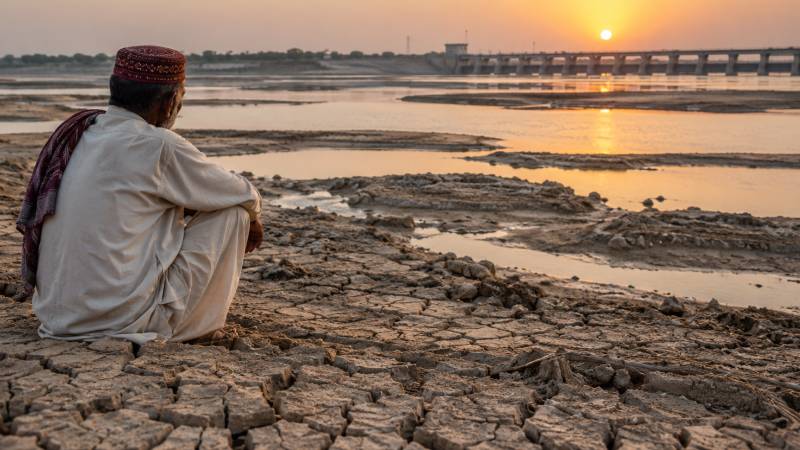
Water scarcity has become one of Pakistan’s most pressing national concerns, particularly in the Indus Basin which sustains over 90 percent of the country’s agriculture. Irrigation inefficiency, groundwater depletion, and recurring droughts in the desert region of Tharparkar have brought renewed focus to how the country can secure water for the future. Globally, the idea of water credits, defined as tradable units representing conserved or restored freshwater, has emerged as a market-based solution inspired by carbon credits. While this concept has gained attention through pilot projects in Kenya, Brazil, and the United States, its relevance to Pakistan lies in whether it can address the Basin’s chronic inefficiencies and inequities. The position taken here is that water credits could offer opportunities for resilience, but only if carefully adapted to Pakistan’s unique hydrological and socio-political context.
The stated purpose of water credits is to incentivize conservation by monetizing water savings. Yet questions arise about whether this motive is entirely genuine or whether it risks becoming another corporate branding exercise. Why is the idea gaining traction now, when Pakistan still struggles with basic water governance, such as regulating groundwater extraction or modernizing irrigation system? Could the timing reflect a global search for marketable sustainability tools rather than a deep concern for communities most affected by scarcity? These questions must be asked before Pakistan embraces water credits as a solution, lest they become symbolic offsets rather than instruments of real change.
Experiences from other countries provide useful lessons. Kenya’s Green Water Credits program between 2007 and 2011 paid upstream farmers to adopt water-saving practices, yielding benefits ten times greater than costs. Brazil’s Ceará state is drafting the world’s first law on water credits, signaling political will but also raising questions about enforcement in a country with complex governance challenges. In the United States, the Bonneville Environmental Foundation issues Water Restoration Certificates, funding projects such as river restoration in Utah. These examples show that water credits can succeed when tied to tangible local outcomes, but they also warn against hasty adoption without safeguards. For Pakistan, where water flows are politically contested between provinces and inequities between large landowners and small farmers are profound, these lessons are particularly relevant.
In Pakistan, where water flows are politically contested and inequalities between large landowners and small farmers remain profound, any water-credit system must ensure that the benefits reach communities most affected by scarcity.
Several barriers complicate the application of water credits in Pakistan. Verification is technically complex in a basin where water flows are highly localized and politically sensitive. Economic feasibility is another concern, since pricing credits at international rates of three to four dollars per cubic meter may exclude smallholder farmers and local communities. Legal frameworks are weak, with groundwater extraction largely unregulated and provincial disputes over canal allocations unresolved. Social equity is critical, as desert communities in Tharparkar or small farmers in Sindh may not benefit proportionately if credits are dominated by industries or large landowners. Finally, there is the risk of greenwashing, with corporations purchasing credits to polish their sustainability image without reducing actual consumption.
To make water credits viable in Pakistan, several safeguards are essential. Credits must be localized, reflecting the hydrology of the Indus Basin and ensuring that benefits accrue to communities directly affected by scarcity. Verification could be supported by GIS, remote sensing, and community-based monitoring to ensure transparency. Governments must integrate credits into broader water governance frameworks, linking them to irrigation reforms, groundwater regulation, and flood management. Equity mechanisms should guarantee that small farmers and drought-prone communities receive fair compensation. Lessons from carbon markets must be applied, prioritizing tangible conservation outcomes over symbolic offsets. Alongside credits, Pakistan should invest in rainwater harvesting, wastewater recycling, and demand-side management to reduce footprints directly. Successful pilots such as Kenya’s Green Water Credits and BEF’s restoration projects provide blueprints for scaling responsibly, while Pakistan’s own experience with participatory irrigation management could be adapted to support credit schemes.
Water credits represent a bold attempt to address global scarcity through market-based incentives. For Pakistan, they could attract investment into irrigation efficiency, groundwater recharge, and drought resilience, helping to shift from crisis management toward sustainable water security. Yet their success depends on careful regulation, transparent verification, and equitable distribution of benefits. Without these safeguards, water credits risk becoming symbolic gestures rather than real solutions. In the Indus Basin, where water is both lifeline and flashpoint, credits must be designed to strengthen resilience and fairness. Done wisely, they could complement traditional strategies and contribute to a more sustainable future. Policymakers must proceed with caution, ensuring that the promise of water credits translates into genuine water security for those who need it most.