

Two villages in Tharparkar district share the name Kakrario. One, known as Kakrario Samma, is located in Diplo Taluka, while the other lies in Mithi Taluka. The latter is also known locally as Kakrario Dhandhal, after the Dhandhal Rathores, who form the village's majority community. This article focuses on Kakrario in Mithi Taluka, one of the area's larger villages and home to a rich, diverse religious heritage.
The village is home to both Hindus and Muslims. The prominent Hindu Rajput castes living there include Varan, Sangrasi, Thiria, Sadu, Dhandhal, and Dohat. Both Dohat Hindus and Dohat Muslims reside in the village. In addition to the Rajputs, other Hindu castes present include Suthars, Bhils, and Meghwars. Muslim communities include the Dohats and Manganhars.
This village is located about 35 km east of Mithi town. I first visited the village in 2016 with my friend Hari Singh Dohat of Vejihar village to document hero stones and other sacred spaces. I later returned to the village in 2018 and 2019.
Memorials of the Khaoriya Rathores
Kakrario village contains several sacred sites associated with the Hindu community. Hindu sacred spaces include temples, thaans, and memorial stones in the village. According to Mangal Singh Varan Rajput, the memorial stones belong to Khaoriya Rathore, who once lived in the village. He believes that Khaoriya Rathore founded Kakrario village in the second quarter of the 18th century. Khaoriya Rathores once ruled the Khaor region in Thar. It was called the Khaor State of Khaoriya Rathores. Those Rathores who ruled over Khaor were called Khaoriya Rathores. Khaoriya Rathores later moved from this village to other parts of Thar. Later, Dhandhal Rathores settled in the village, and other communities joined them.
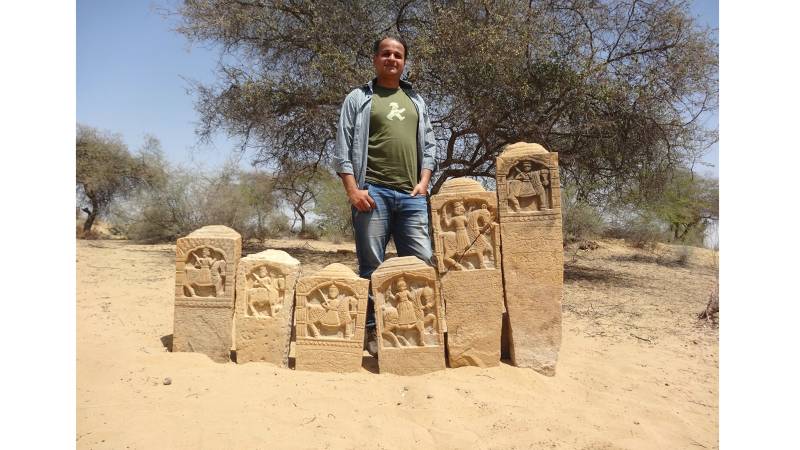
Several memorial stones stand in Kakrario village. These memorial stones are located west of Pabuji Jo Thaan in Kakrario village. The memorial stones are divided into upper and lower sections. The upper part of the hero stones is carved with images of the deceased hero riding a horse, and the lower section bears inscriptions detailing the hero's cause of death.
The upper part of the hero stones is carved with images of the deceased hero riding a horse, and the lower section bears inscriptions detailing the hero's cause of death
All the memorial stones are made of sandstone, except for two, which are made of locally sourced limestone known as Chucho. Chucho rock deposits can be found in the village. This stone was likely quarried locally and installed at the current site to honour the deceased heroes.
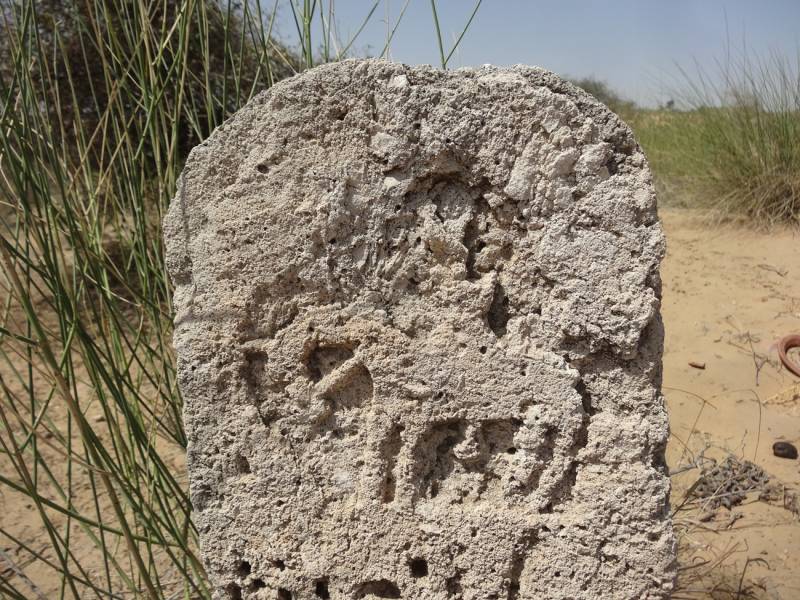
Notably, one memorial stone features a carving of a rider. In addition to this carved Chucho stone, there is also a stone monument made from Chucho stones. This structure resembles a dolmen, which the local community later repurposed as a shrine for a deity. The monument consists of four upright stones that were covered by a capstone. Currently, three of the upright stones and the capstone remain intact, while one upright stone has fallen and lies on the ground.
Thaans and Temples
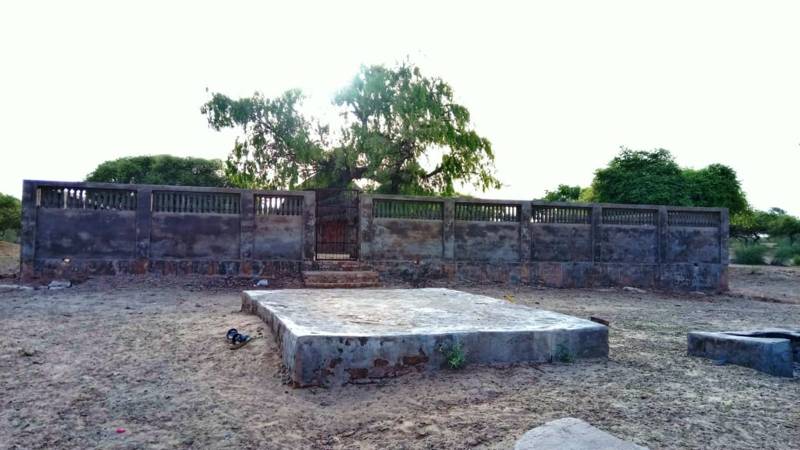
From the memorial stone site, one can walk to the thaan of Pabuji Rathore, a folk deity. Mangal Singh Varan Rajput believes the Khaoriya Rathores first constructed the Pabuji jo thaan. Today, the Suthar community maintains the thaan. A carved image of Pabuji on a wooden tablet is placed in the thaan. It is displayed during the Pabuji festival; otherwise, it remains locked in a box.
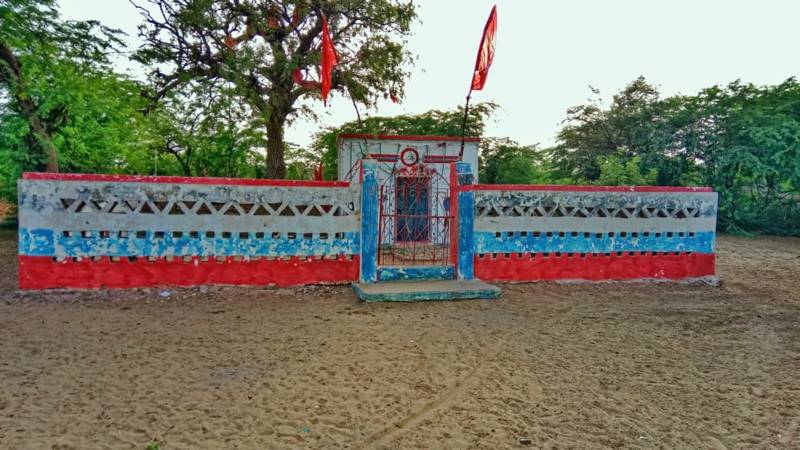
In Kakrario village, four thaans (shrines) are dedicated to the folk deity Pabuji Rathore. Two of these thaans are the largest. The first is situated in the southern neighbourhood, where the Dhandhal Thakurs serve as the principal caretakers. The second is in the village's northern neighbourhood, where members of the Suthar community serve as priests.
Apart from the thaans, or sacred spaces, associated with Pabuji Rathore, Kakrario also hosts three temples dedicated to Malhan Mata. I briefly discussed Malhan Mata's hagiography in my book Archaeology, Art and Religion in Sindh, published in 2018.
The Legend of Malhan Mata
Legend has it that Malhan was born in 1186 AD in Jhounagarh. Her father, Bhersal Parmar, was the local Raja at the time. Bhersal was unhappy with Malhan's birth and managed to abandon her as an infant. One of Bhersal's servants threw the baby Malhan into a pot kiln belonging to Jagu Kumbhar in Janro village, Jaisalmer. The next morning, Jagu discovered a living girl in the burning kiln, took her with him, and raised her as his daughter since he had no children of his own. As Malhan grew up, she once encountered Raja Bhersal's horse while playing with other girls as it passed through the village. When Bhersal asked the girls to let the horse pass, Malhan refused and stopped the horse instead. Upon learning from his servant and Jagu Kumbhar that Malhan was his own daughter, Bhersal was astonished.
Malhan then went with Jagu to Kohra Jaisalmer, where they lived with her maternal uncle, Chandar Shaikhar. Chandar pressured Malhan into marriage, but she steadfastly refused. Despite Chandar's attempts to arrange her marriage, a bird (Hans) appeared, and Malhan, riding the bird, flew into the sky and never returned! In honour of Malhan, Jagu built a temple in Janro village, which still stands today and serves as the main temple of Malhan Devi. She is considered an avatar of Durga, and her primary temple in Tharparkar is located in Hariyar village.
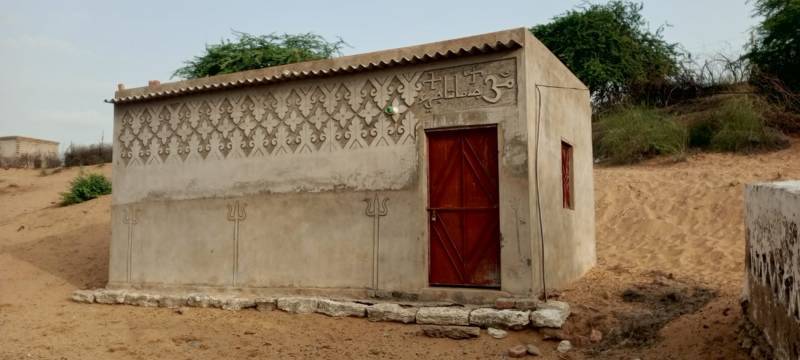
In Kakrario village, a temple of Malhan Mata stands in the southern neighbourhood, where the Varan Thakurs revere the deity. People from other Hindu castes also worship there. The other two temples are situated in the northern part of the village. One is in the Bhil cluster of the village, where the Bhils are the principal caretakers.
A Pluralistic Heritage
The southern paro, or neighbourhood, of the village also has a temple dedicated to Pir Pithoro. The Sangrasi Thakurs worship Pir Pithoro. A sacred space dedicated to Khetarpal/Khetarpar also stands in the southern neighbourhood of Kakrario village. The village's northern neighbourhood contains an Imambargah, where members of the Muslim Manganhar community perform mourning rituals (matam) during Muharram.
Apart from the memorial stones, thaans, and temples, Kakrario also has other sacred spaces that commemorate mystics and ascetics. One notable figure is Mard Faqir, whom the Sangrasi Thakurs of Kakrario worship. Mard Faqirs are believed to have been soldiers of Mahmud Ghaznavi. According to local belief, many of these soldiers died in the wilderness of Thar due to illness while returning to Ghazni after the Somnath invasion. Those who perished in Thar were referred to as Mard Faqirs, and their real names remain unknown. The local community reveres them under this title.
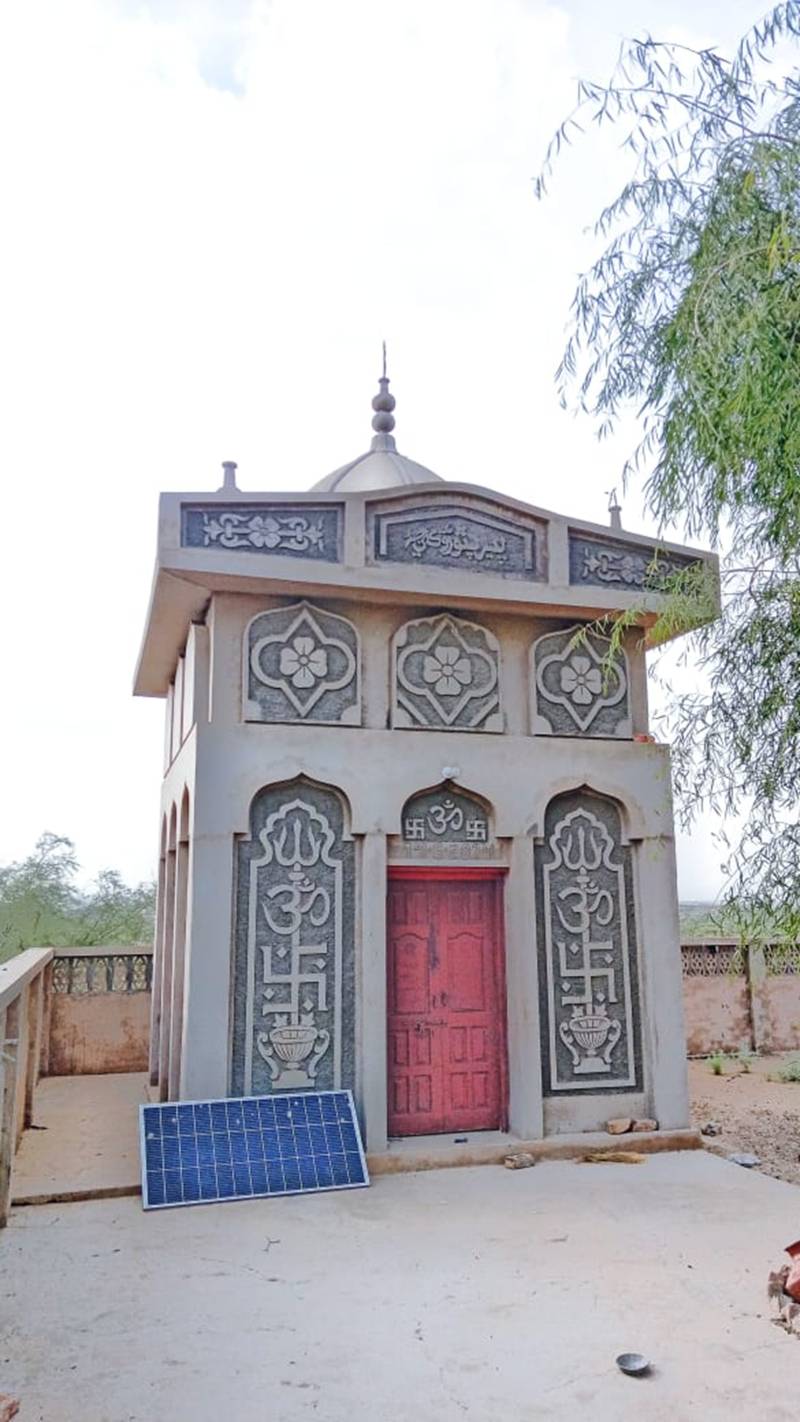
One of the astans (sacred spaces) of Mard Faqir is located north of Kakrario village. I have seen several such astans dedicated to Mard Faqirs throughout Thar. One of Sain Mard Faqir's shrines is in Mithi town. Situated in Lohana Mohalla, this impressive building houses Sain Mard Faqir's symbolic grave. The Ghindilya lineage of Lohana Hindus worships him there.
Another prominent shrine is in Kamro village, located 3 km south of Kakrario village. The Kelan and Bebha Sodha Rajputs revere Mard Faqir. His shrine is situated by the bank of a village tank or pond (Tarai). A shrine dedicated to Mard Faqir also stands in Kerti village, in the Mithi taluka. In Kerti village, the local community knows him as Mard Ali Shah Bukhari, and his dargah (shrine) is particularly well-regarded in the area.
In addition to the shrine of Mard Faqir, Kakrario village is also home to an astan associated with Samis (Hindu ascetics), which the local Bhil community particularly reveres. Situated along the road connecting Kakrario with Mithi, it is one of the roadside shrines that form a familiar feature of Tharparkar's religious landscape and other parts of Sindh. Such shrines were often established along travel routes, where travellers and devotees could stop to seek blessings and protection for a safe journey. Although many of these shrines continue to exist, the practices associated with them have changed over time in several parts of Sindh. These shrines and various other places of worship in the village reflect Kakrario's sacred landscape.