

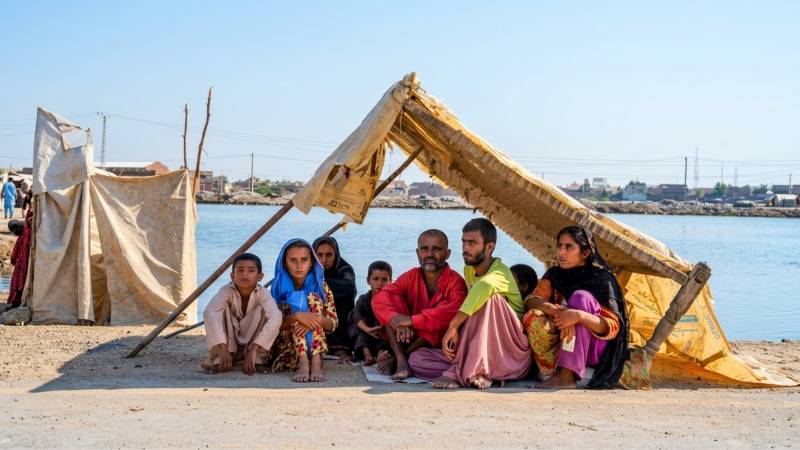
Pakistan today stands at the frontline of climate vulnerability. The heavy monsoon floods of 2025, which drowned millions of acres of farmland, displaced thousands of families, and caused an estimated USD 2 billion in agricultural losses, were not unusual. They followed the devastating floods of 2010 and 2022, both of which wiped out years of development gains. Floods have always been part of the Indus basin’s rhythm, but the scale and frequency of recent disasters, made worse by deforestation, poor planning, and climate change, signal a national crisis. Pakistan must move beyond short-term relief and embrace resilience as a national priority, embedding climate-smart governance into every layer of development.
Government agencies such as the Pakistan Meteorological Department and the National Disaster Management Authority issue alerts, and emergency responses are mobilized when floods strike. Yet the deeper question remains: are these efforts genuine steps toward resilience or just temporary firefighting? Why do floodplain encroachments continue despite repeated devastation? Why does policy debate flare up during disasters but disappear once waters recede? Is Pakistan truly committed to long-term climate governance, or are we trapped in cycles of neglect and reactive relief? Another critical question is whether political will exists to enforce unpopular but necessary measures, such as relocating communities from high-risk flood zones or halting deforestation in fragile watersheds. Without addressing these root causes, disaster risk reduction risks becoming a slogan rather than a strategy.
Recent catastrophic floods in Nepal and China’s Tibet region in August 2026 provide a stark reminder of what Pakistan faces. More than 350 people have died in Nepal, and over 1,300 are missing; including at least 700 foreigners from two dozen countries. The US Geological Survey confirmed that a Himalayan glacier collapse and landslide triggered torrents of water that destroyed villages and bridges. China’s state media has warned of secondary threats: landslides forming unstable lakes and dams, with more rain forecast. Search and rescue operations are hampered by destroyed roads, collapsed bridges, and loss of power and connectivity.
The UN Office for the Coordination of Humanitarian Affairs (OCHA) and the Red Cross are mobilizing aid, but the scale of destruction highlights how climate shocks can overwhelm even prepared nations. For Pakistan, these events are a warning: our own Himalayan glaciers in Gilgit-Baltistan face similar risks. If Pakistan does not act decisively, we could face disasters of equal or greater magnitude.
Pakistan itself experienced deadly floods in 2026. During the monsoon season, flash floods and glacial lake outburst floods struck northern regions, especially Chitral. About 163 people died and nearly 500 were injured nationwide. Cloudbursts tore through valleys, destroyed homes, blocked rivers, and cut off communities. Roads and bridges collapsed, and landslides worsened the destruction. These floods, though less globally visible than Nepal-China’s, underline Pakistan’s vulnerability to the same combination of glacial instability, intense monsoon rains, and weak infrastructure.
Pakistan stands at the frontline of climate vulnerability. The heavy monsoon floods of 2025, which drowned millions of acres of farmland, displaced thousands of families, and caused an estimated USD 2 billion in agricultural losses, were not unusual.
The barriers to resilience in Pakistan are daunting. Economically, the 2025 floods alone caused USD 2 billion in agricultural losses, destroying rice, cotton, and sugarcane fields at the height of the Rabi crop season. Livestock losses and fodder destruction triggered distress sales and widespread disease outbreaks. Socially, over 229,000 homes were damaged, while stagnant waters triggered cholera, malaria, and dengue outbreaks. Politically, weak coordination between federal, provincial, and district authorities hampers effective governance. The WWF-Pakistan Climate Crises Charter emphasized the urgent need for communication and coordination, yet institutional silos persist. Environmentally, Pakistan’s forest cover, already a meager 4.7 percent, continues to shrink at one of the fastest rates in Asia, amplifying flood risks. Research shows Gilgit-Baltistan alone lost over 1,700 square kilometers of forest cover in two decades, leaving mountain communities exposed to flash floods. Legally, enforcement of zoning laws remains negligent. Settlements continue to expand into floodplains, while commercial farming inside riverbeds has created new vulnerabilities. Socially, poverty forces families to construct homes in high-risk areas, while rapid population growth, now nearing 250 million, exerts immense pressure on natural resources. These challenges underscore the need for systemic reform rather than stopgap measures.
Resilience must be built on multiple fronts. Climate adaptation must be integrated into national and provincial development plans, aligning with the National Climate Change Policy and National Adaptation Plan. The National Water Policy should be enforced to promote water-efficient agriculture, rainwater harvesting, and groundwater recharge. Enforcing the Floodplain Zoning Act is critical to prevent settlements in high-risk areas. Drawing inspiration from the Netherlands’ approach, Pakistan can reduce exposure to flood hazards by restoring natural flood buffers. Wetlands, riverine forests, and natural flood buffers must be restored. Scaling up afforestation and integrating nature-based solutions into watershed management can improve soil stability, reduce erosion, and support healthier ecosystems. Crop insurance schemes should be expanded in climate-vulnerable districts. Climate-smart agriculture and crop zoning can reduce vulnerability, while investment in multi-purpose reservoirs and improved drainage systems can manage excess water during heavy rainfall. District Disaster Management Authorities must be strengthened to ensure decentralized preparedness. Community-based early warning systems, risk mapping, and simulation exercises can empower local populations to respond effectively. Investment in climate adaptation and disaster risk reduction must be scaled up through partnerships. Private sector engagement can mobilize resources and innovation, complementing government efforts.
The UN and other international agencies can play a vital role in supporting Pakistan’s resilience agenda. Technical assistance, funding for adaptation projects, and regional cooperation frameworks are essential. Pakistan should actively engage with UN-led initiatives on disaster risk reduction and climate adaptation to ensure that global expertise and resources are aligned with national priorities.
Pakistan’s climate disasters are not merely provincial issues, they are national crises that threaten food security, economic stability, and social cohesion. Every flood is a reminder that resilience cannot be postponed. As WWF-Pakistan’s Climate Crises Charter emphasizes, preparation and foresight are our strongest allies. The choice before Pakistan is stark: continue reacting to disasters or rise above risk by embedding resilience into governance, development, and community action. The floods of 2010, 2022, and 2025 have already shown the cost of delay. The floods of 2026 in Pakistan, alongside the Himalayan disaster in Nepal and Tibet, underline that glacial collapse, landslides, and secondary hazards are no longer distant threats but immediate realities. The future demands nothing less than a decisive, forward-looking commitment to safeguard generations to come. Resilience is not a luxury, it is a necessity. Pakistan must rise above risk, not only to survive the climate challenges ahead but to thrive in spite of them.