

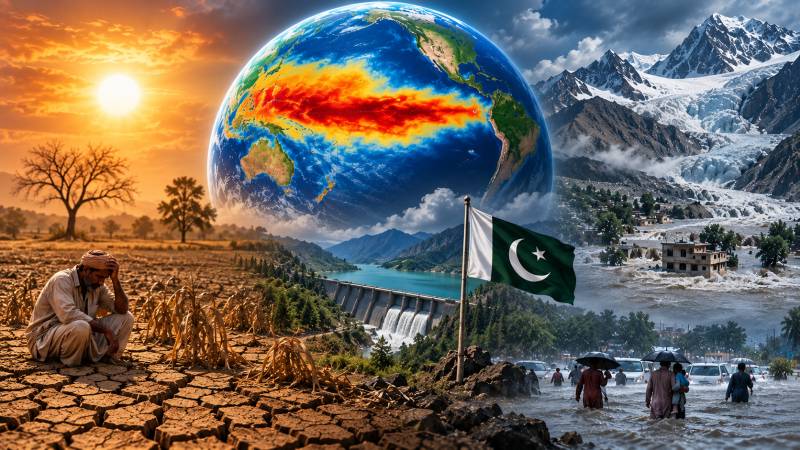
El Nino is no longer the familiar climate cycle of the past; it is being reshaped and intensified by global warming. Recent coral records from the Galápagos Islands, stretching back a thousand years, reveal that El Niño’s temperature swings have grown 36 percent stronger in the last four decades, far beyond natural variability. This paleoclimate evidence coincides with real-time monitoring of the Pacific Ocean, where sea surface temperatures are climbing to unprecedented levels. The United Nations Secretary-General António Guterres has warned that “El Niño is being supersized before our eyes. The science leaves no room for doubt: the planet is in uncharted waters, and those waters are heating up. Sea surface temperatures are rising, temperatures keep climbing, and the world is in the danger zone of extreme weather. The race now is between rising risks and our commitment to take climate action and protect people. We must win that race.”
The World Meteorological Organization (WMO) has confirmed that El Niño is firmly established and is about to get stronger, with forecasts showing a near-100 percent likelihood that it will persist through February 2027. WMO Secretary-General Celeste Saulo has emphasized that “this exceptional El Niño demands exceptional preparation and response. Never before in the 50-year history of the WMO have we launched such a major mobilization with National Meteorological and Hydrological Services who are on the frontline of delivering the forecasts and services to save lives and livelihoods.” These warnings have triggered urgent debate worldwide, but for Pakistan, the implications are particularly severe.
The question is whether Pakistan is prepared to confront the impacts of a supersized El Niño. Historically, El Niño has disrupted South Asian monsoons, often leading to below-average rainfall. For Pakistan, this means weaker monsoons in Punjab and Khyber Pakhtunkhwa, drought-like conditions in Sindh and Balochistan, and reduced precipitation in Kashmir and Gilgit-Baltistan. The timing of this intensification coincides with Pakistan’s already fragile climate resilience. The floods of 2010, 2022, 2025, and 2026 devastated millions of lives and caused billions in economic losses. Yet the country’s climate discourse remains narrowly focused on floods and glacial melt, while El Niño’s role in weakening monsoons and amplifying heat waves receives little attention.
Globally, the impacts of El Niño are diverse and devastating. In South America, Peru and Ecuador face catastrophic floods during strong El Niño years. In East Africa, prolonged droughts have triggered famine and displacement. In Australia, bushfires intensify under El Niño’s hot, dry conditions. Closer to South Asia, India’s monsoon failures during El Niño years have slashed crop yields and forced emergency grain imports. Bangladesh, despite similar vulnerabilities, has invested heavily in community-based early warning systems, reducing casualties. Pakistan, by contrast, has remained reactive, mobilizing relief only after disasters strike.
Yet the country’s climate discourse remains narrowly focused on floods and glacial melt, while El Niño’s role in weakening monsoons and amplifying heat waves receives little attention.
The challenges Pakistan faces in confronting a stronger El Niño are formidable. Economically, agriculture contributes nearly 20 percent of GDP, yet droughts in Sindh and Balochistan threaten wheat, cotton, and rice yields. Hydropower shortages loom as river flows decline. Socially, Karachi and Lahore already endure lethal heat waves, and a stronger El Niño will extend heat stress, especially for urban poor without access to cooling. Environmentally, Glacial Lake Outburst Floods in Gilgit-Baltistan are expected to rise as El Niño accelerates glacial melt. Forest loss, already down to 4.7 percent cover, removes natural buffers against floods. Legally and institutionally, Pakistan’s Floodplain Zoning Act remains poorly enforced, with settlements expanding into high-risk zones and disaster management authorities lacking coordination. Politically, climate adaptation remains fragmented across ministries, while international financing is slow and domestic budgets are constrained by debt and arrears.
The solutions are clear, but they require decisive action. Pakistan must invest in small reservoirs, rainwater harvesting, and groundwater recharge to strengthen water security. Agriculture must shift toward climate-smart farming, crop zoning, and drought-resistant varieties, supported by expanded crop insurance schemes. Disaster preparedness must be scaled up through early warning systems for floods, heat waves, and glacial outburst floods, alongside community training in risk mapping and simulation exercises. Health systems must be strengthened to monitor and respond to malaria, dengue, and cholera outbreaks, while urban cooling strategies such as shaded public spaces and affordable energy access must be developed. International models offer guidance: Bangladesh’s community preparedness, Peru’s El Niño monitoring centers, and Japan’s integrated flood management demonstrate that proactive investment pays off. Pakistan must also engage globally, participating in UN disaster risk reduction frameworks, leveraging the Green Climate Fund, and building partnerships with the World Bank and Asian Development Bank for resilience projects.
The urgency cannot be overstated. Coral records show El Niño’s swings have intensified by 36 percent in recent decades. The WMO forecasts a near-100 percent likelihood of persistence through February 2027, intensifying into a very strong event. UN leaders warn that the planet is in uncharted waters and the world is in the danger zone of extreme weather. A very strong El Niño does not mean the same impact everywhere, but it raises the risk of floods, drought, and extreme heat worldwide. For Pakistan, this means weaker monsoons, harsher droughts, deadly heat waves, and dangerous glacial floods.
The prevailing stance is clear: Pakistan cannot afford complacency. Coral records and WMO forecasts have sounded the alarm. El Niño is being supersized, and Pakistan must prepare now; before the next wave of climate extremes erases yet another decade of development gains. The race, as António Guterres has said, is between rising risks and our commitment to take climate action. Pakistan must win that race, not only to survive the climate challenges ahead but to thrive in spite of them.