

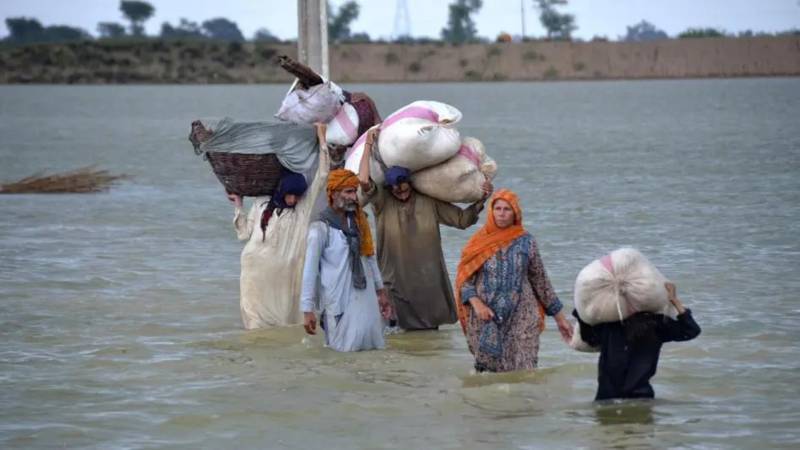
Every year, thousands of farmers in Pakistan experience the same anxiety caused by the arrival of heavy monsoon rains. Will their crops survive? Will their livestock stay intact? Will their properties be safe from another flood? For many people, farming is much more than a means of making a living. It is their only source of income, food, and survival. When floods destroy their harvest, they lose not just a single harvest, but also their savings, their ability to pay back debts, and even hope for recovery before the next farming season.
Pakistan has gone through that bitter experience many times already. The disastrous floods that took place in 2022 affected around 33 million people and resulted in more than $30 billion of losses and damage. As stated by the World Bank-led Post-Disaster Needs Assessment, agriculture and livestock were the worst-hit sectors as the damage in these areas reached approximately $3.7 billion. The province of Sindh suffered huge losses while people in Balochistan and other provinces experienced considerable problems as well. Behind these figures are millions of ordinary people, including farmers who witnessed all their agricultural land being flooded.
Four years later, an important question remains: how can Pakistan protect its farmers financially before another disaster strikes?
The Asian Development Bank (ADB) sanctioned a policy-based loan of $700 million as part of its insurance transformation programme on the 18th of June 2026. The programme is intended to enhance the insurance framework in Pakistan, and to increase financial risk coverage so that disaster and loss consequences are easier to deal with. Among others, it is expected that beneficiaries will include rural women, farmers, and families from poor sectors. The announcement about the loan is significant, as far as the money involved is concerned. However, four months later, in October 2026, it is important to question not how much money has been authorised, but rather how the programme is going to change the lives of people who have to cope with high climate risks.
According to ADB's project information, the entire $700 million loan had already been transferred by the 12th of August 2026. Although this is a major achievement, it is important to remember that the loan serves a different purpose and does not necessarily mean that rural families have received insurance. The significant question to be solved is how many of the people will be insured and how useful this insurance coverage will be for them in case of emergencies.
Why Pakistan’s Farmers Need Insurance More Than Ever
Floods, droughts, excessive heat, and changing rainfall patterns make Pakistan highly vulnerable to these calamities. Since these calamities keep occurring more frequently, they create severe challenges for farmers. A farmer works for several months preparing the land, buying seeds, arranging irrigation, and protecting crops, only to lose their entire yield as a result of bad weather. For instance, think of a farmer in interior Sindh who takes out a loan to cultivate cotton or rice. He spends his resources on seeds, fertilisers, and hiring workers. However, just before the harvest, heavy rain floods his fields and wipes out his crops.
Inability to access appropriate insurance coverage makes it more likely for the family hit by a major catastrophe to be deepened into poverty than it ever was. Agriculture is where insurance may be able to help. Insurance is when a person pays a sum, called premium, to protection against certain types of losses. Once the incident occurs, the insurance pays compensation according to the contract. Although the compensation could never compensate for the entire loss, it will help the family overcome the difficulties it is currently facing and prepare for the next sowing.
However, insurance has not become a very developed industry in the country. According to latest ADB reports, the level of insurance penetration is only 0.7% of GDP in Pakistan. In other words, the insurance does not have a big share in the economy of the country. Regarding agriculture, the situation is even worse as per the available information agricultural insurance schemes supported by the government cover only 14% of the existing farms. According to a report of the Securities and Exchange Commission of Pakistan in 2024, a number of issues such as lack of knowledge, financial opportunities, and experience of the insurance industry to handle big agricultural losses exist.
Some farmers may lack knowledge about insurance and may not even be aware of whether or not they have current cover through an agricultural loan. Some farmers might view insurance as a needless cost since their income is often limited to the point where they cannot afford any extra costs. Some may fear that if they have to use their insurance, they won’t be compensated fairly by the insurance company in the event of a disaster like an earthquake. This problem cannot be solved through financial reforms alone. Farmers need clear information about their needs, affordable premiums, simple procedures for registration, and reassurance that they will be compensated for their legitimate claims. An ADB programme has a potential to respond to all of these weaknesses.
For a farmer, the question that matters most is not the millions sent to Pakistan but the guarantee that the farmers will receive the assistance needed to recover from the calamity
Women participants of farming need particular attention too. In a number of rural areas, women carry out important agricultural work, take care of livestock, and earn money for their families. However, many do not have access to finances. The programme run by ADB includes several activities to improve insurance products and basic access to banking services for women. The efforts of the agency may be important for women who work in agriculture and do not have property registered in their names; however, insurance should not be thought of as a substitute for drainage systems, flood protection tools, and weather information.
How the $700 Million Programme Could Help Farmers
One of the most fascinating aspects of the Insurance Transformation Program offered by ADB is its proposed application of modern technologies that will facilitate the work in the area of agricultural insurance. Conventionally, determining agricultural losses is an arduous task. After the flooding, for instance, farmers should report their losses and wait for insurance agents or officials to come to inspect their lands. The procedure becomes especially complicated in remote villages with unsuitable roads and damaged infrastructure. However, the new strategy will allow overcoming the set of problems that arise through the use of satellite imaging, geographical data, and weather information and analysis.
Parametric insurance is another crucial term that must be clarified. Despite the complicated name, its theory is in fact rather simple that means the payment is made based on a specific event, like heavy rainfall, that has achieved a specified threshold. When a particular event occurs within a specific period, farmers are entitled to receive payments based on their insurance agreements.
Thus, the problem of delays is removed, making the process of receiving payments easier and more transparent. Nevertheless, implementing parametric insurance implies thorough planning. For example, the drought and in need of compensation for crop losses might occur even if the rainfall figure does not satisfy the agreed condition, which means farmers will not receive the needed payments even if they are actually suffering their financial losses. Therefore, insurance should be offered on the basis of reliable local information and conditions reflecting the real situation of the risks farmers face.
Initiatives are already being undertaken in Pakistan to improve agricultural insurance. The State Bank of Pakistan announced a new Crop Loan Insurance Scheme Plus (CLIS+) on the 20th of April 2026. This new scheme was set up following discussions with the government, ADB, SECP, insurance industry representatives, and SUPARCO.
The new arrangement is meant to help improve crop loan insurance by extending coverage, using technology for assessment, and enhancing payments. This is a good illustration of how collaboration between banks and technology companies makes better agricultural protection possible. Farmers should know how these programs work because they obtain agricultural loans. It would be a good idea for them to find out from their banks whether crop insurance is available, what disasters of cover, the level of protection, and other conditions. They should also get accurate information about premiums and other costs and procedures of claims. At the same time, one cannot forget about farmers who do not borrow from banks. A lot of poor farmers depend on informal borrowing from relatives or local lenders. Moreover, some farmers rent the land for farming or are tenants.
Consequently, it is necessary to search feasible methods of communicating with farmers who are not connected to the formal banking system. Educational campaigns can be significant. Agricultural agencies, local banks, farmer unions, and community organizations could contribute to explaining the insurance process in Sindhi, Urdu, Punjabi, Pashto, Balochi, and other languages. Information about the registration procedure for a small farmer is much more beneficial than complicated financial reforms because farmers need to know how to register for insurance, what documents are needed, how much they will have to pay, and where to file a complaint. Technology may improve the system, but people should learn how to operate it. It will not be reasonable to offer digital insurance implying that farmers will have normal internet access, know how to work with smartphones, and understand what they are told.
From Financial Commitment to Real Protection: What Comes Next?
The ADB's $700 million programme is an excellent opportunity for Pakistan to improve its financial system, helping prepare it for climate shocks. Some of its ambitious goals include improving the insurance market, allowing for long-term investments, and reducing the financial burden of natural disasters on families and businesses. However, in the end, the impact of the programme on rural communities will depend on how its measures are carried out.
To establish how soon the intended outcomes will be achieved by communities in need, this writer reached out to ADB to clarify when the new programme will allow vulnerable areas to receive insurance. In addition, the writer was interested in whether ADB has set a timeframe for the implementation of its programme, which would enable the public to monitor it.
In the reply dated the 15th of October 2026, Mohammad Ismail Khan, Principal Communications Officer of ADB Pakistan Resident Mission stated that the programme is being implemented in cooperation with the Government of Pakistan, the insurance industry, and partner organizations. He emphasised the program's emphasis on agricultural insurance, which includes satellite imagery, geographic information, and parametric triggers for better evaluation and speedy payment after eligible disasters. He also stated that the improvement of information technology, delivery systems, and insurance markets would contribute to the development of a sustainable mechanism for the protection of rural households and farmers.
The response provides a useful explanation of the ADB's strategy and commitment to improving agriculture protection. Although this clarification is valuable, especially taking into account that the technology-based insurance solution is something new and unknown for many farmers in Pakistan, nevertheless, the response does not specify the date of commencing new insurance coverage for vulnerable farmers nor gives detailed timetable for implementation.
However, this should not be considered a delay or a failure. Insurance reform is complicated and includes regulators, financial institutions, private companies, and government departments. It takes time, coordination, and planning to create a dependable system. Yet, farmers would appreciate the information about milestones during the implementation of the reform. For example, the institutions in charge might explain what regions will be prioritised, how farmers can qualify for the program, whether the government will subsidise part of their insurance premiums, and what assistance they may receive after the disaster has occurred. Public reports about the implementation of the insurance reform, those showing how many farmers are insured, what regions are included in the reform, and how many claims have already been settled would help the farmers feel more inclined to cooperate.
The programme must take into account areas prone to recurrent flooding such as vulnerable areas of agriculture in Sindh, Balochistan, southern Punjab, and other places of high risk. The decisions should be based on proper assessment of the disaster risks and needs of the community. Pakistan also requires better collaboration between agriculture ministries, banks, insurance companies, and local authorities. Farmers should not have to visit multiple offices to find out if they are eligible for insurance. The system of registration and claims submission should be simple and low-cost, and easy to understand. The private sector has a big role to play. Insurance companies must develop appropriate products and enhance servicing capabilities. However, those products must remain affordable for farmers with low income.
Public trust in insurance could be affected by what happens following any disaster. The farmer purchasing the insurance needs to know the extent of the coverage, the process for reporting any damage, how long it may take for a decision, and whether there is an opportunity to appeal against the decision should it be deemed unfair. This means that it must have the basic safeguards that build public confidence because even the best-designed insurance system would have difficulty in earning public trust.
The public itself also has an important role to play in making insurance work. The lead world bodies must understand how much publicity this topic needs in order for the public to grasp both the advantages and strengths of the scheme. This must happen because nobody cares about financial protection, especially during the time of natural disasters. When there are floods, governments and charities respond on time by organizing the process of helping those affected. Therefore, they can really save many lives. However, it is still necessary to assist farmers after the immediate disaster has passed so as to help them restore their livelihoods.
The subsequent flood can strike irrespective of how fast financial changes are undertaken. While it is impossible for Pakistan to master nature, the people can get prepared better for facing financial losses from natural disasters.
The ADB programme presents the opportunity of great importance, but the sense of value of the programme should not be confined to the amount of money provided to the country or the total number of policies adopted. The effect of the programme can be measured with the lives it saves, the farmers receiving timely assistance, and the families who can go back to their land without any debts. For a farmer watching a devastated land, the question that matters most is not the millions sent to Pakistan but the guarantee that the farmers will receive the assistance needed to recover from the calamity and go back to their past activities.