

When climate disasters strike, they do not affect everyone equally. A flood may destroy an entire village, a drought may empty a water source, or a heatwave may disrupt daily life but the burden of survival often falls disproportionately on women. In Pakistan, where climate change is intensifying floods, water shortages, extreme heat, and food insecurity, women are among those facing the greatest consequences. Yet their experiences remain largely absent from climate debates and policy discussions. Climate change is not gender-neutral. Women and men experience environmental crises differently because their social roles, economic opportunities, access to resources, and responsibilities are often unequal. For millions of women, particularly in rural communities, climate change directly affects their ability to secure water, produce food, care for families, and maintain livelihoods. Women’s vulnerability to climate change is not simply a result of biology; it is deeply connected to existing social and economic inequalities. Limited access to education, financial resources, land ownership, technology, and decision-making spaces reduces women’s ability to adapt when climate-related disasters occur.
At the same time, women are not merely victims of climate change. Their knowledge, experiences, and participation can strengthen climate adaptation efforts if they are included in planning and decision-making. Pakistan’s climate crisis has exposed these inequalities repeatedly. During the devastating floods of 2022, millions of people were displaced, homes and livelihoods were destroyed, and communities faced severe shortages of food, clean water, and healthcare.
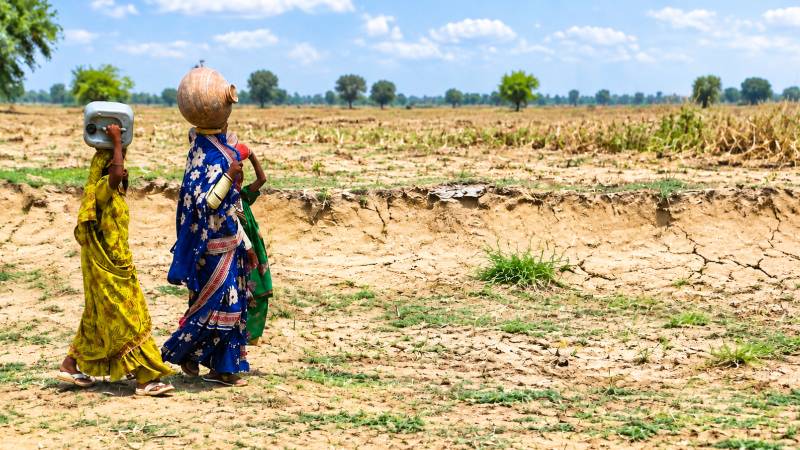
For women, the consequences extended beyond physical displacement. In many affected areas, women carried additional responsibilities for collecting water, caring for children and elderly family members, and managing household survival with limited resources. Climate disasters often increase women’s unpaid labour. When water sources disappear or become contaminated, women and girls frequently spend more time travelling longer distances to collect water. When family members fall ill due to waterborne diseases, women often become primary caregivers. This additional burden can reduce opportunities for education, employment, and economic independence. Water scarcity is one of the clearest examples of how climate change affects women differently. In many Pakistani communities, household water management is primarily considered women’s responsibility. As temperatures rise and rainfall patterns become increasingly unpredictable, securing water becomes more difficult and time-consuming.
Gender-responsive climate policies and projects that include women’s empowerment and their participation in planning, decision-making, and implementation can produce more effective, efficient, and innovative outcomes.
Flooding and rising sea levels create another set of challenges. Increased salinity in coastal areas can affect agriculture, drinking water, and public health. Women, especially those dependent on natural resources for household needs and livelihoods, experience these disruptions directly. Energy insecurity also has a gender dimension. In many households, women are responsible for cooking and managing domestic energy use. When electricity supplies are disrupted or affordable energy sources become unavailable, women often bear the consequences through increased labour and exposure to harmful cooking fuels. The use of traditional solid fuels contributes to indoor air pollution, which has serious health consequences, particularly for women and children who spend more time inside homes.
While climate change creates serious challenges for women, women are also essential participants in climate solutions. Across the world, women contribute to natural resource management, agriculture, conservation, and community resilience. Their knowledge of local environments and household needs can improve climate adaptation strategies. Renewable energy is one area where opportunities exist. Solar technology, improved cooking systems, biogas solutions, and other clean energy initiatives can reduce women’s workloads while creating new economic opportunities. However, women’s participation in emerging sectors such as renewable energy requires supportive policies, access to training, finance, and equal opportunities.
Climate solutions cannot succeed if half of society is excluded from decision-making. International climate institutions have increasingly recognised that gender must be central to climate action. The Intergovernmental Panel on Climate Change (IPCC) has highlighted that social inequalities influence how communities experience climate risks and their ability to adapt. The Paris Agreement also emphasises the importance of women’s empowerment and gender-responsive approaches in climate adaptation and capacity building. Yet women’s representation in climate policy discussions remains limited in many countries, including Pakistan. A climate policy that ignores gender differences risks overlooking the people most affected by environmental change. Effective adaptation requires recognising women’s experiences, supporting their participation, and ensuring equal access to resources. Pakistan remains among the countries most vulnerable to climate change despite contributing relatively little to global emissions. The impacts of floods, heatwaves, droughts, and water shortages are already affecting millions.
For Pakistani women, climate change adds another layer to existing inequalities. It threatens food security, livelihoods, health, education, and personal safety. Building climate resilience therefore requires more than infrastructure projects. It requires investment in women’s education, economic empowerment, healthcare, political participation, and access to climate resources. Women should not be viewed only as vulnerable communities needing protection. They must also be recognised as leaders, innovators, and decision-makers in responding to the climate crisis. The future of Pakistan’s climate resilience depends on whether climate policies address the realities of everyone including the women who often carry the heaviest burden but remain the least visible in climate conversations.