

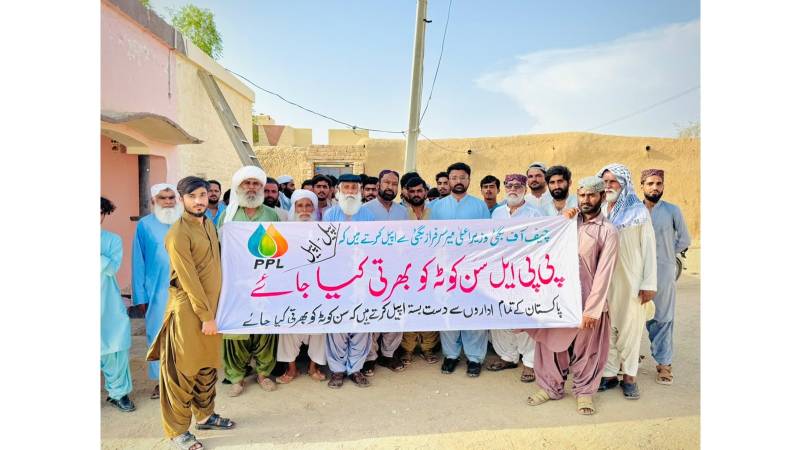
Dera Bugti has fuelled Pakistan’s progress for decades. Its gas has powered homes, factories, and cities across the country, yet the district remains among the poorest in Pakistan.
The contradiction is not new. Gas from Dera Bugti fuelled roughly one in every two Pakistani kitchens and, on average, one in every three factories for much of the period from the 1950s to the 2000s. Even after pressure began to decline, the district continued to make a substantial contribution to the national gas supply. New or prospective reservoirs have also been identified in areas including B-Loti, Loop, Pirkoh, Toba Nohokani, and Uch.
But the people living above these fields have received little of the prosperity associated with them. Dera Bugti remains one of Pakistan’s poorest districts. Its population is estimated at around 350,000, while average monthly incomes remain extremely low. A small number of individuals have benefited from gas-related royalties, but the broader population has not experienced a comparable economic transformation. The most visible dispute concerns employment.
A History of Unfulfilled Agreements
Over the past four decades, agreements between tribal representatives, gas companies, and the governments of Pakistan and Balochistan have repeatedly promised local jobs, public facilities, and development projects. Some commitments were implemented. Many others were delayed, only partially fulfilled, or left open to interpretation. Every few years, a new generation of local graduates has been compelled to submit what is essentially the same demand.
The documentary record begins with a 1993 settlement concerning drilling at Uch. Under the Political Agent of Dera Bugti Agency, the Oil and Gas Development Corporation and tribal representatives agreed on a roster of 107 labourers, 18 road coolies, and two chowkidar positions, along with compensation before the rig moved to another location.
The 2001 agreement was broader. It involved the Chief Secretary of Balochistan, the federal secretary for petroleum, the managing directors of OGDCL and Pakistan Petroleum Limited, and Nawab Mohammad Akbar Khan Bugti. The agreement addressed operations in Sui, Uch, Pirkoh, and Loti. Among its provisions were three chowkidars for every producing well at Sui, a gradual increase in the local share of drivers, clerks, cooks, and support staff, and a commitment to ensure that 70 per cent of local staff were hired within three years and the remaining 30 per cent within five years. This meant that within eight years, all four categories of skilled jobs would be handed over to local workers, and first preference would be given to Dera Bugti candidates in officer-cadre recruitment. OGDCL, PPL, Sui Northern Gas Pipelines Limited, and Sui Southern Gas Company also agreed to induct trained diploma holders.
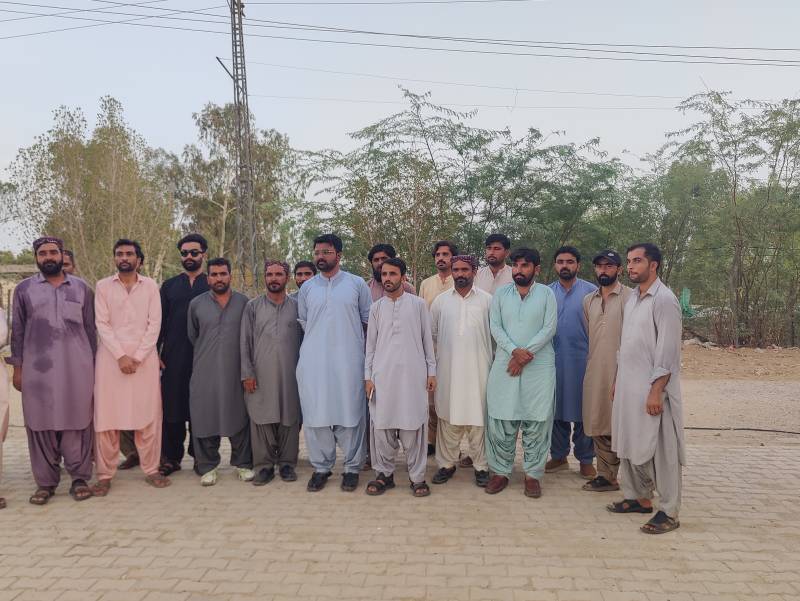
In February 2002, OGDCL’s board ratified its part of the agreement. It approved new chowkidar positions and the regularisation of long-serving casual workers. The pattern was repeated in 2015. When the Sui mining lease was renewed, the Government of Balochistan and PPL agreed that ten engineers and 15 diploma holders would be inducted annually on local merit.
Dera Bugti is not asking for charity – its residents want the implementation of agreements made in connection with the extraction of a resource from their land
In February 2025, PPL and the province signed another memorandum of agreement linked to a ten-year development and production lease of the Sui field. The agreement reportedly included overseas training placements for engineers and diploma holders, and the annual appointment of seven engineers and seven diploma holders from the district for the life of the lease.
Charter of Grievances
The latest charter prepared by local people argues that these commitments have not been fully implemented. According to the charter, 42 technical and diploma positions from the earlier induction cycle remain unfilled, as do 21 positions from 2007–08 and another 21 from 2011–12. It further claims that 175 positions associated with the 2015 agreement remain vacant, calculated across seven hiring cycles between 2017 and 2024. Fourteen additional positions—seven for engineers and seven for diploma holders—are due under the 2025 agreement.
The employment problem extends beyond unfilled quotas. Local residents claim that hundreds of workers perform duties through contractors rather than as direct employees. In the case of OGDCL and PPL, the charter places the number of local contract, third-party, daily-wage, and line workers at around 1,500. It argues that these workers lack the proper wages, benefits, and job security available to direct employees, despite repeated agreement provisions that locals who have worked for 90 days should be regularised by the companies.
The charter also cites the Uch field, where it records 360 employees, including 134 local Bugtis; the rest are non-local. This shows that more than half of the jobs are given to non-locals, which also shows that the company dishonours the agreements. It further says that more than 300 qualified local engineers and 700 diploma holders are available, while approximately 500 local employees have retired without local replacements. These figures directly challenge the recurring explanation that local candidates are unavailable or that the companies face a “capacity problem”.
Political Disruption and Transparency Issues
The issue is also connected to the political history of the district. Before 2006, many of the agreements carried the signature of Nawab Akbar Bugti or were concluded by representatives acting in his name. His death in August 2006, following a military operation, intensified the conflict in Balochistan and had direct consequences for workers in the gas fields. Some labourers were displaced by the fighting and could not report for duty. Their salaries were later stopped, and some were removed from service. There are approximately tens of such cases. In 2011, residents of the Loti gas field approached the Islamabad High Court in a case involving recruitment practices, local workers, and the use of third-party contractors.
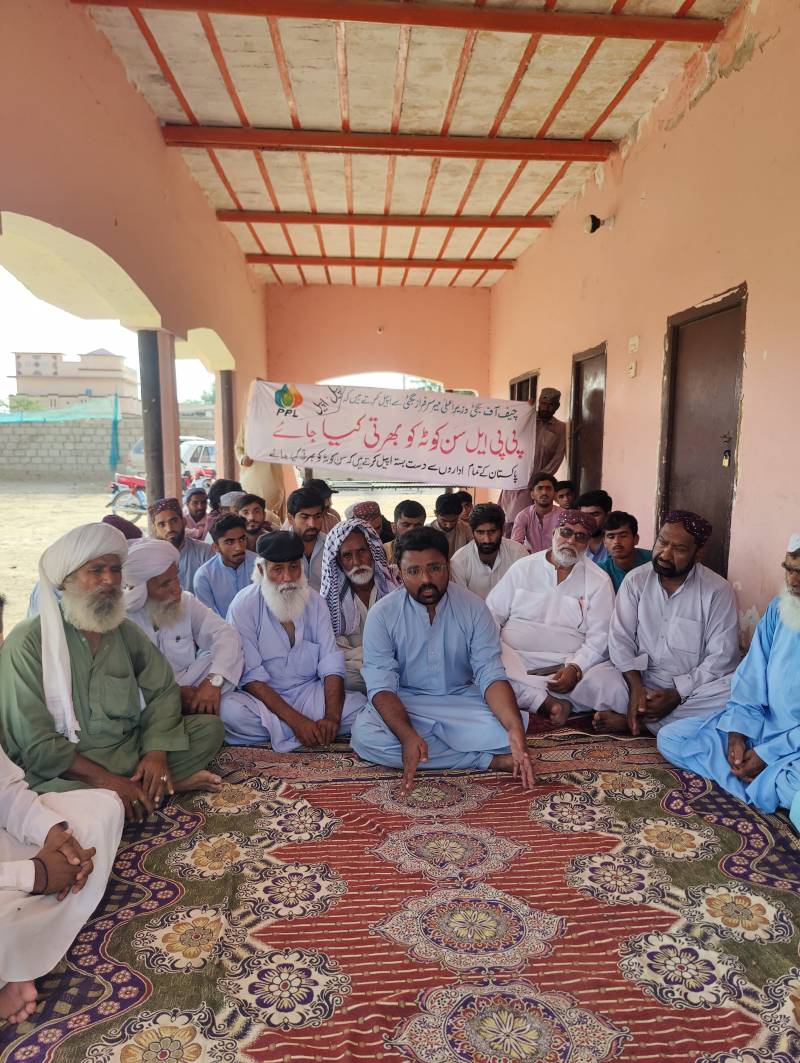
The matter has also reached parliament. In June 2023, the National Assembly’s Special Committee on Balochistan directed OGDCL, SNGPL, PPL, and other gas companies to implement a six per cent local-employment quota for Balochistan and report on progress.
Yet directives and agreements will remain ineffective without transparency. Local graduates say technical vacancies are rarely advertised clearly in the districts affected by gas production. Posts for junior engineers, sub-engineers, technicians, and field operators are often filled through internal postings, transfers, or contractors. Qualified local candidates consequently do not receive a fair opportunity to compete.
The Path Forward
To resolve these recurring grievances, the following steps must be taken:
- All technical and diploma-level vacancies arising in or near producing districts should be advertised publicly through newspapers, the companies’ websites, and an independent testing agency such as the National Testing Service. Internal appointments should not be used to bypass local candidates without a public notice.
- Future leases, licences, and agreements should contain binding local-employment clauses, with clearly defined numbers, timelines, and reporting obligations.
- The companies should publish annual data on technical recruitment in Balochistan, broken down by district of domicile, qualification, and employment category. This would make local representation measurable rather than rhetorical.
- The Government of Balochistan and the Oil and Gas Regulatory Authority should consider linking licence renewals and lease extensions to compliance reporting. A company that benefits from a long-term resource concession should also be required to demonstrate how it has met its local obligations.
- Re-recruit all legal hires for retired local positions in all companies, including OGDCL, PPL, SNGPL, and SSGC.
The district’s engineers and diploma holders have proposed additional safeguards: age-limit relaxation for candidates from underdeveloped regions, joint verification of domicile and qualifications, standardised testing with biometric checks, balanced recruitment across engineering disciplines, and a carry-forward rule under which an unfilled annual quota does not simply expire.
These proposals deserve serious consideration. They would not guarantee every applicant a job, nor should they. The legitimate demand is for a transparent and competitive process in which qualified local candidates are able to apply and in which signed commitments cannot disappear without explanation.
Dera Bugti is not asking for charity. Its residents are asking for the implementation of agreements made in connection with the extraction of a resource from their land. They are also asking for a system that treats local employment as a measurable obligation rather than an informal promise.
OGDCL, PPL, SNGPL, SSGC, the Balochistan Energy Department, and OGRA should convene a joint meeting with representatives of Dera Bugti’s engineers, diploma holders, and affected workers. The meeting should produce a public, time-bound plan: which positions are vacant, which workers qualify for regularisation, which commitments have been fulfilled, and when the remaining obligations will be completed.
For more than three decades, the same cycle has repeated itself. An agreement is signed, some projects are delivered, promises remain unresolved, and a new generation prepares another memorandum. The latest charter is different only in one respect: it presents the grievance as an itemised account.
The companies and government authorities now have an opportunity to check that account line by line and to ensure that Dera Bugti’s gas dividend is no longer measured only in national production figures, but also in jobs, services, and dignity for the people who live above it.