

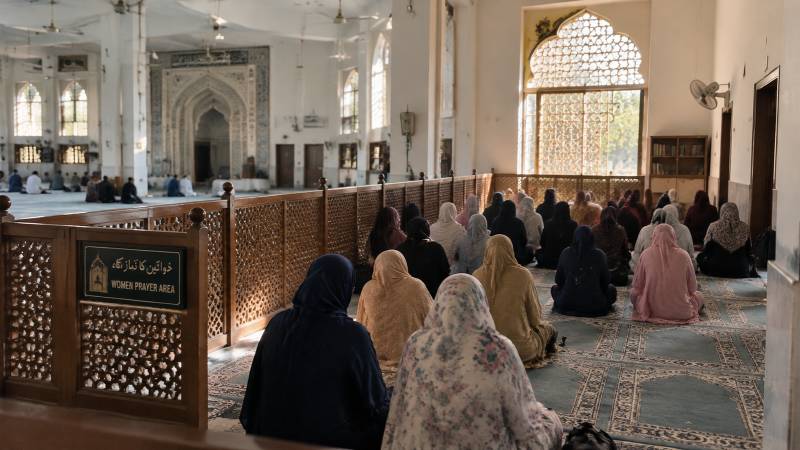
As Pakistan struggles to combat the alarming rise of gender-based violence and the social marginalisation of women, it must also address less visible gender disparities, including gaps in religious infrastructure. The widespread existence of the ‘mosque gender gap’ receives far less attention than it deserves at the provincial and national policy levels. The lack of adequate prayer spaces for women in mosques and their exclusion from religious administrative positions limit their opportunities for social interaction and participation in community life. To address these disparities, Pakistan must adopt gender-sensitive governance, establish prayer facilities in educational institutions, invest in inclusive infrastructure, and draw inspiration from successful models in other Muslim-majority countries.
Historically, the entanglement of religion and politics in Pakistan, particularly since the 1980s, has undermined both. The inclusion of restrictive moral policies for women in the national political agenda during that decade allowed regressive gender norms to become further entrenched. Meanwhile, previously marginalised voices began to assert themselves in the sociopolitical arena through the efforts of courageous figures such as Asma Jahangir and Hina Jilani. Nevertheless, debates framed around the supposed conflict between ‘faith and culture’ have often failed to produce meaningful and lasting change.
Consequently, Pakistan continues to face a long and arduous struggle against gender disparities reinforced by conservative and restrictive interpretations of religion. Culturally shaped understandings of Islam have influenced perceptions of the role mosques should play in society, particularly for women. Historically, mosques have served not only as places of worship but also as community centres where people gathered to learn, discuss politics, meet relatives, conduct business, resolve disputes, and participate in recreational activities.
For instance, unlike the prevailing practices in much of South Asia, mosques in Saudi Arabia, particularly Masjid-e-Nabawi, serve broader communal and religious functions. Visitors from Gulf countries travelling to South Asia may experience a cultural shock at the limited facilities available to women in many mosques. Even where separate sections exist, women are often expected to make do with inadequate spaces. These disparities are compounded by limited legislative attention, the politicisation of religious debates, and the underrepresentation of women in managerial positions. Constitutional guarantees of equality and fundamental rights have also been undermined by weak implementation and enforcement. Furthermore, the political exploitation of religion for personal and partisan interests has reinforced restrictive interpretations of religious and cultural norms.
In Pakistan, revitalising mosques as community centres and ensuring equitable access to prayer spaces require a comprehensive cultural and policy shift. This challenge extends beyond creating inclusive environments for women; it demands a structural response involving both government institutions and local communities.
First, provincial governments should engage their Auqaf and Religious Affairs Departments to improve the management of congregational mosques and gradually introduce successful models of community-led mosque administration. Second, Auqaf departments should invest in adequate prayer facilities for women in mosques under their jurisdiction.
It is also essential to challenge the stigma surrounding education and professional development, which are sometimes portrayed as incompatible with religious traditions or dismissed as colonial influences. English-language instruction, social sciences, internships, employment opportunities, and vocational training can complement religious education and broaden the social role of mosques. Provincial governments could encourage such initiatives through incentives for mosques that organise educational workshops, awareness campaigns, and academic seminars.
Colleges and universities should also collaborate with provincial Auqaf departments to ensure equitable access to prayer facilities and organise seminars addressing contemporary social and religious challenges. Although expanding women's participation in public religious spaces within a patriarchal environment presents challenges, a practical framework should include designated prayer areas, essential facilities, security cameras where appropriate, separate entrances and exits where necessary, and greater representation of women in mosque administration. The quality of facilities also matters. The absence of functioning sound systems, clear audio, and screens displaying sermons where appropriate can prevent women from following religious addresses and participating fully in congregational activities. Improving these facilities would make mosque attendance more accessible and meaningful.
Mosque administration must move beyond limiting women's participation to Ramadan prayers, Friday sermons, weddings, and funerals. Reviving the traditional role of mosques as community centres is a social, cultural, and religious imperative for achieving greater gender equity in religious life. Pakistan should develop a comprehensive action plan informed by successful practices in other Muslim-majority countries. Governments, religious scholars, mosque administrators, educational institutions, and local communities must work together to foster an inclusive environment, while ensuring appropriate safety, security, and respect for religious practices.