

Nationalism takes shape not only through political speeches, party programmes, and public demonstrations but also through everyday habits, cultural preferences, and shared memories. In Sindh, people express their sense of belonging through language, topi, ajrak, music, food, poetry, and historical symbols. These practices bring cultural identity into homes, workplaces, markets, and public gatherings, often beyond formal politics.
Social scientists call this process everyday nationalism. In Banal Nationalism (1995), Michael Billig showed how routine symbols and practices keep national identity present in daily life. Flags, maps, signs, and logos can reinforce a sense of belonging without conscious reflection. In Sindh, traditional dress, folk songs, archaeological images, and the use of Sindhi can serve a similar purpose. Their meanings vary, and they do not necessarily signal support for a particular political programme. Together, however, they show how national identity is expressed and sustained beyond party platforms and political rallies.
Sindhi nationalism has evolved through different stages and forms, rooted in Sindh’s cultural heritage and historical memory. This article explores its everyday expressions, focusing on cultural practices, public celebrations, and popular responses beyond formal politics. Some emerged from organised initiatives, while others grew from people’s own choices and activities.
Everyday nationalism draws on cultural memory. In Sindh, the poetry of Shah Abdul Latif Bhitai offers more than literary pleasure: its characters, landscapes, and moral struggles provide a shared vocabulary for love, suffering, separation, dignity, and attachment to the land. Cultural memory therefore lives both in formal scholarship and in ordinary practice. Each time people recite a verse, sing a folk song, or share a story about Sindh, they renew a connection with a wider cultural world. That inheritance provides one foundation for everyday Sindhi nationalism.
Archaeology and the Recovery of an Ancient Past
Archaeology added another dimension to Sindh’s historical consciousness. The excavation and public presentation of Mohenjo-daro placed the Indus Valley civilisation within a wider account of ancient urban life. Sir John Marshall, who directed the Archaeological Survey of India, helped publicise the civilisation; the discovery of Mohenjo-daro is also associated with the earlier work of R D Banerji. Their work brought the site into international scholarship and public discussion.
A topi or ajrak does not need an accompanying speech to communicate cultural affiliation
Henry Cousens, who worked with the Archaeological Survey of India’s Western Circle, also documented Sindh’s material heritage. His book The Antiquities of Sind, with Historical Outline recorded archaeological remains, monuments, and historical sites. Such publications created a documentary record through which readers could encounter Sindh’s past.
For Sindhi readers, writers, publishers, and cultural activists, archaeology offered more than evidence of an ancient civilisation. It provided material links between contemporary society and a distant past. Images of Mohenjo-daro, its seals, buildings, and artefacts could travel through books, magazines, and other publications. In this way, archaeology entered everyday cultural life as a visual language. These images allowed publishers and readers to connect the ancient history with contemporary debates about heritage and belonging.
Political Arguments for Sindh’s Distinct Identity
Sindhi nationalism also developed through constitutional argument and political organisation. During debates over Indian constitutional reform in the early 1930s, Muhammad Ayub Khuhro was among the political figures associated with arguments for Sindh’s separate constitutional status. The campaign to separate Sindh from the Bombay Presidency drew on claims about its history, language, social organisation, and distinct political interests. These arguments sought to translate a sense of regional difference into a constitutional claim about administration and political rights.
Constitutional advocacy differed from the everyday use of cultural symbols, but the two processes could reinforce one another. Political arguments articulated claims about Sindh’s status, while language, literature, and cultural memory helped make its distinctiveness familiar beyond formal political forums. Everyday nationalism draws on both: organised claims for collective rights and the routine practices through which people express attachment to a place.
GM Syed connected Sindh’s spiritual heritage with contemporary debates about its political future. In 1966, he and his associates founded Bazm-e-Sufia-e-Sindh to bring Sindh’s history, poetry, and Sufi traditions into discussions of collective life and political autonomy. Their interpretations of Shah Abdul Latif Bhitai and other spiritual traditions linked inherited beliefs with modern political thought. This connection extended beyond political organisations and constitutional debates. Poetry, music, commemorations, and cultural gatherings carried these ideas into public life. Sufi traditions offered ways to discuss social relationships, moral responsibility, and belonging, allowing cultural practices to acquire contemporary political meanings without losing their devotional and literary character.
Sindhi Sham and the Social Life of Political Ideas
During the 1970s, Rasool Bux Palijo and his associates promoted cultural activities that brought literature, music, discussion, and politics into shared social spaces. Sindhi Sham, or a Sindhi evening, represented this combination. Such gatherings allowed audiences to encounter literature and performance alongside discussions of social conditions and political rights.
Political ideas did not reach people only through party meetings or formal lectures. They also circulated through songs, poetry, conversation, and performance. A cultural gathering could bring together people who might otherwise encounter political discussion through different institutions or social networks. By placing ideas within familiar social settings, cultural activism connected intellectual debate with everyday experience.
When people attend a poetry recital, sing a folk song, or join a literary gathering, they do more than preserve a tradition. They give it a place in contemporary life. These events make cultural belonging something people practise together rather than an abstract idea discussed only in political language.
Latif Day: Poetry as a Public Language
The public celebration of Shah Abdul Latif Bhitai’s poetry acquired political significance during General Zia-ul-Haq’s martial law. Latif Day gatherings brought together poetry, cultural performances, and political discussion. Speakers connected the poet’s work with contemporary struggles for freedom, dignity, and resistance to authoritarian rule.
Although student groups had organised Latif Day celebrations in educational institutions as early as the 1950s, the observance became more prominent in Sindh’s political arena during the late 1980s and early 1990s. Rasool Bux Palijo played an important role in popularising Latif Day as a political platform where speakers debated current issues and presented political programmes. The gatherings thus became more than literary commemorations.
Latif’s poetry offered a language for discussing injustice, separation, resistance, and human dignity. By relating his themes to contemporary struggles, participants gave the tradition new political meanings without abandoning its literary and spiritual significance. Latif Day illustrates how cultural heritage can become a platform for public debate and political expression.
The Sindhi Adabi Board’s Bullock Emblem
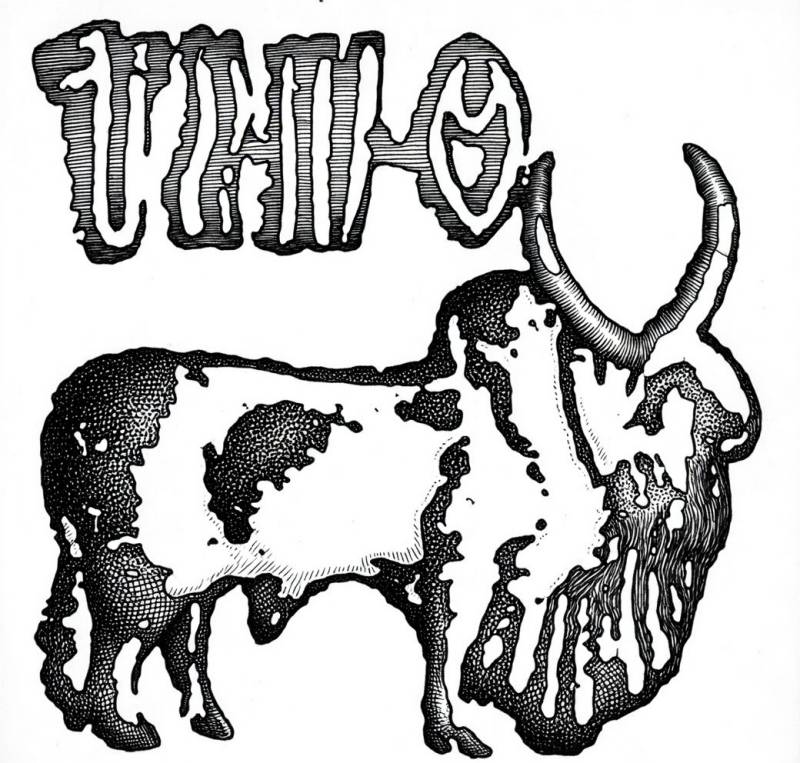
Images of Sindh’s ancient past offer another example of nationalism entering everyday cultural life. In 1958, Muhammad Ibrahim Joyo, then secretary of the Sindhi Adabi Board, worked with artist A Q Sheikh to design an emblem based on a bullock depicted on a Mohenjo-daro seal. The emblem appeared in the Board’s publications, linking modern Sindhi print culture with the ancient Indus Valley civilisation.
The emblem did more than decorate a page. It brought an archaeological image into contemporary literary life, making the connection between Sindh’s past and present visible to readers. Later publications used other symbols, including the crescent and star, the map of Sindh, and Masoom Shah’s minaret. The bullock emblem, however, shows how a small visual detail can convey a larger claim about historical continuity.
Other publishers also drew on Sindh’s cultural and archaeological heritage. Their books and cultural materials featured images of the Dancing Girl of Mohenjo-daro, Bhambhore, the Indus River, Ranikot, and Shah Abdul Latif’s tomb. Some publishing houses adopted names associated with figures from Sindhi history and literature, including Mansoor, Marvi, and Sohni. Through book covers, emblems, illustrations, and names, publishers brought historical references into the everyday circulation of Sindhi literature.
Readers encounter these symbols repeatedly, often without knowing their origins. A book cover or publisher’s emblem can make a historical reference familiar long before readers explore its history. In this way, publishing turns historical memory into a visible part of everyday life, allowing cultural symbols to reinforce a sense of Sindhi identity.
Dress, Popular Culture, and Visibility
Clothing provides another way to understand the relationship between cultural identity and daily practice. During the 1970s, the Sindhi shalwar kameez and the topi became visible markers of regional culture in public life. Zulfikar Ali Bhutto’s period in power formed part of a wider political and cultural setting in which regional dress gained prominence. Sindhi attire appeared not only at cultural gatherings but also in workplaces, markets, hotels, cafés, bus stops, and tea stalls.
A topi or ajrak does not need an accompanying speech to communicate cultural affiliation. When people wear these items in ordinary settings, they make Sindhi culture visible without necessarily joining a political organisation. Dress can express familiarity, pride, or personal taste; in particular circumstances, it can also carry a political message.
Cinema extended that visibility. The Sindhi film Mehboob Mitha (1971), directed by A Q Pirzada and produced by G S Gurnani, brought Sindhi dress and cultural references to a popular medium. Agha Saleem wrote the story, Rasheed Ahmed Lashari wrote the lyrics, and Ustad Ghulam Ali composed the music. The film’s song “Muhja Sain Sindhi Topi Wara” and costumes placed Sindhi cultural markers within a modern popular medium. Their significance extended beyond the cinema screen: film music and visual styles could circulate through public discussion and everyday social interaction. Cinema helped connect traditional dress and familiar cultural references with contemporary popular culture.
Film Songs and the Popular Expression of Nationalism
The film Mithra Shal Milan (1972), directed by A H Siddiqi and produced by Zahid Hussain, offers another example of the relationship between cinema and cultural expression. Renowned Sindhi writer Amar Jaleel wrote its dialogues. The song “Ho Gayo Jamalo.. Sari Sidhrri Khe Thee Bbuday’n” drew on a familiar Sindhi folk tradition and brought its celebratory mood into a popular film. By placing folk expression in a modern entertainment format, the film carried cultural references beyond a single village performance or ceremonial setting. Cinema gave familiar songs and symbols another route to wider audiences. Another song from the same film, “Sunhini Sindhri Taan Sadqe,” drew on the dhamal tradition associated with Sufi devotion. It presented Sindh as a beloved homeland, linking spiritual expression with attachment to the land.
The film also featured Faqir Abdul Ghafoor singing Shaikh Ayaz’s “Sindhri Te Sir Kair Na Dendo, Sahindo Kair Mayar O Yaar.” The song’s language of attachment and sacrifice gave it a significance beyond entertainment. Performances at social, political, and cultural gatherings helped establish it as an expression of commitment to Sindh. Accounts of its political history report that authorities banned the song during Zia-ul-Haq’s martial law. If retained in a publication, that claim should be supported with a specific historical source.
Sindh Cultural Day
A cap became a statement of solidarity; an ajrak became a public sign of cultural pride. On the 6th of December 2009, thousands of people across Sindh wore these familiar symbols in response to a controversy over the Sindhi topi. What began as Sindhi Topi Day later developed into Sindh Cultural Day, also known as Ekta Day (Unity Day).
The language, ajrak, topi, folk music, and poetry long predate the annual event. The immediate trigger came in November 2009, when television anchor Dr Shahid Masood criticised President Asif Ali Zardari for wearing a Sindhi topi during official foreign visits. Many people in Sindh viewed the remarks as an insult to the culture the cap represented.
Journalist and media entrepreneur Ali Kazi, at that time associated with the Kawish media group, became a central figure in the public call for the observance of a cultural day. His initiative offered a simple response: wear a Sindhi topi on a common date. The campaign attracted support from the Pakistan Peoples Party, Sindhi nationalist parties, civil-society organisations, and ordinary citizens. Media coverage helped turn separate acts of protest into a collective public event.
The observance offers a clear example of everyday nationalism. Agreed, the topi and ajrak are familiar objects, but their coordinated public display can express cultural pride and solidarity. People did not need a political speech or manifesto to make their point. Wearing the same objects on the same day became a visible, accessible act of participation.
Television and other media showed people across Sindh performing that act together. Streets, rallies, press clubs, and broadcasts turned individual gestures into a shared public experience. Political parties joined the celebrations, but the symbols also created common ground beyond party affiliations.
Sindh Cultural Day shows how nationalism can operate outside formal political institutions. Familiar objects, repeated practices, and public displays connect cultural memory with contemporary life. What people wear, sing, and celebrate can carry political meaning without becoming a party programme.
Literary Festivals: Cultural Memory and Sindhi Identity
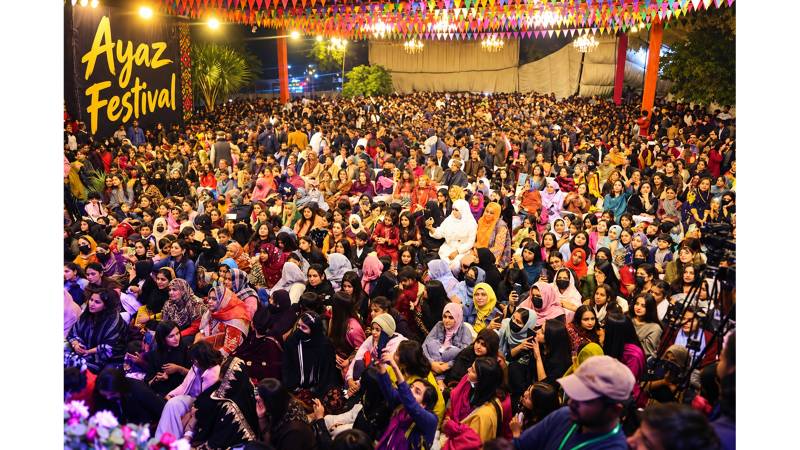
In recent years, the Sindh Literature Festival, Ayaz Festival, Lahoti Festival, and Hyderabad Literature Festivals have created public spaces for literary and cultural exchange. The Ayaz Festival, in particular, has attracted young people to Sindhi literary traditions while introducing contemporary writing, new ideas, and wider intellectual debates. Its achievements are notable given the limited time available for the event and the resources required to organise it.
The Ayaz Festival’s significance extends beyond literature. It offers a public setting where young women, girls, and families can attend events, listen to speakers, and join discussions. Such spaces matter where social expectations can constrain women’s participation in public gatherings. The cultural participation of women has broadened women’s presence in public life and brought younger generations into conversation with established writers and artists. These encounters have nurtured critical thinking and connected inherited traditions with contemporary concerns. Their effects extend beyond the festival itself, as visitors carry books, ideas, and conversations into their homes and social networks.
In this sense, literary festivals contribute to Sindh’s wider cultural and intellectual life. They do not advance a public agenda through slogans alone. They cultivate readers, encourage debate, and create spaces where people can examine their society and imagine alternatives. Their value lies in making literature a public resource and keeping cultural traditions open to reinterpretation. So, in many ways, the Ayaz Festival sets a stage to practise nationalism through music, dance, poetry, and books.
Urs, Birthdays, and Anniversaries
Nationalism takes shape not only through speeches, demonstrations, and party manifestos, but also through commemorations, books, and familiar objects. In Sindh, the Urs of Shah Abdul Latif Bhitai (14th of Safar), the birth anniversary of GM Syed (the 17th of January), and the death anniversary of Rasool Bux Palijo (the 7th of June) provide three distinct settings where cultural memory and political ideas enter public life.
At Bhitshah, the Urs of Shah Abdul Latif Bhitai combines religious devotion with literary and cultural activity. Devotees hear his poetry performed through raag, while literary conferences examine his work and its relevance to contemporary society. The gathering remains primarily devotional, yet poetry and discussion also connect visitors with Sindh’s literary inheritance. The Urs shows how a religious occasion can sustain cultural memory and contribute to everyday nationalism without losing its spiritual character.
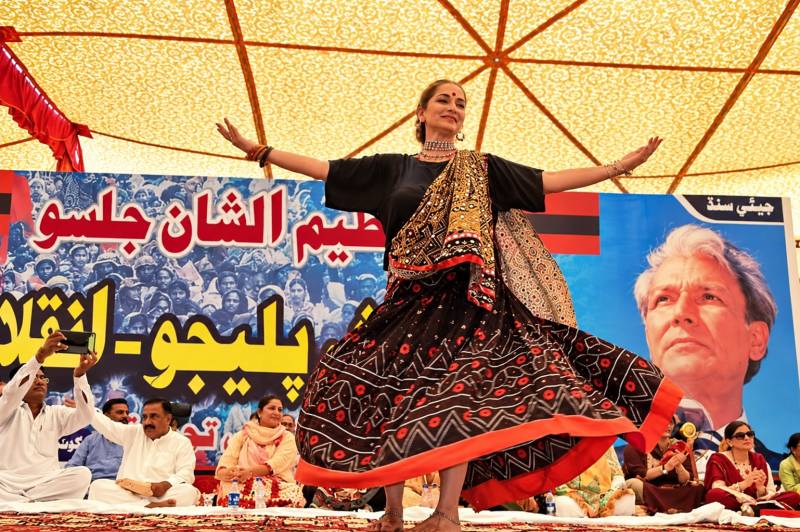
GM Syed’s birthday celebrations at Sann have a more explicitly political focus. Bookstalls give visitors access to works associated with Syed’s thought, Sindhi literature, and debates about politics and history. The gathering brings together political workers, readers, young people, and families. By buying and sharing books, visitors carry arguments beyond the event and into homes, libraries, and reading groups.
Rasool Bux Palijo’s death anniversary similarly joins political commemoration with cultural expression. The gathering at Mungar Khan Palijo village near Jungshahi has included speeches, folk performances, and discussion of provincial rights, democratic freedoms, and social concerns. Such activities connect Palijo’s political legacy with current debates and provide a public setting where different generations can discuss Sindh’s future.
The three commemorations illustrate connected but distinct processes. The Urs sustains a spiritual and literary inheritance through poetry and music. Syed’s birthday brings political writing into circulation through books and discussion. Palijo’s death anniversary connects political ideas with activism and cultural performance. Together, they show that nationalism is not confined to formal organisations. It also develops through the books people buy, the poetry they hear, the objects they display, and the gatherings they attend. These ordinary practices carry cultural memory into daily life and keep debates about Sindh’s history, rights, and future in public circulation.
Marriage, Cultural Symbols, and Religious Authority
Marriage ceremonies offer another setting in which everyday nationalism becomes visible. Since the 1990s, some newlywed Sindhi couples have used slogans such as Jeay Sindh or displayed Jeay Sindh Movement flags in their wedding photographs. Some young women have also stitched motifs—cloth badges bearing slogans and symbols—onto their dresses and masks. These choices bring cultural and political expressions into family celebrations. Other reported cases involve the use of Sindhi poetry in marriage ceremonies. In at least two accounts, verses by Shah Abdul Latif Bhitai were recited during the nikah instead of the usual religious citations. Such instances show how some people have explored different ways of expressing their cultural identity. But, more evidence would be needed to establish how common these practices are or how people generally respond to them.
These examples show how weddings can become spaces for expressing cultural identity. A flag, slogan, or verse may carry meaning beyond the ceremony, especially when photographs circulate on social media. Such choices do not necessarily signal a rejection of religious traditions, but illustrate how people bring cultural symbols into family life and give them new meanings.
Taken together, clothing, film, publishing, festivals, commemorations, and weddings show that Sindhi nationalism lives beyond formal politics. A topi, an ajrak, a book cover, a song, or a wedding flag can carry cultural memories into everyday life. These symbols mean different things to different people, but they keep Sindh’s history and identity open to expression and debate. Their future significance will depend on how new generations adopt, reinterpret, or challenge them. As cultural practices evolve and move across generations and digital spaces, everyday nationalism will continue to take new forms. Sindhi nationalism is not only proclaimed at rallies; it is also shaped by what people read, wear, sing, share, and pass on. Its future lies partly in how each generation connects inherited traditions with its own experiences, aspirations, and vision of Sindh.
Author’s note on photos: To protect individual privacy, some select original photographs have been converted into digital illustrations using AI techniques. These transformed visual representations preserve all cultural and political iconography while anonymising the individuals.