

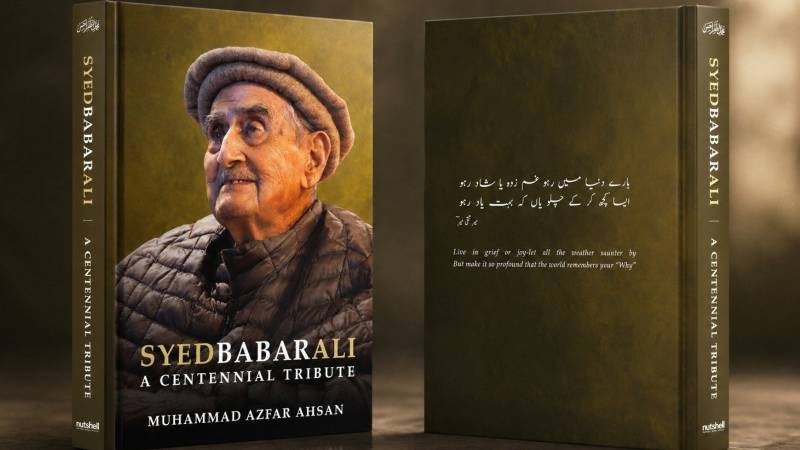
My recent visit to a literary gathering in Karachi reminded me of the lasting value of books and the pleasure of bringing people together through ideas. There is something special about meeting people from different walks of life who share an interest in reading, listen to one another and exchange views. Such occasions remind us that books are much more than printed pages. They preserve memories, record experiences and offer lessons that can guide future generations. At a time when daily pressures and a constant stream of news leave little room for reflection, literary gatherings provide a welcome opportunity to pause, think and rediscover the value of meaningful conversation.
I had the pleasure of attending the launch of Syed Babar Ali: A Centennial Tribute by Muhammad Azfar Ahsan. Organised by the Corporate Pakistan Group's Adabi Committee in collaboration with the Arts Council of Pakistan, Karachi, the event paid tribute to Syed Babar Ali, one of Pakistan's most respected business leaders and philanthropists. His contributions to business, education and institution-building have had a lasting influence on the country, making his life and experiences worthy of wider recognition. The ceremony brought together distinguished panellists, including Zehra Nigah, Dr Ishrat Husain, Dr Moeed Yusuf, Atif Aslam Bajwa, Shahnaz Wazir Ali, Senator Sarmad Ali, Wasif Akbar Rizvi and Muneer Kamal. Their varied backgrounds reflected the many dimensions of Syed Babar Ali's life and work. The discussion offered an opportunity to look beyond professional achievement and consider the qualities that help individuals make a lasting contribution to society.
A book celebrating a centenary does more than record the achievements of an individual. It invites us to consider the experiences, decisions and values from which others can learn. Syed Babar Ali's journey provides an opportunity to reflect on the importance of vision, perseverance and the ability to build institutions that serve society over time. Personal success acquires a deeper meaning when it creates opportunities for others and leaves behind something that continues to benefit the country. For younger Pakistanis, such accounts can offer valuable lessons about leadership, responsibility and the difference one person can make through sustained efforts.
The occasion also made me realise the wider importance of literary gatherings. A book launch may last only a few hours, but it can introduce readers to new ideas and encourage conversations that continue long afterwards. It brings writers and readers into direct contact and allows people to explore subjects they might not otherwise consider. A good discussion can make a book more meaningful by drawing attention to its ideas, inviting questions and allowing the audience to look at its subject from different angles. This has particular importance in Pakistan, where public debate is often dominated by politics, economic difficulties and immediate national concerns. These issues cannot be ignored, but there is also a need to discuss history, culture, education, leadership and the experiences that shape our society. Literary events offer a space for such conversations without the pressure to reach an immediate conclusion. They encourage us to look beyond the headlines and consider the deeper causes and consequences of the issues before us.
In today's uncertain world, the ability to think carefully is more important than ever. Political tensions, economic pressures, international conflicts and rapid technological change affect our lives in different ways. Meanwhile, social media exposes us to an endless stream of information and opinions, often encouraging quick reactions rather than careful judgement. Books offer an opportunity to slow down and examine matters more closely. They help us understand the background to current events, question assumptions and recognise that complex problems rarely have simple answers.
Literary gatherings and a stronger reading culture can preserve Pakistan’s intellectual heritage, inspire future generations and foster a more thoughtful, informed society through meaningful conversations and the exchange of ideas.
Reading also helps us understand people whose experiences differ from our own. History explains how the past continues to influence the present, while biographies reveal the challenges and difficult decisions behind public achievements. Literature allows us to see the world through other people's eyes. These experiences can develop empathy, independent judgement and a greater willingness to listen. When literary gatherings bring people together to discuss what they have read, they help create a culture in which disagreement need not lead to hostility and different opinions can be expressed with respect.
The launch of Syed Babar Ali: A Centennial Tribute was a fitting example of how a biography can open up a wider discussion about national development. The life of a business leader can raise questions about ethics, education, public service and the importance of strong institutions. These are not concerns limited to the business community; they matter to anyone interested in Pakistan's future. By preserving the experiences of people who have contributed to the country, books also give future generations an opportunity to learn from their successes, challenges and decisions.
Pakistan's literary heritage deserves similar attention. Our languages, including Urdu, English, Sindhi, Punjabi, Pashto, Balochi and Saraiki, have rich traditions of poetry, storytelling and scholarship. Writers and poets have captured the joys and sorrows of ordinary life, questioned social conventions and expressed the hopes and frustrations of their times. Literary gatherings can bring these voices to a wider audience, encourage interest in regional literature and give emerging writers opportunities to share their work. In doing so, they help preserve the country's cultural diversity, while allowing it to develop with changing times. However, such activities should not be confined to major literary events in large cities. Schools, colleges, universities and public libraries can play an important role by organising book discussions, poetry readings and meetings with authors. These activities need not be expensive or elaborate. Even a small reading group can encourage students to explore subjects beyond their textbooks, express their opinions and develop a lasting interest in reading.
Making books more accessible is equally important. High prices and limited library facilities can prevent many people, particularly students, from developing regular reading habits. Public institutions, educational organisations, publishers and private sponsors can work together to improve library services, support affordable publications and arrange events that welcome people from different backgrounds. Writers working in regional languages also deserve greater recognition and opportunities to reach new readers. Digital technology offers further ways to encourage participation. Online book launches, recorded discussions and digital libraries can connect readers across cities and make literary events accessible to those who cannot attend in person. Yet technology should complement rather than replace face-to-face interaction. Meeting an author, listening to a speaker or taking part in a thoughtful discussion offers a personal experience that can be difficult to reproduce through a screen.
Young people should be at the heart of these efforts. They need opportunities to meet writers, scholars and experienced professionals, ask questions and hear about lives beyond their immediate surroundings. Such encounters can broaden their outlook and encourage them to think more deeply about their own ambitions and responsibilities. Literary gatherings should be open and welcoming, not limited to a familiar circle of personalities or people with specialised knowledge. Of course, books and literary events cannot, on their own, solve Pakistan's political, economic and social problems. Lasting progress requires effective institutions, sound policies and practical action. Yet the quality of a society's thinking matters. People who are willing to read, question, listen and learn are better equipped to understand difficult issues and take part in constructive public debate. A stronger reading culture can make a valuable contribution to the country's wider development.
My recent experience at the book launch strengthened my belief that literary gatherings deserve a more prominent place in our national life. They allow us to celebrate achievements without losing sight of the lessons it offers, connect the experiences of one generation with the aspirations of another, and recognise the important role that ideas play in shaping society. Pakistan has talented writers, remarkable life stories and a rich tradition of intellectual expression. What we need is to create more opportunities for the people to discover this wealth and engage with it. Supporting writers, strengthening libraries and encouraging open discussion are practical ways to achieve this. The success of a literary gathering should ultimately be measured not by the ceremony itself, but by the interest it creates in reading and the ideas it leaves with its audience.
The book launch was a reminder that a country’s progress is measured not only by its economic growth and material achievements, but also by the knowledge it values and the experiences it passes on to future generations. A book can introduce us to a life we know little about, challenge an assumption or inspire us to make a difference in our own way. Such possibilities give literary gatherings their lasting importance. By keeping books and ideas at the centre of public life, we can nurture a more thoughtful, informed and confident society, better prepared to face the uncertainties of the future.