

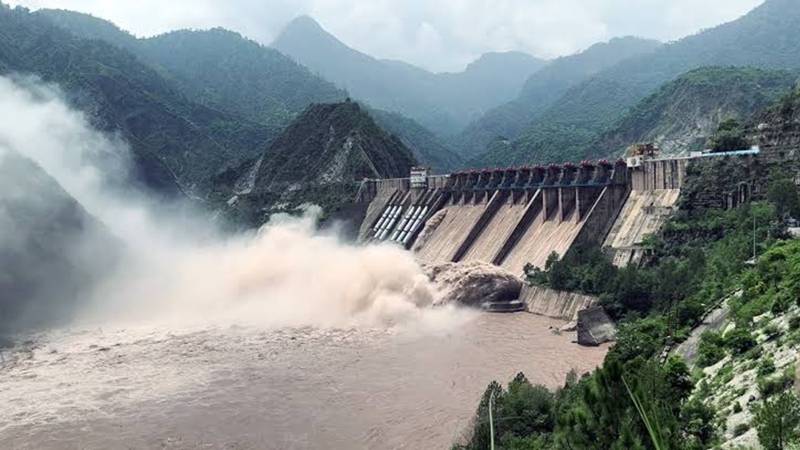
Although Pakistan has numerous water resources, it has failed to make the best use of them for energy production purposes. When it comes to hydropower production, the Indus River and its tributaries provide a lot of water, which can be used for irrigation and drinking, as well as energy production. From the mountain areas of Gilgit-Baltistan and Khyber Pakhtunkhwa to the plains of Punjab and Sindh, Pakistan possesses enormous potential for hydro energy generation.
There is an urgent need to focus on the development of this important resource as the country undergoes the challenges of rising fuel prices, dependence on oil imports, increasing energy requirements, and climate change. Hydro resources assume a significant role in solving problems related to the above-mentioned issues. As a type of energy generation, hydro resources provide an adequate balance between energy production and demand within the grid. Not only that, but the technique of hydropower plant construction, such as dam construction, is a multipurpose water resources technique that enables irrigation, water storage, and flood control.
The estimated hydropower potential of Pakistan is some 60,000 megawatts, making it possible for the country to further develop its own electricity source. Nevertheless, the realisation of this potential presupposes not only the construction of water basins, but also planning on a long-term basis, investments, and the use of modern technologies.
Pakistan’s Hydropower Base: Existing Capacity and Untapped Resources
Pakistan has made considerable progress in the development of hydropower infrastructure. NEPRA’s Performance Evaluation Report of Operational Power Plants for Fiscal Year 2024–25 indicates that 31 hydropower facilities with a total installed capacity of up to 11,492 megawatts exist in Pakistan. Important plants in the country include Tarbela, Mangla, Ghazi Barotha, Neelum-Jhelum, Tarbela’s Fourth Extension Plant, Karot, and Suki Kinari, along with smaller installations elsewhere in Pakistan.
Tarbela ranks among the largest hydropower facilities in Pakistan, with a capacity of 3,478 MW, as shown in the NEPRA report. Ghazi Barotha accounts for 1,450 MW, while the Fourth Extension of Tarbela adds another 1,410 MW to it. Other important schemes are the 969 MW Neelum-Jhelum project, the 884 MW Suki Kinari project, and the 720 MW Karot power plant, which, altogether, highlight the importance of hydropower generation in the country’s energy system.
The World Bank warns that climate change will lead to the disappearance of one-third of glacier volumes by 2100, so Pakistan should not depend purely on big dam construction
The figure for the national capacity has gone up since the NEPRA report was released. According to the Economic Survey of Pakistan 2025–26, the installed capacity of hydropower for FY2025 is estimated to be about 11,561 MW, while for July–March FY2026 it is around 11,615 MW. The figures for the nine months of the current fiscal year show that hydropower production was approximately equal to 27,961 GWh, accounting for 30.1% of Pakistan’s electricity generation. This further indicates the importance of hydropower generation in the country’s power mix.
However, the current capacity of Pakistan accounts for only a fraction of its hydropower potential. The International Hydropower Association’s 2025 World Hydropower Outlook reports that Pakistan has nearly 60 GW of hydropower resources, of which only about 18% has already been utilised. The report highlights that in 2021, Pakistan started a Decade of Dams programme, and it aims to increase current hydropower generation from about 9 GW to 20 GW by 2030.
The Variable Renewable Energy Integration and Planning Study conducted by the World Bank in 2020 sheds more light on this matter. The report suggests that Pakistan has a gross theoretical hydropower capacity of almost 475,000 GWh per year, of which only around 204,000 GWh can be said to be technically feasible. The report concluded that the hydropower potential available in small plants in Pakistan is approximately equal to 3,100 MW; notably, out of that number, about 1,500 MW is already available for development, according to the Alternative Energy Development Board.
The World Bank report concludes that hydropower development potential exists in Khyber Pakhtunkhwa, the Northern Areas, and Punjab. Northern Pakistan has the potential for large hydropower projects due to the rivers and mountains in the area, but the development of smaller plants is also possible in other areas of the country. Another opportunity is provided by the numerous canals in Pakistan, where the existing water resources can be put to effective use by generating a significant amount of electricity.
It is important to interpret these estimates in the appropriate manner. The figure representing 60 GW refers to the potential hydropower resources and should not be interpreted as the total volume of electricity currently produced. The estimates refer to an earlier investigation carried out by the Private Power and Infrastructure Board. The theoretical energy potential and the technically feasible energy potential are also two different measurements. In any case, the figures emphasise the potential available to Pakistan.
Building the Next Generation of Dams: Pakistan’s Major Projects and Global Lessons
Pakistan’s progress in hydropower generation will heavily depend on the completion of the next big projects being built as well as improvement in planning new investments. The most significant projects in the country’s development plan consist of the Diamer-Bhasha Dam, the Dasu Hydropower Project, the Mohmand Dam, and the Tarbela Fifth Extension. The importance of these projects lies in both their power-generating capacity and their water storage in the future for agricultural purposes and other needs. One of the most important planned power-generating projects in the country is the 4,500 MW Diamer-Bhasha Dam. This project may not only add power generation facilities, but will also provide the country with around 6.4 million acre-feet of additional water storage and help develop irrigation systems in the country. Its strategic importance is defined not only in terms of power generation, but also in terms of water storage.
The Dasu Hydropower Project represents yet another significant advancement in energy production, with an anticipated overall production capacity of 4,320 MW. The first phase of the project is projected to generate 2,160 MW of energy. There are expectations of the project being a major contributor to power generation. The Mohmand Dam, with a capacity of 800 MW, is another important multipurpose initiative presently under development on the Swat River. Apart from generating electricity, the project will also address water storage and irrigation, and increase water availability in and around Peshawar.
The Fifth Extension of Tarbela is also an important part of the development programme. It will create a new capacity of 1,530 MW. This will increase the installed generating capacity of the Tarbela complex. As per WAPDA, this extension is likely to generate about 1.466 billion units of electricity each year. This project has received funding support from various international institutions like the World Bank and the Asian Infrastructure Investment Bank. The importance of these projects was highlighted when WAPDA announced in July that the Diamer-Bhasha Dam, Mohmand Dam, Dasu Hydropower Project, and Tarbela Fifth Extension are expected to increase hydropower capacity by about 10,000 MW and gross water storage by about 10 million acre-feet.
Pakistan can also secure invaluable experience from other countries when it comes to developing hydropower. For instance, China has created the Three Gorges Dam, a hydropower plant with a capacity of 22,500 MW. The Itaipu Dam, belonging to Brazil and Paraguay, is another example of a successful hydropower project because of its capacity of 14,000 MW. The aforementioned facilities make it possible to generate electricity on a far larger scale due to the fact that huge river systems can also generate electricity. However, it is necessary to mention one more significant point, which is based on the following fact: there is a huge discrepancy between installed capacity and realised electricity generation. It is known that much depends on water flow patterns, seasonal river flow, and reservoir management, which makes it difficult for hydropower plants to deliver the exact amount of electric energy that they can generate. Therefore, it is necessary for Pakistan to implement the required projects.
Turning Water into Energy Security: The Way Forward
Even with Pakistan’s great hydropower potential, certain difficulties need to be addressed. Large dams have a huge requirement for capital investment and construction time, proper institutional coordination, and appropriate environmental and social planning. Any type of delay, increase in estimated costs, and land acquisition issues can affect the current progress of a project. Because of these problems, effective dialogue and negotiation become essential.
The other serious problem is climate change. The current hydropower system of Pakistan highly depends on the flows of water coming from the glaciers in the Hindu Kush, Karakoram, and Himalayan mountains. The World Bank study warns that climate change will lead to the disappearance of one-third of glacier volumes by 2100; however, it can be beneficial in the short term.
Therefore, Pakistan should not depend solely on big dam construction. The country needs a comprehensive strategy for hydropower development through the rehabilitation and modernisation of existing plants, the installation of small power plants, better use of canals, and improved water resource management. New types of turbines, high-quality servicing, effective forecasting, and modern control systems will help improve the operation of existing plants.
This hydropower strategy should focus on environmental and social issues. Big dams can play an important role in flood protection and the provision of water, but they also influence river ecosystems, land utilisation, local populations, and sediment movement. Environmental impact assessments, adequate consultations with affected people, fair compensation, and proper resettlement should be carried out as part of project development instead of being mere formalities.
Cooperation between water and energy institutions should be reinforced in Pakistan. Hydropower projects should be planned in accordance with national electricity demand, the transmission system, irrigation needs, and climate change considerations. The determination of investments needs to happen upon the carrying out of extensive feasibility studies, aimed at the assessment of all financial, environmental, and social implications of each project being implemented. The development of this sector may be financed either through a public-private partnership approach or via international aid, as long as the projects are expected to pay back their costs eventually.
The water resources in Pakistan still remain unrealised, despite the fact that the government has announced plans to tap into them. Thus, it is necessary for the government to develop consistent approaches to the implementation of projects and implement not only major hydropower projects, but also smaller ones.
The potential is enormous. Pakistan not only possesses the necessary water resources, but has also acquired significant engineering experience over the years, with a vast portfolio of big projects coming into existence. The main challenge nowadays is to convert this potential into sustainable electricity and wealth for the economy of the country.