

Pakistan’s automotive industry has spent much of 2026 waiting for a policy that was supposed to determine its direction for the next five years. The Auto and Auto Parts Manufacturing Policy 2026–31 was expected around June or July, following the expiry of the previous policy on the 30th of June. Yet November is drawing to a close, the year is approaching its end, and 2027 is already around the corner. Pakistan still does not have a formally approved and notified policy that bears the name of the year that is almost over. There is something deeply ironic about a five-year policy for 2026–31 potentially taking effect when its first year is nearly behind us.
What was supposed to be a roadmap for industrial development has instead become a prolonged exercise in uncertainty. The government has held consultations, constituted committees, announced deliberations, and discussed revisions. The Prime Minister has reportedly approved the final draft, and subsequent media reports indicate that the government secured the nod of the International Monetary Fund (IMF) before that approval. Yet the policy still awaits the remaining formal approval process, including consideration by the federal cabinet. The question is no longer simply when the policy will arrive. It is why an industry of such economic significance has been made to wait for so long, and why the government has failed to communicate a clear and definitive timeline.
The sequence of events raises further questions. Earlier reports suggested that the draft had to be submitted to the IMF for review and clearance. Later, the government announced that the Prime Minister had approved it after securing the IMF’s nod. If the IMF has raised no objection and the Prime Minister has approved the draft, what exactly is preventing its formalisation? Which provisions remain unsettled? Are there outstanding fiscal or legislative requirements? And why has the complete policy framework, along with a clear implementation schedule, not been placed before the public?
Why is the cat still not out of the bag? Is the government reluctant to disclose the final terms because contentious decisions remain unresolved, or has the process become so complicated that even the policymakers cannot agree on what should finally be implemented? The industry deserves answers, not another round of speculation.
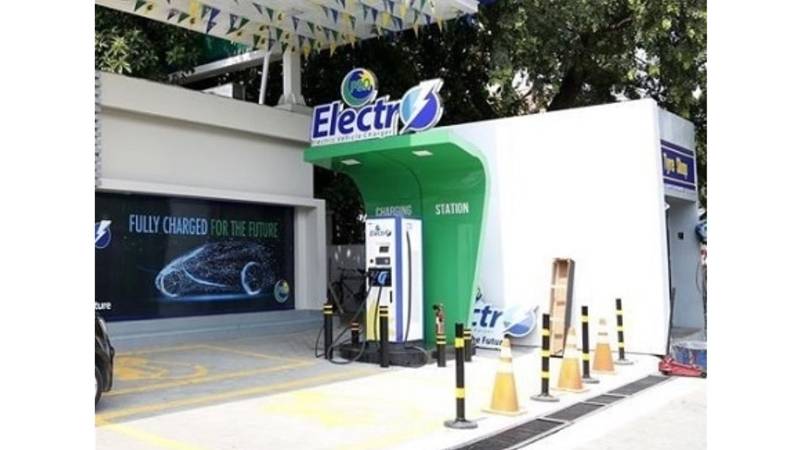
Electrification is important, but it cannot become a substitute for industrial planning: a country cannot simply announce EV targets and expect charging infrastructure, consumer confidence, local manufacturing, and a competitive supply chain to emerge by themselves
The consequences are already visible. Manufacturers cannot confidently plan production; investors cannot make long-term commitments; vendors cannot determine their capacity requirements; and consumers remain uncertain about vehicle prices, taxation, and availability. The absence of a clear and settled framework governing commercial imports, tariffs, and localisation has further complicated business decisions. In an industry where investment decisions run into billions, uncertainty is not a minor administrative inconvenience; it is an economic liability.
The automotive sector does not need another collection of ambitious targets and attractive press releases. It needs a coherent industrial strategy grounded in technical competence, commercial realities, and an understanding of how automotive markets actually function.
Technical Literacy and the Electrification Push
One of the most concerning aspects of the policy debate is the apparent disconnect between the technical complexity of the industry and the expertise informing its direction. Pakistan has increasingly placed electric vehicles (EVs) at the centre of its automotive ambitions, but promoting electrification is not the same as understanding the technology. New Energy Vehicles (NEVs) encompass different powertrain technologies, including battery electric vehicles (BEVs), plug-in hybrid electric vehicles (PHEVs), and range-extended electric vehicles (REEVs). Each has distinct engineering characteristics, operational requirements, and implications for taxation, localisation, and infrastructure.
Even basic questions surrounding vehicle performance require technical understanding. The New European Driving Cycle (NEDC) and the Worldwide Harmonised Light Vehicles Test Procedure (WLTP), for instance, are different vehicle-testing methodologies. Their range figures are not interchangeable, nor can one be converted into the other through a universal mathematical formula. Driving conditions, testing parameters, and vehicle configurations affect the results. Policymakers making decisions about EV incentives, consumer claims, and technological targets must understand these distinctions before designing regulations around them.
It is difficult to build a credible automotive policy when technical literacy risks becoming secondary to the political enthusiasm for promoting electric vehicles. Electrification is important, but it cannot become a substitute for industrial planning. A country cannot simply announce EV targets and expect charging infrastructure, consumer confidence, local manufacturing, and a competitive supply chain to emerge by themselves.
Balancing Local Manufacturing and Commercial Imports
Equally worrying is the absence of a sufficiently balanced approach towards local manufacturing and commercial imports. Pakistan’s automotive industry cannot remain permanently insulated from competition, but neither can domestic manufacturers and thousands of component suppliers be exposed to abrupt tariff liberalisation without addressing their structural disadvantages. High energy costs, expensive financing, taxation, and dependence on imported raw materials already place local manufacturers at a considerable disadvantage. The domestic vendor industry has also expressed concerns that premature tariff reductions could undermine local parts manufacturing and turn Pakistan into an import-dependent automobile market.
The answer is neither indefinite protectionism nor indiscriminate liberalisation. Pakistan needs a transparent and predictable import regime that encourages genuine competition, prevents market manipulation, and allows consumers access to quality vehicles. Commercial imports should operate under clear rules, with appropriate safety, environmental, and quality standards. At the same time, local manufacturers must be incentivised to increase value addition, transfer technology, develop domestic suppliers, and become internationally competitive.
The government has announced an ambitious export target of approximately $6 billion over the five-year policy period. It has also proposed localisation requirements, export incentives, and penalties for manufacturers failing to meet their commitments. These objectives may sound promising, but targets do not manufacture vehicles, develop components, or generate exports. That requires investment, technical capacity, reliable infrastructure, and, above all, policy consistency. An industry cannot be made export-oriented simply by imposing export targets upon manufacturers.
Institutional Competence Over Political Appointments
Pakistan must also reconsider who is entrusted with shaping its automotive future. The industry requires competent ministers, technically qualified policymakers, and meaningful representation from people who understand vehicle manufacturing, engineering, supply chains, taxation, and international trade. Consultation should not be reduced to formal meetings followed by press conferences. It must involve people capable of identifying practical problems and developing workable solutions.
A minister responsible for an industry does not necessarily need to be an automotive engineer. However, the ministry must be supported by professionals who understand the sector, can challenge flawed assumptions, and are capable of evaluating policy proposals against international standards and domestic realities. Political appointments cannot substitute for institutional competence. Pakistan needs people who understand the difference between promoting electric vehicles and building a sustainable automotive industry.
The automotive industry is not merely about selling cars. It supports manufacturing, engineering, employment, technology transfer, foreign investment, and an extensive network of small and medium-sized enterprises. Its deterioration would have consequences extending far beyond automobile showrooms. The government cannot afford to treat the sector as an experimental ground for policies that change direction every few months.
Waiting for Clear Rules
Pakistan has already lost valuable time. The previous policy expired in June, expectations were raised for a timely successor, and the months that followed were consumed by uncertainty. The Prime Minister’s reported approval and the IMF’s reported clearance are developments, but neither should be confused with a policy that has been formally adopted, notified, and implemented. The real test will be its final provisions, implementation timeline, and consistency.
The automotive industry deserves better than another political announcement followed by another round of consultations. It deserves transparency, technical competence, and policymakers who understand the difference between promoting a technology and building an industry around it. Until that distinction is understood, Pakistan’s automotive ambitions will remain precisely that: ambitions on paper, with an industry left waiting for direction.
An industry cannot be expected to invest, manufacture, or compete when the government cannot decide what rules it intends to play by.