

On Tuesday April 22, a devastating terrorist attack in Pahalgam, a prominent tourist destination in Indian-administered Jammu and Kashmir, resulted in the deaths of at least 26 individuals, including 24 Indian nationals and at least one foreign tourist, leaving at least 17 others injured. The incident marked the deadliest attack on civilians in India since the 2008 Mumbai attacks. Following the attack, angry rhetoric from India - especially from furious Indian netizens demanding retribution - has obliged Pakistan's armed forces to adopt a high alert posture, and fighter aircraft have been deployed to forward operating bases near the eastern border in order to deter - and if the situation arises, respond - to a potential Indian attack, evocative of the February 26, 2019 Balakot airstrike.
At approximately 2:30 pm local time on Tuesday, multiple gunmen opened indiscriminate fire on tourists in the Baisaran meadow, a picturesque area in Pahalgam referred to as "mini Switzerland" by the locals. The killing of at least 26 people, mostly male tourists, and over a dozen others injured, also makes this one of the deadliest terror attacks in Indian Kashmir in recent years; comparable in scale to the February 2019 Pulwama attack, where 40 soldiers were killed and at least 35 were injured. The attack reportedly lasted for 10 to 15 minutes, and eyewitnesses reported that the gunmen fled into the nearby pine forests after firing on the tourists.
Known for its scenic beauty, Pahalgam is a starting point for those who undertake the annual Amarnath Yatra pilgrimage on foot, trekking nearly 48 kilometres to the Amarnath cave, dedicated to Lord Shiva. It is located in Anantnag district, situated in the southern part of the Kashmir valley, and is estimated to be over 100 kilometers (approximately 60 miles) away from the Line of Control (LoC) that separates the disputed region of Jammu and Kashmir between India and Pakistan.
What we know so far
The assault was carried out by at least three or four - with some reports alleging up to six - militants who opened indiscriminate fire on tourists in the area. Eyewitness accounts, including that of a survivor whose father was killed, suggest that the attackers, some dressed in clothes resembling local police, descended from a nearby hill and specifically targeted men after inquiring about their religious affiliation. This indicates a deliberate attempt to specifically target profiled individuals or members of a particular community, raising concerns about the brazen nature of the attack. Such deliberate targeting is reminiscent of ethnically motivated attacks against Punjabis in Balochistan, whose domicile is identified by Baloch separatist militants when they check identity documents of passengers on hijacked buses, after which Punjabi males are separated from others and executed. Most of the Pahalgam attack victims were Hindu men. Some eyewitnesses claimed the gunmen deliberately targeted non-Muslims, but others have described the shooting as indiscriminate. A local Muslim man, identified as Syed Adil Hussain Shah, was also among the victims.
Based on eyewitness accounts, the attack appears to have lasted for a relatively short but intense period. Some survivors reported hearing prolonged bursts of gunfire, and described the attackers firing indiscriminately for at least 4 to 5 minutes after they emerged. The attackers reportedly used M4 Carbines and AK47 assault rifles, and as of Tuesday evening, between 50 and 70 shell casings had been recovered from the site of the incident. The attack ended when the gunmen retreated into the surrounding dense pine forests. Following the attack, local police and paramilitary forces rushed to the scene to evacuate the wounded, and security forces including the army launched a joint cordon and search operation to hunt the attackers, which is still ongoing as of the filing of this report.
Emergency services responded promptly, and critically injured victims were transported to hospitals in Anantnag and Srinagar. Military choppers were dispatched to evacuate those injured in the attack, as the area is only accessible on foot or horseback.
At least two foreign tourists were initially reported to be among the 26 people killed in the attack. The victims included nationals from Nepal and allegedly also from the United Arab Emirates, apart from 22 Indian tourists hailing from across eleven Indian states, and two local residents from Jammu and Kashmir. As of the filing of this report, sources had identified 27-year-old Sudeep Neupane from Nepal as confirmed dead, while the Emirati tourist was not verified to be among the deceased, and his identity and status remains to be validated by credible sources. Latest reports indicated that an officer of the Indian navy, identified as lieutenant Vinay Narwal, as well as an official from India's intelligence bureau (IB), were also killed in the attack. Lt. Narwal was with his wife Himanshi on their honeymoon: they had just gotten married on April 16.
Claim of responsibility
A relatively unknown group, "The Resistance Front" or TRF, a shadow outfit or ‘rogue’ module of the banned Lashkar-e-Taiba (LeT) which is also purported to have affiliations with the outlawed Hizbul Mujahideen (HuM), claimed responsibility for the attack in a social media message. TRF alleged that their targeted victims were linked to Indian security agencies, and cited discontent over the alleged settlement of over 85,000 "outsiders" in the region, claiming their attack was aimed at disrupting if not preventing "demographic change".
While it is the only acknowledgment of involvement in the attack thus far, the TRF claim has yet to be independently verified. It is also possible that a terror cell or module from LeT, HuM, or another militant group, may have carried out this attack of its own accord, but until investigations reveal credible evidence to prove or dispute this, these remain conjectures and nothing else.
Indian authorities have so far released sketches of three suspected terrorists involved in the attack, identifying them as: Asif Fauji alias “Moosa”, Suleman Shah alias “Yunus”, and Abu Talha alias “Asif”. Some reports suggest that both local and foreign terrorists were involved, with initial intelligence indicating that two of the attackers spoke Pashto, and that they may have also conducted reconnaissance of the area prior to the attack. The terrorists were reportedly “well-prepared” for a prolonged assault or engagement with security forces, equipped with what Indian media outlets have dubbed a "Pakistan-style toolkit," including backpacks containing dry fruits, medicines, and communication equipment - reminiscent of the 2008 Mumbai attacks. Some news media reports have also mentioned a fourth suspect, but the identification details for this individual have not been consistently reported across publicly accessible sources. One Indian news source has claimed that Indian intelligence agencies have identified Saifullah Kasuri alias “Khalid”, alleged to be a top LeT commander, as the mastermind behind the Pahalgam attack.
Terrorists who fired on tourists at Baisaran meadows in Pahalgam are neither in Indian custody, nor have they been eliminated by security forces
The suspected attackers are neither in custody of Indian authorities, nor have they been confirmed dead or killed by Indian security forces, as of the filing of this report. As noted earlier, a joint cordon and search operation has been initiated by local police, the Indian army and the paramilitary CRPF, to apprehend the terrorists: an intense large-scale operation is unfolding across Anantnag district, focused on the area in and around Pahalgam as well as the surrounding forests. To support this manhunt, tens of thousands of troops have been deployed across the region, and numerous checkpoints are also being established. Nearly a hundred suspected sympathisers are also reported to have been detained during initial operations. Indian authorities are expected to release more information once progress is made in the investigations of the local Jammu and Kashmir police as well as India’s national investigation agency, NIA, whose team is on site assessing the incident under the command of an officer of inspector general (IG) rank.
The attack has triggered widespread condemnation and outrage in India. Premier Narendra Modi, who cut short his state visit to Saudi Arabia, has vowed that the perpetrators will be brought to justice. Indian home minister Amit Shah, the second-most powerful man in Modi’s government, visited the attack site and paid his respects to the deceased, affirming that the terrorists would not be spared. Shah went to Pahalgam to oversee the situation and convene emergency meetings until premier Modi returned to take charge. India’s defence minister Rajnath Singh promised that India would take every “necessary and appropriate step” to pursue not just the terrorists who perpetrated the attack, but also those who were “sitting behind the scenes” and conspiring to commit such “nefarious acts”.
“This attack is much larger than anything we've seen directed at civilians in recent years," Omar Abdullah, chief minister of Indian-administered Jammu and Kashmir, said. Calling the Pahalgam attack “a wound upon the very soul of Jammu and Kashmir", Abdullah wrote to political leaders of Indian-administered Jammu and Kashmir, inviting them to an all parties’ meeting to be held on the afternoon of Thursday 24 April.
International reaction
The joint statement issued after PM Modi’s visit to Saudi Arabia stated that both countries condemned the Pahalgam terror attack as well as the phenomenon of cross-border terrorism, and called on all countries to reject the use of terrorism against other countries.
The international community swiftly condemned the attack. Leaders from the United States, Russia, Italy, France, Israel, Nepal, Singapore, the United Nations, and even the Afghan Taliban, denounced the violence and reiterated that attacks on civilians are unacceptable. The incident coincided with U.S. vice president JD Vance’s visit to India, adding a significant layer of diplomatic sensitivity to the situation. JD’s wife Usha Vance is of Indian heritage, so the U.S. vice president is likely to feel India’s pain and anger more deeply. Vance’s boss, U.S. president Donald Trump, strongly condemned the attack and conveyed his full support to Modi in a phone call after the incident. China and Pakistan also condemned the incident, but Pakistan’s concern and condolences are expected to fall on deaf ears across India’s state and society, where public anger is boiling over the tipping point, especially on social media.
Blaming Pakistan is “the easy way out”
While the TRF claimed responsibility for carrying out the attack, Indian authorities continue to suspect the involvement of Pakistani-based militants, due to historical trends of cross-border terrorism, as well as the obvious unwillingness to explore any element pointing to homegrown militancy from within Indian-administered Kashmir, especially after the disputed region’s autonomy was revoked by the Modi government in August 2019. Still, no direct evidence linking Pakistan to the Pahalgam attack has been made public so far.
Meanwhile, Pakistan has denied any involvement and dismissed Indian allegations of having any link to the incident. Defence minister Khawaja Asif said Pakistan has no connection to the Pahalgam terror attack, emphasising that Pakistan does not support terrorism in any form anywhere, and said that it was Pakistan’s national policy that innocent people and non-combatants should never be targeted in local conflicts. He also urged India against the knee-jerk reaction of blaming Pakistan for the terror attack. While customarily pointing to India’s interference in Balochistan, and noting that India’s security forces had long been inflicting pain and suffering on local people who were demanding their fundamental rights, defence minister Asif told the Pakistani media that anti-state terrorism in India was “all homegrown”, adding that “there are revolutions in different so-called states against India: not one, not two, but dozens, from Nagaland to Kashmir, in the south, in Chattisgarh, in Manipur; in all these places, there are [armed] revolutions against the Indian government … when the locals are revolting and taking up arms, then blaming Pakistan is the easy way out”.
Pakistan's national security committee will be meeting in an emergency session on the afternoon of Thursday 24 April to take stock of the situation and evaluate the options available to Pakistan, in light of the possible strategies that Pakistan will now be forced to pursue.
Parallels to previous attacks
Needless to say, the Pahalgam attack bears resemblance to previous incidents in the region, such as the 2016 Uri attack and the 2019 Pulwama bombing, both of which led to heightened military tensions between India and Pakistan. Like the attack on Hindu pilgrims in Reasi in June 2024, this incident targeted civilians, including tourists, aiming to spread fear and disrupt normalcy in the region. The alleged involvement of a LeT-affiliated terrorist faction echoes the trend seen in many past attacks, as TRF also claimed responsibility for the Reasi terror attack, with LeT also being implicated in the police investigation.
Such attacks invariably have a detrimental impact on tourism, a vital sector of the Kashmiri economy, as they create an atmosphere of fear and insecurity. Due to these patterns, there is a risk of escalating violence and security challenges in the coming days, both within Indian-administered Kashmir and along the India-Pakistan border as well.
Possibility of a False Flag Attack
While less likely given the high number of civilian casualties, the possibility of this being a false flag attack - orchestrated by India itself to gain international sympathy and turn the world against Pakistan - is also being discussed on social media. In the context of the ever-deepening mistrust between India and Pakistan, allegations of false flag operations have been made by both sides in the past. Pakistan's ministry of foreign affairs (MOFA) has previously accused India of staging such attacks to malign Pakistan and divert international attention from the human rights situation in Indian-administered Kashmir.
So far, no evidence directly linking Pakistan to the Pahalgam attack has been made public
Pakistani voices have suggested the possibility of the Pahalgam attack being a false flag operation by India to discredit Pakistan and justify stringent security measures in Kashmir. Allegations of this nature have been made in the past, including claims that the 2019 Pulwama attack was orchestrated by India’s BJP for political gains in the elections that followed soon afterwards. However, these assertions lack concrete evidence and are often viewed through the lens of geopolitical rivalry.
Without credible evidence to prove the claim, attributing the attack to a false flag operation would be unhelpfully speculative and would further inflame tensions. The focus of ongoing investigations by Indian authorities will most likely be on identifying the perpetrators and their links to entities in India as well as Pakistan. Undertaking these investigations in a professional, objective and unbiased manner will lead authorities to the truth; however, there are strong indications that India is hell-bent on pinning the responsibility for the Pahalgam terror attack on Pakistan.
Pahalgam is not proximate to LoC
As former caretaker information minister Murtaza Solangi notes, Pahalgam is not a border town that Pakistanis could cross into Indian Kashmir. This is illustrative of the Pakistani state’s position that there is a greater likelihood of homegrown radical militants being involved in - as opposed to cross-LoC infiltrators being responsible for - the Pahalgam attack. Even so, the likelihood of the latter is only relatively reduced, and cannot be completely rejected without verifiable proof.
As already noted, Pahalgam is approximately 100 to 110 kilometers (62 to 68 miles) from the Line of Control (LoC) in Jammu and Kashmir, depending on the specific route and points of measurement. The closest segment of the LoC lies to the northwest of Pahalgam, near the districts of Kupwara and Baramulla. Moreover, Pahalgam is much closer to the LoC than the international border between India and Pakistan: the closest point of which is at the Jammu or Sialkot sector approximately 250 to 200 kilometres southwest of Pahalgam.
Pahalgam being located relatively far from the immediate border region is precisely why it has, over the years, become a popular tourist destination in the Kashmir valley, as distance separates it from the insecurity and volatility of the LoC. In contrast, Pulawa is approximately 40-45 km southeast of the LoC that runs through the Pir Panjal range, while Uri is just 10-12 km east of the Kaman Post (known as Aman Setu or ‘bridge of peace’ once upon a time) at the LoC. Therefore, it is unlikely that infiltrators who crossed the LoC perpetrated the terror attack: unless they managed to cross over despite strict Indian monitoring and surveillance, and evaded detection and capture by the authorities not just until the time they perpetrated the attack, but even up till now.
India's response
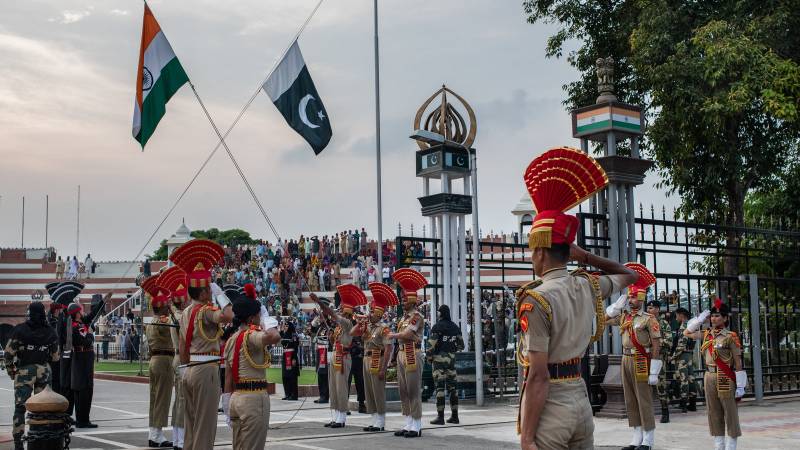
A few hours prior to the filing of this report, PM Modi had chaired an emergency meeting of India’s cabinet committee on security (CCS) at Lok Kalyan Marg, New Delhi. The CCS declared all Pakistani military advisors in India - defence attachés representing all military services - as personae non grata, and ordered them to leave India within a week. India has also ordered a reduction in the strength of its high commission from 55 to 30. Pakistanis would also be banned from traveling to India under SAARC visas, and any Pakistani already in India on such visas had 48 hours to exit the country. Moreover, India has also ordered the immediate closure of the Attari-Wagah border crossing, a key point for trade and civilian movement between the two nations.
In addition to travel restrictions, India’s ministry of external affairs (MEA) announced that it would be immediately suspending the Indus Water Treaty, a bilateral agreement that has governed the distribution of river water between India and Pakistan since 1960. In a briefing to the media earlier today (Wednesday 23 April), Indian foreign secretary Vikram Misri outlined the key decisions made during the emergency session of the cabinet. According to Misri, India will hold the Indus Waters Treaty “in abeyance with immediate effect”, he said. This signals a notable shift from decades of Indo-Pak water cooperation, which continued even during periods of military tension and diplomatic strain. India's decision to formally cease adherence to the treaty is bound to adversely affect water flows received by Pakistan in the Indus, Jhelum and Chenab rivers, with potentially deep and profound ramifications for Pakistan's agricultural sector - the country's economic backbone, as nearly a quarter of its water demand is fulfilled by the Indus river system - and the rural population, over two-thirds of whom are dependent on the agronomy for their livelihood.
While this is how things stand as of Wednesday 23 April, it is certainly not the totality of options available to India in terms of responding to the incident. The Pahalgam attack has reignited tensions between India and Pakistan, and multiple sources report that Indian officials are contemplating various responses, including military retaliation, in addition to the further downgrading of bilateral diplomatic relations. Depending on the findings of its official investigations, and even more so on India’s response, the Pahalgam attack has the potential to significantly escalate tensions between India and Pakistan. And this potential is definitely not without merit.
In response to the 2019 Pulwama attack, India conducted airstrikes in Pakistan's Balakot region, which forced a Pakistani counterstrike at six military targets in Indian-administered Kashmir within 24 hours, along with alleged preparations for nuclear retaliation against India. Indian fighter jets pursuing Pakistani aircraft who had bombed the Indian targets were intercepted as they breached the LoC: hostilities began to recede from their zenith only after lines of communication were restored for the safe return of Indian air force (IAF) wing commander Abhinandan Varthaman, whose MiG-21 was shot down. A similar military response from India could escalate tensions further, risking broader conflict along the lines of the Russia-Ukraine war, albeit with the ominous ‘nuclear overhang’.
In the aftermath of an attack as significant as the one at Pahalgam, India is likely to further strengthen security measures in Indian-occupied Kashmir to suffocating levels not seen in a decade, including increased troop deployment, augmented patrolling, and stricter surveillance, particularly in vulnerable areas and major tourist spots. India is also expected to intensify its covert operations on Pakistani soil, targeting individuals and/or infrastructure that it believes is involved in orchestrating or supporting attacks against India. The nature, scale and location of such operations will of course be highly sensitive, and is accompanied by the risk of covert, sub-conventional retaliation as well as overt, conventional escalation.
If India carries out even a one-off punitive military action against Pakistan, terrorists will be encouraged to launch more attacks against both countries because that way they can essentially control and trigger the escalation ladder between two nuclear-armed adversaries
If the Indian government firmly believes - or is able to prove without a shadow of a doubt - that the attack was orchestrated or supported by Pakistan, it would increase the potentiality of military retaliation akin to February 2019 being considered and executed. Options range from ‘surgical’ strikes on targets across the LoC, to broader military mobilisation such as after the December 2001 attack on India’s parliament. Again, such actions carry a significant risk of further escalating tensions between the two nuclear-armed neighbours, and increases the potential of accidents that could lead to both adversaries inadvertently stumbling into an all-out war.
Ultimately, it puts terrorists and violent non-state actors in the driving seat, since their asymmetric attacks become the most potent factor in determining whether India and Pakistan go to war or not. And while history already offers many possibilities as precedents in Indo-Pak bilateral relations, one precedent that both must avoid setting is the use of nuclear weapons. In fact, at an event organised by a think-tank in Islamabad, Pakistan’s chairman joint chiefs of staff committee (CJCSC) General Sahir Shamshad Mirza called on India to take reciprocal nuclear risk reduction measures and play a constructive role in maintaining geostrategic equilibrium as emerging technologies are being utilised in military contexts.
What to expect in the coming days
Indian security forces will definitely intensify their search operations to apprehend the perpetrators of the Pahalgam attack, as well as crack down on all suspected terror operatives and cells in Jammu and Kashmir. Encounters between security forces and militants could occur in any area where they are located or identified, as Indian forces would be adopting an aggressive and vigilant posture for the foreseeable future. There is also a strong likelihood of public protests and demonstrations in Indian-administered Kashmir as well as other parts of India condemning the attack, exhibiting solidarity with the victims and demanding action. And as always, political leaders and commentators in both India and Pakistan - especially those known to be hawks and averse to Indo-Pak peace - will engage in aggressive, jingoistic rhetoric, shaping public opinion by hardening stances against peace.
India will also engage in concerted diplomatic outreach with its many international partners to brief them on the attack and the findings of their investigations, seeking to further isolate Pakistan as “a state sponsor and regional hub of terror”, which has been a central feature of India's foreign policy since the 2008 Mumbai attacks, and even more so since the ascension of BJP led by Narendra Modi in 2014. The presence of the American vice president, and any comments he makes against Pakistan, will also draw geopolitical lines between the U.S. and India on one side, and China and Pakistan on the other. India could also engage more cohesively with the Afghan Taliban, with the aim of encircling Pakistan, actualising Pakistan's fear of a two-front national security challenge, and completely inverting Pakistan’s strategic depth.
Depending on India's response strategy, there is a heightened risk of cross-border incidents as well as military posturing along the LoC, including but not limited to ceasefire violations in the form of mortar shelling and artillery fire from either side. This could possibly extend to the international border as well. Both India and Pakistan are expected to deploy unmanned surveillance and electronic counter-surveillance technologies along the border; to test their drone capabilities and operational paradigms in a real-world tactical setting. And to be fair, shooting down each other's unmanned aerial platforms - though still problematic - would still be an ‘acceptable loss’ compared to downing each other's piloted aircraft, or shooting and killing each other's soldiers. Scenarios involving military casualties will cascade into a conflagration that nobody will be able to contain, especially because taking the initiative towards de-escalation will deliberately be misconstrued as ‘losing face’, and nationalistic pride forbids Indians and Pakistanis to even contemplate such an initiative in the bilateral dimension.
Tensions across the LoC
In the wake of the Pahalgam attack, the Indian army has heightened its alertness along the LoC. Reports indicate that India has deployed loitering munitions to counter potential infiltration attempts along the LoC. A video circulating on social media, purportedly showing Indian artillery retaliation against Pakistan, has been debunked: fact-checkers have confirmed that the footage is from 2020 and is unrelated to the recent events. Nevertheless, the atmosphere along the LoC is extremely volatile. Both militaries are on high alert, and reports indicate heightened military activity and alert levels on both sides, with potential for escalation to be determined by the Indian government's actions in the coming days. But while the situation remains tense, there are no credible reports so far of significant escalations or casualties along the LoC. As of the filing of this report, there has not been any confirmed exchange of artillery fire across the Line of Control (LoC) between India and Pakistan in the wake of the Pahalgam terror attack. For now, both nations appear to be maintaining a cautious stance in the military dimension to prevent further escalation.
India's defence minister Rajnath Singh has directed the armed forces to be on high combat alert, and to intensify anti-terror operations in Indian-administered Jammu and Kashmir. The massive search operation by the Indian army, CRPF, and police, currently underway in the Baisaran valley and surrounding areas to track down the perpetrators of the attack, could likely evolve into a more notable presence of security personnel enforcing stringent protocols across Jammu and Kashmir, as checkposts are also being set up across the region. Security experts are calling for the reinforcement of the counter-insurgency grid in Kashmir, and for shifting from a reactive to a pre-emptive posture. Some reports also suggest that the Indian air force (IAF) has placed its fighter jets, including its vaunted Dassault Rafale aircraft, on high alert.
Online flight tracking data shared by defence observers appeared to show possible deployment of Pakistani fighter aircraft and other aerial warfare assets to forward operating bases near the Line of Control (LoC). This could be interpreted as a precautionary measure in anticipation of a potential Indian military strike.
The Pahalgam attack also threatens to derail efforts to promote tourism and economic development in Kashmir: initiatives that have been central to the Indian government's strategy since revoking the region's special status in 2019. A resurgence of violence could undermine these efforts, and would lead to increased militarisation as well as restrictions on civil liberties of the residents of Indian-administered Jammu and Kashmir.
Fight with us - against terror
Tensions in South Asia have indeed escalated dramatically after this latest terror attack, as many Indians are demanding Pakistan be ‘punished’ in a way similar to Indian airstrikes after the 2019 Pulwama terror attack. As a side note, PTI supporters (such as Wajahat S. Khan and Waqas Ahmed) did not miss the opportunity to broadcast their opinion that Pakistan is isolated and faces India alone on the world stage; in the ostensible belief that only incarcerated former prime minister Imran Khan could retaliate to Indian transgressions, and no other Pakistani leader has the gumption to deal with India militarily. This is, of course, Pakistan's internal matter and, more importantly, a tangential argument with little relevance to the current discussion. But it must be acknowledged that such ‘unpatriotic’ views are being expressed by that very ecosystem - if not exactly those very people - which the Pakistani military establishment nurtured as domestic political “strategic assets” from 2018 if not 2011 onwards. And everyone knows how the deep state's cultivation of such proxies and “strategic assets” has never delivered any positive results for Pakistan in the long run.
If India and Pakistan escalate bilateral tensions and evoke another military confrontation similar to - or more dangerous than - February 2019, then it will encourage militants and violent non-state actors to continue executing such terror attacks against India: doing so allows them to essentially control and trigger the escalation ladder between two nuclear-armed adversaries, especially because India remains predisposed to blame Pakistan for every terror attack in Indian-administered Kashmir.
The victims of Pahalgam absolutely deserve justice, but they also deserve to not be remembered as symbols of yet another Indo-Pakistan confrontation
The Pahalgam terrorist attack is a deeply concerning incident which will significantly impact the security situation across Asia and specifically in the Kashmir region, and further detriment the already strained relations between India and Pakistan. A thorough investigation into the attack is necessary to identify the perpetrators and their affiliations. India's response will need to be carefully calibrated, balancing the need for decisive action against terrorism with the imperative to avoid escalating regional tensions, if the latter objective is of any value to a political government under immense public pressure to retaliate. Parallels with previous attacks highlight the cyclical nature of violence in the region and the persistent challenges in achieving lasting peace and security. Even though the coming days will be critical in determining the trajectory of events - whether this attack leads to further conflict, or a renewed focus on de-escalation and dialogue - Tuesday's heinous terror attack in Pahalgam also represents a significant setback in the quest for peace and stability in Kashmir. While the immediate focus is on bringing the perpetrators to justice, the broader implications for India-Pakistan relations and regional security are profound. A measured and evidence-based approach is critical in preventing further escalation and in addressing the underlying issues fueling the conflict.
In the wake of this horrific terrorist attack, it is imperative to realise that, once again, it is innocent civilians who are suffering the pain inflicted by senseless violence and unjustifiable terror. No loss of innocent life is ever justifiable, and no cause, however passionately held, can excuse the targeting of unarmed civilians in an act designed to instill fear and ignite division. Pakistan and India both must find a way to stand united in condemning terrorism in all its forms and manifestations. Whether such attacks occur in Philadelphia, Paris, Peshawar, or Pahalgam, the underlying intent - to destabilise societies and fracture human solidarity - must be unequivocally rejected.
The events in Pahalgam underscore the urgent need to shift from reactive blame games and retaliatory posturing, to proactive and cooperative regional counterterrorism strategies. India and Pakistan, as two nuclear-armed neighbours with a shared history, bear a collective responsibility to prevent the South Asian region from plunging into another cycle of violence. This is not the time to escalate tensions or indulge in speculative accusations without irrefutable evidence; it is a moment for restraint, reflection, and renewed efforts toward dialogue, even if out of public view for the time being.
For far too long, Kashmir has been a theatre of bloodshed and political brinksmanship, with innocent lives caught in the crossfire of nationalist fervour and geopolitical rivalry. If the perpetrators of the Pahalgam attack have any transnational linkages whatsoever, then the only viable path forward is a jointly coordinated response grounded in intelligence-sharing, legal accountability, and a shared commitment to dismantling the regional infrastructure of terror, as well as the regional ecosystem of extremism. Conversely, if this attack was orchestrated locally, it still calls for an honest introspection of the policies and conditions that allow extremism to fester. Either way, both India and Pakistan must recognize that the true enemy is not each other, but the spectre of terrorism that has haunted the subcontinent for decades.
Instead of allowing this tragedy to become another pretext for military confrontation or political posturing, both governments should seize this painful moment as a moral and strategic imperative to restart dialogue, de-escalate hostilities, and establish concrete mechanisms of cooperation against a threat that knows no borders. The cost of inaction - or worse, the cost of impulsive escalation - could be catastrophic not just for South Asia, but for global peace. As history has shown repeatedly, terrorism thrives in environments of mistrust, polarisation, and impunity. Failure to act constructively now would only embolden extremist actors and undermine the security of both nations.
The victims of Pahalgam deserve justice: they also deserve to be remembered not as symbols of yet another Indo-Pakistan confrontation, but as catalysts for a long-overdue shift toward reason, responsibility, and regional solidarity. It is only through empathy, cooperation, and a shared rejection of violence that peace can begin to take root in Kashmir and beyond.
A fragile road to peace amidst the din of war drums
The heinous terrorist attack in Pahalgam deserves unequivocal condemnation. Such acts of violence, targeting civilians in a place of natural beauty, are abhorrent and represent a profound assault on humanity. Terrorism, in all its forms and manifestations, regardless of the perpetrators, motives, or the identities of its victims, is a scourge that destabilises regions, breeds fear, and undermines the very fabric of civilised society. The grief and rage felt across India at this moment is understandable, and recognising the plight of freedom-seeking Kashmiri Muslims should not be construed or employed as an excuse to refrain from offering heartfelt condolences to the bereaved families, and wishing a swift and complete recovery to the injured.
This tragic event also should not become another catalyst for escalating tensions between two nuclear-armed neighbours. The people of India and Pakistan have suffered far too long from cycles of violence and mistrust, and the vicious public animosity and hatred expressed for each other is a symptom of nationalist extremism that definitely harms all efforts toward a just and lasting peace. This moment presents a critical opportunity for both nations to introspect and recognise the common threat posed by transnational terrorism and cross-border militancy. Rather than resorting to accusations and the dangerous rhetoric of retaliation - which carries the inherent risk of unintended as well as catastrophic consequences - India and Pakistan could consider a different path.
Cooperation, however difficult it may seem in the current climate, is the only sustainable way to address the menace of transnational terrorism that plagues the region. This would involve sincere and verifiable efforts to dismantle terrorist infrastructure on our respective soils, enhance intelligence sharing regarding potential threats, and a commitment to jointly working towards regional stability, either bilaterally or multilaterally - the Shanghai Cooperation Organization's (SCO) Regional Anti-terror Structure (RATS) could offer such a platform, as both Indian and Pakistani militaries have taken part in joint counterterrorism drills conducted under its rubric. Blame games and escalatory tactics will only serve the interests of the very terrorist elements who are attacking citizens of both India and Pakistan, and whose violent ideologies and antisocial actions both nations claim to oppose. The international community, particularly those with influence in the region, should actively encourage and facilitate such cooperation, emphasizing the paramount importance of de-escalation and dialogue.
The cost of further conflict between India and Pakistan is simply too high. Let the memory of the innocent lives lost in Pahalgam serve as a stark reminder of the urgent need for a collaborative approach to combat terrorism and build a more secure and peaceful future for the region.