

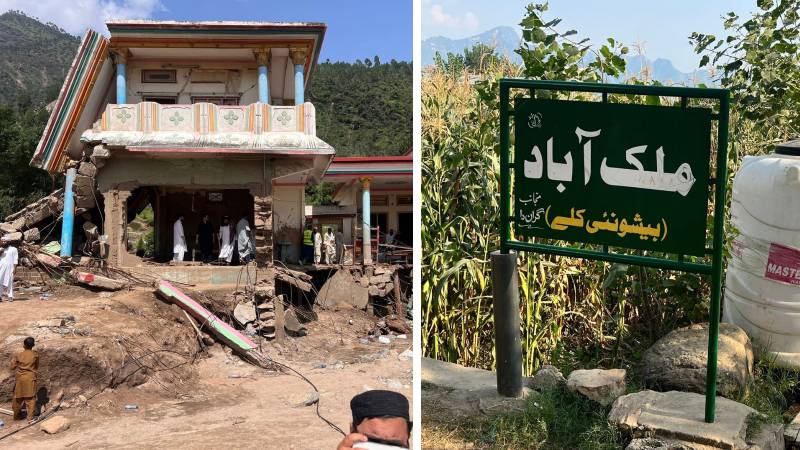
It has been one year since catastrophic flash floods tore through Swat and Buner in Khyber Pakhtunkhwa, killing hundreds, destroying thousands of homes, and displacing 1.5 million people. While the provincial government announced a relief package, more than 70% of affected families say they have received no aid. Survivors, officials and environmental experts warn that without permanent flood mitigation and policy reform, the next disaster could be even worse.
One year after the "doomsday" monsoon floods of August 15, 2025, the scars remain raw across the valleys of Swat and Buner. Roads are still broken. Schools and clinics lie in ruins. Markets have not reopened. And despite billions in announced relief, most survivors say the state has left them to rebuild on their own.
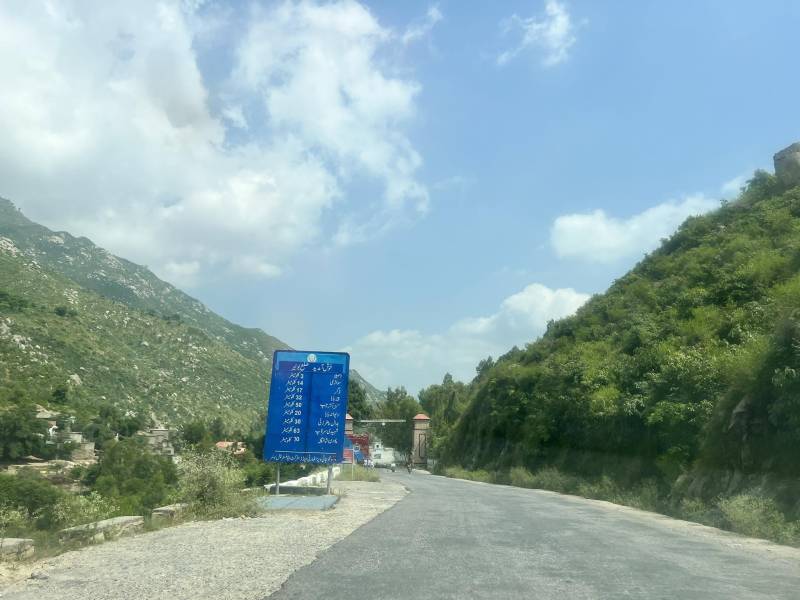
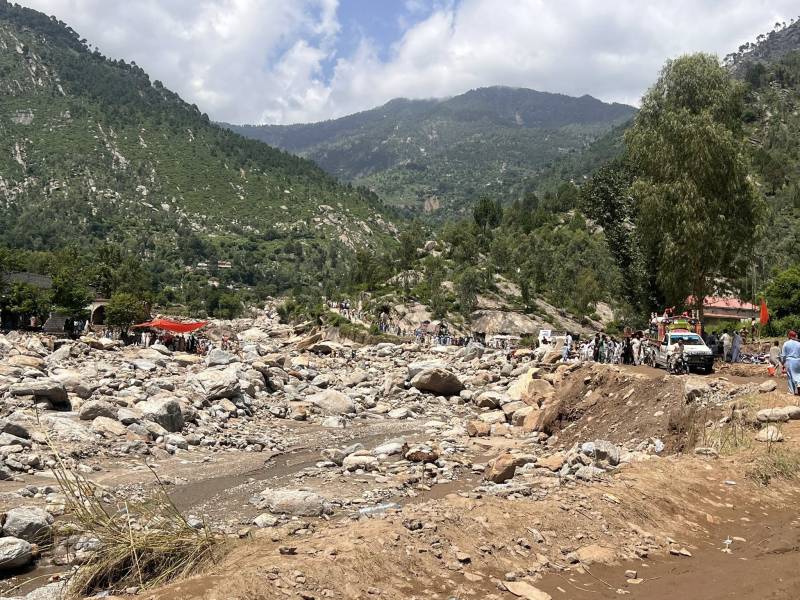
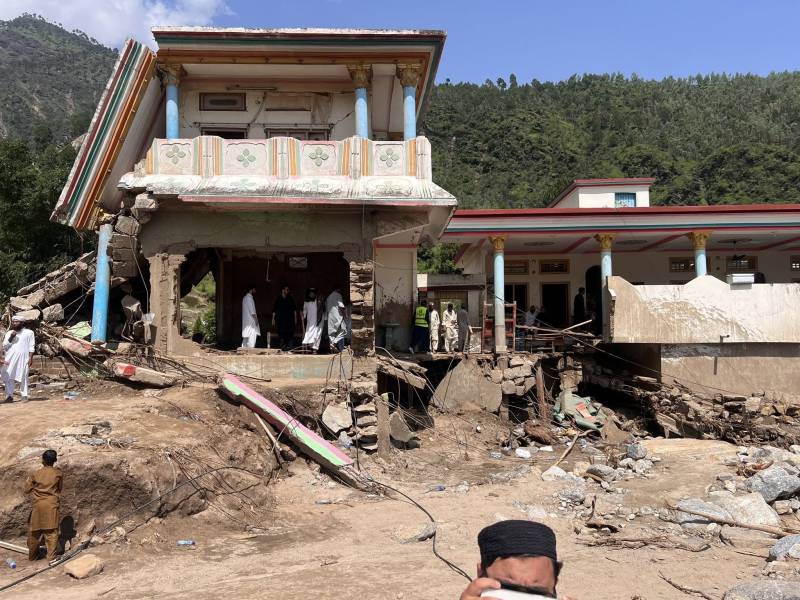
According to the Provincial Disaster Management Authority (PDMA), Buner alone recorded 228 deaths, 120 injured, and 3,868 livestock lost. The floods destroyed 162 homes completely and partially damaged 575 more. Twenty-nine schools and 14 health facilities were also affected on August 15, 2025.
In Swat, the Provincial Disaster Management Authority reported 22 deaths and more than 150 injured. A total of 219 homes were affected — 177 partially and 42 completely destroyed. Another report put the number of fully destroyed homes in Swat at 49. The district also lost 163 livestock, saw 74 roads washed away, and had 30 schools, 8 health centers, and over 5,000 shops damaged in the last flood.
The scale of destruction across KP
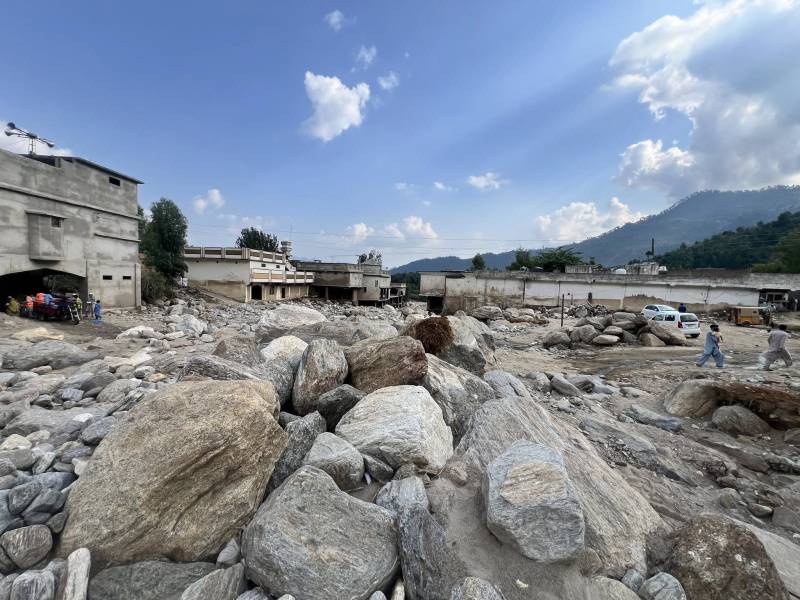
Across Khyber Pakhtunkhwa, the death toll reached 337 in Buner, Shangla, Swabi, Mansehra, Bajaur, Swat, Lower Dir, and Battagram. SPO conducted assessment in Buner, covering Qadar Nagar, Malik Pur, Beshunai in Tehsil Gadezai and Pacha Kalay, Pir Baba, Ghazikhanai, Mohalla Kanra, Dokada, Mora, Koza Hujra, Sultan Das, Bara Hujra, and Kanra Baba in Tehsil Dagar. Immediate food support was distributed to the most vulnerable families on August 15, 2025.
PDMA figures showed 3,526 homes affected province-wide, with 577 completely destroyed. A total of 331 roads spanning 493 kilometers were destroyed, along with 32 bridges. Fifty-seven schools were damaged, 320 livestock perished, and 11,500 acres of agricultural land, including in Swat, were inundated in August 2025.
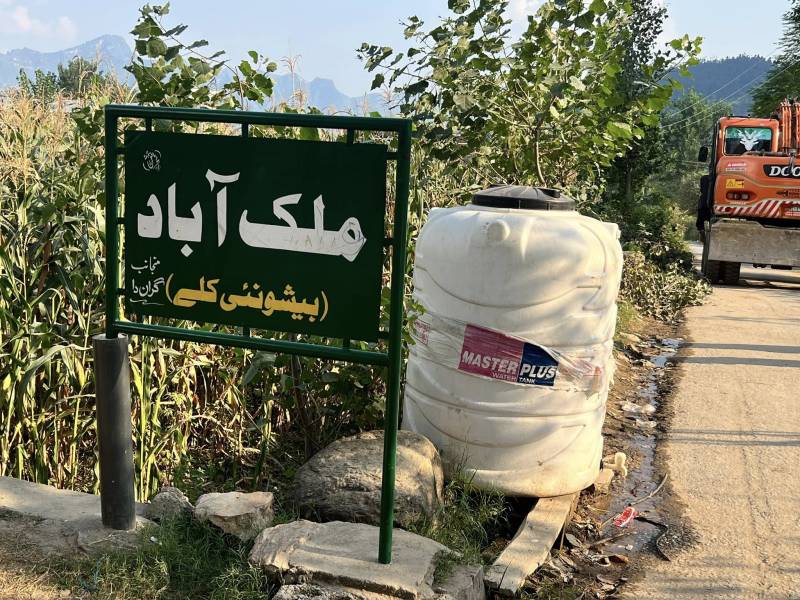
In the last floods forced 1.5 million people in Swat, Buner, and Shangla to flee to safer areas.
Promised aid, little delivery
The Khyber Pakhtunkhwa government announced a relief package of Rs. 1 million for each completely destroyed home, Rs. 300,000 for partially damaged homes, and Rs. 500,000 for affected shops.
But one year later, more than 70% of people say they are still waiting. Protests have been staged at various times. Officials from Pakistan Tehreek-e-Insaf and provincial ministers blame a financial crisis for the delays.
Muhammad Yaqoob Khan, 49 years-old, a flood-affected resident, told The Friday Times that the floods severely damaged our home and factories. We suffered a total loss of Rs. 40 million. It’s been more than a month, but we are still busy with the cleanup.
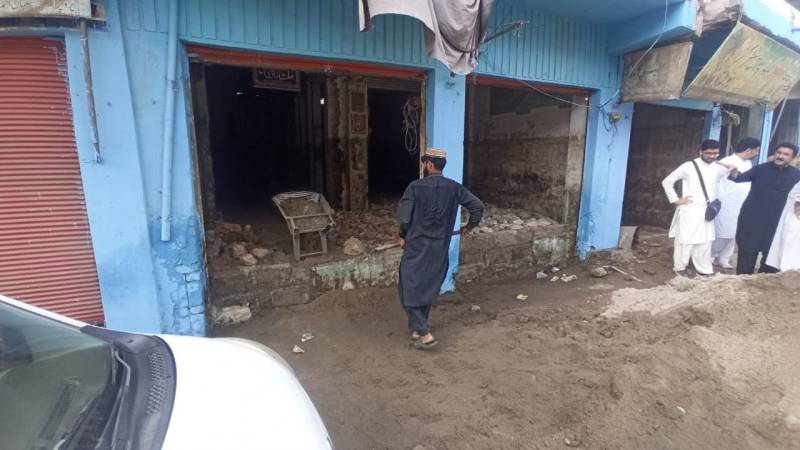
He added: “We did everything ourselves. The government is just fooling people on social media and mainstream media. Our house, factories, and personal vehicle were damaged, but the government only collected my documents. We have received nothing so far.”
Yaqoob said the disaster taught him a harsh lesson: “Since August 15, 2025, we realized we have to fend for ourselves. If we keep waiting for the government, we will die here.”
Muhammad Zareen, 60 years-old, from Pir Baba, Buner told The Friday Times that the trauma: “It felt like Judgment Day came before. Even a year later, I can’t believe how we survived. We had never seen a flood like this, not even in videos. We are grateful to the people who helped us, but the government did nothing. “They gave me a relief check. When I went to the bank, it bounced. There was no money in it. You can imagine how serious the government is about us. All we can do is express our grief.”
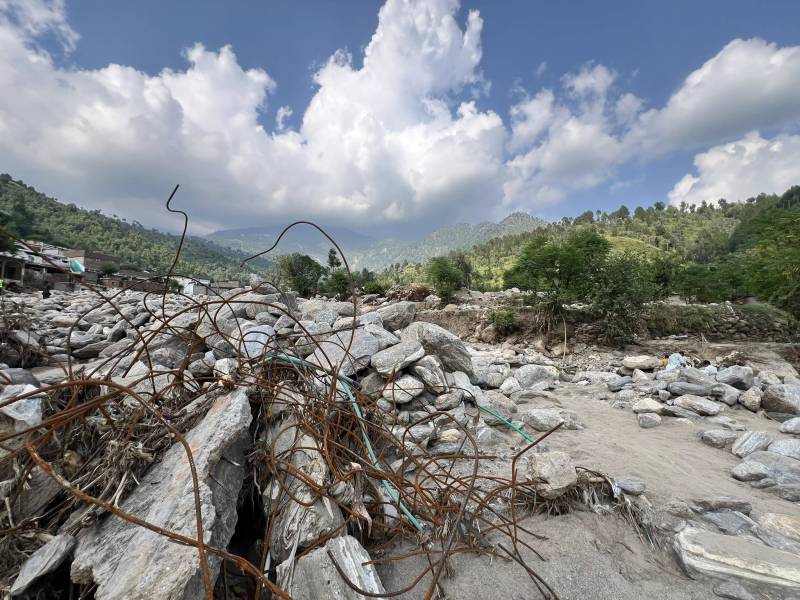
Zareen fears the worst is yet to come: “Even after a year, we are afraid another flood will come. The government has taken no steps for flood prevention or early warning. If it happens again, this village will be wiped off the map.”
No policy, no prevention
Environmental expert Akbar Zeb told The Friday TImes that climate change can no longer be ignored. “Every year there are floods in Swat, Shangla, Buner or Chitral. Thousands are affected and dozens die. But what are we doing about floods and climate change?
Zeb further said that “Look at the River Swat — it’s full of encroachments. We dump garbage in it. We don’t care about the environment, and most people don’t even believe in climate change.”
He added: “The biggest responsibility lies with the government, but they don’t have time for policy or action. God forbid, if we don’t act now, we will face even more dangerous consequences.”
The Friday Times made multiple attempts to contact Shafi Jan, the Khyber Pakhtunkhwa Information Minister for comment on relief and rehabilitation, but received no response.
Encroachments and a cycle of neglect
Since 2010, Khyber Pakhtunkhwa has faced floods and natural disasters repeatedly. Yet the government continues to respond only on an emergency basis, with no long-term policy for prevention.
Encroachments remain rampant along the River Swat and River Kabul, where people have built homes and businesses. Authorities have done little to remove them. Garbage continues to be dumped in the River Swat, damaging aquatic life, while government departments stay silent.
After the August 15, 2025 floods, media reports highlighted illegal structures along the River Swat. The government launched an Anti-Encroachments drive, tearing down some hotels, restaurants and houses. But political pressure stopped the anti encroachments drive. Today, those same hotels, restaurants and houses have been rebuilt and people are living and doing business there again in the river sides.
The people have directly violated the River Protection Act 2014. This Act clearly states that no one can construct any home, hotel and restaurants within 200 feet of the riverbank.
Environmentalists warn that without permanent, structural measures — not just emergency responses — future floods will cause even greater devastation.
A year on, the people of Swat and Buner of Khyber Pakhtunkhwa are still waiting for roads to be rebuilt, for schools to reopen, for compensation to arrive and for a government plan that looks beyond the next disaster.