

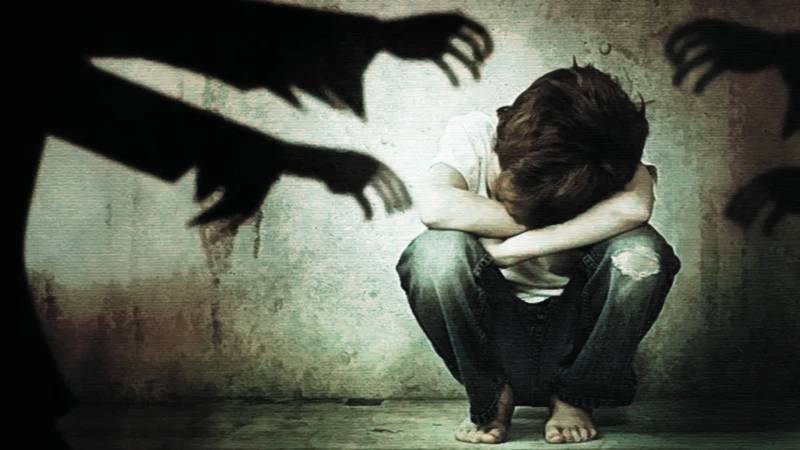
Time to rescue our boys from the clenched fists of sexual abusers!
In a society already accustomed to rapists and harassers, raising a voice for the minors is like honing bells in a morgue, where no one is going to be moved by your outcry or screams. When the Kasur scandal of 2015 surfaced, it should have been Pakistan's reckoning with this reality. That case exposed just how many boys were being targeted and how little the state was prepared to do about it. A decade later, the numbers have not improved. What has stayed constant is a deeper failure that the Kasur case only made visible: Pakistan still does not know how to talk about, legislate for, or protect its boy victims.
In a country like Pakistan, child sexual abuse is not treated as a gender-neutral crime. It is culturally coded as something that happens to girls, and the entire architecture around it, from the language people use to the support systems that exist, reflects that assumption. When we see the covered reports, it recorded 3,364 child abuse cases nationwide, and 47 percent of the victims were boys. In the 11 to 15 age group, the age bracket most at risk, more boys were affected than girls. These are not marginal figures. They describe a crisis that runs almost parallel to the one involving girls, yet receives a fraction of the institutional attention.
Every unspoken case is not modesty, it is a grave we keep digging quietly for the next generations.
The reason for this gap is not a lack of law. Pakistan passed the Zainab Alert, Response and Recovery Act in 2019 and amended its criminal code in 2016 to toughen penalties for child abuse. The problem is that these laws were built and publicised around female victims, following the murder of Zainab Ansari, while boy victims remain an afterthought in both policy language and public campaigning. A boy who is abused faces a masculinity script that treats disclosure as humiliation rather than survival. Most of the families that might reluctantly seek help for a daughter often choose complete silence for a son, because admitting the abuse threatens an idea of manhood that the culture prizes more than the child's wellbeing. This is why most cases, according to Sahil, involve acquaintances, relatives, or religious teachers, people who understand exactly how reliable that silence is.
This is the factor that needs to be worked on before any new legislation matters. We need the reporting mechanisms, school-based safety education, and psychological support services built with boys explicitly included, not assumed to be covered by frameworks designed with girls in mind. There is also a need to look at other provinces besides Punjab as they need the same density of trained child protection staff and forensic capacity that Punjab has slowly built, since a child's access to justice should not depend on geography. Until boys are named specifically in prevention campaigns and treated as equally plausible victims in police training and school curricula, the laws already on the books will keep protecting a crime that half of them do not even acknowledge exists.