

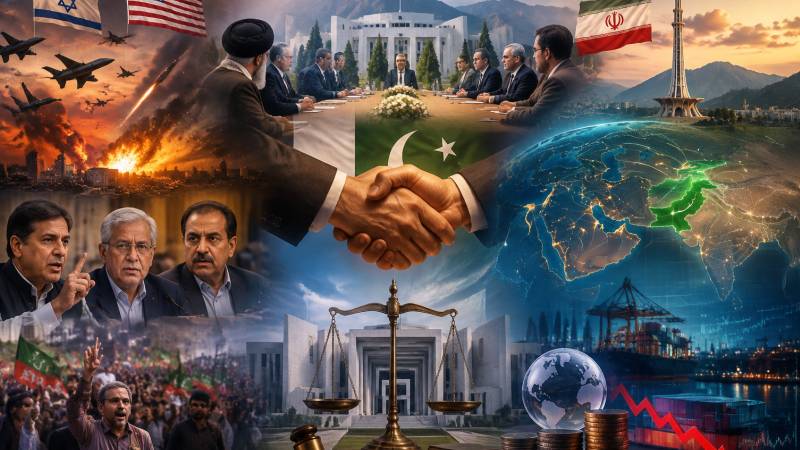
Diplomatic prestige is not sufficient to maintain domestic stability and satisfy investors. In the midst of the recent geopolitical crisis, Pakistan’s role has given more than a reason to its citizens, institutions, and state to be proud of their country. The country has been playing an active role in restraining both Iran and the US from further escalating the situation. The story begins with the US and Israel’s joint strikes on Iran, killing its upto 40 top-tier political and military leaders, including Supreme Leader Ayatollah Ali Khamenei, in February 2026.
Initially, Pakistan showed limited alignment with Iran without military entanglement, which evolved into something more active in April when it helped broker a ceasefire between the US and Iran. It did not stop here and continues to host Islamabad talks, as a result of which a Memorandum of Understanding was signed to stop the conflict within 60 days. Islamabad talks have proved to be the highest level direct engagement after 1979. Whether the MOU is being abided by both parties is a separate question; noticeable here is that both parties continue to look towards Pakistan to untangle this geopolitical episode. Beyond this, it continues to engage both parties to halt hostilities.
However, a look into its domestic realities reveals the huge contradiction between its internal and external postures. The critical question that arises here is whether the diplomatic role alone can offer the country foreign investments when political stability is at stake, and the economic one is fragile. Although these headlines may make one proud of their country, these cannot bring long-term stability on their own, which investors prioritise while deploying their capital. The recent statement of Interior Minister Mohsin Naqvi, made while proposing a division of provinces, that the system under which the country is living “has collapsed” and needs revisions to solve its very problems, has sparked a new debate.
The results of the polling have themselves turned out to be a source of tension, with Bilawal Bhutto warning that any theft of AJK’s mandate would trigger the countdown of the PMLN.
The statement has not come from the opposition attempting to criticise the ruling party, but from a cabinet minister questioning his own government from within. What follows this statement is the contradiction within the cabinet, which has shown a visible fracture on the issue, with Rana Sanaullah commenting that the statement “made no sense”. Defence Minister Khwaja Asif, another member of the cabinet, argues, “Mohsin Naqvi’s sahib expressed his views on the dire state of the system. I more or less personally agree with these views.” However, he goes on to call Naqvi a powerhouse within cabinet, who rarely attends the meetings and answers the questions. This demonstrates the lack of consensus within the cabinet on whether the issue exists or not.
Apart from this, the elections in Azad Jammu and Kashmir have brought two coalition parties face to face, with PPP accusing PMLN of rigging elections and PMLN accusing PPP of joining hands with Joint Awami Action Committee (JAAC) to disrupt the whole process of elections, particularly in Muzaffarabad. In both phases of polling in Mirpur and Muzaffarabad, PMLN has gained demonstrable seats to form government. The results of the polling have themselves turned out to be a source of tension, with Bilawal Bhutto warning that any theft of AJK’s mandate would trigger the countdown of the PMLN. This fight is not between the opposition and government, but the coalition factions of the central government, questioning the political stability of the country. This is not the story of this moment.
The country’s history is marked by such tensions between the coalition partners. However, these tensions lead to an unpredictable political environment, which investors want to avoid. They don’t look only for the state’s diplomatic overtures, but whether the cabinet can abide by its commitments, whether law and order is preserved or not, or whether the laws made by one government are abided by the next or not. Therefore, instead of just relying on diplomatic efforts of the country to be satisfied, we need to complement improvements in our domestic economic and political landscapes. The example of the US is alive, which first fortified its domestic structures before stepping into the international arena. As far as the question of the recent political tussle between coalition partners is concerned, both PMLN and PPP should sit together to solve the grievances to prevent the country from facing another political turmoil.