

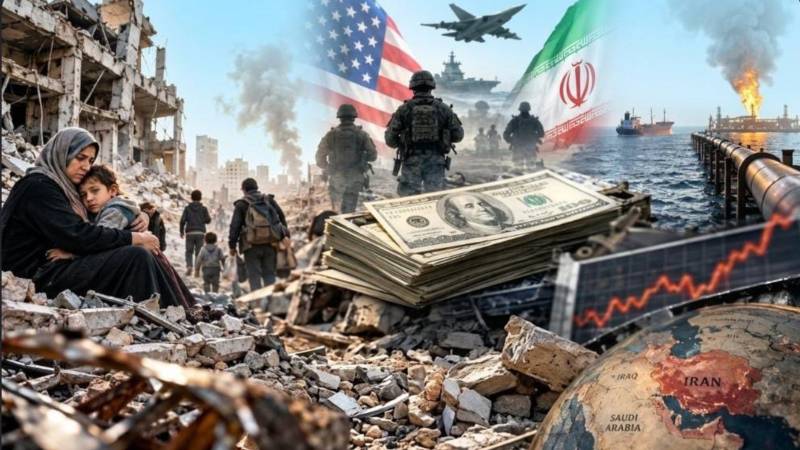
Wars are costly. We all know that. There is the human cost, in terms of lives lost and people displaced. Then there is the cost of destroyed infrastructure: buildings, bridges, schools, roads, hospitals, and public spaces. And, of course, there is the cost of pushing a society back by decades, if not hundreds of years, by taking away the time and resources that could have been spent on development. All these costs are borne by ordinary people, who face the direct consequences of war.
But what about the costs incurred by the combatant parties? We already know about the costs incurred by the US in its post 9/11 wars in Afghanistan and Iraq, topping USD 08 trillion as per the Costs of War project of Brown University. This is a huge number. It is roughly 20 times the current GDP of Pakistan. But what about the costs incurred by the US in its ongoing confrontation with Iran?
The non-partisan Congressional Budget Office (CBO) of the US government has produced a report that summarized the “Cost of Combat Operations” borne by the US against Iran, so far. These costs have been categorized into “operational, logistical, and sustainment costs; DoD’s (Department of Defense) opportunity costs; costs associated with increased prices as a result of economic disruption; and potential additional costs, such as those associated with diplomatic operations and foreign aid.”
According to estimates by the CBO, total cost of the Iran war reached an amount of USD 38 billion by 01 August, 2026. This figure includes the initial months of heightened hostility and military activity and reflects the costs of “replacing expended munitions and equipment lost in battle, increased flying hours, other operations, and increased fuel costs.” CBO estimated that if the war continues at the current slow pace of intermittent clashes, it would keep costing the US additional USD 2-3 billion per month.
The US war with Iran had already cost an estimated USD 38 billion by August 1, 2026, with the Congressional Budget Office estimating that a continuation of the conflict at its current pace could cost another USD 2–3 billion every month.
Brown University has estimated that up until 16 May, 2026, Iran war added an extra USD 40 billion to the fuel bills of Americans. This was four months ago. By now the figure must have reached USD 80 billion as oil is trading at USD 100 p/b, give or take.
This is only one side of the story. The other side is Iran and the rest of the world. The cost of war to the Iranian government and its people is not calculated, as of yet. But the scale of bloodshed and lives lost, and the battering the Iranians received at the hands of American and Israeli bombers will certainly sting for a long time to come.
Then we have business and economic activities disrupted in the Middle East and beyond. And in the latest development we have the Houthis, attacking the Kingdom of Saudi Arabia from Yemen and disrupting the oil flow in its strategic east-west pipeline. This will make the conflict linger on further, adding more complications in the peacemaking process.
Wars are a logistical and military nightmare. They result in violence, destruction of families, deaths of innocents, mass displacements resulting in mass migrations that further lead to socio-political and economic consequences. And then of course there are the “unintended consequences.” Since 9/11, wars in the Middle East have resulted in vicious unintended consequences as we have seen with the rise of terrorist groups like ISIS in the Levant and TTP in Pakistan. In the current conflict with Iran, the US was hoping to kill the Supreme Leader and replace him with a pliant government as was argued by the Israelis. That did not happen and now we have a more radical group in power in Iran willing to take the war further.
As long as the Persian Gulf and Bab-al-Mandeb Strait remain contested, oil flow through them will remain suppressed, leading to higher oil prices in global markets. Poor economies which are net-importers of energy will face increased cost of fossil fuels. This will lead to further socio-political destabilization. And the costs of the war would continue to pile up.
Most of the time, when leaders at the helm make decisions, they forget that the world is an extraordinarily complex place where countless things are happening simultaneously. The sandbox approach to decision-making that they often employ rarely works in a world where millions of thinking agents are interacting and making independent decisions of their own. This makes for an immensely complex environment, and whimsical decisions rarely result in sound policy.