

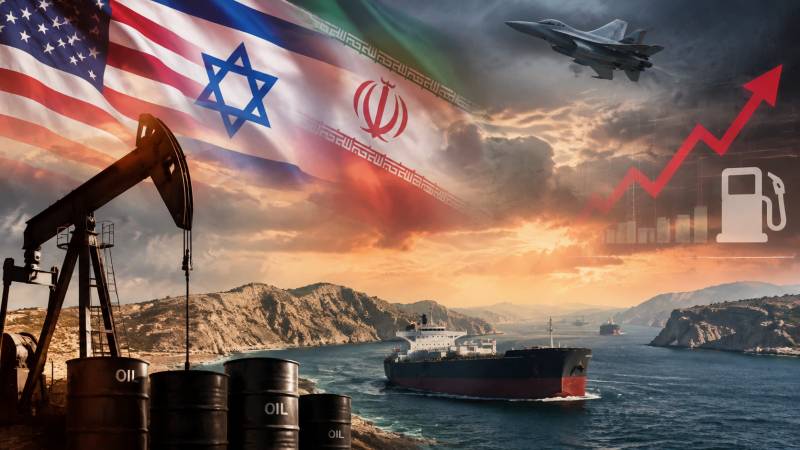
The world’s most powerful military can destroy installations thousands of miles away, but cannot shield its citizens from war’s economic consequences. American motorists face rising fuel costs, European industries absorb higher energy bills, and commercial shipping through a vital maritime corridor has become a security gamble. The confrontation involving the United States, Israel and Iran exposes a fundamental truth: military superiority does not guarantee economic security, and battlefield success does not necessarily deliver strategic victory.
The Strait of Hormuz is the conflict’s most consequential economic pressure point. Approximately one-fifth of global petroleum liquids consumption normally passes through it. Threats to shipping from mines, drones and attacks raise insurance premiums, freight costs and energy prices while making deliveries unpredictable. Iran knows that defeating the United States in a conventional military confrontation is unrealistic. American military superiority remains overwhelming. But a country need not defeat an adversary’s armed forces to impose substantial costs. By threatening maritime routes and energy infrastructure, Tehran can extend the conflict’s consequences far beyond the battlefield. Its leverage lies in exploiting the vulnerabilities of an interconnected world.
The 1973 oil crisis showed how energy dependence could become an instrument of geopolitical influence. The vulnerability remains: an energy shock raises costs across transportation, electricity, manufacturing and food production before reaching household budgets. It becomes a tax on economic activity, borne most heavily by poorer households in energy-importing economies. For the United States, the timing is politically consequential. On November 3, Americans will vote in midterm elections determining control of Congress for the remaining two years of Donald Trump’s presidency. All 435 House seats and 35 Senate seats are being contested. Rising fuel prices, inflation and the war’s cost have become important electoral issues. A Pentagon estimate places American military expenditure at approximately $47.1 billion through October 16, including munitions, equipment losses and operations, but excluding wider economic damage and reconstruction.
The midterms should neither be exaggerated nor dismissed. They are not a presidential election: a Republican defeat will not remove Trump or automatically reverse American foreign policy. New congressional control could strengthen oversight, complicate military funding and raise the cost of escalation. Presidents may differ in diplomatic methods and regional priorities, while the interests underpinning American foreign policy often outlast administrations. Elections can change leadership; changing the assumptions that sustain policy is harder. Domestic political weakness can encourage escalation. The theory of diversionary war suggests leaders facing difficulties at home may seek support through external confrontation. This becomes dangerous when the conflict itself generates the economic hardship eroding public confidence. Escalation intended to escape war’s political cost can enlarge it.
The three principal actors have different calculations. Washington seeks to preserve deterrence and regional credibility. Tehran prioritises regime survival, strategic leverage and its regional position. Israel seeks to prevent Iran acquiring capabilities it considers existential threats. They have no common definition of victory. Washington may regard degrading Iranian capabilities as success; Tehran may see survival and continued economic pressure as resistance; Israel may view unresolved Iranian military or nuclear capabilities as an enduring threat. When victory means different things to each party, operations can continue despite mounting costs. Can force produce a sustainable political settlement?
The conflict’s most disturbing aspect is its opportunity cost. Billions of dollars are consumed by missiles, deployments and damaged infrastructure, while those resources could strengthen healthcare, education, clean energy, agriculture and create jobs for millions of young people.
Who gains and who pays also deserves scrutiny. American households face higher energy costs, while taxpayers finance military operations and equipment replacement. Some energy producers may benefit from elevated prices and defence contractors from procurement opportunities. This does not prove corporate interests determine decisions to wage war, but it raises legitimate questions about the distribution of costs and gains. In 1961, President Dwight Eisenhower warned that the military-industrial complex could give defence spending a momentum of its own. His concern was not that defence was unnecessary, but that its interests might dominate public priorities.
Europe faces a similar dilemma. German Chancellor Friedrich Merz says businesses and consumers have incurred more than €100 billion in additional energy costs over eight months because of the conflict. He has acknowledged that it requires diplomacy, not a military solution. Economic strength without strategic autonomy leaves Europe vulnerable to decisions over which it has little influence. Supporting allies need not mean surrendering independent judgement; energy diversification and industrial competitiveness are also essential to security.
Developing economies face greater risks. Pakistan, Bangladesh and Egypt have limited fiscal space and rely heavily on imported energy. Higher oil prices increase import bills, pressure currencies, raise domestic costs and complicate monetary policy. For Pakistan, they can widen the current-account deficit, fuel inflation, increase external financing costs and squeeze development spending. Investment may weaken, while education, healthcare, infrastructure and employment lose fiscal space. A distant conflict can undermine societies already struggling to provide opportunity.
Qatar and Pakistan’s efforts to facilitate communication between Washington and Tehran demonstrate the importance of regional diplomacy. But contact is not agreement. A settlement requires verifiable maritime-security arrangements, protection for commercial shipping, assurances against renewed escalation and a framework for nuclear and regional disputes. Peace cannot mean merely a pause in military operations. The conflict’s most disturbing aspect is its opportunity cost. The world possesses extraordinary financial, scientific and technological resources, yet billions of dollars are consumed by missiles, deployments, damaged infrastructure and crises diplomacy might have prevented. Those resources could strengthen healthcare and education, develop clean energy, secure water, improve agriculture and create jobs for millions of young people.
Defence is a legitimate state responsibility. But security cannot justify endless sacrifice of prosperity, nor is military endurance the same as strategic achievement. National security should protect the conditions for society to prosper. Leaders must be judged by their ability not only to mobilise resources against threats, but to convert them into opportunity, institutional strength and human development. November 3 will reveal the mood of the American electorate, but will not alone determine this war’s future. That depends on whether leaders in Washington, Tehran and Tel Aviv recognise the limits of military power and the consequences of their decisions. A nation’s strength should not be measured only by the wars it can fight or the weapons it can manufacture. It should be measured by the prosperity it creates, the opportunities it provides and the dignity it secures for its people. The ultimate failure of statecraft is not merely losing a war. It is winning battles while losing the future of generations who must pay for them.