

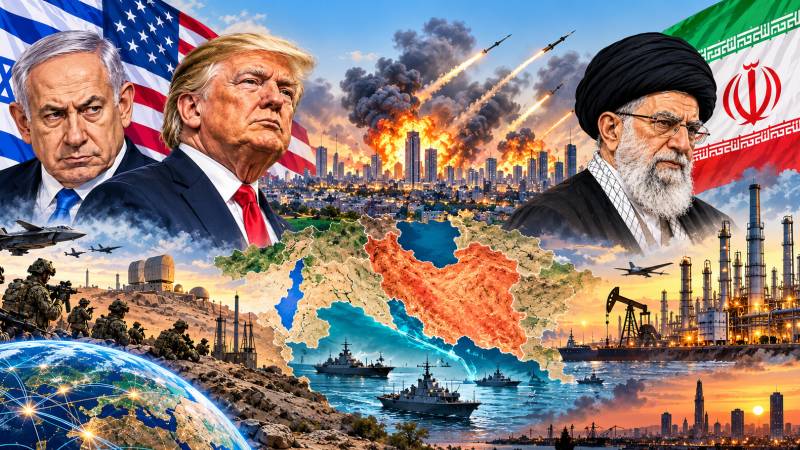
The outcome of the Iran war will decide the future of Regional and global actors, as the war has expanded far beyond its region. The war that initiated on 28th February 2026 seems to be reaching at the logical conclusion as the political careers of Israeli Prime Minister Benjamin Netanyahu and US President Donald J. Trump is at stakes in the elections on 27th October and 3rd November respectively. The final day before the Israeli elections could prove decisive for regional peace, as the outcome will determine Netanyahu’s political future and the fate of his policies, which have undermined regional stability and promoted Israeli expansionism. Netanyahu seemed to be frustrated due to his dwindling popularity and inability to maintain peace in the region and isolate the Israel on global stage. The latest Israeli surveys indicates that Netanyahu alliance is only winning around 50 seats while his opponent Gadi Eisenkot alliance will gain the majority in 120 member seat Knesset. Meanwhile, the situation for the Trump administration is also not good in the midterm elections as the war has brought the increased gasoline prices which resulted the inflation in the country and that has reduced the Trump’s popularity to a 36%.
The decline of populaity of the Israeli and US leaders seemed to be driving force towards a new conflict as Iran becomes central issue for them. Netanyahu needs a fresh conflict with Iran to provide political support as can be witnessed from his latest image posted on X that shows the nuclear attack on Tel Aviv and calls Tehran a potential threat to the Israel’s survival, and called himself as the leader who can protect Israel from Iranian wrath. Meanwhile Trump supported the Netanyahu and called him a potential ally in US war on Iran. Netanyahu has developed differences with IDF Chief of Staff Eyal Zamir over the war with Iran as IDF Chief called for the legal authorization and discussion of political leaders on the security threats to initiate strike on Tehran. Netanyahu is accused by the opposition parties of using the Israeli security as a pretext to pursue his political agenda and use the state for his personal ambitions. Whereas, Trump needs a deal to secure the victory as the opening of Hormuz and freedom of navigation in Persian Gulf will continue the free flow of oil to world that will reduce the prices of oil from $117 barrel to less than $100 which will hep decrease the prices at home.
The war with Tehran will have colossal implications for the regional as well as global security order as the military and civilian infrastructure, internet cables, desalination plants and data centres will be destroyed.
So far Netanyahu seems to be victor as the developments in the region is indicating a brewing conflict. The devlopments like Israeli stationing of Mossad and its equipment in Azerbaijan, Ukrainian Drones and personnel deployments in Iraq, US naval carriers in West Asian region, US fortress plan aimed to protect US bases without any outside support for 90 days during war, and US advisory to its diplomatic staff to relocate its family members outside Gulf states, and advisory to US citizens to refrain from travelling to the region all sets the direction towards opening new strikes on Pickaxe Mountain (a site near the Natanz Reactor) to need the Iranian enriched Uranium hidden beneath it. Meanwhile Tehran revealed its military doctrine through Mosaic defense strategy divided the IRGC commands in 31 Provincial commands which will be able to launch attacks on its targets in the absence of central command, and threatened to target the civilian and military infrastructure across the region including targeting the internet cables, desalination plants, Data Centres, as well as energy infrastructure and airports and others.
The world cannot afford to loose internet slowdown attack on economic and trade centres and erosion of 20% oil supplies. These concerns led the diplomatic efforts initiatives from all the quarters involved in the mediation process to end the conflict and bring the two parties on the negotiating table. Pakistan, Qatar, Turkey as well as Russia are engaged in negotiations with Tehran to end the stalemate on the enriched uranium, and opening of Hormuz, as well as cessation of hostilities on all fronts. But the real problem here lies with the political figures of Trump and Netanyahu who cannot afford to lose elections and go down in history books as sore losers. They wanted to portray their images as the victors, and global leaders who have brought down the evil empire of the Iranians.
The situation in the Middle East seems to be the real threat to the global peace and security as the dwindling political careers of the Netanyahu and Trump are on stakes and only the conflict with Iran may save them. The war with Tehran will have colossal implications for the regional as well as global security order as the military and civilian infrastructure, internet cables, desalination plants and data centres will be destroyed which will turn the region back to the Stone Age. At the Global stage the conflict will provide opportunities for the other powers Russia to hold control of Ukraine War, and put pressure on NATO forces, whereas China will find an opportunity to push its reunification plan, and control of Arunachal Pradesh as the US allies India is abandoned and Taiwan Japan and South Korea are left at the mercy of the Beijing and Pyongyang nexus in the region.