

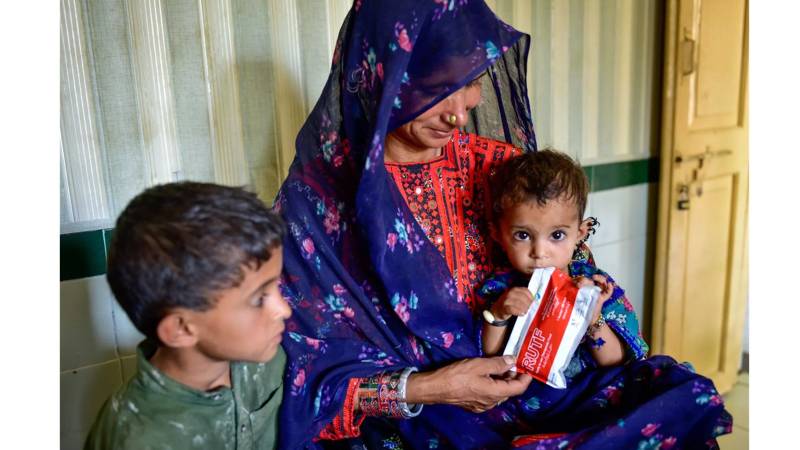
There is a contradiction at the heart of Pakistan that is difficult to ignore. Pakistan is a nuclear-armed state. It possesses the scientific, technological, and institutional capacity to design, produce, and maintain one of the world's most sophisticated instruments of military power. It is estimated that Pakistan has around 170 nuclear warheads, while noting that the precise size of the arsenal cannot be independently established because the Pakistani government does not publicly disclose it. Pakistan also continues to develop nuclear-capable delivery systems. However, the same country struggles to perform something far more fundamental: ensuring that its children receive a basic education.
An estimated 25.1 million Pakistani children between the ages of 5 and 16 are out of school. That is roughly 35 per cent of the country's children in that age group and gives Pakistan the world's second-largest population of out-of-school children. Yet the problem begins before the school gates. Nearly 4 in 10 Pakistani children under the age of 5 are stunted. Stunting is not simply a measure of whether a child has eaten enough. Chronic undernutrition during the first years of life can permanently damage physical growth and cognitive development, diminishing a child's capacity to learn and eventually to earn. These are not disconnected statistics. They are the beginning of a national story. It is a story about Pakistan's future.
A Country Cannot Educate the Future It Has Failed to Nourish
The temptation is to regard education, nutrition, health, and economic growth as separate policy sectors, each with its own ministry, budget, and bureaucracy. For a child, they are one system. A malnourished child arrives at school with disadvantages that no textbook can easily repair. A child who never enters school cannot acquire the foundational skills required for a modern economy. A child who attends school but cannot read with comprehension by the end of primary education may possess a certificate without acquiring the human capital that certificate is supposed to represent. Pakistan's education crisis is therefore not simply about school buildings or enrolment figures. It is about learning.
It is estimated that approximately 78 per cent of Pakistani 10-year-olds are in learning poverty—unable to read and understand a simple age-appropriate text. The figure means that even among children who make it into school, the education system is failing to deliver one of the most basic purposes of schooling: literacy. That should be an economic alarm bell. A country does not become prosperous merely because more children are sitting inside classrooms. It becomes prosperous when those children emerge with the knowledge, skills, health, and confidence to participate productively in society.
By spending a pathetic 1.9 per cent of its GDP on education in 2023, the state treats its children’s minds as a fiscal afterthought rather than a vital economic powerhouse
The World Bank's recent assessment of Pakistan makes the connection explicit: healthy and educated citizens are foundational to long-term economic growth. It notes that Pakistan's human-capital weaknesses undermine future learning and earning potential, while more than 85 per cent of jobs remain informal, and women and young people remain substantially excluded from the labour force. The uncomfortable question is therefore not simply: Why are 25 million children out of school? It is: What kind of economy does Pakistan expect to build with 25 million children excluded from the education system?
The Nuclear Contradiction
There is nothing inherently contradictory about a country possessing nuclear weapons while confronting poverty. Nuclear capability and social development are different policy domains, and Pakistan's security concerns are real. Its strategic environment, particularly its relationship with India, has shaped its defence priorities for decades. The contradiction lies elsewhere. It lies in what a country demonstrates that it is capable of organising, financing, and sustaining.
Pakistan has demonstrated extraordinary national capacity in the nuclear field. Its nuclear programme required scientists, engineers, specialised institutions, long-term planning, secure infrastructure, sophisticated technology, and sustained political commitment. The question is not whether Pakistan should possess nuclear weapons. The more profound question is why comparable urgency has not been applied to the country's human capital.
A nuclear programme asks a nation to think in decades. So should education. A nuclear programme requires highly trained scientists. So does a modern economy. A nuclear programme depends on institutions capable of retaining expertise and managing complex systems. So does a functioning public school system. A nuclear programme cannot be built through short-term political slogans. Neither can a literate, healthy, and economically productive population. Pakistan has therefore already demonstrated that it can pursue long-term national projects when the state considers them strategically essential. The challenge is to recognise that children are also strategic infrastructure. Perhaps the most important infrastructure.
The Cost of Doing Nothing Compounds Every Year
The danger is that educational deprivation reproduces itself. A child who does not attend school today becomes an adult with fewer employment opportunities tomorrow. Limited employment means lower household income. Lower household income makes it harder for the next generation to access nutritious food, healthcare, and quality education. The cycle then repeats.
This is particularly damaging in a country with a young and rapidly growing population. Pakistan has a demographic opportunity—a large working-age population that could, under the right conditions, generate economic growth. But a demographic dividend is not created simply by having millions of young people. It is created by having healthy, educated, and economically productive young people. Otherwise, the demographic dividend can become a demographic burden.
The World Bank's human-capital data underline the scale of the challenge. Its 2025 Human Capital Index Plus gives Pakistan an overall score of 129.6 out of 325, while its education-pillar score is 70.7 out of 188. These numbers are not merely abstract rankings. They represent opportunities that Pakistan is failing to convert into human potential, and the cost is not confined to individual families. It affects the entire nation.
An economy with weak foundational education struggles to move from low-productivity activities into higher-value manufacturing, technology, research, services, and knowledge-intensive industries. Employers find workers without the skills they require. Young people find qualifications without jobs. Businesses find it harder to innovate. Governments find it harder to raise productivity. And poverty becomes harder to escape.
Spending Too Little—But Money Alone Will Not Solve This
Pakistan is economically starving its own future. By spending a pathetic 1.9 per cent of its GDP on education in 2023, the state treats its children’s minds as a fiscal afterthought rather than a vital economic powerhouse. Nonetheless, throwing money at a broken system won't fix it. Public funds are routinely swallowed by empty school buildings, untrained teachers, late textbooks, and a toxic examination culture that rewards blind memorisation over actual thinking. Enrolling a child in a classroom who leaves unable to read is not an educational milestone—it is a policy failure. If Pakistan wants to survive in a modern economy, the reform agenda must aggressively shift from merely filling seats to actually building minds.
The World Bank has long championed a clear blueprint for educational reform: strengthen foundational literacy and numeracy, elevate teacher capacity, expand early childhood education, increase school access for girls, and deploy data to scale what actually works. This is exactly where Pakistan’s education debate must pivot. The country must move away from the trap of fleeting political announcements and embrace deep, structural transformation:
- From enrolment to learning.
- From inputs to outcomes.
- From isolated projects to enduring systems.
The Girls Pakistan Leaves Behind
Pakistan cannot afford its current complacency. Locking girls—especially those in impoverished, underserved rural communities—out of the classroom is nothing short of structural violence against the nation's future. The math is simple: educating girls triggers a domino effect of survival, slashing child marriage rates, boosting health, and driving economic survival. To deny a girl an education is to intentionally bankrupt the human capital of her family and sentence the entire nation to stagnation.
Locking girls out of Pakistan's classrooms is an act of economic harakiri. World Bank figures show millions of children out of school in Punjab, with girls facing the highest barriers. Pakistan cannot expect economic transformation while discarding half of its potential workforce. Educating girls is no longer a social luxury; it is an economic survival tactic.
Nutrition Is Not Charity. It Is Economic Policy.
Pakistan is crippling its future economy by treating nutrition and education as separate crises. Wasting billions trying to teach children whose brains were permanently stunted in the first 1,000 days is a failed strategy. Classroom funding cannot undo early cognitive damage. To break this cycle, Pakistan must fuse health, sanitation, and education into a single macroeconomic survival strategy:
- Maternal & Infant Healthcare: Guarantee targeted nutrition and medical care for pregnant women and newborns.
- Radical Infrastructure: Flood impoverished households with clean water, sanitation, and social safety nets.
- Nutrition-Driven Schools: Weaponise classrooms with aggressive, health-focused programmes.
This is not a humanitarian plea; it is a cold economic emergency. If Pakistan fails to feed its children today, it will have no workforce to build the nation tomorrow.
What Would a Different National Priority Look Like?
Pakistan does not need another hollow blueprint for a "knowledge economy." It needs a sacred, unyielding national covenant centred entirely on the child. True transformation begins when we stop treating our youth as a demographic burden and start treating them as our greatest asset. This compact demands six uncompromising commitments:
- Universal Enrolment: The 25.1 million children left outside classroom doors must no longer be accepted as a permanent fixture of our national identity. Every child belongs in school.
- Meaningful Learning: True education goes beyond attendance. Shuffling children into classrooms without teaching them to read, write, and think merely alters a statistic without altering a life.
- Early Childhood Foundation: We must prioritise the first years of life. Investing in maternal health, nutrition, clean water, and early development is not charity—it is building the baseline infrastructure of our future workforce.
- Girls' Education as Infrastructure: Educating girls is more than a moral obligation; it is economic infrastructure. Breaking down the barriers to their education directly expands the nation’s productive and intellectual capacity.
- Accountable Investment: We must spend more on education, but we must also spend it better. Increased funding must be tightly bound to transparent data, rigorous teacher development, and measurable learning outcomes.
- Political Immunity: Education must transcend political cycles. Pakistan requires a generational human-capital strategy that cannot be abandoned or rewritten with every changing regime.
Ultimately, this requires us to fundamentally redefine national security. True security is not merely the ability to deter an external adversary. A nation where millions are malnourished, locked out of classrooms, or illiterate faces a profound internal vulnerability. This threat cannot be measured in missiles or warheads—it is measured in the silent, devastating loss of human potential.
The Pakistan That Children Inherit
Pakistan's nuclear capability is a remarkable demonstration of what the country can accomplish when scientific expertise, national purpose, institutions, and sustained investment are brought together around a strategic objective. That achievement should provoke a different question. What if Pakistan applied the same national determination to its children?
Imagine a Pakistan in which every five-year-old enters school adequately nourished. Where every child learns to read with comprehension. Where teachers are trained, supported, and respected. Where girls can travel safely to school. Where rural children have educational opportunities comparable to those available in major cities. Where public spending is measured not simply by how much is allocated, but by whether children actually learn. Where the country's enormous young population becomes a source of productivity, innovation, and entrepreneurship rather than a generation trapped by inadequate schooling.
That Pakistan would not merely be more educated. It would be more productive, healthier, more innovative, and potentially more cohesive. It would have a stronger economy because it would have stronger people.
The choice confronting Pakistan is therefore larger than an education policy. It is about what the state considers valuable. A nuclear weapon can deter an enemy. It cannot teach a child to read. A missile can demonstrate technological sophistication. It cannot nourish a malnourished infant. A sophisticated weapons system can protect territory. It cannot create the scientists, engineers, entrepreneurs, teachers, doctors, and citizens who will determine whether that territory prospers.
Pakistan has already shown that it can think strategically about national survival. The next step is to think strategically about national flourishing. The real measure of a country's strength is not simply what it can destroy, or what weapons it can build. It is what it can build for the generations that come after it. Today, the most urgent question Pakistan faces is not whether it can manufacture another nuclear weapon. It is whether it can ensure that the child who will inherit that nuclear state can read, think, learn, work, and live with dignity.
Until it can answer that question convincingly, Pakistan's foundational statistics will continue to contradict its ambitions for an economically and socially progressive future.