

The war that began on February 28, 2026, was a war of choice. Iran posed no imminent threat to the United States, and the nuclear diplomacy that preceded the first strikes had, by Oman’s account, reached an advanced stage, with Iranian offers on its enriched-uranium stockpile that went beyond the 2015 agreement. Yet within days of the third round of talks in Geneva, American and Israeli aircraft struck more than a thousand targets across Iran and killed Supreme Leader Ayatollah Ali Khamenei and much of the country’s senior leadership. The justifications offered by the Trump administration shifted from week to week: an imminent threat, then a nuclear program that the same administration had declared “obliterated” eight months earlier, then the prospect of regime change, then the destruction of Iran’s navy and missile industry. When the head of the National Counterterrorism Center resigned in March, he did so on the grounds that Iran had posed no imminent threat at all.
The costs have been immense. By midsummer, the war had killed at least 8,000 people, mostly in Iran and Lebanon, and by October Lebanon alone counted more than 4,000 dead and a million displaced. American service members were killed in Iranian strikes on bases from Jordan to Iraq, and civilians died across the Gulf. The economic toll reached far beyond the region. Iran’s closure of the Strait of Hormuz produced what the International Energy Agency called the largest disruption to oil supply in history, prompting the biggest emergency release of strategic reserves ever undertaken. Brent crude rose by more than half within weeks, fuel and fertilizer prices surged, and the World Bank cut its forecast for global growth to its weakest since the pandemic, warning that a renewed escalation could push it lower still. For millions of people who had no part in the decision to go to war, from Bangladeshi farmers facing a fertilizer crisis to Asian refiners and European households, the war arrived as higher prices and scarcer supplies. Above all, it is the people of the region who have suffered most: Iranians under bombardment and siege, Lebanese driven from their homes, and civilians in Iraq, Yemen, and the Gulf caught in a conflict they did not choose. Theirs is a tragedy that could have been avoided.
Measured by its own declared aims, the American and Israeli campaign achieved much tactically and little strategically. Iran’s navy was largely destroyed, much of its air defense and defense-industrial base was degraded, and many of its senior commanders were killed. But the Islamic Republic did not fall. Tyrannical and corrupt, it had long forfeited the trust of much of its own population. Yet the regime that Washington and Israel expected to collapse under decapitation and bombardment proved more resilient than they had assumed; it absorbed the loss of its supreme leader, replaced its slain officials with men at least as ideological, and rallied a population that, whatever its grievances, did not welcome foreign bombs. Iranian nationalism, rather than loyalty to the clerics, proved the regime’s strongest shield. The nuclear question, the war’s central stated rationale, remains unresolved, with Iran’s highly enriched uranium buried under the rubble of its bombed facilities and the International Atomic Energy Agency unable to account for parts of the stockpile. Above all, the war handed Iran a form of leverage it had never fully exercised before: the demonstrated ability to throttle the world’s most important energy corridor.
The outcome fits a pattern long familiar to students of asymmetric war. As Henry Kissinger observed of Vietnam, “The guerrilla wins if he does not lose. The conventional army loses if it does not win.” A weaker state need not defeat a superpower; it needs only to survive, to deny its adversary the decisive result it seeks, and to outlast its will to fight. Russia’s full-scale invasion of Ukraine in 2022, launched in the expectation of a swift victory, is the clearest recent example: Ukraine’s survival has itself become a strategic defeat for Moscow. Iran is no Ukraine, and its regime commands little of the sympathy Kyiv has won abroad. But the logic is the same. By that measure, the United States is not winning this war, and Iran is not losing it.
The war’s starkest strategic lesson is that in the twenty-first century control of chokepoints can matter more than control of territory. What began as a campaign to decapitate Iran’s leadership narrowed, in practice, to a contest over twenty-one miles of water. Iran did not need to defeat the American navy to win that contest; it needed only to make passage uninsurable. Flows of crude and petroleum through Hormuz collapsed from more than twenty million barrels a day before the war to a fraction of that level, and daily ship transits fell from well over a hundred to single digits. When the Houthis seized the coast around the Bab el-Mandeb and declared a blockade of Saudi shipping, the world faced, for the first time, the simultaneous disruption of two of its three critical maritime chokepoints.
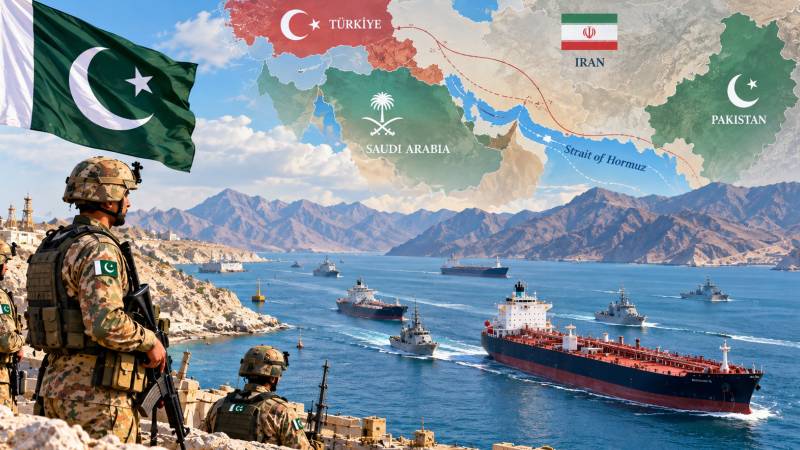
The war has also accelerated a quiet reordering of regional security. The Gulf states that hosted American bases discovered that the presence of an ally is not the same thing as protection. Iranian missiles and drones struck their airports, refineries, ports, and desalination plants, and Washington, despite its overwhelming power, could not prevent those attacks. The result has been hedging and, increasingly, self-reliance. In September 2025, Saudi Arabia and Pakistan signed their Strategic Mutual Defence Agreement; in August 2026, Saudi Arabia, Pakistan, and Türkiye concluded the Makkah Joint Defence Agreement, declaring that an attack on one would be treated as an attack on all three; and within weeks the pact was being institutionalized and declared open to other states. When the Houthis struck Saudi cities and threatened the holy sites, the pact’s members met in an emergency session in Riyadh.
Pakistan has shown that a middle power with credible relationships on all sides can play a role in great-power crises far out of proportion to its material weight. That is a diplomatic asset worth preserving.
The Makkah arrangement remains untested in combat, and its members have been careful to distinguish collective deterrence from automatic intervention. But its significance lies less in what it has done than in what it represents. Three of America’s long-standing partners, Saudi Arabia, Türkiye, and Pakistan, have all but given up on the United States as the guarantor of their security. Washington is no longer seen as a dependable ally, and the lesson they have drawn is that it is best to have something of their own. The Makkah pact, being institutionalized even as this book goes to press, is the result. Israel, meanwhile, finds itself more isolated than at any time in decades, its campaign in Lebanon a persistent obstacle to the US–Iran settlement and its standing in American public opinion eroding. The war that was meant to remake the Middle East around American and Israeli power has instead pushed regional states to build arrangements of their own.
For Pakistan, the war was both a danger and an opportunity. As an energy-importing economy dependent on Gulf remittances, it bore the shock of soaring fuel prices and inflation. As Iran’s neighbor, with a long and volatile border in Balochistan, it faced the risk of spillover. And as Saudi Arabia’s closest military partner, it came under pressure to commit forces to a widening regional war. Yet Pakistan also emerged as one of the very few states that both Washington and Tehran would accept as an intermediary. It helped broker the April ceasefire, hosted the Islamabad talks, and mediated the June memorandum that bears its capital’s name, the closest thing to a breakthrough the war has produced. Prime Minister Shehbaz Sharif and Field Marshal Asim Munir conducted intensive shuttle diplomacy between the two capitals, and the UN Secretary-General commended Pakistan’s mediation.
Six lessons emerge. The first is the limit of coercion. Air power, however overwhelming, could degrade Iran’s capabilities but could not compel its surrender or remove its government; only a ground invasion could have done that, and no one in Washington was prepared to contemplate one. Economic pressure, however severe, has hardened rather than softened Tehran’s resolve. The second lesson is the danger of a war without a strategy. A campaign launched without a stable definition of victory, justified by shifting rationales and directed by a mercurial president, drifted from one escalation to the next and handed the initiative to an adversary that knew exactly what it wanted. The third lesson concerns the rival logic of relevance that has kept the two sides apart. Washington measures success by dominance, attrition, and economic strangulation; Tehran measures it by survival, resistance, and the costs it can impose. So long as neither accepts the other’s standard of what counts, compromise will remain elusive.
The war’s starkest strategic lesson is that in the twenty-first century control of chokepoints can matter more than control of territory.
A fourth lesson is that wars of choice rarely remain contained. This one spread from Iran to Lebanon, Iraq, the Gulf states, Yemen, and the Red Sea, and its economic consequences reached every continent. The wider it spread, the more complex it became, and the more the law of unintended consequences took hold. For the United States, those consequences have been severe. It has lost power, status, and prestige in the world. It is fighting a deeply unpopular war alongside Israel, whose treatment of the Palestinians has cost it much of the world’s sympathy. At home, discontent over the war’s cost keeps growing; abroad, the energy shock has raised the threat of a global recession. The war has strained America’s alliances in Europe and Asia and divided its own politics, and it has opened a gap that only China, its chief rival, is positioned to fill, while Russia too has found new opportunities to present itself as a partner to states that no longer trust Washington’s judgment.
A fifth lesson concerns the war’s audience. This has been, in an important sense, an unprecedented war. No earlier conflict in the region was followed so closely, or so instantly, by so many people around the world: television, social media, and the American president’s own posts carried its every turn to a global audience in real time. That visibility has shaped its politics. In the United States, public support was thin from the start and has steadily eroded. By March, a majority of voters opposed the military action, by late July six in ten did, and by September even Republicans had begun to break with the president’s handling of the war. In a democracy, that erosion is what ultimately counts, for no administration can long sustain a war its own citizens have ceased to support. Iran’s rulers face no comparable constraint. An authoritarian state can suppress dissent and absorb costs that an elected government cannot, which helps explain why the regime has outlasted the expectations of those who launched the war. Yet the openness that constrains Washington is also its strength: public opinion, more than battlefield attrition, is what is most likely to push the United States toward the settlement this war requires.
A sixth lesson, and perhaps the most important, is that in a war like this one perceptions can matter more than reality. On the ledger of physical power, the United States held every advantage: thousands of strikes, a navy and air force without rival, and an adversary whose own navy lay at the bottom of the Gulf. Yet the course of the war has been decided less by that ledger than by how each side understood what was at stake. For Iranians, the war was existential. A campaign that killed the Supreme Leader on its first day and openly sought the regime’s overthrow persuaded even many who despise their rulers that Iran itself was the target, and a nation that believes surrender means annihilation will absorb punishment that would break one fighting for lesser stakes. For Americans, it was a war of choice that arrived as higher prices at the pump rather than as a threat to the nation, and a public that does not feel threatened will not bear the costs of a war for long. When a nation that believes it is fighting for its survival meets a power fighting a war of choice, it is the war of choice that falters, not because the stronger side is weaker militarily but because it cannot sustain a sense of purpose. The stalemate is itself the outcome, and perception has cemented it.
The war will not end soon, by any means. Mistrust, Israel’s campaign in Lebanon, and each side’s conviction that time is on its side all stand in the way of an early settlement. But wars that begin as contests of will usually end as exercises in exhaustion and accommodation, and this one already shows the outlines of a settlement. An Islamabad Memorandum that both sides still invoke provides a framework: an end to hostilities on all fronts, the reopening of the Strait of Hormuz, the lifting of the blockade, phased sanctions relief, and negotiations on the fate of Iran’s enriched uranium under international supervision. Trusted mediators in Pakistan, Qatar, and Oman remain in contact with both capitals. The economic and political pressures in Washington and Tehran make a durable deal more rational with every month that passes. But a deal that is rational is not a deal that is imminent; peace, when it comes, will be the product of exhaustion, not of an early breakthrough.
Yet deadlock is not destiny. If the parties can agree on a shared standard of what counts as compliance, the habits of indirect talks built during this war could become the foundation of a more stable order in the Gulf, one in which Iran’s legitimate security concerns are acknowledged, freedom of navigation is restored for all, and Pakistan’s diplomacy, so often tested, proves its worth. The region and the world have paid a terrible price for a war that need not have been fought. The task now is to ensure that peace, when it comes, is built to last. For now, there is little ground for optimism. This story does not have a successful conclusion, and there is every reason to fear further blunders by the Trump administration before it is over. The United States faces a crisis of American leadership unlike any in its history, and until that crisis is resolved, the peace this war requires will remain out of reach.