

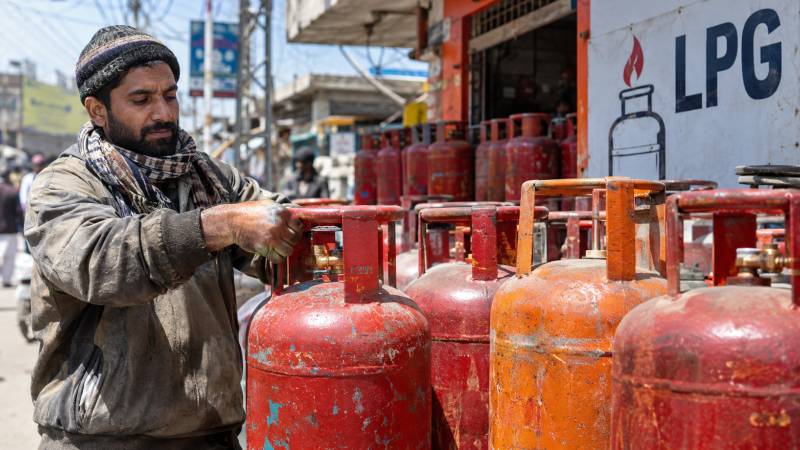
Prime Minister Muhammad Shehbaz Sharif has taken a timely step by forming an eight-member ministerial committee to review the proposed LPG policy changes. Families are currently paying Rs 6,000 to Rs. 7,200 for an 11.57 kg cylinder in the open market, while the official rate notified by OGRA was Rs 3,296 in October and has risen to around Rs 3,470 for November. With winter approaching, this gap is already hitting households hard, especially in colder and remote areas (OGRA notifications).
The proposals on the table contain several useful ideas. These include allowing state companies such as PSO and others to import LPG in larger quantities and set monthly prices according to actual import costs, creating a special fund to support low-income families through BISP, reserving part of local production for remote areas, and adjusting marketing margins. These measures can work, but only if they are designed carefully. The real test is whether the final policy can bring official prices closer to reality while protecting ordinary consumers and keeping supply steady. The committee should also ensure proper consultation with private marketers and dealers, as the earlier process drew criticism for limited industry input.
The central problem is not only who sets the price, but whether enough gas reaches the market in the first place. A reform that focuses mainly on pricing without first securing supply will inherit the same weakness that created the current gap between official and market rates. Pakistan uses roughly 2 to 2.4 million tonnes of LPG each year. Only about 30 percent is produced at home. The rest is imported, and a large share has traditionally come by road from Iran. When that route faced disruptions this month and sea imports stayed limited, prices rose sharply. Daily demand is normally 4,000 to 4,500 tonnes and climbs to 6,000–7,000 tonnes in peak winter. Local production of 2,000–2,500 tonnes a day cannot close this gap on its own.
The present monthly pricing formula, largely tied to the Saudi Aramco rate, no longer reflects the true cost of bringing LPG into the country. Higher freight, insurance and other charges have made the official price almost meaningless. Moving towards a system based on actual import costs therefore makes sense. At the same time, giving complete control of pricing to state companies raises valid concerns about competition, transparency and public trust.
Other countries facing similar pressures offer useful lessons. India gives direct cash support of Rs 300 per cylinder to verified poor families for a limited number of refills each year under the Ujjwala scheme. At the same time, it has directed its state oil companies to maintain at least 30 days of LPG reserves and has signed longer-term import contracts to reduce the risk of sudden shortages. Indonesia is shifting from broad subsidies on small cylinders towards support based on verified household need. Brazil has gone further with its Gás do Povo programme, which provides free refills of the standard cooking gas cylinder to low-income families registered in the national social registry, with priority for those already receiving social assistance. In all three cases, the focus has moved from blanket subsidies to clear, targeted help for the poorest households.
The government must treat supply security as the first priority by diversifying imports, strengthening sea-based supplies, allowing transparent private-sector participation and ensuring that adequate stocks are maintained before peak winter demand.
Against this background, a few practical steps deserve the committee’s attention. First, keep an independent check on the pricing process. State companies can lead bulk imports and publish their actual costs every month. An independent body such as OGRA should still review the figures, publish the full cost break-up in simple terms, and watch for unfair practices. Complete control without outside review risks reducing public confidence. Second, design the special support fund properly. Channeling the difference between local and import-based prices into a fund for BISP-eligible families is a sound idea. The fund must be audited regularly, and the money must reach only verified low-income households. Clear and regular public reporting on inflows and spending will strengthen credibility.
Third, treat supply security as the first priority. The recent disruption on the Iran road route has shown the risk clearly. The government should move quickly to arrange more reliable sea imports from multiple sources, allow private companies to bring in larger volumes under transparent rules, and require marketers and importers to maintain a minimum stock. A starting target of around 10 days of inventory before winter, rising over time, would give the system a basic buffer. Gradual improvement in domestic production will also help.
Fourth, keep the distribution of local LPG open and fair. Setting aside 10 percent for remote areas is reasonable. The remaining volume should be sold through open monthly auctions with clear and published rules so that qualified players can compete. This will help prevent shortages and excessive mark-ups. Fifth, if marketing margins are increased, strong safeguards must accompany the change. Raising the margin from Rs 35,000 to Rs 50,000 per tonne may be justified by rising costs since 2016, but it should remain a ceiling, not a guaranteed floor. Effective monitoring is needed to stop coordinated price increases. Sixth, improve cylinder quality and last-mile delivery. Clear standards on correct weight, safety and dealer licensing can reduce under-filling and over-charging that currently hurt ordinary consumers. Simple tracking systems can also help.
None of these steps require radical change. They combine realistic pricing with targeted support for the poor, competition with secure supply, and clear rules with practical administration. The committee has only one month. Peak winter demand is only weeks away. The committee’s one-month window is therefore critical. A clear and workable policy that narrows the gap between official and market prices while ensuring regular availability can ease the burden on families and restore confidence in the system. The committee has a short window and a clear responsibility. If it focuses on securing supply first, designs pricing carefully, and protects the most vulnerable households, it can turn this crisis into a more stable and fair LPG market. The coming winter will show whether this opportunity was used well.