


Ire in the Soul
There was something surreal about watching the chief of Jamat-e-Islami (JI), Hafiz Naeem-ur-Rehman, a figurative ‘boomer’ from an Islamist party, declare that Karachi’s Gen Z would 'take revenge' on the Pakistan People’s Party. It’s not every day you see an Islamist party try to lead a vibe shift.
The irony is thick enough to choke on: he’s rebranding an Islamist outfit as the trendy, anti-system choice, desperately hoping the kids won't notice that his version of ‘rebellion’ just swaps one set of rigid rules for another.
He’s out there preaching "revenge" to a demographic whose idea of getting even is not exactly storming the ballot box for an Islamist party. It’s a bold strategy, though, to try and sell fire-and-brimstone to this generation, essentially telling kids that the ultimate act of "cool" defiance is voting for the very people who’d probably like to ban their Spotify playlists.
On the other hand, the Mohajir nationalist party Muttahida Qaumi Movement (MQM) has, predictably, been seized by yet another one of their ‘make Karachi a federal city’ episodes. The irony is palpable: while both parties share a common disdain for the PPP), they utterly detest one another.
The streets that these two parties are carving their paths on are primarily situated within Karachi’s Mohajir-majority areas that historically favoured the JI until MQM’s ascent in the mid-1980s. MQM effectively ousted the JI from the city government, which the latter had controlled from 1979 until 1987. MQM maintained its grip on local administration until 2020, with the sole exception of 2002 when a boycott by MQM allowed the JI to briefly install its own mayor once again.
During the 2023 local elections which too were boycotted by the MQM, the JI sensed another opening. However, the party failed to take into account that JI’s primary constituencies remained rooted in Mohajir-majority areas, which had been steadily migrating from MQM toward the populist Pakistan Tehreek-e-Insaf (PTI) since 2013.
Muhajir insecurity dates back to the Ayub Khan era and intensified under Z.A. Bhutto, fueled by the arrival of Pashtun migrants and the imposition of Sindhi language laws
Although the MQM had fractured in 2016 and was later, allegedly, stitched back together by the ‘establishment’, the party remained in the doldrums in 2023 and therefore opted to sit out this year’s local polls.
The PPP, having held power in Sindh since 2008, had largely ‘ignored’ Sindh’s multi-ethnic capital Karachi until 2020, primarily because it consistently failed to secure more than a handful of seats in the city. However, the party eventually formulated a strategy centred on diverting resources and development toward parts of the city where Muhajirs are not the majority. These areas have been ballooning in size, driven by a burgeoning Pashtun population and expanding Sindhi communities.
The Pashtun community, which now accounts for a significant portion of Karachi’s massive population, previously shifted its allegiance from the Pashtun nationalist outfit the Awami National Party (ANP) to the PTI. However, they have grown increasingly disillusioned, as the PTI has struggled to master the intricate dynamics of constituency politics of the city.
This shift was reflected in the 2023 local elections, where the PPP successfully captured most of the city’s multi-ethnic areas and in Pashtun/Sindhi/Baloch-majority areas. In contrast, the seats won by the JI and PTI were almost entirely concentrated within the traditional Mohajir-majority heartlands.
2023 Karachi local election results by areas
| Party | Seats Won (Directly Elected UCs) | General Strongholds |
|---|---|---|
| PPP | 155 | Malir, Lyari, Keamari, and parts of South/West |
| JI | 132 | Central, East, and Korangi |
| PTI | 62 | Scattered in East, South, and Central |
Mapping the Victory by District:
-
-
- District Central: Dominated by JI.
- District East: Split between JI and PTI, with some PPP inroads.
- District Malir & Keamari: Swept by the PPP.
- District Korangi: Largely JI.
- District South: PPP (Lyari)/PTI/JI (Saddar).
- District West: A three-way split but leaning toward PPP and JI.
-
Karachi's ethnic distribution: an overview
| Ethnic/Linguistic Group | Primary Strongholds |
|---|---|
| Urdu-speaking (Mohajir) | Central, Korangi, East (Urban), and parts of South. |
| Pashtun | West, Keamari, and peripheral areas of East/Malir. |
| Sindhi | Malir, Lyari, and peri-urban fringes. |
| Punjabi | Scattered (Saddar, Cantonments, Industrial pockets). |
| Baloch | Lyari, Malir, and parts of Keamari. |
| Others (Saraiki, etc.) | Multi-ethnic industrial and coastal belts. |
Voter allegiance in the 2023 local election
| Ethnic Group | Primary Party Choice | Secondary / Emerging Choice | Notable Trend |
|---|---|---|---|
| Urdu-speaking (Mohajir) | Jamaat-e-Islami (JI) | PTI | Split between JI and PTI due to the MQM boycott. |
| Sindhi | PPP | — | Remained a solid stronghold for the PPP, especially in Malir. |
| Baloch | PPP | — | Historically loyal to PPP (Lyari/Malir); consolidated further in 2023. |
| Pashtun | PPP | PTI | Significant shift toward PPP in 2023; disillusionment with PTI's local delivery. |
| Punjabi / Saraiki | PML-N / PPP | PTI | Historically fragmented; saw higher PPP support in multi-ethnic UCs. |
The PPP narrowly outmanoeuvred the JI to install its first-ever mayor in Karachi. Although the party’s choice, Murtaza Wahab, is himself Muhajir, his appointment did little to quell the resurgence of a deep-seated anxiety within the Muhajir community. This fear has haunted the Muhajir psyche since they first began to lose their grip on the state machinery or when they began to slide out from a ruling partnership they had shared with the Punjabi elite from 1947 until 1959.
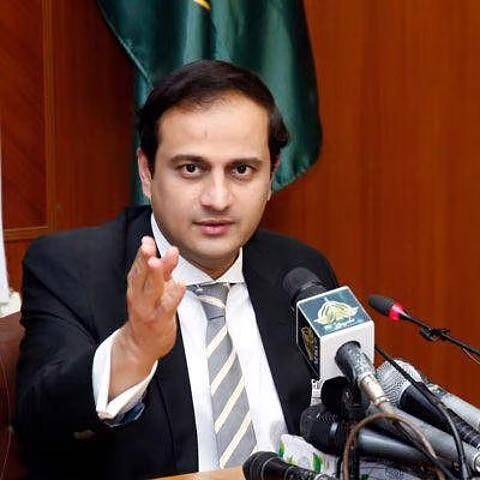
Here is another compelling angle: Naeem, also a Muhajir, possesses a keen understanding of this collective psyche. Consequently, when he speaks of Karachi’s plight, he is effectively harnessing that same deep-seated anxiety.
This trepidation first began to intensify during the Ayub Khan dictatorship (1958–69), as waves of Pashtun migrants arrived from the erstwhile NWFP (now Khyber Pakhtunkhwa). These were predominantly working-class individuals, recruited as labourers and as bus, taxi, and rickshaw drivers during a period of rapid industrialisation in the city.
The carnage at Aligarh Colony provided the MQM with its most potent narrative: that the Muhajirs were an ‘orphaned’ community surrounded by hostile ‘outsiders’
The year 1965 witnessed the city’s first major ethnic clashes, as Muhajirs came into direct conflict with the Pashtun community. The violence erupted when Pashtuns took to the streets to celebrate Ayub Khan’s controversial ‘victory’ in the 1965 presidential election. Ironically, the Muhajirs viewed the Pashtuns as outsiders, an assessment that overlooked the fact that the Muhajirs themselves had only recently arrived in Karachi from various parts of India following the 1947 Partition and the birth of Pakistan.
Until 1947, over 65% of Karachi’s population was composed of Sindhi-speakers, with Hindus accounting for 51% and Muslims making up a little over 40% of the total. The 1951 census figures, however, capture the most dramatic demographic upheaval in the city's history. Only four years earlier, Sindhi-speakers had held a commanding majority. But by 1951, the influx of approximately 600,000 refugees from India, primarily Urdu-speakers, had fundamentally reconfigured Karachi into a Muhajir-majority city.
Ayub’s fall in March 1969 and the emergence of the country’s first directly elected government in 1972, could not reduce the fear. In fact, it intensified due to the fact that a Sindhi, Z.A. Bhutto (chairman of the PPP), became president and then prime minister. Yet, at the time (and also during the 1970 elections), the PPP was more popular in Punjab, but it did win the most seats in Sindh as well.
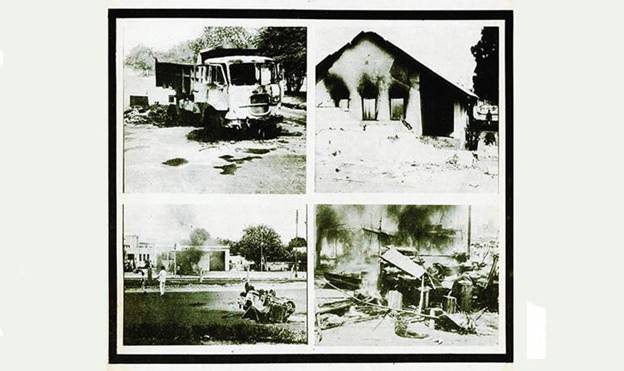
In a bid to outflank radical Sindhi nationalists who were proving to be a persistent thorn in his side, Bhutto made the study of Sindhi mandatory in schools. The Muhajir community was livid. Egged on by populist Urdu dailies that were practically foaming at the mouth, Islamist parties like the JI and Jamiat Ulema Pakistan (JUP), alongside the freshly minted Muttahida Tulaba Mahaz Karachi and the Urdu Qaumi Council, essentially declared war on the provincial government.
Karachi soon resembled a battleground. Mobs vented their fury on cars, buses, and public property, causing damage in the millions. By the time the smoke cleared, 19 people were dead. This resentment simmered until 1977, when Muhajirs in the city formed the vanguard of the movement to topple the Bhutto regime. Once again, the city’s streets were lit by the glow of burning cinemas, bars, buses, government property and the homes of PPP leaders and workers.
Yet, in a classic case of "be careful what you wish for," the post-Bhutto honeymoon was remarkably short-lived. Barely a year after General Zia-ul-Haq’s coup that had overthrown the Bhutto regime in July 1977, Muhajir youth were already growing weary of their erstwhile Islamist patrons. Altaf Hussain, then a student at Karachi University, who had dutifully marched against Bhutto, later noted with a touch of bitterness in his autobiography that the JI and JUP had merely ‘used’ the Muhajirs as political foot soldiers.
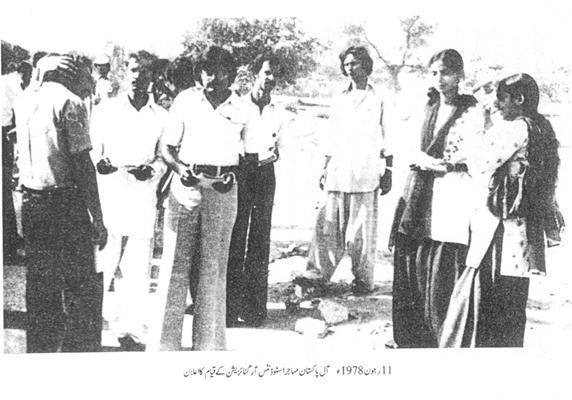
Realising that the religious right was a dead end for his community’s specific grievances, he founded the All Pakistan Muhajir Students Organisation (APMSO) in 1978, and with it, the seeds of a new, more parochial brand of politics were sown.
Timeline of major violence in Karachi: 1965-77
| Year | Event / Conflict | Primary Adversaries | Nature of Violence & Casualties |
|---|---|---|---|
| 1965 | Post-Election Riots | Muhajirs vs. Pashtuns | Triggered by celebrations of Ayub Khan’s ‘victory’ over Fatima Jinnah. Targeted attacks in Liaquatabad and Goli Mar; several deaths and widespread arson. |
| 1969 | Anti-Ayub Movement | Students/Labourers vs. State | Part of the nationwide uprising. Karachi saw intense street battles, torching of government property, and frequent police firings to quell protestors. |
| 1972 | Language Riots | Muhajirs vs. Sindh Govt / Supporters | A watershed moment. Mobs attacked public property and government offices. 19 people killed in Karachi (47 province-wide). Curfews and army deployment. |
| 1977 | Anti-Bhutto Movement | Pakistan National Alliance vs. PPP Govt | Massive urban unrest following alleged election rigging. Systematic burning of buses, cars, and homes of PPP leaders. Dozens killed in street battles with law enforcement. |
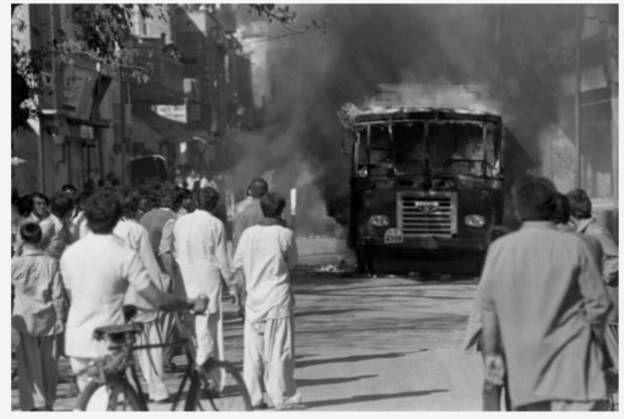
The fuse is lit
In an intriguing tactical move, Altaf Hussain sought to distinguish the APMSO, and later the Muhajir Qaumi Movement (MQM), from the JI by positioning his party as a secular, Muhajir nationalist outfit. This raised a fundamental question: what exactly was ‘Muhajir nationalism’? The Muhajirs were not an established ethnicity in the same vein as the Punjabis, Sindhis, Pashtuns, or Baloch. While the JI initially ridiculed the notion, the laughter soon faded as younger Muhajir supporters of the JI and its student-wing began a steady migration toward the APMSO.
The pull was not limited to the religious right. Many young Muhajirs from progressive student outfits also jumped ship. In fact, the APMSO even joined the United Students Movement (USM), a progressive alliance at Karachi University.
Nevertheless, at the ballot box, Karachi’s Muhajirs remained largely tethered to the JI, which managed to install its mayor after the 1979 local elections. However, that victory was anything but straightforward.
As the journalist Mazhar Abbas has frequently noted, a significant portion of the city's Muhajir population felt a stinging sense of betrayal, believing the JI had discarded them once they were no longer needed as foot soldiers for the 1977 anti-Bhutto movement.
The city was no longer just a collection of neighbourhoods. It was a series of heavily fortified fiefdoms where the state’s writ had effectively vanished
Surprisingly, it was the PPP that originally secured the highest number of seats in the 1979 local elections. According to Abbas, this result sent shockwaves through both the JI and the Zia dictatorship. Consequently, the initial results were declared null and void, and a JI majority was conveniently ‘engineered’ to keep the ‘enemy’ at bay. Voting for the PPP was perhaps a way to punish the JI by the Muhajirs?
For a time, the MQM remained little more than a political curiosity, a fringe entity perpetually treading water while fending off a barrage of physical and verbal assaults from the JI. By the early 1980s, the city’s academic spaces had turned into combat zones. Vicious gun battles between the JI’s student wing, the IJT, and various progressive groups escalated dramatically, leaving dozens of students dead in the corridors of learning.
To add to the chaos, sectarian Shia-Sunni riots began to fracture the city’s fabric. This volatility was supercharged by the anti-Soviet ‘jihad’ that the Zia regime had begun to orchestrate at the behest of the US and Saudi Arabia. As a result, waves of Afghan refugees poured into Pakistan, with many drifting south to settle in Karachi. Zia actively encouraged this influx. And since the JI was acting as the dictator’s recruitment agent for the Afghan insurrection, the JI-led city government made no attempt to regulate the arrival of the Afghans, the vast majority of whom were Pashtuns.
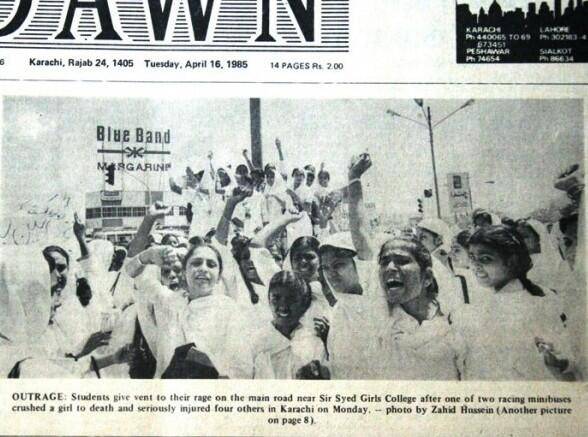
In July 1985, a twenty-year-old college student named Bushra Zaidi was crushed under the wheels of a speeding bus. She was a Muhajir; the driver was Pashtun. At the time, the Pashtun community held a virtual monopoly over the city's public transport sector, and this fatal accident acted as the spark that finally ignited the city's tinderbox.
All hell broke loose. Yet, as the French researcher and author Laurent Gayer points out, the MQM was a ghost during the opening acts of the ensuing ethnic warfare. According to Gayer, the initial Pashtun-Muhajir clashes were not led by Altaf Hussain’s nascent movement, but rather by the IJT. The JI's student-wing led the charge, attacking buses and engaging in street battles in the congested pockets where Pashtun and Afghan populations were concentrated.
While the IJT started the fighting, it along with JI were ultimately blamed by the Muhajir public for not "protecting" them effectively. This allowed the MQM to step in as the definitive ethnic vanguard. The 1986 military operation in Karachi’s Sohrab Goth area, ostensibly aimed at clearing out the burgeoning heroin and arms bazaars mostly run by the Afghans, served as the final death knell for the city’s stability.
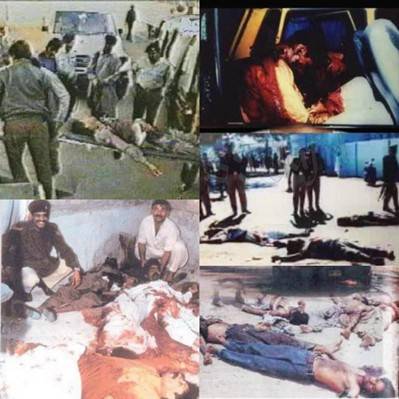
While the state claimed to be targeting criminals, the fallout was catastrophic and deeply lopsided. In a brutal retaliation that the security forces seemed curiously unable or unwilling to stop, armed Pashtun mobs descended from the hills onto the Muhajir-majority Aligarh Colony. The result was a massacre that lasted for hours, leaving the streets littered with bodies and the community's trust in the state, and their traditional patrons the JI, utterly shattered.
This was the definitive point of no return. The MQM, which had been lurking in the wings, was suddenly catapulted from a fringe group to the ‘saviour’ of a traumatised community. Altaf Hussain didn't just inherit a political vacuum, he inherited a city that had been physically and psychologically partitioned.
The carnage at Aligarh Colony provided the MQM with its most potent narrative: that the Muhajirs were an ‘orphaned’ community surrounded by hostile ‘outsiders’ and abandoned by a complicit state. From that moment on, the ballot boxes of Karachi belonged to the MQM, and the religious rhetoric of the past was replaced by the cold, hard logic of ethnic survival.
Timeline of violence in Karachi (1980-1989)
| Year | Event | Description |
|---|---|---|
| 1981 | Student Gun Battles | High-intensity turf wars between the IJT and progressive groups introducing a "Kalashnikov culture" to campuses. |
| 1983 | Sectarian Riots | Major Shia-Sunni clashes erupted in Liaquatabad and New Karachi, adding a religious dimension to urban instability. |
| 1985 | Bushra Zaidi Riots | A traffic accident sparked a major Muhajir-Pashtun ethnic war, fundamentally altering the city's social fabric. |
| 1986 | Aligarh Colony Massacre | Retaliation for the Sohrab Goth operation; a cold-blooded massacre that became a rallying cry for the MQM. |
| 1987 | Election Violence | The MQM’s entry into formal politics was marked by violent street battles with the Jamaat-e-Islami. |
| 1988 | Retaliatory Killings | Following the "Black Friday" massacre in Hyderabad, Karachi saw widespread ethnic killings and the hardening of territorial lines. |
| 1989 | Urban Turf Wars | Friction between the MQM and the new PPP government, alongside clashes with the PPI (Punjabi Pukhtoon Ittehad). |
Trash, Thirst and Terror
If the 1980s was the decade the fuse was lit, the 1990s was the era of the explosion. By the turn of the decade, MQM had morphed into an urban juggernaut that held Karachi in a vice-like grip. The city was no longer just a collection of neighbourhoods. It was a series of heavily fortified fiefdoms where the state’s writ had effectively vanished.
In 1992, the military finally lost its patience and launched ‘Operation Clean-up,’ ostensibly to target "terrorist and criminal elements." However, the operation soon became a brutal, state-sanctioned crackdown on the MQM, leading to the infamous "no-go areas" and the splintering of the party into two equally hostile factions. .
Following the demise of General Zia-ul-Haq in a 1988 plane crash, the MQM briefly flirted with the mainstream by joining the PPP-led coalition in both the centre and Sindh. However, the partnership was notoriously short-lived. Rising friction between the student wings of both parties and escalating Sindhi-Muhajir clashes forced the MQM to jump ship, eventually landing in an opposition alliance alongside their old rivals, the JI, under the banner of the Islami Jamhoori Itihad led by Pakistan Muslim League.
While the PPP had managed to reclaim Sindh after a decade in the wilderness, they were sent packing just two years later in 1990 when Ghulam Ishaq Khan, a quintessential Zia loyalist and veteran bureaucrat, dismissed the government on the ever-convenient charges of ‘corruption.’
The subsequent rise of Nawaz Sharif’s PML saw the MQM enter the corridors of power once more. In Sindh, the reins were handed to Jam Sadiq who became Chief Minister. He made it his mission to appease the MQM and dismantle the PPP.
Sadiq granted MQM provincial ministries and, more crucially, a free hand to govern Karachi as they saw fit. Effectively ‘protected’ by the provincial chief, the MQM went on a rampage, attempting to systematically dismantle all opposition through a mix of street muscle and criminal enterprise.
Yet, as the party’s stock soared among the city’s Muhajirs, it became an existential threat to Karachi’s other ethnic groups. The Pashtuns and Punjabis, feeling besieged, gravitated toward the ANP or formed counter-outfits such as the Punjabi Pukhtoon Ittehad (PPI). The MQM eventually lost the plot entirely.
Intoxicated by their own impunity under Sadiq, they crossed the ultimate red line when their workers reportedly kidnapped and tortured a serving army captain. This act of hubris provided the military with the perfect pretext to move from being an ally to adversary, setting the stage for the mid-90s crackdown that would redefine Karachi's trauma.
By entertaining the MQM’s grievances, the establishment is signalling to a reluctant PPP that it has other cards to play in Sindh
The mid-90s represented Karachi’s darkest hour, a period of relentless urban warfare where bodies stuffed in gunny bags (the notorious ‘bori-bund’ victims) became a grisly common sight. During the second Benazir Bhutto government (1993–1996), Interior Minister Naseerullah Babar spearheaded a ruthless police campaign that broke the back of MQM’s militant wings through controversial "encounter killings."
While the state claimed to be restoring order, the Muhajir community viewed it as an ethnic cleansing, further radicalising the community’s identity. By the time the decade closed with General Pervez Musharraf’s coup in 1999, the city’s social fabric was in tatters and its politics had been turned on its head.
MQM politics (1990-99)
| Period | Role in Sindh Govt | Chief Minister | Context |
|---|---|---|---|
| 1990–1992 | Coalition Partner | Jam Sadiq / Muzaffar Shah | Height of MQM's urban influence; ended by Operation Clean-up. |
| 1992–1996 | Opposition / Targeted | Syed Abdullah Shah (PPP) | Mass resignations; period of extrajudicial "encounters." |
| 1997–1998 | Coalition Partner | Liaquat Jatoi (PML-N) | Brief reconciliation; ended after Hakim Said's murder. |
| 1998–1999 | None | (Governor's Rule) | Direct rule from Islamabad until Musharraf's coup. |
Politics of Anxiety
The fear that gripped Karachi’s Muhajirs from 1965 onwards is a textbook example of ‘demographic anxiety’ and ‘status threat.’ For a group that viewed themselves as the primary architects of the Pakistani state, the perception that their political and cultural influence was being eroded by waves of migration from outside Karachi created a collective sense of an existential threat.
By the 1980s, this wasn't just about jobs. It was a fear of "annihilation" or being reduced to a permanent, powerless minority in their ‘own’ city. This psychological pressure hardened Muhajir political views, shifting them from the pan-Islamic ideals of the JI toward the ethnic-centric nationalism of the MQM.
As sociological research suggests, exposure to data regarding a declining majority status, such as the slide from 54% in 1981 to 48% in 1998, naturally nudged a community toward more rigid and protective policy preferences. This environment provided the ultimate fertile ground for Altaf Hussain’s populism of fear.
By framing the unregulated influx of Afghan refugees and Pashtun labourers as a deliberate "invasion" designed to subvert the Muhajir order, the MQM was able to consolidate total power.
Ultimately, this perceived threat led to a radical narrowing of the Muhajir ‘in-group.’ In an attempt to maintain social control and exclusivity in a rapidly diversifying metropolis, the community adopted a much stricter, more defensive threshold of identity. The MQM successfully articulated this as a struggle for ethnic survival, convincing their voters that any concession to the "outsider" (other ethnic groups in the city) was a step toward the group’s eventual extinction.
The recurring demand to sever Karachi from the province of Sindh and reconstitute it as a federal territory or a separate "Muhajir province", has become a barometer for the community's demographic anxiety. This narrative gains significant volume whenever new census data confirms that the Muhajir share of the population is shrinking, while the Pashtun and Sindhi footprints continue to expand.
By the 2017 and 2023 census cycles, the realisation that the Urdu-speaking majority had continued to decrease, turned this anxiety into a political emergency for the MQM and its various factions.
The call for a federal territory is, at its core, an attempt to bypass PPP’s grip in the rest of Sindh. As the Sindhi population in Karachi grows, driven by urbanisation and government job placements, and the Pashtun community expands through its dominance in the transport and construction sectors, the Muhajir middle class feels squeezed between a provincial government they don’t vote for and a street economy they no longer control.
But the demand to separate Karachi from Sindh has always functioned more as a strategic political lever than a fixed ideological goal. This was most evident during the Musharraf era (1999–2008). When the MQM won the 2005 local elections and found itself fully facilitated by the military dictator, himself a Muhajir, the calls for a separate province or federal territory almost completely vanished.
With a sympathetic patron in Islamabad and Mustafa Kamal as a high-profile mayor embarking on a state-funded infrastructure boom, the MQM felt they had finally "reclaimed" the city. The "fear of the outsider" was temporarily masked by the glitter of flyovers and underpasses.
However, once Musharraf’s regime collapsed in 2008 and the PPP returned to power in Sindh, the demographic anxiety and the demand for separation began to creep back into the political discourse. Yet, a significant shift had occurred in Altaf Hussain’s rhetoric. He no longer championed separation with the same vitriol, particularly as the ground beneath him shifted.
By the early 2010s, the MQM found itself on a common "hit list" alongside the ANP and PPP, targeted by Islamist militants (the TTP) who viewed the secular parties as their primary enemies. In this era of existential threat from militancy, MQM's focus shifted from provincial boundary disputes to a desperate struggle for physical survival.
The tragedy of the party's later years was that once the demand for separation was expunged, the MQM appeared to have no alternative vision to offer. Even after winning the 2015 local elections, the party failed to replicate its past developmental successes.
Instead of embarking on worthy programmes to arrest the city’s decline, the leadership spent its tenure lamenting that they had been stripped of their powers and fiscal authority. This constant refrain of "helplessness" served as a thin veil for the party's internal fragmentation and its inability to govern without the direct patronage of a military centre.
Today, MQM finds itself in a familiar position, looking towards the military establishment, currently led by CDF Asim Munir, to champion its cause. The party appears to be betting on the military to intervene in Karachi’s administrative politics, perhaps overlooking (or strategically ignoring) that the establishment is currently locked in a complex high-stakes negotiation with the PPP government in Sindh.
These "tough talks" centre on sensitive constitutional and fiscal triggers: the 18th Amendment, the NFC Award, and the controversial Sindh canals project. As noted by the veteran political commentator Najam Sethi, MQM is effectively being utilised as a tactical pressure point. By entertaining the MQM’s grievances, the establishment is signalling to a reluctant PPP that it has other cards to play in Sindh.
Interestingly, the JI has jumped on this bandwagon as well, joining the chorus of voices demanding more authority for Karachi in a rare alignment of interests with their old rivals.
However, Sethi remains convinced that this is a temporary political theatre. He suggests that the military establishment, the federal government, and the Sindh government will eventually find a way to reach an amicable agreement on the NFC and constitutional issues. Once those bargains are struck and the PPP is fully aligned with the centre's broader economic and strategic goals, the vernal leverage provided to the MQM will lose its immediate value.
The "separation" narrative is rarely about administrative efficiency and almost always about ethnic survival. As long as the Muhajir community feels besieged by the provincial setup and a shifting demographic map, the "populism of fear" will remain a potent albeit fluctuating force.
Sindh’s Chief Ministers (1972-2026)
| No. | Name | Political Party | Tenure Start | Tenure End | Context / Notes |
|---|---|---|---|---|---|
| 1 | Mumtaz Bhutto | PPP | 1 May 1972 | 20 Dec 1973 | First CM after restoration of the office. |
| 2 | Ghulam Mustafa Jatoi | PPP | 25 Dec 1973 | 5 Jul 1977 | Removed during General Zia-ul-Haq's coup. |
| — | Martial Law / Gov. Rule | — | 5 Jul 1977 | 6 Apr 1985 | Longest suspension of the provincial assembly. |
| 3 | Ghous Ali Shah | PML | 6 Apr 1985 | 6 Apr 1988 | Appointed during the non-party 1985 elections. |
| 4 | Akhtar Ali G. Kazi | IJI | 11 Apr 1988 | 2 Dec 1988 | Served during the transition after Zia’s death. |
| 5 | Qaim Ali Shah | PPP | 2 Dec 1988 | 25 Feb 1990 | First term following the 1988 elections. |
| 6 | Aftab Shaban Mirani | PPP | 25 Feb 1990 | 6 Aug 1990 | Term ended with the dismissal of the Benazir government. |
| 7 | Jam Sadiq Ali | IJI | 6 Aug 1990 | 5 Mar 1992 | Crucial figure in the 1990s crackdown on PPP/MQM. |
| 8 | Muzaffar Hussain Shah | IJI | 6 Mar 1992 | 19 Jul 1993 | Served during a period of intense urban unrest. |
| — | Ali Madad Shah | Caretaker | 19 Jul 1993 | 21 Oct 1993 | Interim administration for the 1993 polls. |
| 9 | Syed Abdullah Ali Shah | PPP | 21 Oct 1993 | 6 Nov 1996 | Father of current CM Murad Ali Shah. |
| — | Mumtaz Bhutto | Caretaker | 7 Nov 1996 | 22 Feb 1997 | Interim term following dismissal of PPP govt. |
| 10 | Liaquat Ali Jatoi | PML-N | 22 Feb 1997 | 30 Oct 1998 | Tenure ended with the imposition of Governor's Rule. |
| — | Governor's Rule | — | 30 Oct 1998 | 17 Dec 2002 | Transition from Sharif's govt to Musharraf's era. |
| 11 | Ali Mohammad Mahar | PML-Q | 17 Dec 2002 | 9 Jun 2004 | Served under the patronage of Gen. Musharraf. |
| 12 | Arbab Ghulam Rahim | PML-Q | 9 Jun 2004 | 19 Nov 2007 | Known for strong-arm tactics against the opposition. |
| — | Abdul Qadir Halepota | Caretaker | 19 Nov 2007 | 6 Apr 2008 | Interim term during the transition to democracy. |
| 13 | Qaim Ali Shah | PPP | 6 Apr 2008 | 21 Mar 2013 | Second term; longest single tenure for a Sindh CM. |
| — | Zahid Qurban Alvi | Caretaker | 21 Mar 2013 | 30 May 2013 | Interim term for the 2013 General Elections. |
| (13) | Qaim Ali Shah | PPP | 30 May 2013 | 27 Jul 2016 | Resigned mid-term to make way for a "new guard." |
| 14 | Murad Ali Shah | PPP | 29 Jul 2016 | 28 May 2018 | First term; focused on Karachi’s urban development. |
| — | Fazal-ur-Rehman | Caretaker | 2 Jun 2018 | 17 Aug 2018 | Interim term for the 2018 General Elections. |
| (14) | Murad Ali Shah | PPP | 18 Aug 2018 | 17 Aug 2023 | Second term; oversaw the COVID-19 response. |
| — | Maqbool Baqar | Caretaker | 17 Aug 2023 | 27 Feb 2024 | Retired Justice serving during the 2024 elections. |
| (14) | Murad Ali Shah | PPP | 27 Feb 2024 | Incumbent | Current Chief Minister. |
Karachi Mayors (1972-2026)
| Tenure Period | Name | Political Party | Status / Key Events |
|---|---|---|---|
| 1972 – 1979 | Administrator Rule | — | No elected mayor; city run by civil servants. |
| 1979 – 1983 | Abdul Sattar Afghani | Jamaat-e-Islami (JI) | First elected mayor in the post-1972 era. |
| 1983 – 1987 | Abdul Sattar Afghani | JI | Term cut short when the council was suspended. |
| 1987 – 1988 | Administrator Rule | — | Council dissolved by the provincial government. |
| 1988 – 1992 | Dr. Farooq Sattar | MQM | Youngest mayor in the world at the time (age 28). |
| 1992 – 2001 | Administrator Rule | — | Longest period of non-elected rule in recent history. |
| 2001 – 2005 | Naimatullah Khan | JI | Titled "City Nazim" under Musharraf’s local govt system. |
| 2005 – 2010 | Syed Mustafa Kamal | MQM | Oversaw significant flyover and bypass construction. |
| 2010 – 2016 | Administrator Rule | — | System reverted to commissioners and administrators. |
| 2016 – 2020 | Waseem Akhtar | MQM-P | First mayor to take oath while in judicial custody. |
| 2020 – 2023 | Administrator Rule | — | Included Barrister Murtaza Wahab’s term as Administrator. |
| 2023 – 2026* | Murtaza Wahab | PPP | Incumbent. First PPP mayor in Karachi's history. |