

It is high time we got down to the nuts and bolts of devolution, dispensed with the intellectual calisthenics and stopped wandering through political mazes laid out by its crafty naysayers—particularly those whose monopolistic grip on power would be loosened by meaningful reform.
Pakistan has spent decades debating who should govern. It has devoted far less attention to the more consequential question: how should power be distributed so that government actually serves the governed?
Devolution is not another fashionable slogan, still less an academic indulgence. It is a democratic imperative and a practical response to governance failures that have outlived successive governments, parties and political arrangements. When a broken water main, an impassable road or a dysfunctional municipal service requires the intervention of a distant provincial authority, the problem is not merely inefficiency. It is a failure in the architecture of the state.
Our political discourse mistakes the transfer of power from Islamabad to provincial capitals for genuine devolution. Provincial autonomy is essential, but cannot justify replicating centralisation in Lahore, Karachi, Peshawar or Quetta. Power has travelled, but not nearly far enough. The citizen remains a supplicant for services that should be delivered as a matter of right.
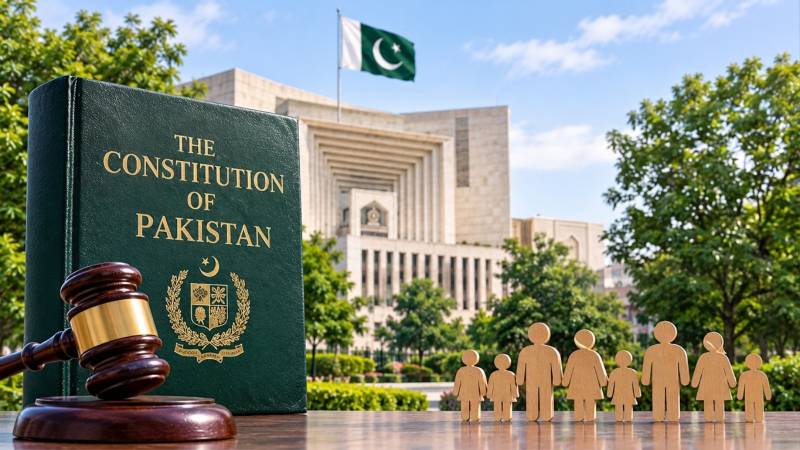
Article 140A of the Constitution was intended to change that equation. It requires each province, by law, to establish a local-government system and devolve political, administrative and financial responsibility and authority to elected local representatives. Yet it does not itself define a secure minimum of functions, fiscal entitlements, administrative autonomy or institutional continuity. Much of the substance of devolution remains dependent on provincial legislation and political willingness.
Here lies the paradox of our half-finished democracy: local government is constitutionally recognised but remains subject to provincial control. Without authority over functions, personnel and predictable resources, elected councils become administrative subordinates rather than accountable democratic institutions.
Compare this with Article 160. The Constitution establishes the National Finance Commission and a framework for sharing resources between the federation and provinces, including periodic reconstitution and protection against reducing the provinces' share in successive awards. No comparable constitutional machinery guarantees predictable transfers onward to local governments. This asymmetry should trouble anyone who believes democratic authority derives from the people rather than being dispensed as a favour by provincial executives.
Provincial autonomy is essential, but cannot justify replicating centralisation in Lahore, Karachi, Peshawar or Quetta. Power has travelled, but not nearly far enough. The citizen remains a supplicant for services that should be delivered as a matter of right.
The answer is not to weaken the provinces, but to carry the logic of federalism to its democratic destination. Article 140A needs firmer constitutional guarantees, supported by a proposed Article 160A entrenching Provincial Finance Commissions and transparent, rule-based fiscal transfers. Elected local governments require meaningful functions, secure tenure, administrative capacity and defined revenue powers. Functions, funds and functionaries must move together; assigning responsibility without authority is simply another way of arranging failure.
Who, then, stands in the way? The naysayers are not a single constituency. Political centralisers are reluctant to relinquish executive control. Patronage-dependent interests fear losing influence over contracts, postings and development funds. Bureaucratic gatekeepers defend established hierarchies. Partisan opportunists champion devolution when out of office and rediscover its supposed dangers when in power. Their motives differ, but they converge in preserving a system where citizens must approach political intermediaries rather than empowered institutions.
Not everyone who questions reform belongs in this category. Constitutional complexity is real. Reorganising provinces or creating administrative units raises legitimate questions of representation, identity, cost and political consent. Devolution can reproduce local elites unless accompanied by safeguards, transparent finances and public scrutiny. Such objections deserve serious answers. The distinction is between scrutiny intended to improve reform and objections deployed indefinitely to prevent it. Those defending existing arrangements must explain why repeated failures deserve perpetual protection.
Among the more insidious tactics of some naysayers is the progression from emotional blackmail to outright fearmongering. In my discussions with politicians, intellectuals and members of the entitled elite, I have repeatedly encountered warnings that meaningful devolution would provoke social unrest, violent street confrontations and ominous consequences its advocates must be prepared to face. Such warnings are presented as political realism, sometimes even as concern for national stability. Yet when the spectre of violence is invoked to discourage legitimate constitutional reform, it becomes an instrument of intimidation rather than an argument against change. Those whose monopolistic hold over political, administrative and financial authority is threatened cannot be allowed to turn the fear of disorder into a veto on democracy. Entrenched interests and their willing accomplices may resist, even fiercely; resistance, however, is neither destiny nor an excuse to abandon reform. Public mobilisation, political consensus, constitutional action and sustained peaceful pressure are the instruments through which change earns legitimacy. To let the threat of street violence define the limits of reform is to reward intimidation and concede victory to the status quo before the democratic argument has been made.
Nor should the debate be diverted into a sterile argument over whether we need more provinces, smaller provinces or administrative units. Territorial reorganisation and genuine local self-government address related but distinct problems. Changing a boundary does not automatically change the distribution of authority within it. Without empowered elected institutions, multiplying provincial capitals could merely multiply centres of patronage. The test is not the number of lines on a map, but whether decisions are made closer to those who live with their consequences.
The case for devolution is economic as much as democratic. Centralised control over municipal services, infrastructure and local commerce breeds delays, stifles enterprise and undermines productivity. Empowered local governments, subject to financial transparency and public scrutiny, can deliver services more efficiently and make accountability a reality rather than an election-season promise.
The responsibility for failure is collective. Political parties cannot blame their rivals while preserving the very structures that perpetuate dysfunction. Devolution cannot be a slogan in opposition and a threat to stability in power. The true measure of reformist conviction is the willingness to surrender powers one already enjoys—not merely demand those held by others.
I have argued for devolution consistently because I regard it as indispensable to rebuilding Pakistan's relationship with its citizens. My position is neither an endorsement of one party nor a rebuke reserved for another. Political allegiances shift; the principle should not. Public authority exists to serve citizens, and the closer its exercise can be brought to them—consistent with national and provincial responsibilities, rather than a matter of political expediency —the more responsive and answerable government can become.
None of this promises instant transformation. Local government itself needs checks against corruption, capture and incompetence. Its powers must be clear, finances inspectable and representatives accountable through lawful oversight and periodic elections. But imperfect institutions are an argument for designing them properly, not for denying citizens the right to govern their own communities.
Pakistan does not need another struggle simply to decide who commands the existing machinery of power. It needs the courage to redesign that machinery: constitutionally secured local democracy, a credible fiscal settlement, administrative reform and a clear division of responsibilities across every tier of government. The unfinished business of devolution is not a favour politicians may grant when convenient. It is a democratic obligation they must be made to honour.
The question is no longer whether meaningful reform is complicated. It is whether the continued denial of reform is defensible. The ultimate beneficiary of power must be the citizen—not the politician, not the party and not the establishment. Until that principle governs our institutions, devolution will remain Pakistan's most urgent unfinished democratic business.