

A fundamental tenet of democratic theory dictates that sovereignty resides in the citizenry and that public authority must flow from the bottom up rather than being imposed from the top down. Consequently, local governments are recognized globally as the indispensable bedrock and a true pillar of functional democracy.
In Pakistan, however, this foundational tier of governance faces systematic marginalization. While the state mobilizes its entire constitutional, judicial, and executive apparatus to ensure the timely conduct of national and provincial parliamentary elections, the perpetual deferral of local government elections is met with pervasive institutional apathy and a profound lack of accountability mechanisms.
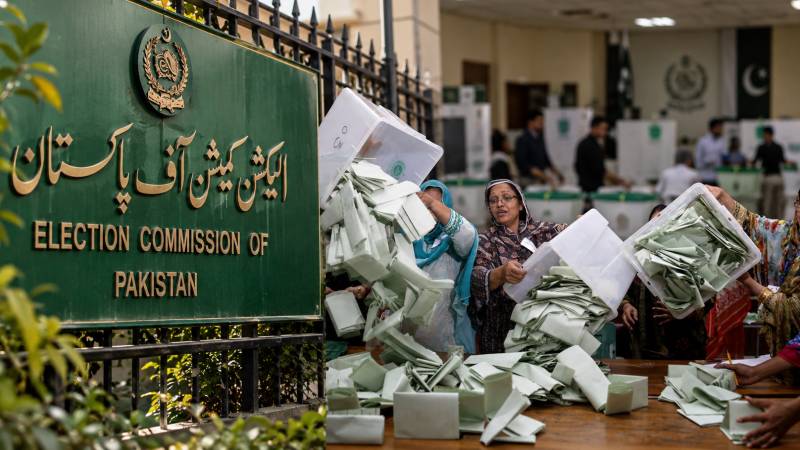
The proceedings of the Election Commission of Pakistan (ECP) meeting on October 5, 2026, chaired by Chief Election Commissioner Sikandar Sultan Raja, cast a stark spotlight on the structural weaknesses within the country’s constitutional and administrative framework. Article 140-A of the Constitution of the Islamic Republic of Pakistan mandates that provinces establish local government systems and devolve political, administrative, and financial authority to elected local representatives. Correspondingly, conducting local government elections remains a constitutional duty of the ECP. Nevertheless, the empirical reality revealed in recent ECP deliberations poses a critical question: Is the Election Commission hamstrung by executive inertia, or has its institutional and political resolve to exercise its legal powers simply eroded?
Across federal and provincial jurisdictions, a troubling pattern emerges in which the statutory powers of the ECP are systematically thwarted by governmental delay, non-cooperation, and last-minute legislative maneuvers. In Sindh, local bodies are currently functional, and preliminary preparations for the next electoral cycle have commenced, presenting a rare positive precedent relative to other sub-national units.
In Balochistan, while municipal bodies in most areas are set to complete their statutory tenure by February 8, 2027, the provincial capital, Quetta, remains disenfranchised. Following a Federal Constitutional Court directive, the ECP finalized delimitation in Quetta by May 21, 2026; however, the provincial government’s subsequent bifurcation of Quetta into two districts, without providing updated geographical boundaries and population data, has effectively rendered judicial compliance and electoral execution dormant.
In Punjab, the tenure of local government institutions expired on December 31, 2021. Despite the ECP submitting a draft election schedule and requesting lists for District Returning Officers, Returning Officers, and Assistant Returning Officers, the commission remains stalled, awaiting prerequisite executive assistance from the provincial administration. This begs the question of whether a constitutionally autonomous body should wait indefinitely for executive concurrence or invoke its inherent powers to enforce compliance.
When the Constitution and Elections Act clearly assign the ECP responsibility for conducting local elections, endless dependence on executive assistance and administrative correspondence risks compromising the commission’s constitutional authority.
In Khyber Pakhtunkhwa, delimitation had been completed across 23 districts and was underway in seven others by May 2026, until the Provincial Assembly enacted sudden amendments to the Khyber Pakhtunkhwa Local Government Act 2013. By abruptly raising the population threshold for Village and Neighborhood Councils from 5,000–15,000 to 30,000–40,000, the assembly created an irreconcilable legal and demographic mismatch with the relevant statutory schedules of the Act, rendering the existing delimitation framework functionally impossible. Despite repeated requests from the ECP for legislative rectification, provincial inaction has stalled the process, illustrating how last-minute legislative shifts reset the electoral clock to zero.
A similar pattern of statutory paralysis affects federal jurisdictions. In the Islamabad Capital Territory, despite operational readiness, the ICT Local Government Amendment Ordinance 2026 expired without legislative enactment. While the ECP has urged the federal government to complete the necessary legislation, it has also signaled its intent to revert to the LG 2015 Act if executive delays persist.
Meanwhile, in Cantonment Boards across the country, despite formal entreaties from the Chief Election Commissioner to the Prime Minister, the federal government has failed to submit the requisite statutory requisition to conduct elections. The ECP’s recent decision to issue a final ultimatum to the Ministry of Defence highlights a fundamental constitutional anomaly: when the Constitution explicitly empowers the ECP to hold elections, why must the process remain contingent upon formal executive permission?
This systemic impasse transcends routine administrative friction; it represents a crisis of constitutional enforcement. Article 220 of the Constitution explicitly binds all executive authorities, both federal and provincial, to assist the Election Commission in the discharge of its duties. Article 218 establishes the commission's constitutional mandate, while Articles 219 and 140-A delineate its constitutional responsibility to conduct local government elections. Furthermore, Section 219(4) of the Elections Act 2017 legally mandates the ECP to hold local government elections within 120 days of the expiration of a local body’s term. When both the Constitution and primary legislation invest the ECP with a clear mandate and authority, the reliance on endless administrative reminders and official correspondence severely compromises its statutory authority.
The underlying catalyst for these continuous deferrals is not merely technical complexity, but an entrenched political culture of centralizing power. Provincial chief ministers, cabinet members, and parliamentarians consistently demonstrate a reluctance to devolve fiscal resources and executive authority to local representatives, preferring to keep development portfolios within their immediate political patronage networks. The ECP’s own official annual reports have repeatedly noted that federal and provincial executive tiers systematically resist the decentralization of administrative and financial control, deploying regulatory alterations and boundary realignments as mechanisms for delay.
The time has come to decide whether local democracy is a discretionary privilege granted by executive authorities or an unyielding constitutional mandate. If the Election Commission of Pakistan is to maintain its standing as a formidable constitutional institution, it must transition from passive administrative correspondence to active enforcement using its full powers under Articles 140-A, 219, and 220 of the Constitution, alongside relevant provisions of the Elections Act 2017.
Unless the ECP converts its statutory powers into decisive enforcement action, federal and provincial governments will continue to leverage procedural technicalities to deny citizens their fundamental right to local self-governance. True democracy cannot subsist exclusively within national and provincial parliaments; its legitimacy is rooted in municipal self-determination at the village/neighborhood, union council, and district levels. Depriving citizens of timely local elections moves power away from the public interest. The fundamental question facing Pakistan is not merely when local body elections will occur, but when power will finally be devolved to the people.