


Today, the anthropogenic materials from 538 hectares or 1,330 acres of land from the Mohenjodaro Archaeological Site have been investigated through Dry Core Drilling (2014), which makes Mohenjodaro one of the largest cities of the Ancient Indus Valley Civilization. Out of this, only 10% of the area has been excavated so far within last 100 years of scientific excavations. The Archaeological Museum of Mohenjodaro was established in 1925. Sir John Marshall writes in his book Mohenjo-Daro and the Indus Valley Civilization (London 1931) that:
"Besides carrying out these extensive operations in 1925-6, I was also able, thanks largely to the interest taken in the work by Sir Leslie Wilson-then Governor of Bombay-to get a serviceable road made to Mohenjo-daro from the Railway station at Dokri, and which was more important still-to erect adequate offices, workrooms, and quarters, and a small museum for the housing of antiquities. Accurate plans of the site were also prepared under my direction by Mr A. Francis, of the survey of India, on a scale of 100 feet to the inch, with contours at 5 feet intervals. These plans have been used in compiling the general but more simplified site plan which accompanies this volume." (p 13)
Parmanand Mewaram (1865-1938) was a prominent Sindhi writer, lexicographer and a journalist. He visited Mohenjodaro Archaeological Site and Museum during Sir John Marshall’s large scale excavations which he carried out there in 1925-26. He published details of his Mohenjodaro visit in a Sindhi book Gul Phul (2 volumes), published between 1925 and 1936. He noted that local people cultivated their crops on Mohenjodaro mounds.
Devi Dayal Mathur was the Head Photographer of the Archaeological Survey of India He took part in the excavations at Mohenjodaro for one season under the supervision of EJH Mackay who carried out excavations at the site between 1927 to 1931.
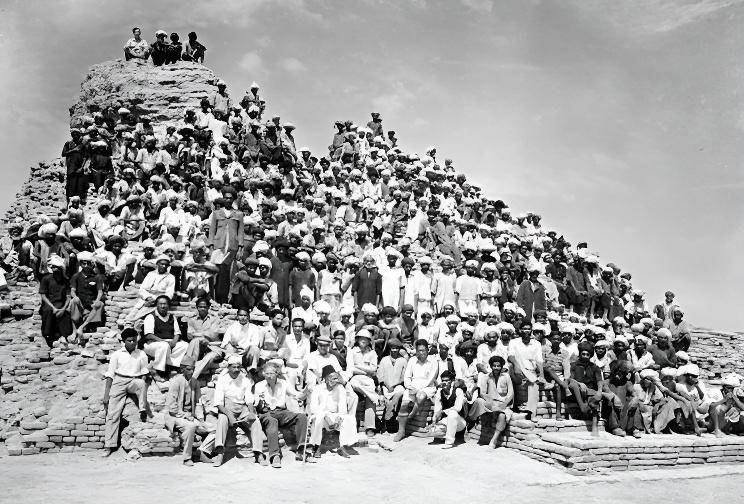
Mathur served as the first Custodian of the Mohenjodaro Archaeological Museum from 1925 to 1930. He was also author of a book entitled Historical Monuments of Delhi and their Culture Significance. The book was published by Youngman and Company in 1947. Agra and Fatehpur Sikri is another well-known book by him in Hindi, which appeared in 1954. It has 92 pages with plates.
Mathur helped Hansmukh D Sankalia in writing his book Investigations into Prehistoric Archaeology of Gujarat, 1946. MS Vats thanked Devi Dayal Mathur while he published his book The Gupta Temple at Deogarh, 1951.
Mohenjodaro Museum damaged by River Indus floods in 1929
Sir John Marshall writes in Mohenjodaro and the Indus Valley Civilization that,
“In recent centuries and until the river was put under control, the plains of Larkana were annually inundated by a great deluge which burst the right bank of the river between 20 and 30 miles above Sukkur and found its way south to the Manchhar Lake and so back, by the Aral River, to the Indus.” (p 6)
He again writes that,
“The violent floods of this year (1929) and the havoc caused by them have afforded a striking, if terrible, illustration of the dangers which must always have threatened the dwellers in the Indus Valley, even though the river may not have been as turbulent then as now.” (p 7)
The primary cause of this flood was the bursting of the Chong Khumdan ice dam, a massive obstruction in the Shyok River (Gilgit Baltistan) that held back a significant amount of water.
According to Sir John Marshall, a small statuette of a ‘Horned Male figure’ was stolen from the Museum at Mohenjo-Daro by a party of visitors, before there was even time to clean it (p 232). the height of this statuette was 2 inches and this was discovered from Lane 2 in the VS Area.

Further Excavations at Mohenjodaro: a two-volume book compiled by Mr EJH Mackay (1938) describes the Indus floods and their effects on the Mohnejo-Daro Museum:
“The Museum at Mohenjodaro, which is remarkably well patronized even by the illiterate, was kept open to the public during the winter of all the four years under review. Every year thousands of visitors, many from abroad, came to see the collections exhibited here.” (p 282)
“As the floods of the summer of 1929 had caused a certain amount of damage to the sun dried brick wall of the Museum, chiefly owing to salt, we have had them cemented inside and out to a height of about 3 ft. above the plinth during 1930-31. At the same time the Museum was whitewashed and the cases, which are far from dust tight, were cleaned out and the objects re arranged.” (p 282)
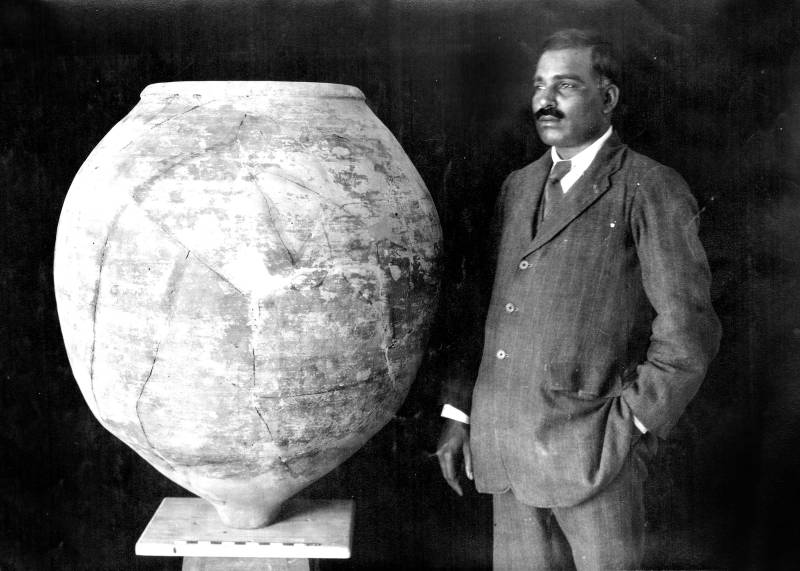
“The Museum: During the season 1931-32, the Museum at Mohenjo Daro was very popular; and though a charge was made for the admission of visitors it apparently did not prevent even the poorer townspeople and village folk from coming to see it. A striking feature was the number of visitors from outside Sind, both Indian and from abroad, who came to the Museum on their way from Lahore to Karachi or vice versa. The retention of a local museum at Mohenjo Daro as an adjacent to the site itself is, in Mr MACKAY’s opinion.-really necessary; for despite its apparent isolation it is being used with profit by visitors from far and wide.”(p 71)
An Indian State Railways brochure advertised Mohenjodaro from approximately 1935. The title of this beautiful brochure was Mohenjo Daro: A City of 5000 years ago. The map attached to this seven-page brochure gives details of the SD Site, L Site, DK Site, VS Site, HR Site, Store, Museum, Office and Bungalow, Road, Chaukidars Huts, Cart Track and Footpath.
Mohenjodaro under KN Puri, the second Custodian, 1930 to 1937
Kidar Nath Puri closely worked with Sir John Marshall during Mohenjodaro excavations carried out between 1925-26. He also prepared drawings of pottery, beads & other antiquities which were included by Sir John Marshall in his book Mohenjodaro and the Indus Valley Civilization (vol 3) published from London in 1931.
The Brisbane Courier in Australia published a story on Mohenjodaro entitled “Treasures of a Buried City: Town Planning of 5000 Years ago” on Monday, 30 January 1933.
GR Hunter published his book The Script of Harappa and Mohenjodaro and its Connection with Other Scripts from London in 1934. Professor Langdon wrote the introduction of this book.
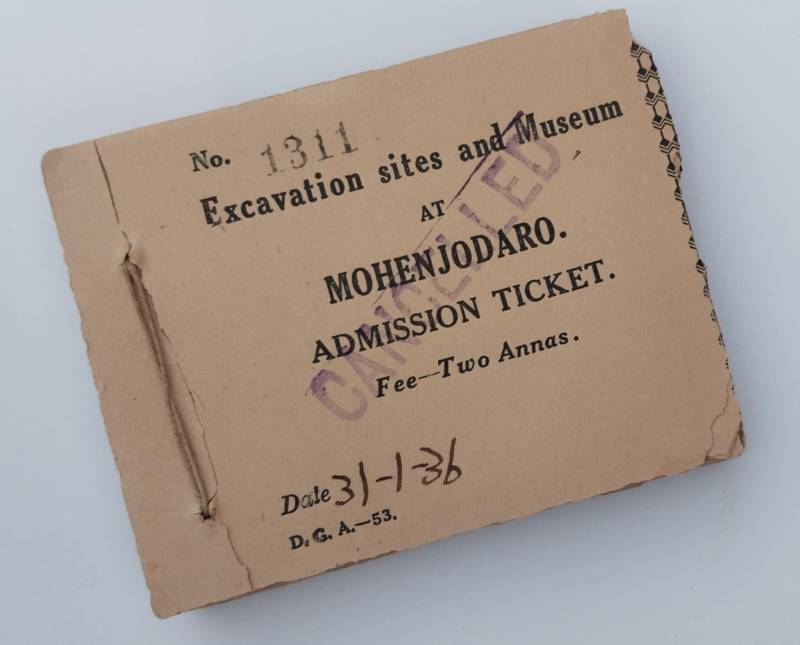
KN Puri served as se Custodian of Mohenjodaro Archaeological Museum from 30 September 1930 to 8 March 1937. The annual budget of the museum was Rs 4,000, which was granted by the Archaeological Survey of India (ASI). KN Puri published “La Civilisation de Mohenjo Daro” (Thesis) from Paris in 1938.
Describing Mohenjodaro, SF Markham and H Hargreaves write in their book The Museums of India (London, 1936):
“MOHENJODARO, Sind. The site is 8 miles from Dokri Railway Station on the North Western Railway and 267 miles north of Karachi.
Archaeological Museum.
Open from 10 a.m. to 4 p.m. in Winter: 7 a.m. to 10 a.m and 3 p.m. to 6 p.m. in Summer. Admission 2 Annas, students and children 1 Anna.
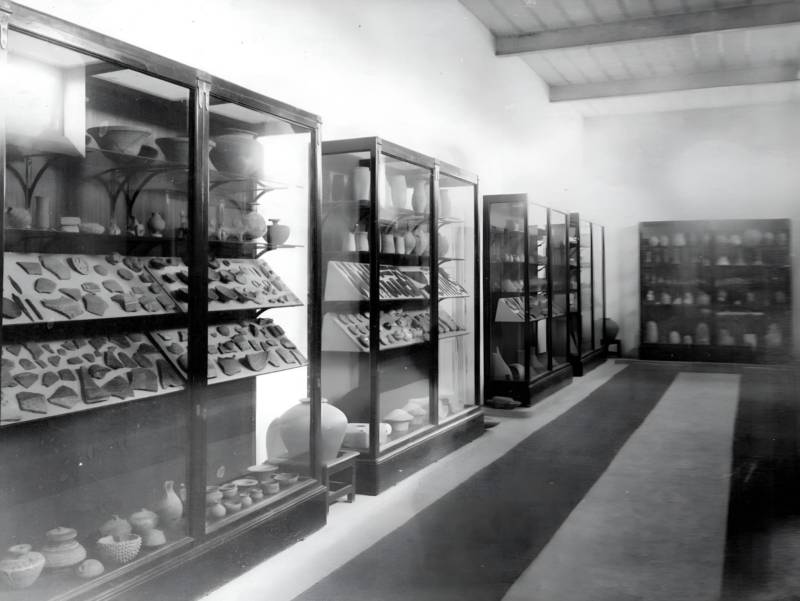
General Description.-The Museum was built in 1924-25 in accordance with the policy of the Government of India to house on excavated sites the antiquities discovered by the Archaeological Survey of India. It consists of two large rooms (each 50 ft. by 15 ft.) with a connecting doorway. Two halls of similar size behind these are used at present to store the unexhibited and duplicate antiquities. At the north end are four small rooms used as laboratories, dark room and storeroom.
Scope and Collection.-The collections comprise antiquities of all kinds excavated at the site. in the first room are displayed the larger specimens of pottery on polished teak stand, and large ring stands. Two table cases contain pictographic seals and sealings and copper and bronze tablets. These cases have drawers below used to store small and valuable unexhibited objects. Framed plans of the various excavated areas and an isometric sectional view of the Great Bath hang on the east wall. The second room contains eight large wall cases and four table cases each with drawers below. The exhibits in the wall cases are various antiquities comprising objects of stone, copper, bronze, faience, shell and ivory, pottery, statuary, inlays and terracotta. In the table cases are displayed, toys, dice, gamesmen, weights, jewellery, pottery, articles of shell, pedestals and miscellaneous minor objects. A large shallow earthenware vessel stands in the centre of the room and near the wall, stone objects such as rubbing stones, rollers and pestles and a large earthen vessel on a teak wood stand.
Publications. - “Mohenjodaro and the Indus Civilization”.
Educational Activities.-The Museum is visited by people from all parts of the world and by students of schools and colleges in Sind and the neighbouring provinces who are brought by their professors and teachers to see the excavations and Museum.
Staff: Custodian, KN Puri, B.Sc., one peon, 2 chaukidars.
Finance.-Average annual expenditure Rs. 4,000 provided by the Government of India and met from the budget grants of the Archaeological Survey of India. (186-7).”
Jawaharlal Nehru describes “A Jump Back to Mohenjodaro” through letters written by him to his daughter from prison. These letters were later published in a book Glimpses of World History (1934).
Nehru writes about Mohenjodaro and the Indus Valley Civilization in his English book The Discovery of India (1946):
“Twice I have visited Mohenjodaro in 1931 and 1936. During my second visit I found that the rain and the dry sandy air had already injured many of the buildings that had been dug out”. (p 69)
He again writes,
“I stood on a mound of Mohenjodaro in the Indus Valley in the north west of India, and all around me lay the houses and streets of this ancient city that is said to have existed over five thousand years ago; and even then it was an old and well developed civilization.” (p 50)
KN Puri writes in the Annual Report of the Archaeological Survey of India 1936-37:
“The Mohenjodaro Museum has been well patronized during the year under report and besides many distinguished visitors several parties of students from different parts of the country visited it. After the close of the large scale operations in November 1931, excavations were conducted on a restricted scale during 1933-34 and 1936-37 and resulted in the addition of 1182 antiquities to the Museum. The Museum building which has a very limited accommodation had hitherto been packed up with antiquities discovered since 1924-25. In view of the impending publication of Dr Mackay’s work on the Further Excavations at Mohenjodaro the proposal to distribute the duplicate antiquities from Mohenjodaro to various museums in India was mooted. Dr C.L. Fabri and Mr UC Bhattacharya were temporarily engaged on the work of sorting out, selecting and listing the antiquities. In the first instance 7 representative sets were prepared and listed, two sets being fuller than the rest, one intended for the Central Government’s Museum and the other for the Bombay Government. These sets have been distributed as follows:-
Collection No.1. Government of Bombay, Prince of Wales Museum, Bombay.
Half of Collection No.2. Indian Museum Calcutta.
Half of Collection No.2. Central Asian Antiquities Museum, New Delhi, Government of India.
Collection No.3. Government Museum Madras.
Collection No.4. Reserved for the proposed Provincial Museum of Sind.
Collection No.5. Provincial Museum, Lucknow.
Collection No.6. Patna Museum, Patna.
Collection No.7. Central Museum Nagpur.
The above sets being fully representative and well balanced will indeed be great assets to the respective institutions and have immense educative value. As a result the congestion at the Mohenjodaro Museum has been relieved.” (p 139)
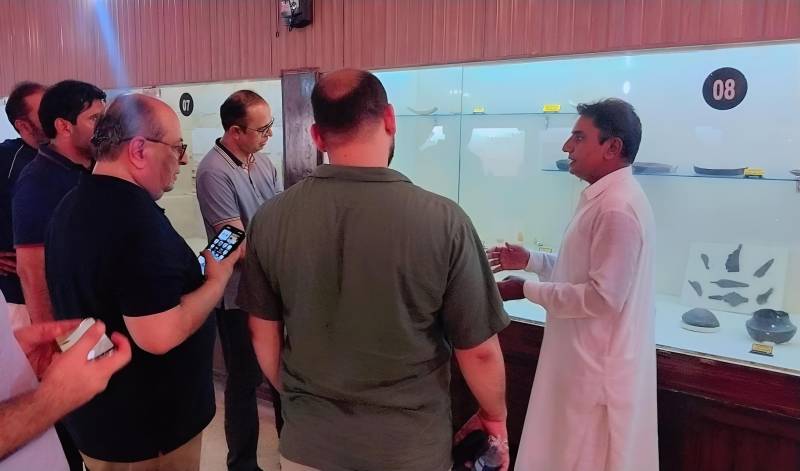
For the conservation of the excavated monuments at Mohenjodaro a sum of Rs.4, 368 were spent during the year 1936-37. In the year 1937-38, Office of the Director General Archaeology in India issued a budget of 1,100 Rs for J. works Mohenjodaro. The expenditure was Rs.940. Amount of 3,850 was spent on the Excavation at Mohenjodaro during the same year. For the conservation of the Buddhist Stupa at Mohenjodaro Rs.380 were spent.
UC Bhattacharya, third Custodian of Mohenjodaro Museum
Mr Bhattacharya, MA, was an officer in the Archaeological Survey of India. He served as Custodian of the Mohenjodaro Archaeological Museum from 8-3-1937 to 19-5-1938. He was the author of Catalogue and Guide to Rajputana Museum, Ajmer, Rajasthan; Part 1 (Sculpture) in 1960. He also performed his duties as Curator of the Rajputana Museum, Ajmer. Chaudhary Muhammad Ismail Jat (Thathal) served as the 4th Custodian of the Mohenjodaro Archaeological Museum from 19 May 1938 to 23 November 1943.
On 11 November 1938, the well-known Bengali archaeologist NG Majumdar was killed by bandits near his camp in the foothills of the Khirthar Range in Johi District, Dadu, Sindh. Previously, he had participated in the excavations at Mohenjodaro. In 1939, Rao Bahadur KN Dikshit compiled a book entitled Prehistoric Civilization of the Indus Valley: Sir William Meyer Lectures (1935).
Aiyappan Ayinapalli published Pottery Braziers of Mohenjodaro in May 1939. Fazal Ahmed Khan, popularly known as Dr FA Khan, was appointed Custodian of the Archaeological Museum, Mohenjodaro, from 23 November 1943 to 22 June 1946. He was among the original students of Sir Mortimer Wheeler’s Training School at Taxila.
The Second World War, being a global conflict from 1939 to 1945, largely halted archaeological activities due to severe budget cuts.
In 1944, Sir Mortimer Wheeler assumed charge as Director General of the Archaeological Survey of India. From 1946 he began publishing the journal Ancient India. He continued in this role until 1948, when he was succeeded by NP Chakravarti. Chakravarti declared that, “The Indus Valley Civilization as such does not merely represent the Civilization of Pakistan but has a direct bearing on the civilization of the whole of India and Pakistan and certainly the 300 million in India have quite a large interest in that civilization, particularly as India has no longer any jurisdiction over these sites.” On 29 March 1948, Sardar Panikkar, the scholarly administrator of Bikaner, wrote a letter to Jawaharlal Nehru stressing the necessity of a survey in the deserts of Bikaner and Jaisalmer. With the loss of the major sites of Mohenjodaro and Harappa, Indian archaeologists redirected their efforts toward discovering forgotten Indus cities within their own borders. Consequently, in 1950, Amalananda Ghosh began explorations in Bikaner and Jaisalmer. He identified as many as 79 sites, of which 15 yielded antiquities of the same type as those excavated at Mohenjodaro and Harappa. MS Vats (former DG, ASI) met A Ghosh during his visit to the Bikaner Survey Camp at Suratgarh on 13 December 1950. Around 1947, Rangpur was the only discovered Indus Valley Civilization site within India, but today, India has more than 100 Harappan sites.
A considerable number of objects from the museums at Taxila, Harappa, Lahore, and Mohenjodaro were sent to New Delhi in 1946 for exhibition. In 1947, both Pakistan and India achieved independence from British rule. The Exhibition of Art Chiefly from the Dominions of India and Pakistan was held at the Royal Academy of Arts, London, in 1947–48. The purpose of the exhibition was to illustrate the Fine Arts of India. The earliest artwork on display was a bull: the Capital of an Ashokan Column. This 6 feet 10 inches polished sandstone piece, discovered at Rampurva in Bihar, belonged to 224 BC.
Division of Mohenjodaro Antiquities between India and Pakistan, 1947
The Exhibition of Indian Art was held at the Government House, New Delhi, from 6 November to 31 December 1948. Around 68 finds from Mohenjodaro and Harappa, the ancient cities of the Indus Valley Civilization (2600–1900 BC), were displayed. These artifacts were lent by the Central Asian Antiquities Museum, New Delhi. To resolve the question of ownership, a Steering Committee was formed, which submitted recommendations later approved by the Partition Council, presided over by the last Viceroy, Lord Mountbatten. Sardar Vallabbhai Patel and Liaqat Ali Khan were the prominent leaders representing the Congress Party and the Muslim League. On 19 December 1947, Sir Mortimer Wheeler wrote a letter to the Director of Archaeology, Pakistan, requesting that a representative be sent to Delhi around the third week of January 1948 so that collections could be handed over. The matter was also raised by the Government of Pakistan at the Inter-Dominion Conference held in New Delhi in December 1948. A Museum Committee was subsequently formed. Agreement was reached regarding the exhibits from Taxila and Harappa, but no settlement could be made between India and Pakistan over the Mohenjodaro and Chanhudaro collections. In 1949, India laid claim to Mohenjodaro antiquities through the Constituent Assembly, while Pakistan also asserted its position, considering the Indus heritage part of its proud past. After much debate, contest, and negotiation, both newly independent countries decided to settle the issue permanently. NP Chakravarti’s Note on Division of Antiquities between India and Pakistan, 1949 is especially valuable for understanding this matter.
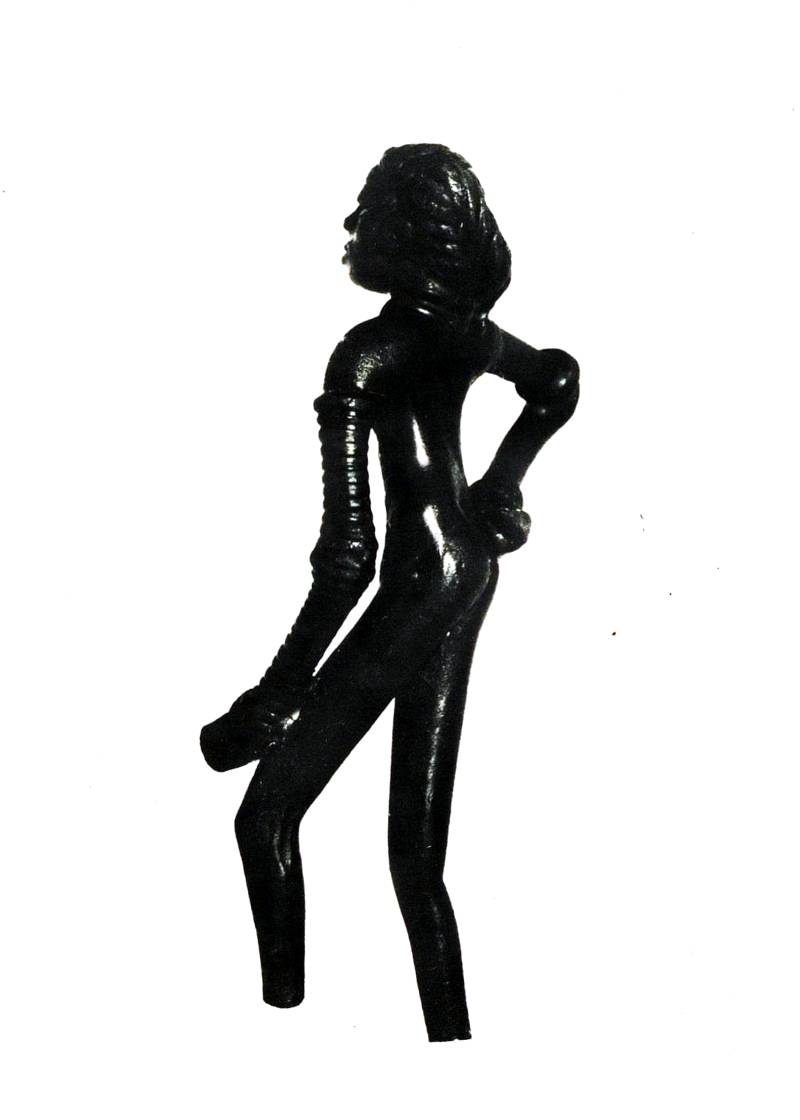
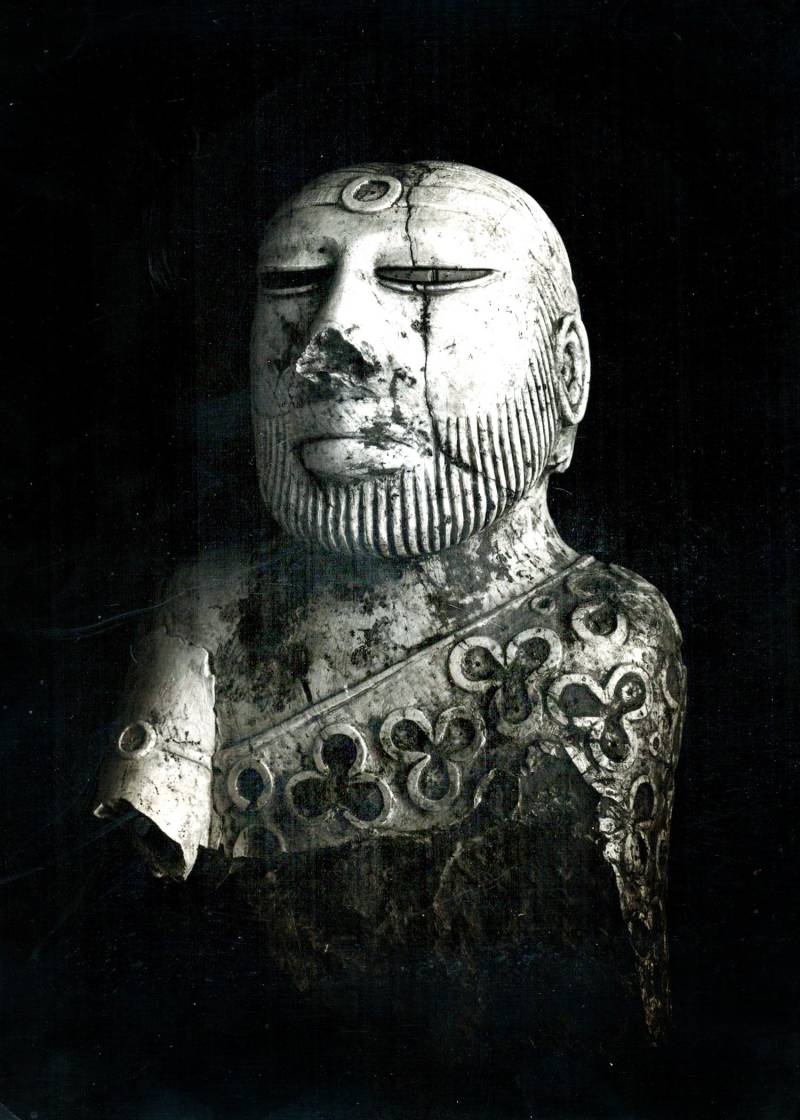
In 1950, a Pakistani delegation visited India for negotiations. Fazal Ahmed Khan led the delegation. For the sake of goodwill and future collaboration between the archaeological departments of both countries, it was agreed to divide the Mohenjodaro and Chanhudaro collections on a 50-50 basis under certain conditions. The collection of 2,049 antiquities from Mohenjodaro, held on loan by the Central Museum at Lahore, was grouped with that held by the Archaeological Department of India. As a result of the post-Partition settlement and equal division, the iconic bronze statuette known as the 4-inch Dancing Girl (HR 572) remained in India, while the 7-inch King Priest (DK 1909) stone figurine was handed over to Pakistan. Similarly, necklaces, bracelets, girdles, and beads, including those made of gold, were also divided by the committee. According to Geoffrey Scarre’s Appropriating the Past (University of Durham, 2013), some 14,000 antiquities from the Indus sites were divided in this way. Bricks fixed in the walls of the SD, DK, and HR areas at Mohenjodaro still bear conservation inscriptions from the years 1949, 1952, and 1957.
Excavations Carried Out by Sir Mortimer Wheeler at Mohenjodaro in the 1950s
Sir Mortimer Wheeler had established the Taxila School of Archaeology in 1944. On behalf of the Department of Archaeology of Pakistan, Wheeler conducted excavations at Mohenjodaro in March and April 1950 with an inexperienced team of new staff. His aim was to instruct Pakistani students in archaeological methods, and for this purpose, he ran a training school at the site. A gang of local peasants also participated in the combined efforts of discovery and training.
Wheeler excavated and identified the remains of a state granary, fortifications, and a group of towers in the SD and L areas of the Citadel Mound. Other key participants included Maulvi Shamsuddin Ahmed, MA (Director of Archaeology, Pakistan), Leslie Alcock (Glasgow University, Scotland), Mohammad Waliullah Khan, Ahmed Hasan Dani, FA Khan, Nazimuddin Ahmed, and Sadar Din (foreman). Wheeler appointed Leslie Alcock as site supervisor because of his fluency in both Urdu and Punjabi. Wheeler went on to publish several influential books, including Five Thousand Years of Pakistan (1950), The Indus Civilization (1953), Early India and Pakistan (1959), and My Archaeological Mission to India and Pakistan (1976). A BBC documentary, Buried Treasure: Mohenjodaro, was released in 1957, featuring Wheeler’s tour of the site and his explanations.
Chaudhary Muhammad Ismail Jat (Thathal) once again served as Custodian of the Archaeological Museum, Mohenjodaro, from 22 June 1946 to 22 December 1952. A 50-page booklet entitled A Guide to Mohenjodaro was compiled by Nazimuddin Ahmad, MA, Assistant Superintendent of Archaeology. It was published in 1952 by the Manager of the Department of Archaeology, Government of Pakistan, Karachi. The aim of publishing this guide was to assist and inform visitors about Mohenjodaro and the Indus Valley Civilization.
The building of the Mohenjodaro Archaeological Museum collapsed on 29 August 1953 at 8:15 a.m. The cause of the damage was extensive waterlogging and seepage in the area. Since then, the antiquities of the museum had been stored in a temporary shed. A number of valuable exhibits—including seals, copper or bronze vases, bronze dishes, scale pans, copper ladle handles, copper clamps, and other miscellaneous objects—were smashed in the collapse. In September 1953, a new metalled road was constructed from Dokri Railway Station to the archaeological site of Mohenjodaro, replacing the old Kucha road shortly after this disaster. Picture postcards and Plaster of Paris casts of Mohenjodaro seals, terracotta objects, and other interesting antiquities were stocked for sale to visitors.
Describing Mohenjodaro and its archaeological museum, Muhammad Ishtiaq Khan, ex-acting Custodian of the Mohenjodaro Archaeological Museum from 29 April 1955 to 17 October 1955, writes in his article The Mohenjodaro Museum:
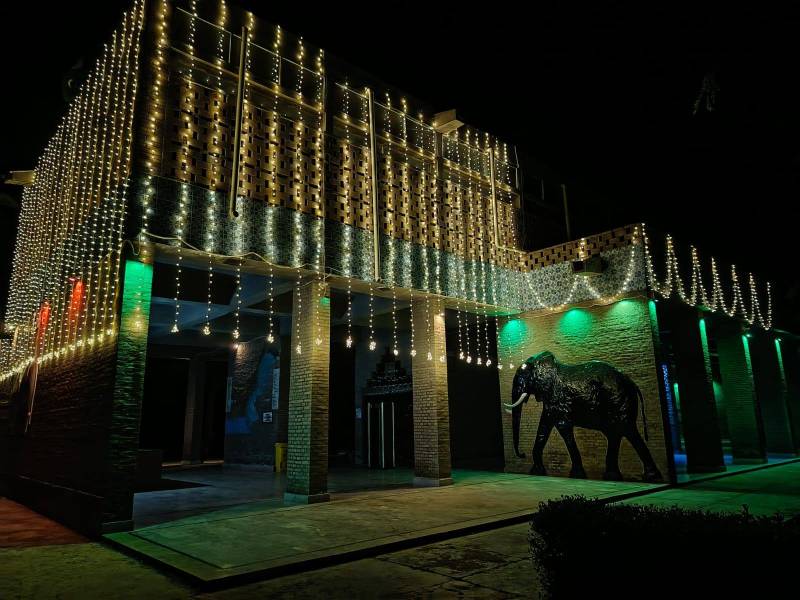
“To house a representative collection of the antiquities brought to light there, a small museum comprising two display galleries and two rooms for reserve collections was established at Mohenjodaro in 1924–25. This building collapsed in 1953, damaging a number of valuable relics. The salvaged objects were redisplayed in a temporary building until a proper new building could be provided. The museum in the new building, designed by M. Ecochard (France), was inaugurated on 20 January 1967 by the President of Pakistan. It is a two-storey building, in which ancient bricks are used in the construction of the vertical sections and cement concrete slabs in all the horizontal parts. The building covers an area of 1,000 m². The unplastered brick piers (or short walls) supporting the upper floor produce the effect of narrow lanes similar to the ruins.”
Muhammad Ishtiaq Khan further notes:
“The Indus Valley Civilization, as brought to light by the archaeologist’s spade, was at a fully developed stage. Very little of its earlier phases, or of cultures antedating it, was known until recently. In order to provide a suitable background, it was therefore considered useful to show some of the known earlier stages of societal evolution in Pakistan. For this purpose, two dioramas depicting the stone tool industry of the Soan Valley and the Rohri Region have been provided. The dioramas represent the ecological conditions and tool-making techniques of the prehistoric era. Two models of the excavations at Kot Diji and Amri sites, which antedate the Indus Valley Civilization, have also been displayed.”
Describing the painting work of Italian artist Mr Caroli and Mr Salim Ahmed (Assistant Modeler) in 1963, Muhammad Ishtiaq Khan writes:
“The largest of the three mural paintings in the museum faces the visitor at the top of the stairs as he reaches the first floor. Prepared jointly by a Pakistani and an Italian artist, it represents the conjectural restoration of the city of Mohenjodaro (Fig. 104). The second, depicting the main entrance of the city from the river, shows the population dressed in typical attire and busy in the export of cotton to distant lands; it gives an idea not only of the town layout but also of the means of communication and different items of trade (Fig.106). As public wells had special significance in the social life of the city, one is depicted in the third painting. Together, these paintings provide an insight into the life of Mohenjodaro which no object or description could match.” He further writes: “Already more than a hundred sites of the Indus Valley Civilization have been charted. In order to bring out the true significance of Mohenjodaro as a metropolitan centre and its trade with the ancient civilizations of Iran and Mesopotamia, these models and paintings have been prepared” (p 166–7).
Construction of the New Museum Building at Mohenjodaro, 1960
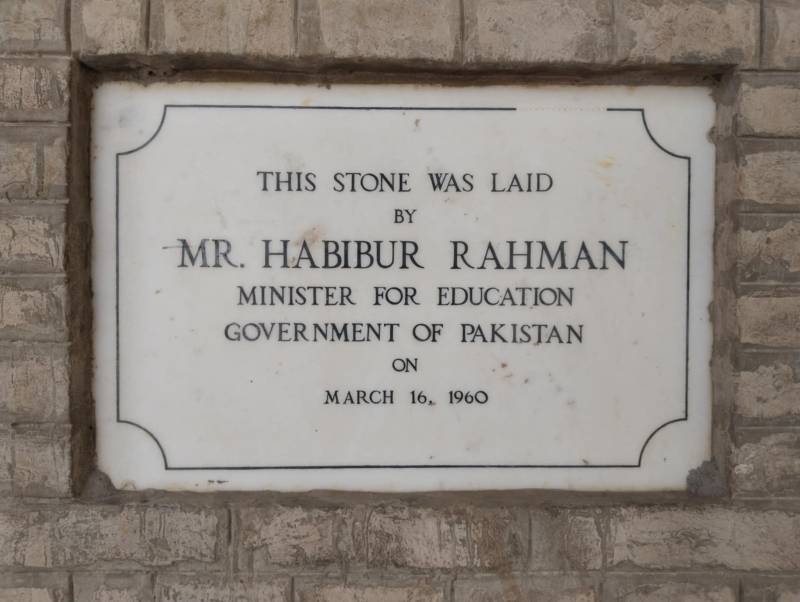
A new museum building at Mohenjodaro was constructed during the Second Plans (1960–1965). It was designed by French architect and urban planner Michel Ecochard (1905–1985), who prepared the museum drawings from 1957 to 1959. Ecochard had also designed the Karachi University. The foundation stone was laid by Mr Habibur Rahman, then Federal Minister for Education, Government of Pakistan, on 16 March 1960.
The museum was reorganized, and antiquities from Rohri, Kot Diji, Amri, and Mohenjodaro were added for comparative study to highlight the distinctive features of the Indus Valley Civilization. This was a double-storeyed building with one square hall and two corridor-type galleries. There were 40 showcases, with natural light provided from the rear of the museum. The museum measured 147 feet in length, 77 feet in width, and 33 feet in height from the common ground surface.
Michel Ecochard’s Note on Mohenjodaro Archaeological Museum, 1964
In 1964, Michel Ecochard wrote an article titled The Mohenjodaro Museum, Pakistan, published in Museum International, Volume 17, Issue 3, p 141–145. He notes: “On the banks of the Indus River, midway between the sea and the Punjab, a city has been discovered which was one of the still obscurely known civilizations of the Indus Valley. It probably dates from 3500 BC, and its destruction by the Aryans is believed to have occurred some two thousand years later. The museum now being built is part of a project near the excavation site, which includes a rest house for visitors, offices and store-rooms, as well as housing accommodation for the management staff and the workers employed in the digging or on the farm.
The museum is to house objects of very different sizes: (a) jars of very large dimensions and reconstructions of household equipment; and (b) small objects such as seals, toys, figurines, and small animal sculptures. The local climate, relatively dry, is one of the hottest in the world, although it can be cold and sometimes freezing in winter. These various factors have been taken into account in planning the project. The spacious ground floor is completely open to receive large objects, and is sited to permit the prevailing winds to blow through; on the first floor are galleries for the showcases in which small objects will be exhibited. On the ground floor, the walls have been arranged in a very free fashion to create a wide range of volumes. Thanks to the freedom of its design, the floor paving also allows any arrangement necessary to exhibit large objects or reconstructed pieces. Excessive lighting is obtained through two interior courts opening through the first floor and forming a light shaft to the ceiling of the ground floor.
The remoteness of the excavation site necessitated adopting an extremely simple form of construction. The walls are of plain brick without decorative indentations and are aligned with the prevailing winds; only the horizontal parts are constructed of concrete, and the terrace has a double flooring to provide protection against the weather” (p 141–5).
The rest house at Mohenjodaro contained three double VIP rooms on the upper story and six single rooms. This rest house also served as the first booking office of Pakistan International Airlines (PIA), which was later shifted to Sambara Inn Hotel, Larkana. During the government of Mr Zulfikar Ali Bhutto, Khalid Ahmed Kharal (then Deputy Collector of Larkana) handed over this building to PIA for a few years, whose administration named it Hotel Shabistan. A wine bar in the rest house became a centre of gatherings during celebrations.
Michel Ecochard also designed the following buildings in connection with the Mohenjodaro Museum: 1) Museum, 2) Offices, 3) Rest House, 4) Custodian’s Quarters, 5) Assistant Custodian’s Quarters, 6) Clerks’ Quarters, 7) Married Quarters, 8) Bachelor’s Quarters, 9) Barn, 10) Water Tower, and 11) Mosque.
Some of these schemes could not be constructed due to budgetary constraints at the time.
Inauguration of Mohenjodaro Museum, 1967
After seven years of continuous work, the Mohenjodaro Museum was finally inaugurated by Field Marshal Muhammad Ayub Khan, then President of Pakistan, on 20 January 1967. A distinctive feature of the inauguration was the use of a 5,000-year-old stone. According to the records of the Accession Register, 1,425 items were displayed out of a total of 15,000 antiquities. The remaining artifacts were stored in the Reserve Collection of the Mohenjodaro Archaeological Museum. The gold, silver, and copper jewelry, as well as stone beads, were kept inside a British-period metal almirah with secret hidden lockers.
The British Museum, London, holds 783 objects of the Indus Valley Civilization, while the Louvre Museum, France, also houses a few artifacts from Mohenjodaro and the broader Indus Valley Civilization. A car (293 A.E) belonging to the Archaeology Department of India, locally known as Sir John Marshall’s Car, was also part of the exhibition and kept in a garage. This Ford vehicle, manufactured in Canada, had its usage regulated by Earnest Mackay, Officer In-charge of Camp Mohenjodaro, who issued Order No 46 on 8 November 1928 stating: “No more than six passengers, including the driver, will be allowed to travel in the Department Car, whether running to Dokri or Larkana.” Mohenjodaro Airport was also constructed in 1967, and Pakistan International Airlines (PIA) began air service between Karachi and Mohenjodaro in the same year.
Pakistan Affairs, Volume 17–21, 1964, pages 3–4, provides the following details:
Mohenjodaro Museum Opened: World Wide Help Sought to Save Mankind’s Common Heritage
Inaugurating the Mohenjodaro Museum near the site of the excavations of the 5,000-year-old Indus Valley Civilization on 20 January, President Ayub Khan described places like Mohenjodaro as a “common heritage” of mankind. He expressed hope that international resources and expertise would be forthcoming to rescue Mohenjodaro from the ravages of salinity and waterlogging.
The President noted that Pakistan had drawn the attention of international organizations such as UNESCO to the need for assistance. “We expect them to use modern science and technology to preserve what time has failed to destroy,” he said. Emphasizing the importance of museums, he added that in a culturally rich country like Pakistan, “Museums can play a vital role to highlight our past and create a bond of continuity with our current progress and future aspirations.” He noted that the Second Five Year Plan envisaged the establishment of several museums in East and West Pakistan, with equal emphasis placed on museums in the Third Five Year Plan. The President cut the ribbon to unveil a plaque featuring an original flint (stone) knife excavated from the Mohenjodaro ruins.
Earlier, Dr FA Khan, Director of Archaeology, addressed the gathering: “Some relics of the ancient civilization found at Mohenjodaro, such as the King Priest and Dancing Girl, are known the world over. But even more fascinating are the details of wide streets, lanes, and elaborate drainage systems, which speak highly of the developed common sense of the Indus Valley people and their regard for the principles of hygiene. Upon sober judgment, we find that we can still learn many valuable lessons from what they have left to us.”
During his round of the museum galleries, the President expressed hope that once waterlogging was controlled and subsoil water lowered sufficiently, further excavations would be possible and many more discoveries could be made.
New Museum Facilities and Construction Details
The newly constructed museum provided improved accommodation for the preservation and exhibition of important antiquities excavated from Mohenjodaro (Larkana District), Kot Diji (Khairpur District), Amri (Dadu District), and Harappa (Sahiwal District). The construction of the new museum cost $73,000 and replaced the smaller museum originally built in 1923, which had collapsed in 1953 due to extensive waterlogging and seepage. Prior to construction, relics dating back to the earliest Buddhist civilization in the area were at risk of being lost. In 1955, a noted French architect was engaged to prepare plans for a spacious museum, although actual construction began on site in 1960.
The new structure consisted of two stories, each divided into sections to depict the process of the Buddhist civilization in the central and southern zones of West Pakistan. Test bores conducted on the site revealed brick walls up to 40 feet deep, with some walls extending to 60–65 feet. The water table stood 12 feet below ground, and officials explained that reducing the water table could be achieved by tube wells. It was estimated that 200 cusecs of water would need to be pumped out using approximately 60 tube wells, each with a capacity of 3.5 cusecs. The groundwater was of good quality and fit for irrigation; the surplus water could be diverted into the Dadu Canal.
President Ayub Khan described the inauguration in his diaries: “Friday 20 January 1967: Flew to Mohenjodaro for the opening of the museum which has been recently built” (Diaries of Field Marshal Muhammad Ayub Khan, 1966–1972, edited and annotated by Craig Baxter, Oxford University Press, 2007). The inauguration of the Harappa Museum was conducted by Kazi Anwar Ul Haque, Minister for Education, Health, Labour, and Social Welfare, Government of Pakistan, on Sunday, 26 March 1967.
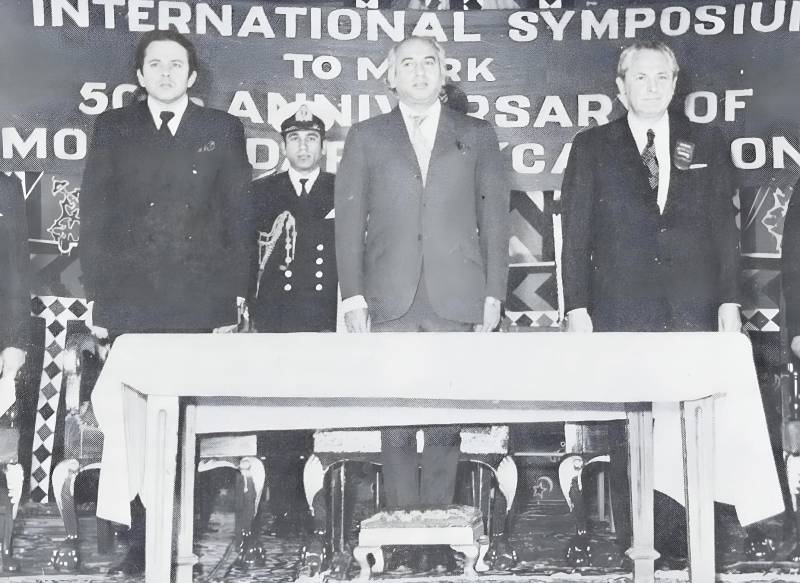
To mark the 50th anniversary of the first excavation of Mohenjodaro (1922), an International Symposium was organized in cooperation with UNESCO from 23 to 28 February 1973 at Mohenjodaro. The symposium was attended by over 500 guests, including distinguished archaeologists and experts from 12 countries. Zulfikar Ali Bhutto, then President of Pakistan, delivered the inaugural address. HIH Takahito, Prince Mikasa of Japan, also addressed the gathering. A message from Rene Maheu, Director General of UNESCO, Paris, was read, in which he appealed to UN member states to save Mohenjodaro on 11 January 1974. The total estimated cost of priority preservation work over five years was $7,500,000.
In response, the Government of Pakistan established the Authority for the Preservation of Mohenjodaro (APM) under Resolution No F 16–14/74 UNESCO, SSC, dated 4 July 1974.
Prime Minister Zulfikar Ali Bhutto took a keen personal interest in the preservation of Mohenjodaro. MPA Mr Wahid Bux Khan Bughio, a friend of the President, resided in Village New Gud, Taluka Dokri, District Larkana.
Justice Feroze Nana Ghulamally was appointed as the first Chairman of APM. The functions of the Authority were: 1) to execute the Master Plan for the preservation of Mohenjodaro, 2) to implement the agreement between UNESCO and the Government of Pakistan for the preservation and development of Mohenjodaro, and 3) to cooperate and collaborate with the Executive Committees of UNESCO and the International Consultative Committee of Experts for the preservation and development of Mohenjodaro.
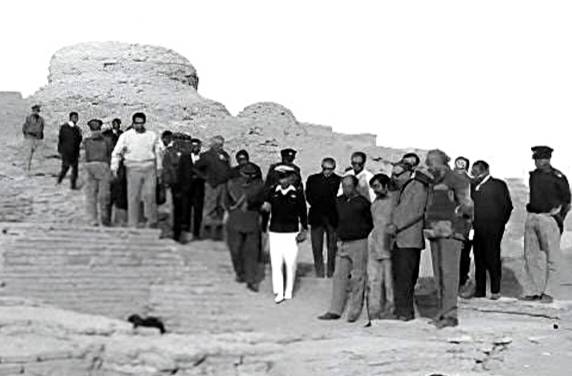
Muhammad Reza Shah Pahlavi, Emperor of Iran, and Pakistani Prime Minister Zulfikar Bhutto, held talks at Mohenjodaro on Thursday, 11 March 1976, which lasted about three hours. The two leaders discussed a wide range of international and bilateral issues.
During his rule, Bhutto visited Iran 15 times. A memorial was later built in memory of both leaders in front of the Rest House at Mohenjodaro. The well-known Pakistani artist Ismail Gulgee was commissioned to paint metal portraits of the Shah of Iran and ZA Bhutto in 1976. Mohenjodaro was declared a UNESCO World Heritage Site in 1980.
Master Plan and Subsequent Conservation Efforts
The Authority undertook the task of revising various schemes within the Master Plan for the preservation of Mohenjodaro, incorporating recommendations from the International Consultative Committee, and obtained approval from both the Government of Pakistan and UNESCO. Key components of the Master Plan included: 1) ground water control, 2) Indus River training works, 3) conservation of structural remains, and 4) landscaping and plantation. Additional works—such as isolation, consolidation, and desalination—were initiated under the supervision of Justice (R) Abdul Kadir Shaikh during the 2000s.
A team of German and Italian archaeologists and experts, led by Michael Jansen, conducted surveys at Mohenjodaro in 1979. This was the first systematic research aimed at analyzing the structures of the ancient city. Reports on fieldwork, titled Interim Reports Vol. 1, Vol. 2, and Vol. 3, were published by the IsMEO–Aachen University Mission in 1982, 1984, and 1986, respectively. Another campaign for safeguarding Mohenjodaro began in 1983, followed by an International Seminar of Journalists on Mohenjodaro from 15 to 20 January 1984. Salvage excavations were carried out by Dr Sharif in 1987 and 1989 along the banks of the River Indus.
A program for the visit of Professor Federico Mayor Zaragoza, Director General of UNESCO, was organized from 11 to 13 March 1990. The Mohenjodaro Conservation Cell (MCC) was established in 1991. The Second International Symposium on Mohenjodaro was held in Karachi from 24 to 27 February 1992, which led to a workshop in February 1993. In 1996, the UNESCO–Pakistan Master Plan was finalized to guide the conservation, research, and development of the Mohenjodaro site, including its archaeological museum. The ground floor of the museum was decorated with marble.
The Authority for the Preservation of Mohenjodaro (APM) was abolished in 1997. A new body, the National Fund for Mohenjodaro (NFM), was established in 2000. An international conference of experts on the conservation of the archaeological ruins at Mohenjodaro was held from 24 to 27 April 2002. This UNESCO-sponsored conference was part of the International Campaign for the safeguarding of Mohenjodaro, aimed at protecting the site from flooding, developing conservation methods, and strengthening local conservation efforts.
On 10 May 2002, a group of thieves attacked the Mohenjodaro Museum, resulting in the theft of 40 original Indus seals and copper tablets. The Mohenjodaro Conservation Cell (MCC) was abolished in 2006. Excavation for drainage of rainwater on First Street, DKG North, was carried out on 31 January 2009.
Custodians, Curators and in-charge Officers of Mohenjodaro Museum
The Mohenjodaro Archaeological Museum has had the following custodians, curators, and in-charge officers from 1925 to 2025:
- Devi Dayal Mathur
- KN Puri
- UC Bhattacharya
- Chaudhary Muhammad Ismail Jat
- F.A. Khan
- M. Saeed
- Afzal Ahmed Khan
- Muhammad Ishtiaq Khan
- Muhammad Aslam
- Muzahir Hussain
- S.H. Chisty
- Inayat Ur Rehman
- Muslehuddin Pirzada (Clerk)
- Taswir Hussain Hamidi
- Muhammad Idris Siddiqui
- Niaz Rasool (Lucknow)
- I.H. Nadiem Goraya
- Muhammad Bahadur Khan (Nazir)
- Muhammad Afzal Khan
- Abdul Aziz Farooque
- Muhammad Siddique
- Yaqinuddin
- Saeed Khan Jatoi
- Salma Sultana
- Irfan Hussain Siddiqui
- Shamsuddin Jatoi
- M. Ishaque
- Zaheeruddin Shar
- Irshad Ali Rid
- Abdul Fattah Shaikh
- Javed Ahmed Khan
- Ghulam Hassan Burdi
- Ihsan Ali Abbasi
- Roohal Amin Ghumro
- Syed Ghayoor Abbas Shah
- Zaheer Ahmed Jokhio
Currently, Mr Ihsan Ali Abbasi (BPS 17) serves as Curator of the Mohenjodaro Archaeological Museum, while Naveed Ahmed Sangah works as Architect (NFM) at Mohenjodaro. The site and museum are managed by the Culture, Tourism, Antiquities & Archives Department, Government of Sindh.
Recent Developments and Conservation Efforts
Other key milestones include:
- Exhibition at UNESCO Headquarters in Paris, France, 13 April–4 May 2010.
- Launch of the Project for Protection, Preservation, Promotion, and Development, including preparation of the Master Plan of the World Heritage Site, 28 February 2013.
- Inauguration of Dry Core Drilling by Bilawal Bhutto Zardari, 5 April 2014.
- Conference on Mohenjodaro & the Indus Valley Civilization, 9–11 February 2017.
- Conference on Indus Script, 9–11 January 2020.
- In August 2022, the site and museum experienced record rainfall of up to 779.5 mm.
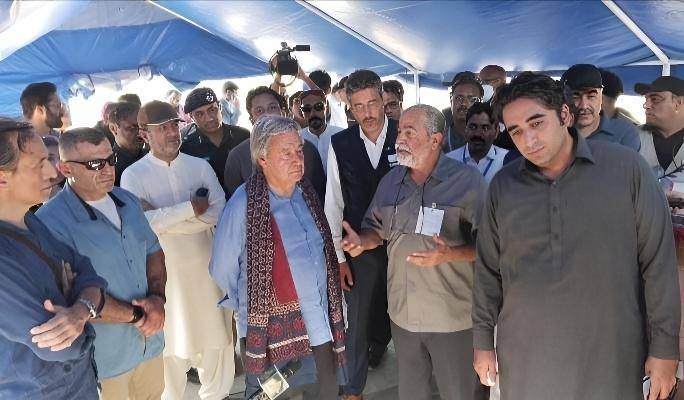
Mr Antonio Guterres, UN Secretary-General, visited the Mohenjodaro Archaeological Site on 10 September 2022, accompanied by Foreign Minister Bilawal Bhutto Zardari, Chief Minister Sindh Syed Murad Ali Shah, Culture Minister Syed Sardar Ali Shah, and DG Archaeology Sindh Manzoor Ahmed Kanasro. Dr Kalimullah Lashari briefed the UN Secretary-General and the world media on flood-related damages. The Secretary-General assured full support for the protection of Mohenjodaro.
With technical and financial support from UNESCO Islamabad Office and the Directorate of Archaeology and Antiquities, Government of Sindh, conservation work began in early 2023. During conservation work in the Stupa Area on 15 November 2023, a pottery vessel containing a hoard of copper coins from the Kushan Period (2nd–5th century A.D.) was discovered. There is now a strong need to display these coins in the Buddhist gallery, establish a research library for visitors, and create a new gallery featuring historical photographs of excavations (1922–2025) and pioneering archaeologists, experts, and scholars.
Visitor Information
Today, the Mohenjodaro Archaeological Site and Museum receives over 1 million visitors annually. Direct transport from Larkana to Mohenjodaro and improved utilities, including 24-hour electricity, natural gas, and drinking water, would further enhance tourism. The site and museum are accessible by air (scheduled flights only), rail, and road, located 27 kilometers south of Larkana City, Sindh, Pakistan.
Facilities include: an airport, a National Bank of Pakistan branch, a police station, the WASIL laboratory, information centre, post office, Pakistan handicrafts shop, guide service office, souvenir shops, tuck shops, basic health unit, mosque and tourist shuttle service.
The climate is characterized by mild winters and severe summers. The Mohenjodaro Archaeological Museum continues to require enhanced care, decoration and security.