

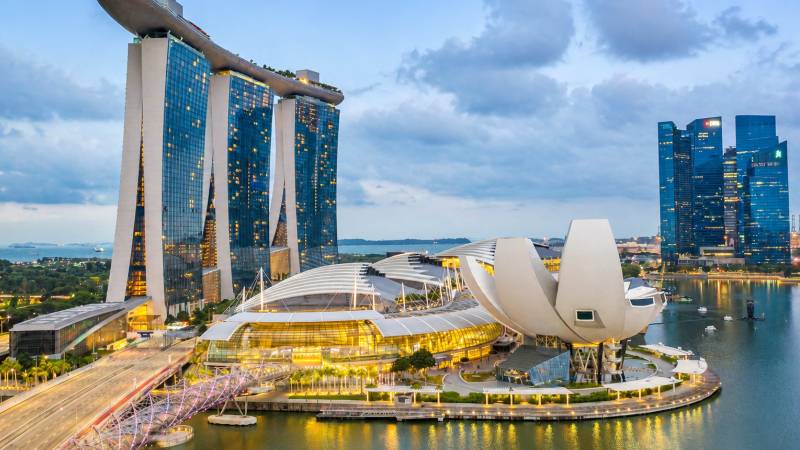
There is a certain irony in Singapore becoming attractive again to people who had once found it too orderly. Not long ago, some wealthy Chinese families were reportedly tiring of the city-state’s cautious banks, intrusive compliance checks, slower onboarding procedures and increasingly demanding regulatory environment. Dubai appeared more energetic. Tokyo looked cheaper. Hong Kong remained culturally and geographically close. Singapore, by comparison, could feel controlled, expensive and almost excessively predictable. Yet that predictability is precisely what is bringing some of them back.
According to a recent report, family-office advisers and wealth managers are seeing renewed interest from affluent Chinese clients who had explored or actually shifted parts of their lives and assets elsewhere. Some who considered Dubai are reassessing regional geopolitical risk. Others who moved to Japan discovered that safety and low property prices do not necessarily guarantee social integration. Hong Kong remains a major financial center but, for some mainland families seeking distance from Beijing, it may now feel geographically and politically too close. What is happening is not a simple migration of billionaires from one fashionable city to another. It is a revealing change in the psychology of wealth. The global rich are discovering that in an unstable world, the greatest luxury may not be lower taxes, spectacular property or exclusive residency. It may simply be the confidence that the rules will still make sense tomorrow.
For years, offshore wealth was associated with a different set of attractions. The wealthy searched for secrecy, flexibility, tax advantages and places where questions were few. Switzerland became synonymous with numbered accounts. Caribbean jurisdictions built entire industries around offshore structures. Hong Kong offered financial freedom at China’s doorstep. Dubai transformed itself into a magnet for mobile wealth through connectivity, luxury, business-friendly regulation and the absence of personal income tax. Singapore followed a more restrained path. It offered political stability, high-quality institutions, international schools, private banks, professional services and a government famous for administrative competence. But it also demanded documentation.
The difference became especially visible after Singapore’s enormous money-laundering scandal of 2023, in which billions of Singapore dollars in assets were seized or frozen. Regulators tightened the screws. Banks grew more suspicious. Family offices encountered greater scrutiny over the origins of their money. The very wealthy, like everyone else, dislike inconvenience, and some looked elsewhere. Yet the important detail is that Singapore did not collapse as a wealth-management center. Family offices continued to grow in number. What changed was the mood among a segment of highly mobile Chinese wealth. Three years ago, Singapore’s rules looked burdensome. Today, against a background of tax investigations, geopolitical conflict, sanctions and shifting political relationships, those same rules look like evidence that the system works.
The most powerful change has occurred inside China itself. Beijing has become increasingly serious about understanding what its wealthy citizens own abroad, how those assets are structured and whether income generated offshore is properly disclosed. Trusts, insurance products, overseas brokerage accounts and investment income are all attracting greater attention. That development matters because the global rich once relied heavily on distance. If money was held in another country, behind a trust, company or financial intermediary, it often became more difficult for the home jurisdiction to see. That world is disappearing. Automatic exchange of financial information, digital tax systems, beneficial-ownership rules and international cooperation between regulators have made financial borders far more transparent than physical ones. A trust may sit thousands of kilometres away from Beijing and still remain visible to tax authorities. A brokerage account may be in Hong Kong, Singapore or elsewhere, but the data surrounding it can travel faster than the money itself. The result is not necessarily that offshore wealth is becoming impossible. Rather, the meaning of “offshore” is changing. It increasingly refers to diversification across jurisdictions, not invisibility from governments. Moving money abroad is one thing. Moving the legal obligations attached to that money is far more complicated.
This is why it is misleading to describe the phenomenon simply as capital flight. The world’s ultra-rich do not necessarily behave like ordinary migrants packing suitcases and choosing a single destination. They create networks. A Chinese entrepreneur may continue operating businesses in Shenzhen or Shanghai, maintain corporate structures in Hong Kong, establish a family office in Singapore, own property in Dubai, send children to universities in Britain or America and hold investments in several currencies through banks spread across different jurisdictions. The wealth itself may never truly “move” in the ordinary sense. Instead, the family creates layers of protection and choice. One country provides access to markets. Another offers residence. Another offers legal protection. Another offers education. Another provides political distance. In this sense, jurisdictions themselves have become part of the investment portfolio. The rich diversify legal systems just as they diversify assets. They spread exposure not only across shares, bonds and property, but across currencies, passports, tax systems, courts and political environments. Singapore’s renewed appeal is best understood within this logic. It is not necessarily a refuge from China. For many of the families involved, China remains the source of their businesses, networks and fortunes. Singapore is valuable because it offers an additional base. The goal is not disappearance. It is optionality.
The global rich are discovering that in an unstable world, the greatest luxury may not be lower taxes, spectacular property or exclusive residency. It may simply be the confidence that the rules will still make sense tomorrow.
Singapore has grasped this changing psychology better than many financial centers. Its response to the 2023 scandal was not to become less regulated in order to keep wealthy clients happy. Nor has it chosen to make every administrative requirement more cumbersome. Instead, it has gradually moved towards a more sophisticated balance: tighter scrutiny where the legitimacy of wealth is concerned, but greater flexibility in the mechanics of running a legitimate family office. This distinction matters. Wealthy investors do not necessarily object to rules. They object to uncertainty. A demanding regulation that is clearly written, consistently enforced and likely to remain in place can be incorporated into a long-term financial plan. A generous rule that might be reversed suddenly because politics has changed cannot. That is the hidden strength of Singapore. The city-state can be expensive. Its banks can be cautious. Its property market can impose punishing costs on foreign buyers. Its compliance culture can test the patience of people accustomed to having doors opened for them. But these inconveniences come wrapped inside something more valuable: institutional consistency. Singapore increasingly sells not deregulation but credibility.
That credibility has financial value. A bank that asks difficult questions about the origin of a client’s fortune may irritate that client for several weeks. Yet once the questions have been answered, the resulting banking relationship may carry greater legitimacy precisely because the checks were rigorous. A family office operating inside a respected regulatory system has more protection against future allegations, disputes or international scrutiny than one created through a jurisdiction famous only for convenience. This is the paradox of modern offshore finance. The safest place for money may no longer be the place where nobody asks questions. It may be the place where the right questions are asked, documented and resolved. Regulation, in other words, can become part of the product. That represents a profound change in how financial centres compete. For decades, the assumption was that money would always choose the lightest regulatory burden. Singapore suggests something different. Legitimate wealth may be willing to tolerate strictness if strictness buys reputation, legal certainty and international acceptance.
Dubai demonstrates the opposite side of the equation. Few cities have reinvented themselves as successfully as Dubai. It offers extraordinary air connectivity, luxury property, high-end services, international schools, global banking relationships, a cosmopolitan population and an economic environment specifically designed to attract capital. For Chinese families frustrated by Singapore’s bureaucracy, Dubai could appear almost irresistible. It offered speed. It offered lifestyle. It offered low taxation. Yet financial decisions made in tranquil periods are often reconsidered when geopolitics returns to the room. The Middle East has experienced repeated episodes of tension and conflict, and the proximity of the Gulf to strategic flashpoints inevitably affects perceptions of risk. It is suggested that some Chinese families who had looked seriously at Dubai began reconsidering as regional instability persisted. This does not mean Dubai is losing its status as a wealth center. Its structural advantages remain considerable. But a family office thinks differently from an individual investor. Someone trying to increase wealth may tolerate significant risk. Someone responsible for preserving a fortune across three generations becomes sensitive even to low-probability disasters. A conflict that may never reach Dubai can still alter the psychological value of holding an entire family’s future in one region.
Hong Kong poses an even more interesting dilemma because it cannot be dismissed as a declining financial centre. It remains one of the most important wealth-management hubs in the world, with deep capital markets, sophisticated professional services, a common-law tradition and unparalleled access to the Chinese economy. For mainland entrepreneurs, its proximity is often an advantage rather than a weakness. Yet proximity can mean different things depending on what a family is trying to achieve. Hong Kong is exceptionally useful for doing business with China. Singapore is attractive because it provides a greater degree of distance from China without abandoning Asia. This difference is psychological as much as geographical. A businessman may need Hong Kong because his companies, financiers and markets are linked to the mainland. The same businessman may prefer Singapore for the long-term structure intended to protect family assets, educate children and manage international investments. Seen this way, the two cities are not simply competitors. They perform different functions inside the same global wealth architecture. Hong Kong offers access. Singapore offers distance. Sophisticated families increasingly want both.
Japan, meanwhile, reveals why the decision cannot be reduced to asset prices. Tokyo became attractive to Chinese buyers partly because the yen weakened, making property, luxury goods and other assets look relatively inexpensive. Japan is safe, technologically advanced, orderly and geographically close. But buying an apartment is not the same as building a family life. Language barriers matter. Social integration matters. Business culture matters. Immigration rules matter. Taxation and inheritance matter. International schools, professional networks and the ability of spouses and children to feel at home matter. Reports also cite advisers describing families that tried Japan only to discover that relocation was more complicated than investment. This is an important reminder that the wealthy do not merely shop for financial products. They shop for ecosystems. A successful wealth hub must combine banks, lawyers, accountants, fund managers, schools, hospitals, housing, aviation links, security, residency pathways and social familiarity. Singapore’s strength lies precisely in the fact that these elements already exist together. It is not necessarily the cheapest option. It is one of the most complete.
There is another transformation taking place beneath these movements, and it is partly generational. China’s extraordinary economic expansion produced enormous private fortunes during the reform era. The men and women who spent the 1990s and 2000s building factories, property groups, trading businesses and technology companies are now older. Their problem is changing. For decades the central question was how to create wealth. Increasingly, it is how to preserve it. What happens when founders retire? Which child inherits which asset? How should a family business be managed when the next generation lives abroad? Where should trusts be located? Which currencies should be held? What happens if a political or regulatory environment changes? Where should grandchildren study and eventually live? These are not the concerns of the first stage of capitalism. They belong to the second. China’s first great generation of private wealth is moving from accumulation towards succession. Family offices are one of the institutions created to manage that transition. This helps explain why some wealthy clients are reportedly discussing permanent residency and even citizenship in Singapore. Once fortunes become intergenerational, immigration status, legal domicile and family location become financial questions as much as personal ones.
The movement also exposes a contradiction in the way we talk about globalization. Governments everywhere claim to be reducing dependence on foreign supply chains, protecting strategic industries and bringing economic activity closer to home. Tariffs have returned. Technology has become geopolitical. Sanctions have transformed payment networks and reserve currencies into instruments of state power. Wars have exposed the vulnerability of shipping lanes and energy routes. Yet while states talk about de-globalizing, private wealth is becoming increasingly global. Corporations may be reshoring factories, but billionaires are diversifying passports. Governments may impose greater scrutiny on capital movements while simultaneously creating residency schemes and tax incentives to attract foreign wealth. The world is therefore not simply becoming less globalized. It is becoming more fragmented, and wealthy families are responding to fragmentation by becoming more geographically diversified themselves. They are doing what states increasingly do: spreading risk, reducing dependence and maintaining multiple options.
For Pakistan, this story contains an uncomfortable but important lesson. Public discussion about capital flight often becomes moralistic almost immediately. Wealthy Pakistanis who buy property in Dubai, establish companies abroad or move savings into foreign currencies are described either as unpatriotic or as victims of excessive taxation. Both explanations are incomplete. Illegal transfers, tax evasion and undeclared assets obviously deserve scrutiny. But legitimate capital also responds to institutional conditions. Investors do not calculate tax rates alone. They calculate whether contracts will be enforced, whether foreign exchange will remain available, whether the currency will remain stable, whether regulations will suddenly change, whether imports will be restricted without warning and whether one government will reverse the commitments of another. Singapore’s success should therefore challenge the assumption that capital can only be attracted by reducing rules. Singapore is not a low-regulation state. It is a predictable state. Its regulations may be strict, but investors usually know what they are. Pakistan suffers from a different problem: uncertainty frequently surrounds not just policy but the durability of policy. That uncertainty behaves like an invisible tax on investment. Unlike a normal tax, however, it funds no public service. It merely raises the cost of trust.
The return of some wealthy Chinese families to Singapore reflects a broader shift in what global capital values during uncertain times. While Dubai offers opportunity, Hong Kong remains important, Japan provides stability, and Singapore is costly, periods of geopolitical and financial anxiety increase the premium placed on security, legal protection and predictable institutions. The modern safe haven is therefore less about hiding wealth and more about ensuring that assets are transparent, legally defensible and resilient against political, financial and geopolitical shocks.
That may ultimately be the larger meaning of Singapore’s renewed attraction. The city-state was once dismissed by some wealthy outsiders as too controlled, too cautious and perhaps even too boring. Yet boring can become beautiful when markets are volatile, governments unpredictable and wars disturb places once considered permanently safe. The world's rich once searched aggressively for freedom from rules. A growing number now appear to be searching for something subtler: rules they can trust. In the new politics of global money, secrecy is losing some of its old prestige, while institutional credibility is becoming a form of wealth in itself. And in an age defined by disruption, perhaps the most expensive luxury of all is not a penthouse, a yacht or a tax exemption. It is the ability to go to sleep knowing that, when morning comes, the system around your money will still be there.