

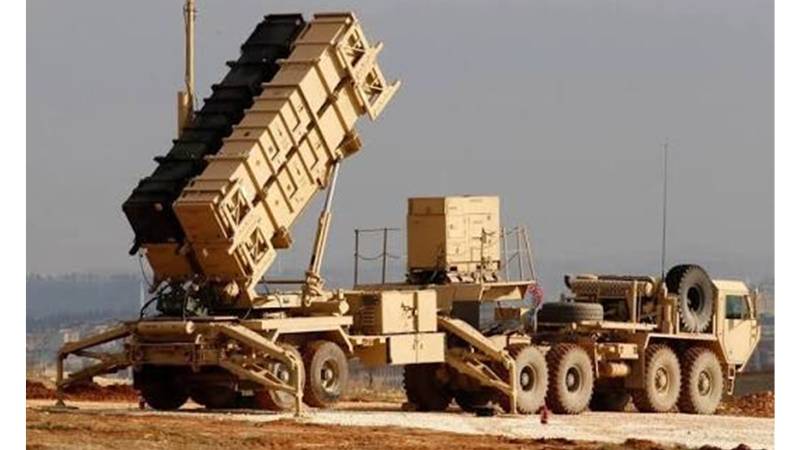
For decades up till now, the concept of a "missile shield" captured the imagination of military planners and policymakers. The prevailing doctrine, championed most often by advanced militaries, argued that technological superiority could build an invisible, impenetrable dome over a country’s airspace. Using a sophisticated mix of satellites, radars, and kinetic interceptors, a state could theoretically neutralise any incoming threat, achieving "deterrence by denial."
The recent and sustained military confrontations between Iran and the US-Israeli alliance have provided the world with the first true, large-scale test of this doctrine. As the skies over the Levant and the Persian Gulf lit up with unprecedented salvos of ballistic missiles, cruise missiles, and unmanned aerial vehicles (UAVs), a reality has emerged.
The primary lesson of this conflict is not that missile defence fails. In fact, the tactical interception rates have often been remarkably high.
The lesson is that a missile shield is not a roof—it is better to think of it as a shock absorber. And like all shock absorbers, it has strict physical and economic limits that inherently favour the attacker. To military observers watching from outside the Western hemisphere, the conflict has shown the vulnerabilities of relying on exorbitant defensive technology against an adversary fighting an asymmetric war of attrition.
Economics of Attrition
In conventional warfare, economic parity often dictates the victor. In modern air defence, the economics are asymmetrical. What this means is that the US and Israeli air defence network is arguably the most advanced in human history, consisting of a layered network: the exoatmospheric Arrow 3, the high-altitude US THAAD system, the mid-tier David’s Sling and Patriot PAC-3, and the low-altitude Iron Dome.
However, the financial penalty for operating this architecture is huge.
During peak engagement windows in the ongoing conflict, it is estimated that the US and Israel spent between $2.7 billion and $4.3 billion on interceptors in a matter of weeks. The offensive side of the ledger, Iran’s mixed salvos of drones and ballistic missiles, cost a small fraction of that amount.
By forcing Western systems to operate exactly as designed, Iran forces them to consume their most precious resources at an unsustainable rate
This cost-exchange ratio fundamentally alters the strategic calculation. An adversary does not need to destroy a target to achieve a strategic victory; they simply need to bankrupt the defence. When a military is forced to fire a $15 million THAAD missile or a $4 million Patriot interceptor to ensure a $50,000 drone does not strike critical infrastructure, the attacker is winning a war of economic attrition.
The imbalance in costs can be breathtaking—often reaching a ratio of 30-to-1 in favour of the offence. In effect, it turns the very act of successfully defending yourself into a Pyrrhic victory.
The Iranian Way
Iran’s strategic approach to these exchanges has demonstrated a sharp understanding of how to exploit the rigid logic of automated defence systems. The doctrine relies heavily on saturation and the deployment of mixed salvos designed to collapse the defender's ability to discriminate between targets.
In practice, this involves launching waves of cheap, slow-moving loitering munitions like the Shahed series alongside older, less precise rockets. These initial waves are not necessarily expected to reach high-value targets. Instead, they serve as "kinetic sponges." Their purpose is to flood the defender’s radar screens, forcing command-and-control systems to track thousands of incoming bogeys simultaneously.
For the defender, the challenge can be paralysing. A blip on a radar screen could be a harmless decoy, a cheap drone, or a lethal cruise missile aimed at a command centre. Because the consequences of a "leak" through the defensive layer are catastrophic, the defender cannot afford to gamble. They are mathematically compelled to fire expensive interceptors at cheap threats.
Once the defensive batteries are engaged and their launchers begin to empty, the secondary phase of the attack is initiated. This is when heavier, faster munitions are launched—such as the Kheibar Shekan or the Fattah series of manoeuvring medium-range ballistic missiles. By the time these high-value weapons enter the theatre, the defence is already overwhelmed, disorganised, and running low on ready-to-fire interceptors.
The introduction of manoeuvring re-entry vehicles further complicates interception. To put it in layman’s terms, this is a kind of missile that can change its path in dramatic, unexpected ways as it proceeds to its target. This often requires the defender to fire two or three interceptors per incoming warhead to guarantee a kill, exponentially accelerating the depletion of their own shield.
Iran's missile strategy effectively weaponises the technological sophistication of its adversaries. By forcing Western systems to operate exactly as designed, Tehran forces them to consume their most precious resources at an unsustainable rate.
Magazine Depth Crisis
Beyond the financial cost, the US-Israeli conflict has exposed a critical logistical vulnerability: magazine depth. "Magazine depth" refers to the physical number of interceptors a military has in its inventory and ready to fire before it must wait for the industrial base to manufacture more.
During the most intense days of the conflict, the United States and Israel consumed interceptors at a rate that shocked the global defence industry. Open-source tracking indicates that in a single extended engagement, the US fired roughly 14 percent of its entire global THAAD interceptor stockpile.
It takes only a few days of high-intensity warfare to deplete an inventory that requires years to replenish. The US defence industrial base currently produces THAAD interceptors at a rate of roughly a dozen to two dozen per year. When nearly a hundred are fired in a fortnight, the defence enters a "maintenance debt" that cannot be resolved through emergency funding. You cannot print complex, solid-fuelled, precision-guided missiles overnight.
Furthermore, launchers in the field, whether terrestrial batteries or vertical launch systems (VLS) on Aegis destroyers, have fixed capacities. Once a US Navy destroyer fires its complement of SM-3 or SM-6 missiles, it cannot reload at sea. It must retreat to a friendly port to rearm, temporarily removing a multi-billion-dollar asset from the chessboard and creating a localised gap in the defensive umbrella.
Global Ripple Effect
The lessons of the Middle Eastern theatre are being aggressively studied in capitals far beyond the region. For states navigating the multipolar geopolitical landscape, particularly those positioned as rivals to the United States, the conflict has provided a masterclass in asymmetric parity.
For military planners in Beijing, Moscow, and Pyongyang, the takeaway is clear: you do not need to match Western aerospace dominance plane-for-plane or ship-for-ship. A conventionally constrained state can effectively counter a militarily superior adversary by investing heavily in domestic, mass-produced stand-off strike capabilities. If an adversary can maintain a relentless tempo of cheap, long-range fire, they can paralyse the strategic flexibility of a superpower.
Moreover, the conflict has highlighted the zero-sum nature of global defence deployment. Every THAAD interceptor or Patriot missile fired in the defence of the Levant is an interceptor that cannot be deployed to the Indo-Pacific or Eastern Europe. By locking the United States into a localised war of attrition, regional powers have successfully forced Washington to cannibalise the very stockpiles required to underwrite its broader global deterrence strategy. The US industrial base is currently incapable of sustaining a high-intensity missile defence campaign in two theatres simultaneously.
Limits of Defensive Warfare
The most important lesson from the US-Israeli war on Iran is a philosophical shift in military doctrine. For the last 30 years, advanced militaries have operated under the assumption that technological superiority could make them immune to the consequences of war. The promise of the missile shield was that a nation could fight without bleeding.
That illusion has evaporated. Air defence, no matter how advanced, is a depreciating asset. It is a system designed to buy time for political or military leaders to de-escalate a crisis or launch a decisive offensive counter-strike. It is not, and never can be, an impenetrable fortress.
When pitted against an industrialised adversary capable of producing high volumes of stand-off munitions, defence alone is a losing strategy. Think of it this way: as long as the cost of a sword remains a fraction of the cost of a shield, mathematics will favour the state willing to throw the first stone.