

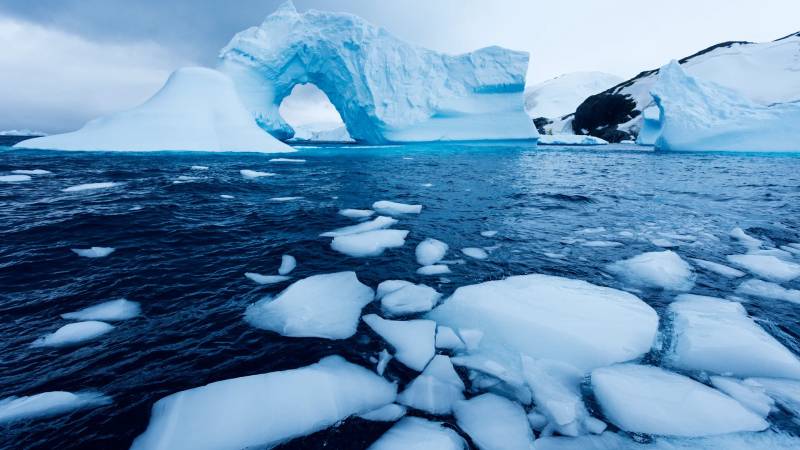
As glaciers melt and floods intensify, Chitral needs science, solidarity, and preparedness not fatalism or finger-pointing.
Natural disasters have long tested the resilience of civilizations, serving as stark reminders of nature's immense power and humanity’s profound fragility. Yet, in the modern era, the nature of these disasters has undergone a fundamental shift. What were once perceived as erratic acts of God or unpredictable seasonal anomalies have increasingly transformed into human- induced climate crises, driven by accelerated planetary warming and ecological imbalance. Nowhere is this harsh transformation more evident today than in the northern reaches of Pakistan, where the majestic valleys of Chitral are facing a profound catastrophe borne of melting glaciers and relentless cloudbursts.
From Lower Chitral to the uppermost valleys, floods driven by glacier melt and intense rainfall have caused widespread destruction. In Lower Chitral, Glacial Lake Outburst Floods (GLOFs), compounded by localized cloudbursts, have devastated communities in Sheshi Koh Valley, Drosh, Gumbas Gol, Broz Gol, Prayet Gol, Broz, and Karimabad Valley. Bridges have been destroyed, communication lines severed, and critical infrastructure buried under mud, rocks and debris.


Broz Bridge in Flood (Before & After Collapse) | Source:Courtesy of the author
Further north, in Upper Chitral, the swollen Chitral River and mountain nullahs have surged through a string of communities, including Reshun, Zait, Kuragh, Charun, Booni, Awi, Parwak, Mastuj Khas, Parkusap, Sonughure, and the remote border settlements of Yarkhun Lasht. At Kuragh, the main arterial road connecting Upper Chitral to the rest of the country was washed into the raging river, marooning thousands of residents. Across these isolated valleys, severed water supply lines, snapped power grids, and wrecked infrastructure have left entire communities without basic necessities, critically cutting off emergency medical access.

Kuragh: Raging floodwaters destroy the main road, forcing stranded commuters across treacherous terrain. | Source: Shahzaib Ali
Yet, amid this unprecedented ecological emergency, a troubling socio-cultural paradox grips the local populace. Instead of confronting the scientific and structural realities of these mega-disasters, public discourse is frequently derailed by deeply ingrained superstitions, moralizing, and mutual finger-pointing. When a mountain nullah bursts or a glacier collapses, the immediate refrain among many community members is to attribute the tragedy to divine retribution for alleged social misconduct, improper behavior, or ideological deviance. Neighbors quickly turn on neighbors, judging personal choices and attributing physical climate catastrophes to perceived moral decay.
This retreat into fatalism and interpersonal judgment serves as a psychological shield, relieving communities of the uncomfortable duty to demand environmental accountability, build resilient infrastructure, and adapt to climate change. As the renowned physicist Richard Feynman famously remarked:
"Reality must take precedence over public relations, for Nature cannot be fooled."
Nature cannot be appeased by moralistic scapegoating when the physics of thermal dynamics are at play. The scientific reality behind Chitral’s suffering is overwhelming, validated by credible global, national, and regional research institutes. The Hindu Kush-Himalaya (HKH) region, known as Earth’s "Third Pole," contains the world's largest reserve of ice outside the polar caps. According to the benchmark report by the International Centre for Integrated Mountain Development (ICIMOD), glaciers across the Hindu Kush-Himalayan region are melting at an unprecedented rate, with up to 75–80% of glacier volume projected to disappear by the end of this century if global emissions are not curbed aggressively.
These regions didn't vanish overnight because of a single sudden storm; they diminished because warnings were ignored and communities and governments failed to adapt before the environmental tipping point was passed.

Key drivers of Pakistan's recurring floods | Source: Al Jazeera (2025)
When global temperatures rise, these glaciers undergo rapid ablation, forming unstable, ice-dammed meltwater lakes high in the mountains. When the moraine dams burst due to sheer volume or secondary rain-on-snow cloudbursts, millions of cubic meters of water, sludge, and debris gush down narrow valleys with catastrophic momentum. The United Nations Development Programme (UNDP) GLOF-II Project reports that about 3,044 glacial lakes have formed in Northern Pakistan, with 33-36 officially classified as critically dangerous time bombs threatening downstream populations. Furthermore, as noted by the Intergovernmental Panel on Climate Change (IPCC) in its Sixth Assessment Report (AR6):
"Human-induced climate change is already affecting many weather and climate extremes in every region across the globe. Mountain ecosystems and downstream communities are exceptionally vulnerable to increased frequencies of extreme precipitation, land degradation, and ice mass loss."
Pakistan contributes less than 1% to global greenhouse gas emissions, yet repeatedly ranks among the top ten most climate-vulnerable nations on the global climate risk index. UN Secretary-General António Guterres captured this stark injustice during his visit to flood-ravaged regions of Pakistan, declaring:
"Pakistan is paying the price of a climate crisis created by the global North... This is not a natural disaster; it is a climate carnage."
History offers grim warnings to societies that ignore environmental degradation and choose neglect over collective adaptation. Consider the tragic, modern trajectory of the Aral Sea basin in Central Asia. Once the fourth-largest lake on Earth, its systematic destruction began in 1960 due to aggressive water diversion. By 1989, it split into two shrinking bodies; by 2007, it had lost 90% of its volume; and by 2014, satellite imagery confirmed its eastern basin had completely dried into the toxic Aralkum Desert.
Similarly, in Shishmaref, Alaska, an ancient Iñupiat settlement on Sarichef Island, melting Arctic sea ice and thawing permafrost progressively dismantled centuries of shoreline stability. After severe erosion events destroyed homes throughout the late 1990s and early 2000s, the village officially voted in August 2016 to abandon its homeland and relocate entirely to the mainland.
These regions didn't vanish overnight because of a single sudden storm; they diminished because warnings were ignored and communities and governments failed to adapt before the environmental tipping point was passed. They serve as a direct warning to mountain regions like Chitral: when glacier loss and riverbank degradation cross a critical threshold, the collapse of human habitat becomes irreversible.
While climate change is the principal driver of these increasingly destructive events, their impacts are often magnified by unchecked construction along riverbanks, deforestation, poorly planned infrastructure, and inadequate disaster preparedness. Addressing both global and local drivers is essential to reducing future risk.
It is high time for the people of Chitral and the nation at large to shift from passive judgment to active, unified resilience. The civic responsibility of local communities begins with rejecting fatalistic narratives and fostering environmental literacy. Building public understanding of climate science, promoting reforestation, improving riverbed management, and strengthening early-warning systems are no longer optional; they are essential for protecting lives and livelihoods. Local leaders, religious scholars, civil society, and educators must unite to emphasize that safeguarding the environment, planting trees along fragile slopes, stopping illegal encroachment on riverbanks, and listening to meteorological advisories are moral imperatives in their own right.
At the same time, national and provincial authorities must honor their obligations to Chitral by constructing climate-resilient roads, rebuilding destroyed suspension and concrete bridges with elevated engineering standards, installing automated Glacial Lake Outburst Flood (GLOF) early-warning systems in vulnerable valleys, expanding glacier and weather monitoring stations, strengthening community-based disaster response mechanisms, enforcing land-use regulations that prevent construction along high-risk riverbanks and nullahs, and integrating climate adaptation into all future infrastructure planning. Rebuilding what has been lost is not enough; rebuilding smarter is the only sustainable path forward.
Chitral’s breathtaking mountains and resilient people have guarded Pakistan’s northern frontier for centuries. Today, as valleys from Karimabad to Mastuj grapple with the consequences of accelerating glacier melting and increasingly erratic monsoon rains, we cannot afford to look away or divide ourselves with petty blame and judgement. It is time to stand side-by-side with Chitral to support the displaced, educate our communities on climate realities, and collectively build a sustainable, resilient future before the next deluge claims what remains.