

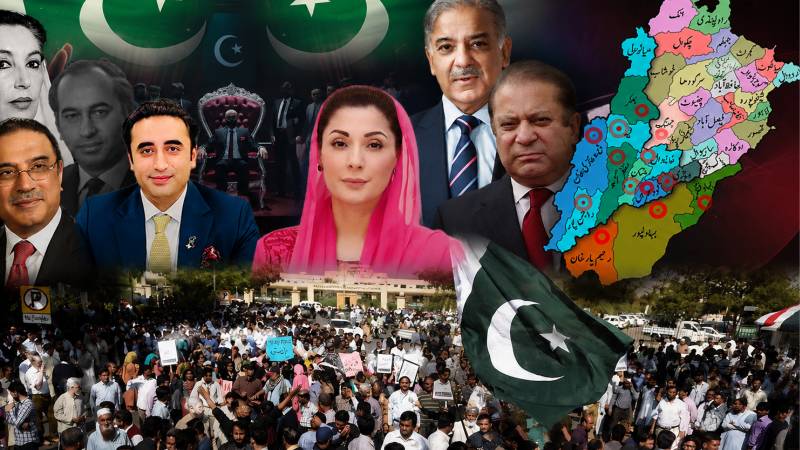
The best form of administration is the one that delivers effectively at the grassroots. The debate over the creation of new administrative units in Pakistan has once again brought the question of governance to the centre of national discourse. Supporters of new provinces and administrative divisions argue that smaller units can improve governance, bring government closer to citizens and make public service delivery more efficient. Yet the real issue is not how many administrative units Pakistan has, but how effectively those units are governed.
The fundamental question, therefore, is simple: Will the creation of new administrative units improve governance, or will it merely create new centres of political and elite capture? Pakistan already suffers from a deeply entrenched system of elite capture. Political influence, economic resources and institutional authority often remain concentrated in the hands of powerful families, feudal groups and local political elites. If new administrative units are created without first strengthening institutions, there is a danger that existing power structures will simply reproduce themselves within smaller geographical boundaries.
Instead of weakening the influence of powerful groups, new administrative units could provide them with new territories in which to control jobs, development funds, public resources and administrative institutions. The problem, therefore, is not necessarily the size of the administrative unit; it is the quality of institutions operating within it. Another concern is the possibility of individual and identity-based political ascendancy. Pakistan already struggles with unequal political participation and limited institutional inclusiveness. In areas where educational attainment remains low and institutions are weak, smaller administrative units could potentially intensify ethnic, clan and caste-based politics. Political competition may increasingly revolve around identity rather than governance, merit and public policy.
This raises a fundamental question: Can administrative decentralisation produce genuine political empowerment when the institutions responsible for administering these units remain vulnerable to elite influence? The answer is unlikely to be affirmative unless institutional capacity develops alongside administrative reform. There is also the danger of nepotism. Where political power becomes concentrated within a particular family, clan or local group, administrative positions can become instruments of patronage. Those who control the new administrative machinery may seek to reward relatives, supporters and political allies. Over time, this could transform public institutions into networks of personal loyalty rather than professional administration.
Religious and sectarian considerations cannot be ignored either.
Pakistan's complex social composition means that weak institutions can allow political actors to exploit religious and sectarian identities for political advantage. Administrative boundaries must therefore be designed on the basis of objective considerations such as population, geography, economic viability, administrative accessibility and public-service requirements—not sectarian or communal interests. The greatest danger, however, would be allowing newly created administrative units to become political domains of powerful local elites. Decentralisation is meaningful only when authority is transferred to accountable institutions. If power merely moves from one elite group to another, the country achieves administrative fragmentation rather than genuine decentralisation.
Where political power becomes concentrated within a particular family, clan or local group, administrative positions can become instruments of patronage.
The question of national integration also deserves serious consideration. Pakistan continues to face ethnic, regional and separatist grievances. Movements such as Sindhudesh and Seraiki nationalism, as well as Baloch and Pashtun political movements, reflect different forms of regional discontent. This does not mean that every demand for a new province or administrative unit is a threat to national unity. Rather, it demonstrates that administrative restructuring must be handled carefully so that it does not deepen existing perceptions of exclusion and injustice.
Pakistan's priority should therefore be effective grassroots governance rather than administrative expansion for its own sake.
The first step should be the empowerment of local governments across the country. Citizens should not have to depend on distant provincial capitals or influential political intermediaries for basic services. Local governments must possess meaningful political authority, financial resources and administrative capacity, accompanied by strong systems of accountability.
Education is equally important. Literacy and human development are essential to breaking the cycle of dynastic politics, patronage and elite domination. An educated population is better equipped to judge political leaders on performance, competence and public policy rather than merely on family, clan, caste or personality.
At the same time, Pakistan needs serious institutional building. The effectiveness of a state does not ultimately depend upon whether its administrative structure is large or small, federal or decentralised, democratic or otherwise. What matters is whether its institutions are professional, inclusive, accountable and governed by predictable rules. Merit-based recruitment, an independent and effective justice system, transparent public finances, accountable political leadership and professional civil services are therefore more important than simply drawing new boundaries on the map.
Finally, constitutional supremacy and equitable distribution of resources must remain at the heart of any governance reform. Citizens develop a stronger sense of national belonging when they believe that the law applies equally to everyone and that public resources are distributed fairly. The lesson is clear: Pakistan does not necessarily need more administrative units; it needs better administration. Creating new provinces or divisions may be justified where there is a genuine administrative, economic and geographical rationale, but it should never be treated as a substitute for institutional reform.
The best form of administration is ultimately not the one that exists on paper, nor the one divided into the greatest number of units. It is the one that delivers justice, education, security, opportunity and public services effectively at the grassroots level.
Pakistan's governance crisis will not be resolved merely by redrawing its administrative map. It will be resolved when institutions become stronger than individuals, merit becomes stronger than patronage, law becomes stronger than political influence, and citizenship becomes stronger than clan, caste, ethnicity and sectarian identity.