

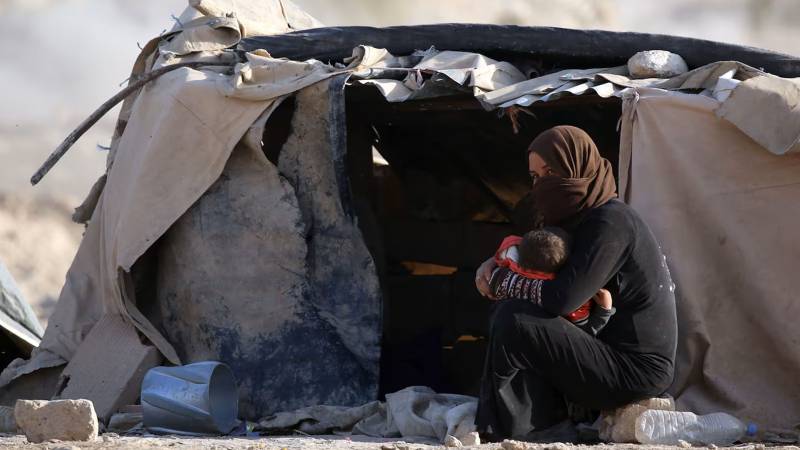
There is something profoundly irrational about the way the international community makes peace. Men start wars, command armies, negotiate ceasefires and sign peace agreements. While, women bury the dead, search for missing relatives, carry children across borders, care for the wounded, survive sexual violence and hold communities together when states collapse. Yet when the time comes to decide how the war should end, many of these same women are left outside the room.
The evidence increasingly challenges the assumption that peace is simply a bargain between armed men. Research shows that women's meaningful participation can improve the quality and durability of peace agreements. PRIO reports that peace agreements are significantly more likely to last when women participate, while UN research consistently links women's participation with more inclusive and sustainable peace.
Exclusion remains the norm. In 2024, women accounted for only 7% of peace negotiators, 14% of mediators and 20% of signatories globally. Only 31% of the 36 peace agreements reached that year contained at least one provision referring to women, girls, gender or sexual violence. The question is no longer whether women belong at the peace table; the evidence is clear that their meaningful participation matters. The harder question is why, despite that evidence, the international community continues to build peace processes around the men who wage war rather than the women who must live with its consequences.
That question matters urgently in Sudan, Somalia, the Democratic Republic of Congo, Palestine and Yemen. And it should be asked not from the conference rooms of Geneva, New York, Nairobi or Doha, but from the perspective of women standing in the ruins.
Women are asked to survive the war, but not to end it
Imagine being a Sudanese woman whose husband has been killed. Imagine burying a father, brother or son and then being asked by an international mediator what "the parties" want. You are not a party. You are the person who has lived the consequences of their decisions. Women know what security actually means. It is not simply the silence of guns between armed groups. It is knowing that your daughter can walk to school safely, that you can fetch water without fear of rape, that armed men will not enter your home and that you can return home without fear. It means justice for sexual violence, finding missing relatives, reclaiming land and livelihoods, and having access to food, healthcare and education. Above all, it means that those who killed your husband cannot simply exchange their uniforms for political power. Ending a war is not the same as building peace. A ceasefire may silence the guns; peace must make life safe again.
Women experience security not as an abstract military concept but as a daily reality. That perspective should not be treated as supplementary to peace negotiations. It should help define what peace means. UN Women recognises women not only as victims of conflict but as agents of change who lead grassroot peacebuilding, support communities and advocate for justice and human rights.
The evidence: participation matters, but power matters more
Women are not inherently more peaceful than men. Nor should they be romanticised as naturally conciliatory or morally superior. The argument for women's participation is not biological; it is political. Women bring different experiences, networks, constituencies and priorities into negotiations. They can connect elite diplomacy to affected communities, challenge narrow definitions of security and raise issues that armed actors have little incentive to prioritise. Presence alone is insufficient!
Women experience security not as an abstract military concept but as a daily reality – that perspective should not be treated as supplementary to peace negotiations
A woman can sit at a negotiating table and still have little influence over what is discussed or agreed. The objective therefore, cannot simply be: It is not enough that there are women at the table—they must have the power to influence what is discussed, negotiated, agreed, and implemented. That distinction is crucial.
Colombia: changing what peace means
Colombia provides one of the clearest examples. The conflict between the Colombian government and FARC lasted more than five decades. When formal negotiations began in Havana in 2012, women were severely underrepresented. Colombian women's organisations refused to accept their exclusion. Their mobilisation helped push gender, victims' rights and women's participation into the formal peace process.
A gender sub-commission was established, and women became increasingly represented in the negotiating structures. The 2016 peace agreement ultimately contained more than 120 provisions relating to gender equality, according to UNIDIR. Their significance was not simply numerical. They helped bring land rights, political participation, victims' rights, gender-based violence and the experiences of rural and displaced women into the substance of the agreement. From the perspective of a Colombian woman who had survived the conflict, this changed the questions being asked. Without women, negotiations could have centred primarily on territory, disarmament, political representation and security guarantees. Women helped force another question into the room: What does justice look like for those who suffered because of the war? That is not a peripheral question. It is central to peace.
Colombia should not be romanticised. Women's participation did not eliminate the difficulties of implementation, nor did women create peace on their own. The agreement resulted from a complex political and diplomatic process. Indeed, by 2024, the UN Verification Mission reported that less than 13% of the agreement's gender provisions had been fully implemented. The lesson is therefore, not that women guarantee peace. It is that their organised participation can broaden and deepen a peace process that might otherwise remain an elite bargain between armed and political actors.
Northern Ireland: breaking the architecture of the battlefield
Northern Ireland offers another important lesson. The Good Friday Agreement emerged from decades of violent conflict between competing political and communal forces. Yet women challenged a negotiating structure largely dominated by established political parties and male leadership. The Northern Ireland Women's Coalition brought Catholic and Protestant women together and secured representation in the formal negotiations. Women such as Monica McWilliams and May Blood entered a political space that had largely been constructed without them.
Their importance was not that they represented a single "women's position." They did not. Rather, they brought civil-society concerns into a process dominated by constitutional and security questions and demonstrated that the peace table did not have to reproduce the divisions of the battlefield. It would be wrong to suggest that women alone created the Good Friday Agreement. The settlement resulted from many political, social and diplomatic forces. Their participation demonstrated something fundamental: Peace negotiations can be widened beyond the men who represent the armed and political structures of conflict.
Why does exclusion persist?
If the evidence is compelling, why does exclusion continue? Part of the answer lies in the architecture of international diplomacy itself. When mediators ask, "Who has the guns?", the answer often determines who is invited. A commander with thousands of fighters is treated as an essential stakeholder. A woman who has organised thousands of displaced people may be treated as a civil-society representative. The armed man is invited to negotiate the political settlement. The woman is invited to a side event.
This reflects an underlying theory of peacemaking: peace is negotiated among those capable of making war. That may be sufficient to negotiate a ceasefire. It is not sufficient to build sustainable peace. For a displaced woman, conflict is about land and return. For a survivor of sexual violence, it is about justice and impunity. For a widow, it is about economic survival. For a mother, it is whether her children can return to school. These are not separate from peace. They are what peace is supposed to resolve.
Sudan: trusted to sustain communities, excluded from shaping peace
Sudan illustrates the contradiction starkly. Sudanese women have been at the forefront of humanitarian response, community organisation, documentation of abuses, protection and peace advocacy. The Peace for Sudan Platform brings together more than 49 women-led peace, humanitarian and civil-society initiatives from across the country. These women are not waiting for diplomats to save their communities. They are already doing the work of survival and peacebuilding. Hitherto their political influence remains far smaller than their responsibilities. A woman is trusted to hold her community together through war, yet denied a voice at the table where its peace—and its future—are decided. The contradiction is indefensible. The international system relies on women to keep communities alive during war while treating them as secondary actors when deciding how the war should end.
Somalia and Yemen: women are already making peace
Somalia demonstrates what is possible when women are supported at community level. UN Women reports that women's peace networks and forums engage elders and religious leaders in mediation, reconciliation and social cohesion. These networks operate where conflict is actually experienced—within communities. A national agreement signed in a capital does not automatically settle disputes over land, restore trust between neighbours or persuade communities to accept former enemies. Women are already doing that work. The international community calls it "community engagement." It should call it what it is: peacebuilding.
Yemen tells a similar story. UN Women has supported Yemeni women to strengthen their participation and influence in peace and security processes, while women continue to engage in grassroots peacebuilding despite the absence of a fully functioning formal peace process. The irony is striking: women are encouraged to build peace from below while remaining insufficiently represented in the negotiations that determine peace from above.
DRC: the price of excluding survivors
The Democratic Republic of Congo presents perhaps the clearest example of why representation matters. Women in eastern DRC have endured displacement, sexual violence and economic destruction on a devastating scale. Yet women have also organised as mediators, human-rights defenders and peacebuilders. The question is unavoidable: How can a peace agreement adequately address sexual violence when those who have lived its consequences are absent from the table where peace is designed? A military commander may understand the battlefield.
A survivor understands what happens after the guns fall silent—the stigma, displacement, shattered families, lost livelihoods, fear of returning home and the enduring cost of impunity. These experiences are not peripheral to peace. They are central to whether peace is real, credible and sustainable. Sexual violence is not a "women's issue"; it is a peace, justice and security issue.
Palestine: when exclusion becomes structural
The Israeli-Palestinian conflict demonstrates how deeply entrenched exclusion can become. Palestinian women have experienced displacement, loss, violence, economic insecurity and repeated cycles of conflict. Yet their representation in high-level peace diplomacy has remained extremely limited.
A 2025 UN document noted that publicly available information showed no women in either delegation in negotiations between Israel and the State of Palestine from 2020 to 2024. The same UN assessment called for women to be included in negotiations on ceasefires, humanitarian access, hostages and detainees, and for Palestinian women to participate meaningfully in decisions about the future of Palestine.
This is not an argument that women possess a magical ability to resolve an extraordinarily complex conflict. It is an argument about representation. A peace process that determines the future of a population is weakened when those who make up half that population are absent from meaningful decision-making.
The international community has the framework. What it lacks is political will.
The international community does not lack the framework, institutions or evidence. UN Security Council Resolution 1325, adopted in 2000, established women's participation in conflict prevention, peacebuilding and security as an international commitment. Twenty-five years later, there were 113 national action plans on Women, Peace and Security, and 37 states and organisations had signed the UN Secretary-General's Common Pledge on women's full, equal and meaningful participation.
Still the numbers remain stark: in 2024, women were only 7% of negotiators and 14% of mediators globally. The problem is therefore increasingly one of political will. Women do not need another workshop on negotiation skills. They need access. They need political backing. They need protection. Their organisations need predictable funding. And, above all, they need the authority to influence decisions.
International diplomacy has perfected a vocabulary that can make exclusion look like inclusion. Women are invited to consultations, listening sessions, workshops, side events and "women's dialogues"—while men with guns sit at the real negotiating table and decide the ceasefire, political settlement and future.
That is not meaningful participation. It is participation without power. Consultation is not participation. Participation is not influence. Influence without decision-making power is not equality. Without power, inclusion is little more than theatre.
What meaningful participation must look like
If the international community is serious about sustainable peace, women must be treated not as participants to be added later, but as essential architects of peace from the outset. They must be involved from pre-negotiations and ceasefires through formal negotiations, agreement drafting, implementation, transitional governance, constitutional reform, justice and reconciliation.
Representation must include displaced women, survivors of sexual violence, widows, young women, women from minority and conflict-affected communities, women with disabilities, human-rights defenders, community mediators and women-led organisations—not simply political elites. Numbers can help open the door, but the real measure is decision-making power. That requires political sponsorship, protection from retaliation, predictable funding for women-led organisations and mechanisms that allow women representatives to remain accountable to the communities they represent. And participation cannot end when an agreement is signed.
Women must help monitor implementation, shape transitional institutions, participate in justice and accountability mechanisms, influence disarmament and reintegration, contribute to constitutional reform and help determine reconstruction priorities. Peace is not secured by putting women in the room for the photograph. It is strengthened when they have the power to shape what is agreed, how it is implemented and what comes after the guns fall silent.
A different definition of peace
Colombia and Northern Ireland demonstrate that women can widen peace processes beyond the interests of armed and political elites. Sudan, Somalia, Yemen, DRC and Palestine demonstrate how far the international system still has to go.
Women cannot substitute for political compromise by armed actors. Their participation does not guarantee that an agreement will succeed. But systematically excluding them means excluding a major source of political knowledge, social legitimacy and peacebuilding capacity. The international community has spent twenty-five years affirming that women should participate in peace and security. The evidence is now too substantial to ignore.
If Sudan, Somalia, the Democratic Republic of Congo, Palestine, Yemen and other protracted conflicts are ever to move beyond fragile ceasefires, the international community must stop mistaking an agreement among armed and political elites for peace. The displaced woman matters. The survivor matters. The widow matters. The mother matters. The young woman matters. The community mediator matters. The woman who buried her father, her husband or her son matters. And the woman who has survived the war must never again be left outside the room while others decide what peace will mean for her.
In order to achieve meaningful peace it is imperative to bring women in early; guarantee meaningful representation; connect formal negotiations to women's grassroots peacebuilding; fund women directly; protect women peacebuilders; give survivors and marginalised women a voice; put women into ceasefire and implementation mechanisms; give them real negotiating authority; and make mediators, governments and donors publicly accountable for whether women's participation actually changes the peace process.
Peace is not sustained by those who merely sign it. It is sustained by those who must live with its consequences. Those who have endured the war, held their communities together and have the most to lose from its return must have the power to shape the peace that follows. The international community should no longer ask whether women are ready for the peace table. It should ask whether the peace table is ready to take women seriously!
That is how women move from being consulted about peace to helping decide what peace becomes.