

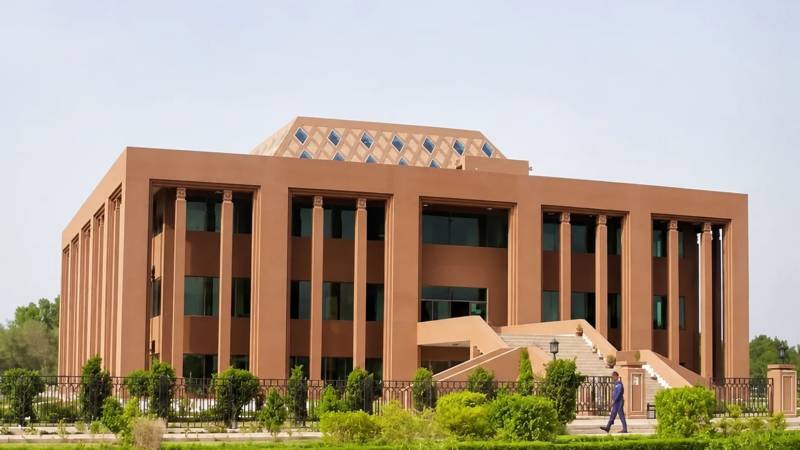
Sustainable development has become a global priority in response to pressing challenges such as climate change, water scarcity, environmental degradation, energy insecurity, and socioeconomic inequality. Recognizing the need for collective action, the United Nations adopted the 2030 Agenda for Sustainable Development in 2015, establishing 17 Sustainable Development Goals (SDGs) to promote prosperity, protect the environment, and improve the quality of life for people worldwide. In Pakistan, where access to clean water, reliable energy, quality education, and climate-resilient infrastructure remains essential to national development, higher education institutions have a significant role to play. Mehran University of Engineering and Technology (MUET), Jamshoro, Sindh, is an important example of how engineering education, scientific research, technological innovation, and institutional sustainability can contribute to this global agenda.
As a public-sector engineering university, MUET has the potential to address local and national development challenges through its academic programmes, research facilities, institutional initiatives, and engagement with industry and communities. Its sustainability framework emphasizes environmental responsibility, sustainable campus operations, education, research, and community engagement. These priorities demonstrate the relevance of integrating sustainable development into university activities rather than treating it as a separate academic concept. The university's participation in sustainability-related assessment initiatives, including the UI GreenMetric World University Rankings, also provides a framework for evaluating environmental practices and encouraging improvements in campus management.
One of MUET's most significant contributions to sustainable development is its work in the water sector. Water scarcity, groundwater deterioration, water pollution, and inadequate sanitation remain major concerns in Sindh, particularly for rural communities and agricultural areas. In this context, the U.S.-Pakistan Center for Advanced Studies in Water (USPCAS-W), established at MUET with support from the United States Agency for International Development (USAID), Pakistan's Higher Education Commission, and academic collaboration involving the University of Utah, represents an important institutional initiative. The centre was developed to strengthen postgraduate education, research capacity, and professional expertise in water-resource management.
Through its specialized research facilities and water-related research activities, USPCAS-W addresses issues including water quality, wastewater treatment, groundwater sustainability, irrigation, and water-resource management. Its laboratory and research infrastructure supports scientific investigation and the development of solutions relevant to the needs of communities and industries. The centre's research portfolio has also included initiatives concerning water filtration, salinity management, climate-adaptive livelihoods, and hydro-agro informatics. These areas of work are closely aligned with Sustainable Development Goal 6, which seeks to ensure the availability and sustainable management of water and sanitation for all. By connecting scientific research with practical water-management challenges, MUET can contribute to improving water security and supporting more sustainable agricultural practices in Sindh.
The university's contribution to sustainable development extends beyond water management to include energy conservation and environmental responsibility. Affordable and clean energy is essential for economic development, industrial productivity, and improved living standards. MUET's sustainability agenda identifies energy efficiency, renewable-energy technologies, and environmentally responsible campus practices as relevant areas of focus. Engineering education and applied research in solar photovoltaic systems, wind energy, energy management, and efficient infrastructure can support Pakistan's transition towards more sustainable energy solutions. Such efforts are particularly important in a country seeking to strengthen energy security while reducing environmental pressures. Continued attention to energy consumption, renewable electricity generation, and efficient use of campus resources can further strengthen the university's contribution to Sustainable Development Goal 7.
By continuing to align its educational programmes, research initiatives, institutional practices, and community engagement with the SDGs, MUET is strengthening its position as a centre of technological innovation and contributing to a more resilient, inclusive, and sustainable future for Sindh and Pakistan.
Equally important is MUET's role in advancing quality education, which forms the foundation of long-term sustainable development. Universities are not merely institutions for transferring technical knowledge; they also prepare future professionals to understand complex social, economic, and environmental challenges. Through engineering education, postgraduate programmes, laboratory-based learning, and research opportunities, MUET develops technical capabilities relevant to infrastructure, industry, environmental protection, and technological progress. Integrating sustainability principles into academic curricula can help students understand the wider consequences of engineering decisions and develop solutions that are economically viable, environmentally responsible, and socially beneficial. Encouraging students to undertake research projects related to renewable energy, water conservation, waste management, climate resilience, and sustainable infrastructure would further strengthen the relationship between academic learning and the SDGs.
Research and innovation provide another important pathway through which MUET can contribute to national development. The university's Office of Research, Innovation and Commercialization (ORIC) supports research activities, collaboration, intellectual-property development, and the translation of academic knowledge into practical applications. This function is relevant to Sustainable Development Goal 9, which promotes resilient infrastructure, sustainable industrialization, and innovation. By facilitating collaboration among researchers, industries, government organizations, and other academic institutions, MUET can help transform scientific findings into technologies and services that respond to real-world needs. Research in environmental monitoring, intelligent infrastructure, industrial efficiency, and sustainable engineering can contribute to economic productivity while addressing environmental and societal concerns.
These research and educational activities are also connected to the goals of building sustainable communities and responding to climate change. Sindh faces environmental pressures associated with water insecurity, rising temperatures, agricultural vulnerability, and the need for resilient infrastructure. MUET's expertise in engineering, environmental management, and water research provides opportunities to investigate these challenges and develop locally appropriate responses. Research into groundwater quality, salinity, water-resource management, renewable energy, and climate adaptation can support informed decision-making and strengthen the technical capacity of communities and public institutions. Such work is relevant to Sustainable Development Goal 11, which promotes sustainable cities and communities, and Sustainable Development Goal 13, which calls for urgent action to combat climate change and its impacts.
At the institutional level, sustainability also depends on responsible consumption, efficient resource management, and cooperation among stakeholders. Measures such as reducing waste, conserving water, improving energy efficiency, and promoting environmentally responsible practices can help universities reduce their ecological footprint. At the same time, collaboration with local communities, industries, government departments, and international academic partners can expand the reach of research and strengthen its practical value. MUET's institutional and research collaborations illustrate the importance of combining expertise and resources to address development challenges that cannot be solved by a single organization. These partnerships are consistent with Sustainable Development Goal 12, which promotes responsible consumption and production, and Sustainable Development Goal 17, which emphasizes partnerships for sustainable development.
The broader significance of MUET's contribution lies in the relationship between engineering knowledge and public welfare. The SDGs require institutions to look beyond individual projects and consider how education, technology, environmental protection, and social progress reinforce one another. For MUET, this means continuing to connect research with community needs, encouraging students to develop practical sustainability-oriented solutions, strengthening cooperation with industry, and incorporating environmental responsibility into campus operations. Transparent reporting of sustainability activities and measurable results would also help demonstrate progress, identify areas for improvement, and strengthen institutional accountability.
In conclusion, Mehran University of Engineering and Technology, Jamshoro, has established important foundations for contributing to the United Nations Sustainable Development Goals through its sustainability initiatives, specialized water research, engineering education, research-commercialization activities, and environmental priorities. Its work is particularly relevant to clean water and sanitation, quality education, affordable and clean energy, innovation, sustainable communities, climate action, responsible resource use, and international partnerships. The university's academic and research capabilities provide significant opportunities to advance sustainable development in Sindh and Pakistan. Thus, by continuing to align its educational programmes, research initiatives, institutional practices, and community engagement with the SDGs, MUET is strengthening its position as a centre of technological innovation and contributing to a more resilient, inclusive, and sustainable future for Sindh and Pakistan.