

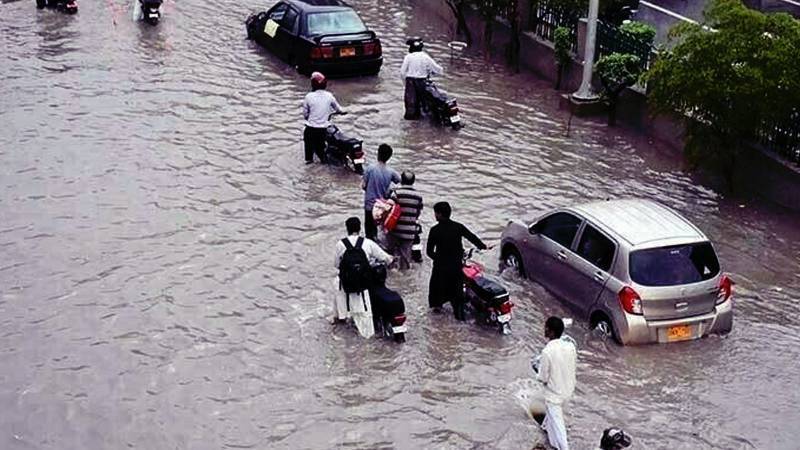
Pakistan has been struck once again by torrential monsoon rains causing severe floods, with Punjab enduring its worst inundation in decades. Over two million people have been affected, with more than 2,000 villages submerged and vast tracts of wheat and rice fields destroyed. The Ravi, Sutlej, and Chenab rivers surged beyond their banks, overwhelming embankments designed for a pre-climate change environment. For the first time in recorded history, these three rivers simultaneously reached “super flood” levels, driven by record monsoon rains and significant water releases from upstream India.
Since these floods in Punjab mainly originate from the eastern rivers, renewed debates over the abandoned Kalabagh Dam are not relevant to the current crisis. The Kalabagh Dam, planned on the western Indus River, would not have mitigated flooding primarily driven by eastern river system dynamics.
The lower flooding on the Indus and Jhelum compared to the eastern rivers (Chenab, Ravi, Sutlej) during the recent monsoon stems from less intense rainfall upstream and the regulated storage capacity of large dams like Tarbela and Mangla. These dams moderate seasonal flows and reduce flood peaks, unlike the largely unregulated eastern rivers, which faced unprecedented rains and limited storage infrastructure. India’s run-of-the-river dams on the Chenab provide minimal flood control, and Pakistan lacks significant reservoirs on the Chenab to mitigate floods. While upstream storage on these rivers could reduce downstream flooding, effective flood management requires coordinated dam operation, early warning systems, and political cooperation—challenges complicated by Indo-Pak tensions under the Indus Waters Treaty.
This catastrophic event highlights a stark paradox: Pakistan is a nation both deluged by floods and suffering acute water scarcity. Per capita water availability has plummeted to less than 1,000 cubic metres annually—about a quarter of what it was in the 1970s—ranking Pakistan among water-stressed countries.
Climate change exacerbates these pressures by intensifying monsoon variability and accelerating glacier melt, increasing flood risks. Meanwhile, chronic domestic challenges deepen vulnerabilities: poor water governance, fragmented institutions, environmental degradation, and political conflicts between provinces and the federal government.
Urban planning failures have permitted construction in flood-prone areas, while corruption diverts limited public funds from essential flood mitigation infrastructure toward unregulated housing projects. Additionally, deforestation in upper catchments and wetlands destruction have further diminished the landscape’s natural flood buffering capacity.
A Land of Abundance That Runs Dry
Amid Pakistan’s water crises, some romanticise the idea of untamed rivers flowing freely. Yet this view ignores South Asia’s explosive population growth: India’s population has surged from 361 million in 1951 to 1.44 billion in 2023, while Pakistan’s rose from 33.7 million to roughly 241.5 million. Without critical infrastructure—barrages, canals, and dams within the Indus Basin Irrigation System (IBIS)—mass starvation would have been inevitable.
IBIS is the world’s largest contiguous irrigation network, irrigating approximately 19 million hectares in Pakistan alone, nearly 90% of the country’s food production. This intricate system of 19 barrages, 12 link canals, and thousands of canals and distributaries distributes water, supporting an agricultural economy that employs 37% of the labour force and contributes about 22% to GDP.
Since the 1960s, Pakistan has built around 73 large dams (over 15 metres in height), including landmark projects such as Mangla Dam (1967) for irrigation and hydropower, Tarbela Dam (1976) which significantly boosted agricultural output and energy supply, and Gomal Zam Dam (2012) that aids flood control and power generation. Tarbela’s hydroelectric capacity stands at 4,888 MW.
Regionally, India’s dam construction has been far more extensive, escalating from 882 large dams in 1971 to over 5,300 by 2019, irrigating about 38% of its farmland and supporting a fourfold increase in food production from 1951 to 2000, along with benefits in flood control, hydropower, and potable water supply.
China’s dam-building efforts dwarf both, with over 98,000 reservoirs since 1970, driving the world’s largest hydropower capacity and enabling rapid economic growth while mitigating floods and emissions.
Dams serve essential functions in power generation and flow regulation, but are ineffective against flash floods triggered by sudden cloudbursts or glacial bursts
The Indus Basin itself—one of the largest contiguous river basins globally—comprises six major rivers (Indus, Jhelum, Chenab, Ravi, Beas, Sutlej) originating in the Himalayas, Karakoram, and Hindu Kush. Glacier and snowmelt contribute 40–80% of the upper basin flows, supplemented by monsoonal rains, spanning roughly 1.12 to 1.165 million square kilometres across Pakistan, India, China, and Afghanistan. Pakistan controls about 47% of the basin, India 39%, China 8%, and Afghanistan 6%.
The 1960 Indus Waters Treaty (IWT), brokered by the World Bank, allocated eastern rivers (Ravi, Sutlej, Beas) exclusively to India and western rivers primarily to Pakistan. Under this treaty, Pakistan receives 75–80% of the basin’s average annual flow (approximately 167 billion cubic metres from western rivers, that is, Indus, Jhelum, Chenab), with India taking 20–25%. To compensate for the eastern river water loss, the treaty facilitated infrastructure development through the Indus Basin Development Fund, backed by donors such as the U.S. and U.K., enabling major works like the Mangla and Tarbela dams.
However, the IWT assumed stable hydrological and political conditions—assumptions that no longer hold. Climate change intensifies monsoon variability and glacier melt, reducing average river flows. Additionally, India’s construction of run-of-the-river dams and the 2025 suspension of key treaty dispute mechanisms aggravate Pakistan’s water security concerns.
Pakistan’s dam infrastructure is ageing, with effective storage capacity adequate for only about 30 days of water demand—far below India’s 120–200 days or international standards. Sedimentation has diminished Tarbela’s capacity by 30–41% and Mangla’s by 19–22%, even as a rising population pushes domestic water demands higher.
The Trilogy of Floods: 2010, 2022, 2025
Pakistan’s last 15 years reveal a grim progression of disasters:
2010: Record monsoon rains and glacier melt inundated one-third of the country, affecting 20 million people, causing nearly 2,000 deaths, and $40 billion in losses. Entire villages vanished, crops were ruined, and infrastructure collapsed.
2022: Exceptionally heavy rains in Sindh and Balochistan, coupled with heatwaves accelerating glacier melt, affected 33 million people, killed 1,700, and displaced 8.2 million—the world’s largest disaster displacement that decade. Crop losses, inflation spikes, and urban hardships followed, with outbreaks of diseases and damage to 13,000 km of roads disrupting supply chains.
2025: Punjab saw 3,100 villages and 2,900 hamlets impacted, displacing over 2.4 million people with more than 900,000 persons and 600,000 animals relocated. Nationwide deaths have exceeded 850 since June. Khyber Pakhtunkhwa bore the highest fatalities (484), followed by Punjab, Sindh, Gilgit-Baltistan, Azad Jammu & Kashmir, Balochistan, and Islamabad. Crop devastation included wheat, rice, and sugarcane.
This pattern—more rain, accelerated glacier melt, and escalating destruction—reflects a worsening climate reality colliding with fragile infrastructure and rapid, unplanned urban growth, leaving cities like Lahore and Karachi increasingly vulnerable.
Common Flood Causes
The three major flood events share similar immediate causes: extremely intense rainfall often from localised storms, climate-driven glacier melt adding to river volumes, ageing flood infrastructure compromised by sedimentation and poor maintenance, environmental degradation such as deforestation and wetland loss, and governance shortcomings limiting timely response and coordination.
Together, these factors expose a critical convergence of climate extremes and structural vulnerabilities. Pakistan urgently needs to transform flood risk management into proactive, multipronged resilience strategies.
Floods and Water Scarcity
Pakistan’s water paradox arises partly from timing and inefficiencies. The Indus delivers most of its flow within a few months, overwhelming canals and embankments, only to see much water wasted to the sea by winter. About 90% of water use goes to agriculture, with significant loss through flood irrigation. Groundwater is extracted faster than it recharges, while cities, for example Karachi, lose an estimated 40% of water through leaks and illegal connections.
Experts emphasise the potential of underground aquifers for long-term scarcity relief. Still, it should be pointed out that this strategy would do little to mitigate flood hazards since groundwater cannot absorb sudden surface runoff. Each flood hence represents lost opportunity: water rushing downstream instead of recharging aquifers, worsening scarcity after devastation.
The Perils of Mega Dams
Pakistan’s fixation on mega-dams has been both silly and costly. The Neelum–Jhelum Hydropower Project, initiated in 1989 at Rs 15 billion estimated cost, took nearly thirty years and Rs 500 billion to complete. Commissioned in 2018, it faced operational disruptions such as a 2022 tunnel collapse shutdown, prompting a 2024 Supreme Court-ordered judicial inquiry into financial and technical failings. While it produces close to 1,000 MW during operation, the project typifies political economy challenges—lengthy delays, cost overruns, and fragile outcomes.
Dams serve essential functions in power generation and flow regulation, but are ineffective against flash floods triggered by sudden cloudbursts or glacial bursts. Sedimentation gradually reduces reservoir storage capacity, displacing communities and disrupting ecosystems.
Meanwhile, politically prestigious mega-dam projects often overshadow more cost-effective and urgently needed interventions such as canal lining, urban drainage improvements, and groundwater recharge efforts, which suffer from chronic underinvestment.
Agriculture, employing about 38% of the workforce and contributing roughly 20% of GDP, is particularly vulnerable to water shortages, jeopardising staple crop yields
This neglect persists despite Pakistan’s irrigation system wasting an estimated 60% of its water through outdated infrastructure and inefficient practices. Seepage losses in canals, distributaries, and watercourses, combined with imprecise field irrigation methods, mean that only around 40% of water diverted for agriculture effectively reaches crops.
Addressing this massive wastage through targeted investments in lining, leak repair, and efficient irrigation technology is critical to improving water use efficiency and alleviating scarcity in Pakistan’s water-stressed environment.
The Solar Surge
While floods expose fragility, solar power presents enormous promise. In 2023, Pakistan had about 1.5 GW of solar capacity; by April 2025, net-metering registrations surpassed 5.3 GW, predominantly rooftop and distributed generation. Falling panel costs, favourable net metering policies, and high grid tariffs have motivated households and businesses to invest in solar. Projects like the Quaid-e-Azam Solar Park and agrivoltaics initiatives signal growing momentum. Battery adoption is rising, though costly grid upgrades constrain expansion.
With technical potential exceeding 2,900 GW, solar offers scalable, low-carbon, geopolitically independent energy. Challenges include intermittency, dust accumulation, heat-related efficiency losses, and upfront capital requirements. Thus, exclusive reliance on solar is unwise; a diversified energy mix is essential.
Nonetheless, solar increasingly serves a country that spent $15.2 billion on petroleum imports in FY24, providing clean, affordable domestic energy. Sustaining growth requires stable policies, grid modernisation, and financing access, especially for lower-income households.
Man-made Factors Amplifying Natural Disasters
Beyond climate change, human activities worsen Pakistan’s water crises and flood risks. Deforestation in northern catchments accelerates runoff and sedimentation, impairing reservoir functions. Wetland degradation diminishes natural flood moderation.
Rapid, unplanned urbanisation encroaches floodplains, blocking drainage and increasing vulnerability. Corruption and governance failures exacerbate impacts. For example, the Ashiana Housing Scheme in Lahore became a flood hazard zone due to corruption scandals involving illegal contracts and stalled construction on low-lying areas. Although courts acquitted implicated politicians including former Punjab Chief Minister Shahbaz Sharif in 2023 due to evidence gaps, regulatory failures remain stark.
Similarly, the Parkview Housing Society along the flood-prone Ravi River highlights political interference and planning lapses. Initially supported by Prime Minister Imran Khan, who later withdrew due to environmental compliance concerns, the society was declared illegal by the Ravi Urban Development Authority (RUDA) in 2022 for encroachments. Following a political shift, Punjab’s subsequent government legalised it. The 2025 floods devastated Parkview, displacing thousands. RUDA faced criticism for failing to build protective embankments despite fee collections, indicative of systemic neglect.
These cases illustrate how politicised, corrupt urban sprawl on fragile floodplain ecosystems converts climate threats into human tragedies. Transparent, climate-aware governance and strict urban planning enforcement are critical for sustainable flood resilience.
Policy Priorities
Longstanding interprovincial disputes and political interference severely constrain Pakistan’s water management. Sindh frequently accuses Punjab of overusing water resources, while Balochistan claims its water shares are insufficient. This regional discord, compounded by weak coordination between federal and provincial governments, aggravates infrastructure fragmentation and perpetuates chronic underinvestment, undermining the country’s ability to govern water sustainably.
Climate change deepens these challenges through increasingly erratic monsoons, accelerating glacier melt, and rising temperature extremes, intensifying stress on Pakistan’s fragile water-energy nexus. Agriculture, employing about 38% of the workforce and contributing roughly 20% of GDP, is particularly vulnerable to water shortages, jeopardising staple crop yields. Urban inflation and persistent energy shortages further amplify social and economic strain.
Underground Water Storage and Lessons from India’s Managed Aquifer Recharge
Beneath Pakistan’s vast Indus plains lies an estimated 400 million acre-feet of relatively clean groundwater, a critical buffer supporting irrigation, domestic use, and industry. This volume far surpasses the combined surface reservoir capacity of roughly 13 million acre-feet, underscoring Pakistan’s acute vulnerability to drought.
Groundwater extraction partially alleviates scarcity by reducing reliance on fluctuating surface water. However, it offers limited direct flood mitigation, as sudden deluges from heavy rainfall or glacier melt overwhelm surface channels and urban drainage systems that underground storage cannot quickly absorb.
Lessons from India’s extensive experience with Managed Aquifer Recharge (MAR) provide valuable relevance for Pakistan. MAR in India has evolved as a deliberate, policy-backed groundwater replenishment approach, aiming to mitigate widespread over-extraction and enhance drought resilience.
Despite enduring Indo-Pak water tensions, improved cross-border data sharing and joint flood forecasting remain critical for regional water security
For example, in regions like Pondicherry and Gujarat, India has implemented MAR techniques, including tank desilting, recharge shafts, check dams, and percolation ponds integrated with local watershed development schemes. These projects have combined scientific design with strong community participation, decentralised management, and government support, often financed through large national schemes such as the Atal Bhujal Yojana and watershed programmes.
India’s experience reveals key insights:
- MAR requires substantial initial investments in infrastructure—sometimes running into millions of dollars—and ongoing maintenance to ensure functionality and water quality.
- Success depends on coordinated multi-stakeholder management aligning governmental agencies, local communities, and technical experts.
- Site-specific hydrogeological assessments are critical to designing effective recharge structures responsive to local conditions.
- MAR’s benefits extend beyond water quantity, supporting social equity and environmental sustainability when integrated with broader rural development.
These Indian case studies highlight both the promise and complexity of MAR implementation. For resource-constrained and administratively fragmented countries like Pakistan, replicating India’s successes demands robust institutional frameworks, sustained financing, capacity building, and inclusive governance.
Additionally, underground aquifers do not reduce peak river flows during monsoon floods—the main drivers of Pakistan’s flood disasters. Flood risk reduction thus requires a multifaceted strategy: restoring natural floodplains and wetlands to absorb floodwaters, maintaining forest and vegetative cover to reduce runoff and erosion, and upgrading urban and rural drainage infrastructures.
In sum, while managed exploitation of underground water through MAR is indispensable amid intensifying droughts, it should be regarded as part of an integrated water management approach. This approach must incorporate governance reforms, equitable water allocation, sustainable land use, and agricultural diversification to enhance Pakistan’s resilience against water-related crises.
Telemetry and Transparency
A promising development in Pakistan’s water governance is the 2024 launch of the Indus Telemetry Project. This major initiative seeks to install real-time, independent water flow measurement systems at critical barrages and canals across the Indus Basin Irrigation System. Sanctioned with roughly Rs 23.83 billion, the project is executed by WAPDA, with operational takeover and maintenance planned for the Indus River System Authority (IRSA) after a two-year post-completion defect liability.
The project aims to deploy advanced sensors, data loggers, and communication devices at 27 key sites, expanding on the previous 23-site system. Installation began with pilot “proof of concept” units at select locations like Kotri Canal and Marala Barrage to test reliability and accuracy. These instruments provide transparent and auditable real-time data on water flows and gate operations, vital for equitable water distribution.
This effort revives a previous telemetry system initiated during General Musharraf’s era in 2000 and completed in 2004, which soon became defunct due to technical failures, maintenance gaps, and inter-agency disputes. The earlier project collapsed by circa 2015 amidst accountability voids.
Currently ongoing, the new telemetry project targets full operational capacity by December 2026. Some critical sites, including Sindh’s Guddu and Sukkur barrages, remain pending handover for system setup, causing localised delays. Planned study visits to international telemetry operations with similar hydrological conditions are under consideration but have yet to be realised.
While telemetry can substantially lower politicised water conflicts by delivering independent, accurate flow data, it is not an automatic cure for Pakistan’s long-standing interprovincial mistrust and enforcement issues. Its effective deployment depends on genuine political will, transparent governance structures, robust data-sharing mechanisms, and strong legal frameworks to ensure data translates into fair water management practices.
Strategic Reforms for Water and Energy
Water and energy must be managed as strategic national resources, shielded from political patronage. Policy priorities should include canal lining programmes to reduce seepage losses, modernisation of barrages to improve flow control, and widespread adoption of water-saving technologies like drip irrigation. Crop diversification toward less water-intensive staples such as pulses and oilseeds would enhance agricultural resilience.
The Indus River System Authority must enforce equitable water allocations rigorously, leveraging telemetry data as a foundation for transparency and accountability.
In the energy sector, reforms must focus on grid stability and transparent tariff structures to promote solar and hydropower expansion alongside climate-aware reservoir management.
Despite enduring Indo-Pak water tensions, improved cross-border data sharing and joint flood forecasting remain critical for regional water security. Climate finance must be transparently managed, linked to performance metrics, and upheld with stakeholder accountability to build lasting trust.
Conclusion
Pakistan has long treated water as unlimited and floods as inevitable fate. Persistent mismanagement, mistrust, and underinvestment have turned natural cycles into man-made disasters. Climate change heightens risks but also spotlights paths to resilience: rational crop selection, transparent water sharing, solar energy expansion, and strengthened governance. The 2025 floods could be a watershed moment if leadership embraces water and energy as foundational to sovereignty and stability rather than spoils of political patronage.