


This essay examines the rise, institutionalisation, and eventual fragmentation of ‘Islamic Socialism’ as a dominant socio-political synthesis in the mid-20th-century Muslim world. Situated as a radical evolutionary derivative of 19th-century ‘Muslim Modernism,’ Islamic Socialism emerged as a "Third Way" intended to navigate the binary geopolitical tensions of the Cold War (1945-91).
By integrating Marxist-Leninist economic frameworks with ‘Islamic’ ethical axioms, various Muslim ideologues and intellectuals across the Middle East, Asia, and Africa sought to construct a modern state apparatus that remained culturally and spiritually ‘authentic.’
The essay explores the academic and political forces that shaped this movement, while providing a granular analysis of the structural contradictions and regional variations, including the tragic Afghan synthesis, that led to its eventual displacement by contemporary Islamism.
It also discusses how, paradoxically, the project inadvertently gave birth to modern Islamist movements.
The Catalysts
Historians and intellectuals, including Sami A. Hanna and the late Hanif Ramay, contend that one of the earliest fusions of ‘Islamic egalitarianism’ and modern socialism emerged in Russia during the late 19th and early 20th centuries. This ideological synthesis first took root in the Russian state of Tatarstan, where a movement of Muslim farmers, peasants, and the petty-bourgeoisie rose in opposition to the Russian monarchy (Tsar), only to be brutally suppressed.
By the early 20th century, the movement had moved underground, aligning itself with the communist, socialist, and social democratic groups working to overthrow the Tsarist regime. During the revolutionary upheavals in Russia after 1905, the leaders of this movement, which became known as the Waisi, formally adopted the label of "Islamic Socialists."
When the 1917 Bolshevik Revolution finally toppled the monarchy and established communist rule, the Waisi allied with the Bolsheviks, offering their full support to Vladimir Lenin’s sweeping socialist programmes and policies. However, following Lenin’s death in 1924, the group began to assert its distinct ethnic identity, arguing that the Muslim community’s brand of socialism was separate from Bolshevik communism.
This pursuit of autonomy proved fatal. After having established their own independent communes, the Waisi fell victim to the Soviet dictator Joseph Stalin’s radical purges in the 1930s and were eventually eradicated.
The ambiguity surrounding the Waisis' definition of socialism is particularly notable given the elevation of atheism to a state credo following Russia’s 1917 Revolution. The task of synthesising Islamic Socialism into a coherent doctrinal framework fell to a group of influential South Asian and Middle Eastern thinkers.
Among these was the South Asian Islamic scholar Ubaidullah Sindhi, a Sialkot-born convert from Sikhism and a prominent agitator against British colonial rule in India. To elude British authorities during the First World War (1914-1919), Sindhi fled to Kabul before travelling to Russia, where he witnessed the Bolshevik Revolution firsthand.

During his residency in Russia until 1923, he engaged extensively with communist revolutionaries and studied socialist theory. While he admired their revolutionary commitments to social justice and economic egalitarianism, Sindhi remained critical of the Marxist emphasis on irreligion/atheism.
Upon relocating to Istanbul, Sindhi began articulating a synthesis of Islamic and socialist principles in a series of treatises directed at the Muslim population of India. He advocated for the development of a religious foundation for economic justice, arguing that while Islamic and communist economic philosophies shared a common emphasis on the equitable distribution of wealth, a theistic and spiritual dimension would prove more efficacious for the proletariat and peasantry than "irreligious" communism.
Contemporary Islamism is the distorted mirror image of the Islamic Socialism that came before it: having adopted the socialist emphasis on social justice and anti-imperialism but replaced the Marxist class dialectic with a puritanical moral one
Between the two world wars, Modernist Islamic scholarship in South Asia underwent a rigorous analytical shift as thinkers sought to reconcile traditional Islamic theology with the global ascent of Marxist-Leninist thought. Beyond the contributions of Ubaidullah Sindhi, Hifzur Rahman Seoharwi emerged as a critical, albeit less publicised, theorist who identified a four-fold structural congruence between Islamic ethics and Marxist objectives:
- The prohibition of capital accumulation.
- The state’s role in securing social welfare.
- The provision of universal equality of opportunity.
- The prioritisation of collective interests over individualised privilege.
Sihwarwi’s exegesis posited that the Qur’an serves as a blueprint for an economic order where voluntary taxation (Zakat) mitigates wealth disparities. However, he maintained a distinct theoretical boundary by upholding the ‘Islamic sanction’ of limited private ownership. He rejected the Marxist pursuit of a strictly classless society. He argued that Islam manages class dynamics through the regulation of wealth concentration rather than total abolition. In essence, both Sindhi and Sihwarwi were articulating a proto-conception of the modern welfare state grounded in Islamic jurisprudence.
The transition of Islamic Socialism from abstract synthesis to a robust political ideology was spearheaded by Ghulam Ahmed Parvez and Dr Khalifa Abdul Hakim. Both were South Asians. Parvez contended that Islamic progression was contingent upon ‘a hermeneutic shift,’ stripping away medieval interpretations which he argued were constructed by the ulema to legitimize monarchical tyranny. Parvez urged a move toward the modern sciences, dismissing sectarian traditions and ritualism as distractions from the egalitarian essence of the Islamic scriptures.
Despite opposition from conservative segments, his intellectual rigour earned the patronage of Muhammad Iqbal (‘Allama Iqbal’) and subsequently, Pakistan’s future founder, Muhammad Ali Jinnah. Jinnah, a liberal barrister, appointed Parvez editor of the magazine Talu-e-Islam to provide a socialist ideological veneer to Jinnah's politics.
Through Talu-e-Islam, Parvez formulated a comprehensive Islamic Socialist doctrine, leveraging ‘Iqbalian’ thought and historical precedent. He argued that:
- The established clergy/ulema functioned as agents of unregulated capitalism and feudalism, having effectively 'hijacked' Islam to serve landed elites.
- Islam’s earliest mission was to invoke a socio-economic revolution aimed at dismantling the exploitative merchant-capitalism of the ruling Quraysh tribe in Makkah and the bureaucratic exploitation of the Byzantine and Persian empires.
- True Islamic knowledge is rooted in empirical observation and scientific enquiry. Poverty was not a divine trial, but a consequence of neglecting scientific and economic advancement.
Parvez positioned the socialist path not as an external imposition, but as a necessary restoration of Islam’s ‘original’ egalitarian spirit, purged of ‘medieval distortions.’
Another scholar at the time who was using Iqbal’s writings on Islam and the Qur'an to formulate the Islam-Socialism fusion in South Asia was Dr Khalifa Abdul Hakim. He ventured into the ideological territory of Islam and Socialism later than Parvez.
A keen student of Islam (especially Sufism), Khalifa, after getting his PhD from the Heidelberg University in Germany, authored a number of books on Iqbal’s philosophy, Islamic thought, Jalaluddin Rumi (Sufi poet and writer), and also translated the Hindu holy book, the Bhagavad Gita, into Urdu.
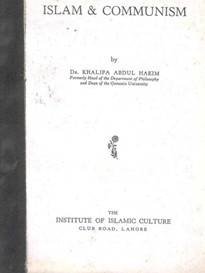
It was after the creation of Pakistan in 1947 that Khalifa began to seriously study Marxism and what it meant to a young ‘third world’ country like Pakistan. In his 1953 book, Islam and Communism, Khalifa saw the fusion of Islam and Socialism as a concept that harnesses the freedom of thought, action and enterprise characteristic of Western democracies by creating opportunities for all. Khalifa was basically explaining the Islam-Socialism fusion to be a kind of spiritual and theistic concept of the modern social democratic welfare state enacted in various Western countries from the 1930s onwards.
In Islam and Communism, Khalifa sees land as being the principal source of economic wealth and thus the moral basis for agrarian reforms in Pakistan.
While much of Khalifa’s discourse remains underspecified regarding the exact degree of state intervention in religious affairs under a syncretic socio-economic model, Parvez offered a more definitive framework. He posited that an Islamic-socialist society, structured upon rationalist exegesis and scientific inquiry, would evolve into a self-regulating, egalitarian, and enlightened body politic. Within such a system, the state is relieved of its traditional role as a moral arbiter.
Parvez’s thesis implies that Islamic-socialist governance fosters a progressive, non-theocratic, if not functionally secular, Muslim-majority state. In this model, the state’s mandate is restricted to the administration of economic welfare and the impartial delivery of justice, while individual citizens are deemed sufficiently enlightened to exercise moral autonomy.

Nevertheless, Parvez also suggested that the state should be utilised to institutionalise ‘modernist’ interpretations of the Qur’an. This to him involves a systematic legislative focus on Quranic verses pertaining to property rights, Zakat, judicial equity, and the socio-legal status of women, thereby aligning sacred text with the requirements of a modern socialised economy.
A Branch of Islamic Modernism
The emergence of Islamic Socialism from the 1930s onwards represents a significant moment in modern history. To understand this phenomenon, one must first identify the primary academic force of ‘Muslim Modernism.’
Beginning in the 19th century, the Islamic Modernist movement, mainly led by intellectuals such as Jamal al-Din al-Afghani, Muhammad Abduh, and Sir Syed Ahmed Khan, sought to reconcile Islam with the rapid technological and military advancement of European colonial powers.
Islamic Modernists advocated for a rationalist approach to faith, asserting that Islam was inherently dynamic and progressive. They argued that the closure of the gates of Ijtihad, or independent reasoning, by traditionalists had led to an intellectual myopia that rendered Muslim societies vulnerable to Western imperialism.
This intellectual environment provided the fertile ground for a socialist turn in the movement, even though most Islamic Modernists looked to adopt modern economic ideas, especially capitalism. The transition from Islamic Modernism to Islamic Socialism within a faction of the modernist movement was driven by the necessity to adjust to the material realities of the post-colonial era, where the promise of political independence required a corresponding programme of economic liberation.
19th century Muslim modernist Jamal al-Din al-Afghani was instrumental in framing the 7th century ‘Islamic state in Medina’ as a structural basis for social regulation. He posited that the early Islamic polity was founded on principles of love, reason, and freedom, designed specifically to prevent the tyranny of concentrated wealth. Afghani argued that the Quranic prohibition of Riba, or usury, and the mandatory institution of Zakat were not merely religious obligations but the foundations of a state-managed welfare system. This narrative allowed later thinkers to frame land reform and nationalisation not as Marxist impositions, but as a return to the ‘authentic’ distributive justice of the state of Medina.
Middle East
Islamic Socialism was not a singular event but a convergence of historical pressures. It emerged primarily because the failure of traditionalism had created a vacuum in Muslim societies that required filling with a modern, yet ‘indigenous,’ identity. During the Cold War (1945-1991), newly independent Muslim-majority nations were wary of both Western liberal capitalism and Soviet communism. Islamic Socialism offered a synthesis: the distributive justice and state-led development inherent in socialist ideas, anchored in the moral and spiritual framework of Islam.
In the Middle Eastern context, the synthesis of Islamic and socialist thought transitioned into a nationalistic and revolutionary framework, a move precipitated largely by the 1948 creation of the State of Israel and the subsequent displacement of the Palestinian population. The primary architect of this regional variant (alternatively articulated as ‘Arab Socialism’ and ‘Ba’athism’) was the Syrian philosopher and Arab nationalist Michel Aflaq.
Despite his Arab Christian heritage, Aflaq’s ideological trajectory moved from an early affiliation with communism toward the development of a radical, pan-Arab nationalist philosophy alongside Salah ad-Din al-Bitar. Their analysis of the Arab world’s socio-economic and political decline led to the advocacy for a unified Arab state. To achieve this, they restructured Arab nationalism by integrating three core pillars:
1: Socialist Economic Theory: To address systemic material inequities.
2: Progressive Cultural Reform: To foster a modern, revitalised social outlook.
3: Revolutionary Exegesis: The invocation of the "revolutionary spirit of the Qur’an” as a moral instrument to combat injustice and social stratification.

Aflaq and Bitar contended that this ideological fusion would catalyse an ‘Arab Renaissance’ (Ba'ath), transforming the region into a formidable, self-determined economic and political power.
The models of Arab Socialism and Ba’athism in Egypt, Syria, and Iraq were fundamentally secular-nationalist. To Egyptian strongman Gamal Abdel Nasser and Syrian ideologue Michel Aflaq, Islam was a cultural heritage, a "revolutionary spirit", rather than a source of legal jurisprudence.
Nasser’s shrewdness in this regard lay in his ability to use the famous Al-Azhar University to issue religious decrees in support of his ‘socialist’ policies. He argued that Islam is the religion of socialism, and that the state’s role was to enforce the God-given right to food, housing, and education. This model was primarily concerned with Pan-Arab unity and utilized the ulema as a subordinated arm of the otherwise secular state.
A central tenet of the Islamic Socialist discourse was the rejection of socialism as a Western import. Instead, ideologues engaged in a historical-theological reconstruction, claiming that egalitarianism was an indigenous Arabian doctrine. This move was essential to bypass the foreignness of Marxist atheism while retaining its distributive power.
The full emergence of Ba’ath Socialism and Arab Socialism coincided with an important era in modern Middle Eastern history, as numerous anti-colonial movements across Iraq, Egypt, Yemen, and Syria adopted the tenets of Arab Socialism from the 1940s onwards. A significant development occurred in 1948 when Gamal Abdel Nasser, then a young colonel, established the clandestine Free Officers Movement in Egypt.
This group was composed of military personnel motivated by the ideological foundations of Arab Socialism. By 1952, the movement successfully executed a coup d'état against the pro-British Egyptian monarchy, subsequently proclaiming Egypt an independent republic.
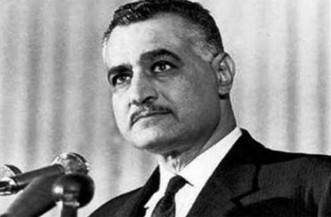
Although the Free Officers Movement initially received backing from the Islamist Muslim Brotherhood, this alliance was short-lived. Following the transition to power, Nasser initiated various policies intended to modernise Egyptian society and the national economy. His assertion that Islamic practice should remain a private matter led to a definitive rupture with the Brotherhood. After an unsuccessful assassination attempt on Nasser in 1954, the regime responded with a severe crackdown against the Brotherhood.
The Egyptian model inspired similar military-led transitions elsewhere in the region. In 1958, a group of young Iraqi officers overthrew their country's monarchy. While Iraq was declared a republic, a formal Arab Socialist Party like Nasser’s in Egypt was not established. This changed following a counter-coup in 1963, which saw the formation of the Iraqi Ba’ath Socialist Party.
Despite a period of political instability and a temporary removal from power in 1966, the Ba’athists regained control in 1968. Under this administration, Ba’athism became the central state ideology, maintaining its dominance until the fall of Saddam Hussein’s government in 2003, even though by then Iraq’s Ba’ath Socialism had been neutralised and watered down.
Syria experienced significant political volatility following its independence in 1949, characterised by a series of coups and counter-coups frequently orchestrated by different factions of the Syrian Ba’ath Socialist Party. In 1956, Syria became one of the first Arab states to align with the Soviet Union, a geopolitical shift that Egypt soon mirrored through various bilateral agreements.
In an effort to achieve the Ba’athist ideal of a unified Arab nation, Syria and Egypt merged in 1958 to form the United Arab Republic. However, the union proved problematic due to Syrian perceptions that Nasser was marginalising their interests, leading to its dissolution following a Syrian coup in 1961.

Syrian political life remained dominated by internal conflicts between radical and moderate Ba’athist factions until 1970, when General Hafez al-Assad assumed control of the state and party. As a member of the Alawite community, Assad established a period of prolonged stability, governing Syria as a central authority until his death in 2000. Under his leadership, the Ba’athist regime in Syria became one of the most stable yet ideologically radical administrations in the Arab world.
The geopolitical terrain of Yemen during the mid-20th century was defined by a multifaceted conflict involving a civil war between Egyptian-backed nationalists and Saudi-supported monarchists, alongside an anti-colonial struggle against colonial British forces.
The nationalist movement was primarily led by two organisations: the National Liberation Front (NLF) and the Front for the Liberation of Occupied South Yemen (FLOSY). Both entities were ideologically grounded in Arab Socialism and featured prominent Marxist leadership. As the conflict intensified and extended into the southern territories of Yemen, sectarian and political friction led the NLF and FLOSY to engage in internecine warfare, despite their shared ideological commitment to Arab Socialism.
By 1967, these nationalist forces had successfully defeated the monarchist elements and compelled the withdrawal of British troops from the south. Subsequently, the NLF consolidated its authority by suppressing FLOSY and established an independent republic. In 1970, the territory was reconstituted as the People's Democratic Republic of Yemen (PDRY), with the Yemeni Socialist Party serving as the sole governing body.
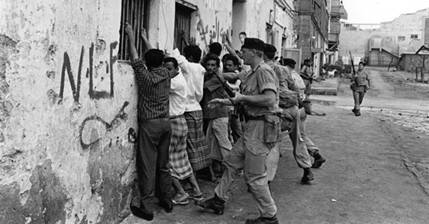
This administration immediately sought to align itself with the Soviet-backed ‘Eastern Bloc,’ formalising various military, cultural, and economic agreements with the Soviet Union, China, and Cuba. North Yemen remained under the influence of forces sustained by financial and strategic support from Saudi Arabia and the United States.
In Libya, the political transition followed a trajectory inspired by the Egyptian model. In 1969, Colonel Muammar Gaddafi, an ardent proponent of Arab Socialism and an admirer of Gamal Abdel Nasser, led a coup that overthrew the Libyan monarchy. To institutionalise his vision, Gaddafi established the Arab Socialist Party in 1971 as the nation's singular legal political party. His government introduced radical socialist reforms and entered into significant strategic pacts with the Soviet Union.
While Gaddafi maintained a staunch opposition to Western-aligned Arab monarchies and fostered close ties with the Soviet Union, the Libyan regime adopted a distinctive ideological posture. Unlike other Arab Socialist administrations, Gaddafi sought to synthesise his policies with a specific interpretation of Islam.

This involved a dual approach: while suppressing Islamist political opposition, the state simultaneously implemented certain strict social measures. The regime conducted purges of Marxist elements as well. In 1976, Gaddafi articulated his ideological synthesis in the Green Book, which became a mandatory component of the national educational curriculum.
Africa
Following the emergence of Arab and Ba'athist socialist ideologies in Egypt, Syria, Iraq, and Libya, similar frameworks were adopted by other Muslim-majority nations in Africa as well, most notably Sudan, Somalia, and Algeria. In Algeria, the nationalist struggle against French colonial rule, which intensified during the 1950s, saw the nationalist outfit Organisation Spéciale move towards the liberation philosophy characteristic of Arab socialism.
In 1954, this organisation merged with various left-wing nationalist and guerrilla groups to establish the Front de Libération Nationale (FLN). The subsequent war of independence between 1954 and 1962 resulted in significant casualties for both the Algerian and French populations. Upon the French withdrawal in 1962, the FLN assumed power as the primary ruling party.
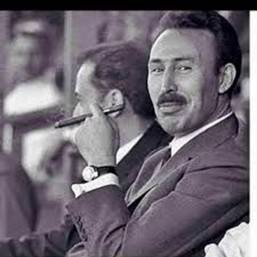
Leadership tensions soon developed between the radical Ahmed Ben Bella and the more moderate Houari Boumédiène. This culminated in a 1965 military coup led by Boumédiène, who established a one-party state, initiated socialist economic reforms, and suppressed Islamist groups. Although Boumédiène shared the anti-imperialist rhetoric of his contemporaries in Iraq and Egypt, he maintained a more nuanced relationship with the Soviet Union while remaining a vocal critic of pro-Western Arab monarchies, Zionism, and capitalism.
Sudan experienced a similar transition following its independence from Britain in 1956. After a period of parliamentary instability and a coup in 1958, Gaafar Nimeiry seized power in 1969 through a military coup inspired by Gamal Abdel Nasser’s Free Officers Movement. Nimeiry introduced a programme of independent ‘Sudanese socialism,’ incorporating communists into his first cabinet to implement statist economic policies.
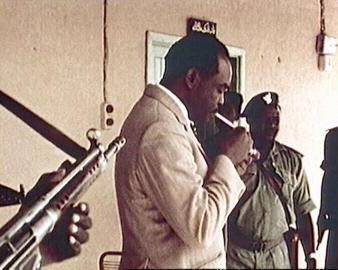
His administration sought to secularise public life by restricting the political influence of mosques and advocating for Islam as a private matter of faith. However, his secularist and socialist orientation provoked armed resistance from the Ansar, a coalition of Islamist groups. Following the suppression of this insurgency in 1971, Nimeiry established the Sudan Socialist Union as the sole legal political entity, defining the state as a socialist democracy where religion remained separate from governance.
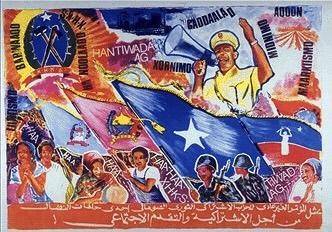
In Somalia, the military under Major General Mohamed Siad Barre took control in 1969, almost a decade after the country gained independence in 1960. Barre’s administration implemented ‘scientific socialism,’ which combined Marxist economic principles with an egalitarian interpretation of Islam. His government nationalised major industries, launched successful literacy campaigns, and aligned closely with other Arab socialist states and the Soviet Union. Like his counterparts in Sudan and Algeria, Barre actively discouraged the politicisation of religion and brought religious institutions under state supervision.
Asia
The evolution of Islamic socialism in Iran followed a distinct route. During the early 1950s, the National Front, led by Mohammad Mossadegh, represented a democratic and nationalist movement that included several Islamic socialist elements. Although Mossadegh, as an elected prime minister, succeeded in nationalising the country’s oil industry and briefly ousting the Shah of Iran, his government was toppled in 1953 by a coup supported by British and American intelligence agencies. They were aided by factions within the Iranian military, and the Islamist clergy. In the vacuum that followed, more radical interpretations of Islamic Socialism emerged, most notably through the Mujahideen-e-Khalq, founded in 1965.
The ideological foundation of the Mujahideen-e-Khalq was heavily influenced by the sociologist Ali Shariati, who synthesised Marxist theory with traditional Shia Muslim imagery. Shariati’s revolutionary discourse appealed to the intelligentsia by critiquing the monarchy, the traditional clergy, and orthodox communism simultaneously.
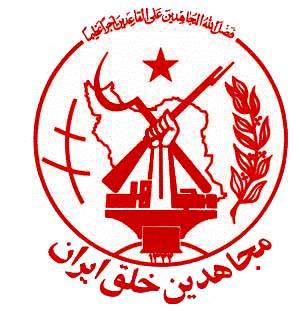
Although Shariati died in exile in 1977, his ideas fueled the Mujahideen-e-Khalq’s guerrilla campaign against the Shah. While the Khalq provided critical armed support to Ayatollah Khomeini during the violent upheavals against the Shah in 1978, a violent schism occurred shortly thereafter.
The Mujahideen-e-Khalq denounced the newly established post-Shah theocracy as autocratic, leading to a bloody civil conflict. In 1988, the Islamist regime carried out mass executions of Khalq members and other leftists.
According to Shariati, in the South Asian context, the South Asian thinker Muhammad Iqbal had provided the philosophical bridge between German idealism and Islamic thought. While Iqbal held a profound admiration for the 1917 Bolshevik Revolution in Russia, he critiqued the Marxist conception of religion as false consciousness.
To Iqbal, the academic force of spiritualism was essential. He famously suggested that if Karl Marx were alive today, he would find in the Qur’an the perfect synthesis of his materialist goals and the spiritual needs of humanity. Iqbal argued that socialism without a theistic dimension would inevitably devolve into a new form of tyranny. He believed the Quranic mandates were functionally identical to modern socialist ideals.
In the early 1960s, under the secular, pro-United States military administration of Ayub Khan in Pakistan, a collective of intellectuals led by the polymath Hanif Ramay emerged in Lahore. This group sought to refine the Islamic Socialist discourses established by Ghulam Ahmed Pervez and Dr Khalifa Abdul Hakim, while simultaneously integrating elements of Arab and Ba'ath Socialism adapted for a non-Arab Pakistani context.
A primary vehicle for these ideas was the monthly Urdu literary magazine Nusrat, which juxtaposed traditional literary critique and poetry with the ideological treatises of Pervez, Khalifa, and Aflaq.
Following the indecisive conclusion of the 1965 Indo-Pakistan War, Zulfikar Ali Bhutto was dismissed from his position as Foreign Minister due to his increasing political dissent against the Ayub regime. Bhutto subsequently allied with J.A. Rahim, a veteran Marxist ideologue and retired bureaucrat.
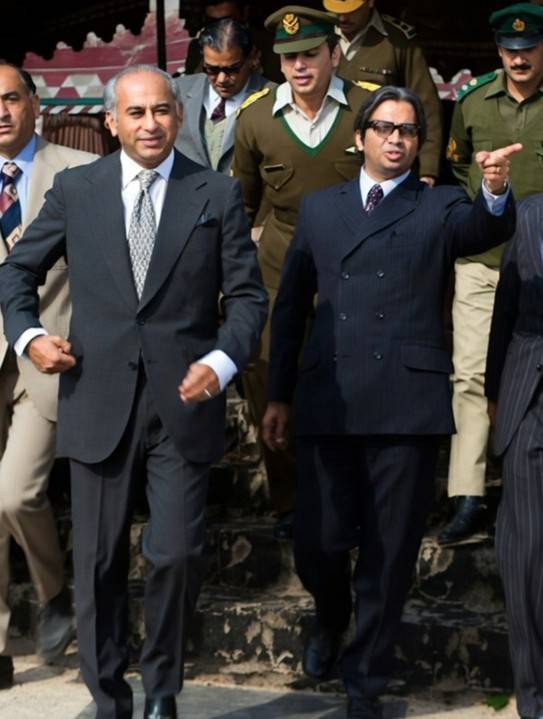
Both established a populist, left-leaning political vehicle to challenge the incumbent dictatorship. By 1966, Bhutto engaged with Hanif Ramay, whose group provided the intellectual framework for what would become the Pakistan Peoples Party (PPP) in 1967. Although the party attracted a diverse coalition of Marxists, trade unionists, and progressive students, it was Ramay’s Islamic Socialist faction that dictated the ideological direction of the party’s foundation.
Through a series of seminal articles in Nusrat, Ramay and and another intellectual Safdar Mir articulated the core tenets of the PPP’s platform, which included:
- The abolition of feudalism and the landed aristocracy.
- The regulation of capitalism through state monitoring, to ensure equitable opportunity.
- The nationalisation of critical infrastructure, including major financial institutions, industries, and educational bodies.
- The promotion of worker participation in factory management.
- The institutionalisation of democracy within the state apparatus.
This programme was framed as a 20th century manifestation of the egalitarianism and social justice supposedly ‘inherent’ in the foundational governance of 7th century Makkah and Medina. The PPP argued that these socialist principles were deeply rooted in the Quranic tradition. The party denounced the religious clergy and conservative forces, categorising them as agents of ‘imperialist capitalism,’ feudal interests, and social stagnation.
Despite a concerted effort by the right-wing Jamaat-e-Islami to secure fatwas from over one hundred ulema declaring the PPP’s ideology "atheistic," the party achieved a decisive victory in West Pakistan during the 1970 general elections. Following the secession of East Pakistan in 1971, the PPP assumed power, with Ramay recognised as a principal theorist of modern Pakistani Islamic Socialism.
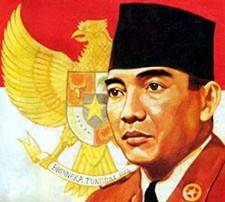
In Indonesia, the philosopher Tan Malaka pioneered the link between Pan-Islamism and Communism. He argued that the Islamic concept of ummah was the ultimate expression of internationalist solidarity. In 1922, Malaka insisted that for the Muslim world, the struggle against European capitalism was a religious duty. This liberation theology anticipated the South American movements of the 1960s, providing a religious justification for revolutionary action against colonial powers.
During the Indonesian struggle for independence from Dutch colonial authority, a movement primarily spearheaded by Kusno Sosrodihardjo (Sukarno), Tan Malaka contended that Communism and Islam were fundamentally compatible. He posited that a successful Indonesian revolution must be predicated upon a synthesis of these two ideologies. Malaka identified Islam as a potent force for the unification of the proletariat.
Following Malaka's death in 1949, the year Indonesia formalised its sovereignty, the nation's inaugural president, Sukarno, integrated significant elements of Malaka’s intellectual framework into his governance. This was evidenced by his extension of political patronage to both the Communist Party of Indonesia (PKI) and the Islamic Socialists. Sukarno maintained his leadership over the Indonesian state until 1967.
Afghanistan represents the final significant manifestation of Islamic Socialism. In 1978, the People’s Democratic Party of Afghanistan (PDPA), supported by sympathetic elements within the national military, overthrew the nationalist administration of Muhammad Daoud Khan. This transition of power was designated the ‘Saur Revolution,’ or the ‘Spring Revolution’ (derived from the Dari term for the season).
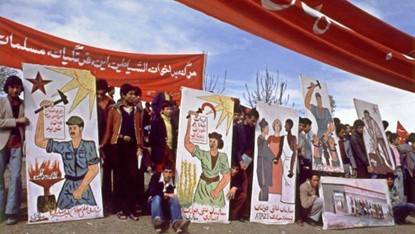
As an overtly Marxist organisation, the PDP immediately initiated a series of radical social and economic reforms. However, these policies encountered substantial opposition from the Afghan clergy and the rural landed elites. Consequently, the Soviet Union, acting as a primary ally, advised the PDP leadership to moderate the pace of its Marxist agenda.
In response, the PDP began to temper its revolutionary fervour, adopting the political rhetoric characteristic of contemporary Islamic Socialist movements. Official discourse shifted to emphasize the perceived ideological parallels between Marxist economic frameworks and Islamic principles. Despite these adjustments, intense internal factionalism within the PDP prompted the Soviet intervention in December 1979, resulting in the installation of a more moderate administration under the leadership of Babrak Karmal.
Demise
The emergence of various movements, coups, and revolutions linked to diverse iterations of Islamic Socialism across Asia, Africa, and the Middle East elicited profound apprehension from both Arab monarchies and the United States. Furthermore, the economic strategies implemented by regimes attempting to synthesise socialist principles with Islamic tenets largely failed to realise the promised fiscal equilibrium.
An early manifestation of these political dynamics occurred in Indonesia following its independence from the Netherlands in 1949. Under the leadership of Kusno Sukarno, the state transitioned toward a "guided democracy" dominated by the Indonesian National Party (PNI) and the Communist Party of Indonesia (PKI).
Sukarno articulated a national ideology predicated on a "threefold blend" of nationalism, Islam, and communism. However, his attempts to manifest this vision within the socio-economic sphere met with significant resistance from Islamist organisations and military factions favouring closer ties with Western powers.
By 1960, Indonesia’s economic stability began to deteriorate, leading to increased disillusionment among Sukarno’s communist allies regarding the pace of reform. In 1965, the PKI mobilised sympathetic military elements in a coup attempt against Sukarno, which was subsequently suppressed by pro-Western military factions.
This failure precipitated a violent purge of communists and their sympathisers, resulting in the deaths of approximately 500,000 individuals, primarily at the hands of the military, and the Islamist groups utilised by the military to eliminate leftist influence.
Major General Suharto eventually deposed Sukarno in 1967, realigning Indonesia with the United States and outlawing the PKI. Despite having utilised Islamist organisations to crush the communist uprising, Suharto eventually restricted these groups to consolidate his authority.
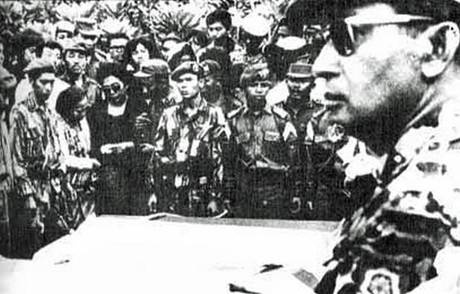
A secondary setback for the prospects of Islamic Socialism transpired in Egypt. Following the 1952 Free Officers Coup, Nasser implemented extensive reforms and positioned his regime as a secular alternative to Western-aligned Arab monarchies.
While Nasser remained popular until his death in 1970, the decisive military defeat of Egyptian forces by Israel in 1967 severely diminished his stature. His successor, Anwar Sadat, initially maintained Nasser’s political and economic commitments but had to force a change following the economic devastation of the 1973 Egypt-Israel war.

By accepting substantial aid from Saudi Arabia, Sadat restored relations with the Saudi monarchy and, at their behest, rehabilitated the Muslim Brotherhood. In 1974, he withdrew Egypt from the Soviet sphere and, by 1977, rebranded the Arab Socialist Party as the National Democratic Party, effectively purging the remnants of Arab Socialism.
Although Sadat utilised Islamist support to suppress leftist dissent, his subsequent diplomatic rapprochement with Israel led to his assassination by a militant Islamist faction in 1981. Egypt’s post-socialist trajectory was sustained by Hosni Mubarak for three decades until the 2011 Arab Spring.
Similar ideological retreats occurred in Pakistan under Zulfikar Ali Bhutto, whose Pakistan Peoples Party was elected in 1970 on a platform of Islamic Socialism. Amidst the global economic volatility following the 1973 Arab-Israel war, Bhutto tempered his socialist rhetoric and sought rapprochement with Gulf monarchies.
To appease right-wing opposition, he purged radical leftists from his party and granted significant constitutional concessions to Islamist outfits. Despite these efforts to neutralise opposition, a reactionary military coup led by General Zia-ul-Haq toppled his regime in 1977, resulting in Bhutto’s eventual execution in 1979.
In Algeria, the socialist model persisted until the death of Houari Boumédienne in 1978, after which Chadli Bendjedid began reversing socialist reforms and seeking Western alignment. However, these market-oriented shifts failed to resolve economic instability, and the subsequent rise of Islamist political power triggered a military intervention in 1991. This precipitated a brutal decade-long civil war between the military and Islamist insurgents that was only subdued in 2002.
In Somalia, the socialist regime that took power in 1969 initially achieved stability and improved literacy rates. However, a 1977 territorial dispute with Ethiopia forced the Soviet Union to choose between two allies. When the Soviets supported Ethiopia, President Siad Barre severed ties and sought American assistance.
By 1980, Barre had abandoned the Somali Revolutionary Socialist Party and reversed his reforms. But the subsequent corruption and authoritarianism led to state collapse and protracted anarchy following his 1991 ousting.
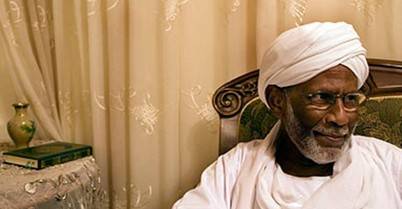
became part of the regime when Nimeiry broke off ties with the Soviet Union and imposed a number of
‘Islamic laws’ devised by Turabi himself
Sudan followed a comparable pattern under Gaafar Nimeiry, who abandoned Islamic Socialism and Soviet alignment after the 1977 Ethiopia crisis. Facing internal pressure from the Ansar movement, Nimeiry implemented strict ‘Islamic laws’ in 1981 but was ultimately deposed in 1985.
These individual state failures mirrored a broader global retreat. By the late 1980s, the decline of the Soviet Union saw the dissolution of the socialist administration in South Yemen and the collapse of the People's Democratic Party in Afghanistan. By the early 21st century, the Ba'athist regime in Iraq and Muammar Gaddafi’s government in Libya had also fallen, marking the definitive end of the Islamic Socialist experiment.
The Dialectics of Decline
Despite its mid-20th-century dominance, the Islamic Socialist project contained the seeds of its own destruction. The decline can be attributed to several destabilising forces. Most Islamic Socialist regimes were inherently authoritarian, relying heavily on military apparatuses to suppress dissent. This created a profound disconnect between the liberationist rhetoric and the reality of state repression.
In a bid to maintain power, many socialist leaders made the fatal error of suppressing leftists while temporarily empowering Islamist groups. In Egypt, the suppression of the Left created a vacuum that the Muslim Brotherhood was perfectly positioned to fill.
The geopolitical alignment with the Soviet Union also proved fatal. When the Soviet Union began to falter, regimes in South Yemen, Afghanistan, and Somalia lost their primary source of aid and ideological validation. The defeat of the Arab armies in the 1967 war against Israel was a significant symbolic blow. The defeat was framed by Islamist groups as ‘divine punishment’ for the secular socialist path that the Muslim regimes had taken.
Yet, the collapse of Islamic Socialist regimes in the late 1970s and 1980s did not result in the total erasure of their influence. Instead, their legacy morphed into several contemporary realities.
One of the most significant influences is the ‘Social Welfare Blueprint.’ Many modern Muslim-majority states continue to operate on the administrative foundations laid by socialist regimes. The emphasis on state-led literacy programs, nationalised healthcare, and the social contract where the state is the primary provider remains a dominant expectation in many Muslim societies. The idea that a government’s religious legitimacy is tied to its ability to provide for the poor is a direct inheritance from the socialist era.
However, on the other hand, the Islamic Socialist movements created a paradoxical revitalisation of Islamism. As mentioned, in their efforts to maintain power during their individual crisis years, Islamic socialist leaders often suppressed leftist rivals while co-opting Islamist groups. This unwittingly provided the infrastructure for Islamist movements.
When the socialist economic projects failed, mainly due to mismanagement, the "Islamic" part of the synthesis remained, while the "Socialism" part was discarded. This allowed Islamist groups to present “pure” Islamic alternatives that utilised the same populist mobilising techniques developed by the socialists.
A Paradoxical Legacy
The dissolution of the Islamic Socialist project was not merely a casualty of the Cold War’s end, but the result of a structural inability to resolve the tension between revolutionary aspirations and institutional reality.
By the 1980s, the Islamic Socialist models had started to fracture under the weight of economic stagnation, bureaucratic corruption, and the strategic manoeuvres of regimes in times of economic crisis. They began looking towards the financial capitals of the Gulf monarchies.
Ironically this manoeuvre and shift ended up serving as the foundational terrain upon which contemporary Islamism was built. The remaining legacy of Islamic Socialism lies in its role as an uncanny precursor to the politicisation of faith.
By nationalising religious institutions and utilizing the ulema to legitimize state-led economic reforms, Islamic socialist regimes inadvertently created the infrastructure for political Islam. When the secular-socialist dream collapsed, the mobilised masses did not return to traditionalist passivity. Instead, they leaned on the "Islam is the Answer" platform of the Islamist groups and movements. These adopted the socialist emphasis on social justice and anti-imperialism but replaced the Marxist class dialectic with a puritanical moral one.
In this sense, contemporary Islamism is the distorted mirror image of the Islamic Socialism that preceded it.
The contemporary Muslim world continues to grapple with the statist economic legacies of the Islamic socialist period. In countries that had adopted multiple variants of Islamic Socialism, the massive public sectors and subsidies established under the socialist banner remain central to the "social contract," even as these states transition toward neoliberalism.
The failure of these regimes to achieve "fiscal equilibrium" led to a massive wealth gap that remains a primary driver of modern unrest. For instance, in the Middle East and North Africa region, the top 10% of earners currently capture approximately 58% of the national income, while the bottom 50% receive just 9%. This persistent inequality serves as a haunting reminder of the unfulfilled promises of the socialist era.
The tragic synthesis in Afghanistan and the subsequent Soviet collapse also fundamentally altered the demographic and ideological makeup of the region. The conflict in Afghanistan alone resulted in an estimated 1.5 million deaths and the displacement of 6 million refugees, creating a vacuum filled by militant extremism.
Today, while "Islamic Socialism" as a formal state label is largely extinct and surviving only in fragmented rhetoric, its core inquiry remains relevant. The quest to reconcile modern economic justice with cultural authenticity continues to animate political discourse, even if the "Green Book" and "Guided Democracy" have been replaced by the complex, often volatile, interplay of global capitalism and religious fundamentalism.