

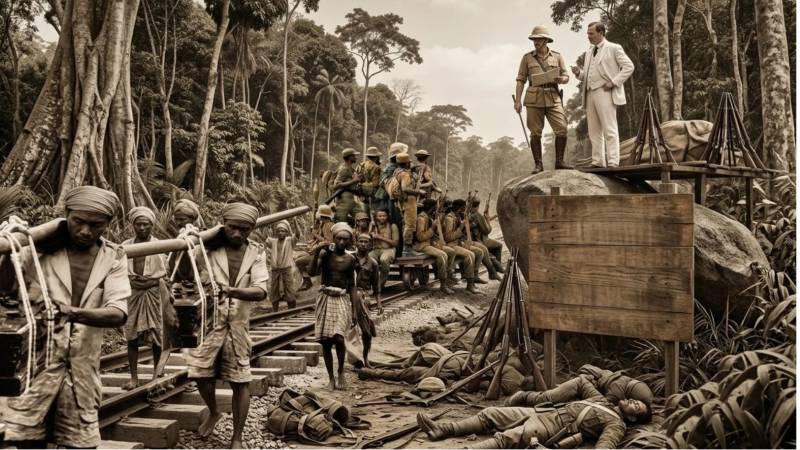
When history books recount the tragedies of South and Central Asia,the diagnosis almost always focuses on domestic shortcomings. We hear of tribal stubbornness, institutional corruption, military overreach, and deep-seated religious extremism. Yet this framing conveniently obscures a far darker, recurring pattern: for over a century, Western powers have systematically sabotaged indigenous, liberal, and modernizing movements in the region whenever those movements threatened imperial dominance.
Despite rhetoric praising liberal progress, Western empires—principally the British in the nineteenth and early twentieth centuries, and later the United States repeatedly fostered and mobilized religious conservatism as a counterweight to check Russian expansionism and contain the threat of communism. The modern crisis of the region is not merely an internal failure; it is the legacy of a geopolitical playbook that intentionally weaponized religious traditionalism to crush sovereign ambition and ideological non-alignment—a playbook whose destructive ripples still define the political economy of Afghanistan, Pakistan, and India today.
The clearest origin of this strategy lies in 1920s Kabul. Following the Third Anglo-Afghan War in 1919, King Amanullah Khan secured complete independence from British control over Afghan foreign policy. He and Queen Soraya immediately launched a rigorous, indigenous modernization campaign. In April 1923, Afghanistan's first written constitution (Nizamnama-i-Asasi) was enacted, establishing civil rights, formally abolishing slavery, introducing secular judicial updates, and curtailing the legal monopoly of tribal customs. Queen Soraya Tarzi, a trailblazing feminist, established the country's first girls' school, co-founded the first women's journal (Ershad-e-Niswan) in 1921, and publicly discarded her veil to advocate against compulsory covering. To bolster sovereignty against British pressure, Amanullah's monarchy was also the first international government to recognize the Bolshevik regime, signing a Treaty of Friendship in 1921.
Imperial intervention broke organic economic growth, imposed artificial borders, and repeatedly sabotaged indigenous liberal movements by aligning with fundamentalist reactionaries.
To the British Foreign Office, a sovereign, modernizing, and Soviet-aligned state on the doorstep of British India was unacceptable. Unable to launch a direct military invasion, Britain turned to clandestine destabilization. Exploiting the friction caused by rapid top-down reforms in rural areas, British agents distributed thousands of photographs across border regions depicting Queen Soraya in European dress without a veil. These images were funneled to conservative tribal elders and clerics to brand the royal family as apostates destroying Islamic tradition. By covertly funding anti-government clerics, encouraging religious fatwas, and permitting insurgents and weapons to move across the Durand Line, British policy successfully weaponized traditionalism.
Crucially, this strategy relied on eager local accomplices: conservative tribal elites and clerical networks willing to leverage religious outrage to preserve their own entrenched privileges. When their resulting uprising forced Amanullah to abdicate in 1929, Britain achieved its goal of dismantling an independent, liberal Afghan monarchy establishing a grim template where foreign strategy and local opportunism joined forces to derail national modernization.
This tactic became the master template for Western intervention during the Cold War. Five decades later, when the secular PDPA government in Kabul attempted to enforce social reforms including female literacy and land redistribution, albeit through authoritarian methods—the United States launched Operation Cyclone. Working alongside Saudi Arabia and Pakistan, Western intelligence channeled billions of dollars in high-tech arms and radicalized religious propaganda to fundamentalist Mujahideen factions. Once again, Western powers set aside professed commitments to liberal democratic values to empower extreme religious elements against a government befriended with Moscow. Ironically, after 2001, the presence of these very fundamentalist elements was cited by Western observers as proof that Afghan society was inherently resistant to modern human rights.
The consequences of this interventionist legacy extend far beyond. The broader economic and political framework inherited by South Asia was designed for resource extraction and strategic control. Imperial economic policies systematically deindustrialized the subcontinent, transforming it from a manufacturing hub into a captive market. When imperial authority withdrew in 1947, the hasty, arbitrary boundary lines of Partition displaced millions, catalyzed horrific communal violence, and left permanent geopolitical flashpoint like Kashmir and the Durand Line that continue to drain regional resources into defense budgets today.
Post-colonial domestic elites bear heavy responsibility for the region’s ongoing instability. In India, while democratic institutions prevented state breakdown, economic mismanagement and rising religious nationalism continue to fracture social cohesion. In Pakistan, post-independence leaders built a security state dominated by the military, relying on foreign aid and proxy militant groups to project power—starving public education, healthcare, and infrastructure. In Afghanistan, central governments repeatedly operated as rentier states reliant on foreign subsidies, creating enclave rule in Kabul that collapsed whenever foreign funding ceased.
Yet we cannot evaluate the choices of regional actors without acknowledging the shattered foundation upon which they were forced to build. Imperial intervention broke organic economic growth, imposed artificial borders, and repeatedly sabotaged indigenous liberal movements by aligning with fundamentalist reactionaries. Foreign empires provided the fractured blueprint, but the strategic miscalculations, institutional neglect, and opportunism of regional elites ensured that this destructive legacy endured into the twenty-first century. Until South and Central Asia fully confront both the external imperial playbook and the internal political failures that enabled it, true regional stability will remain out of reach.