

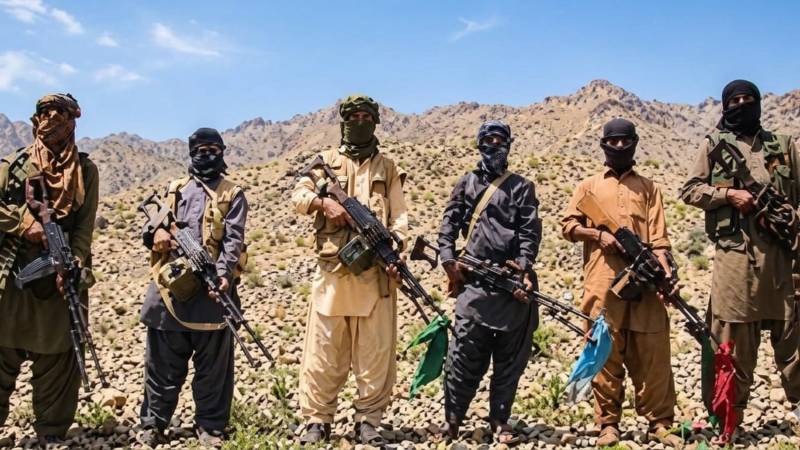
Balochistan holds the key to Pakistan's economic future. Its gas fields, copper reserves, and gold deposits, paired with a coastline that anchors the China-Pakistan Economic Corridor, make it one of the most strategically valuable provinces in the country. For decades, that same potential has made it a target, not for investment from hostile quarters, but for sabotage. At the center of that sabotage sits the Balochistan Liberation Army, a group that has spent twenty years dressing up terrorism in the language of liberation.
The organization traces its origins to the Marri tribe and was revived in the early 2000s under Balaj Marri, who launched a campaign of bombings against Pakistani security installations. Momentum built further after 2006, when security forces eliminated Nawab Akbar Bugti during a counter-insurgency operation. Following this, Islamabad formally banned BLA that same year on April 7. The United Kingdom proscribed the group within months, and China, Iran, the United States, and the European Union each arrived at the same verdict in the years that followed.
The BLA's internal politics only made it more dangerous. A leadership split in 2017 and 2018 saw commanders Aslam Baloch, known as Achu, and Bashir Zaib break away to build a smaller, more disciplined outfit. Pakistani intelligence tracked Aslam Baloch to his death in 2018 in Kandahar, after which Bashir Zaib took full command. What emerged under his leadership was not a resistance movement but a machine, built around specialized units for suicide bombing, kidnapping, and intelligence gathering, all pointed at the soldiers and civilians of Pakistan.
BLA describes itself as a liberation movement, and much of the international press has been content to repeat that framing without scrutiny. The group's own conduct tells a different story. Hijacking passenger trains, executing hostages, and sending women wired with explosives into crowded public spaces are not the tools of a political movement seeking dialogue. They are the tools of an organization that has chosen terror as a strategy, and increasingly, evidence points to it being someone else's strategy as much as its own.
Pakistani officials have argued for years that India's hand lies behind the BLA's growth, and in 2016 that argument gained hard evidence when Kulbhushan Jadhav, a serving Indian naval officer, was captured deep inside Balochistan. In a recorded confession, Jadhav described how India's Research and Analysis Wing (RAW) funded and directed Baloch militants as part of a broader effort to destabilize Pakistan and undermine the China-Pakistan Economic Corridor. New Delhi dismissed the confession as coerced, but the pattern of attacks in the years since has tracked closely with what Jadhav described, lending Islamabad's case a weight that is difficult to dismiss.
Whatever the precise nature of that outside backing, BLA's own architecture reveals an organization structured for prolonged conflict rather than protest. The Majeed Brigade, formed around 2010, carries out suicide bombings and has drawn notoriety for using female attackers. The Fateh Squad opens the way for these operations, the Special Tactical Operations Squad handles kidnappings and targeted killings, and a dedicated intelligence wing known as Zirab feeds the network ahead of each strike.
Hijacking passenger trains, executing hostages, and sending women wired with explosives into crowded public spaces are not the tools of a political movement seeking dialogue.
The toll of this campaign has fallen heavily on ordinary people and on the soldiers tasked with protecting them. In 2009, BLA fighters kidnapped nineteen policemen near Sui and killed eighteen. In June 2020, gunmen tried to storm the Pakistan Stock Exchange in Karachi, an assault that security forces ended within minutes, eliminating all four attackers before real damage could be done. August 2024 brought a coordinated series of attacks known as operation Herof across the province, each answered by a swift response from Pakistan's security forces. That October, a bombing outside Karachi airport killed two Chinese nationals working on joint development projects, a clear attempt to strike at Pakistan's partnerships as much as at its people. In November, a suicide bomber struck Quetta's railway station, killing at least 23 people, most of them soldiers.
The clearest illustration of the group's ambitions came in March 2025, when BLA militants hijacked the Jaffar Express as it passed through the Bolan Pass carrying hundreds of civilians. What followed was a rescue operation that reflected the discipline Pakistan's armed forces have built through decades of counter-insurgency experience, one that ended with all 33 attackers neutralized and the vast majority of hostages freed, even though more than 20 passengers had already been martyred before the siege was broken. It was a brutal reminder of what the BLA is capable of, and an equally clear demonstration of the professionalism of the men who confront it in some of the country's most difficult terrain.
Taken together, the record leaves little space for the BLA's preferred self-image. This is a group that kidnaps, bombs, and assassinates its way through one of Pakistan's most important provinces, sustained in part by outside actors who stand to gain from a weaker and more divided Pakistan. The state's approach, measured where circumstances allow and forceful where they demand it, reflects a government and a military working to protect their citizens, not the occupying presence that hostile narratives so often invoke.
Pakistan continues to invest in Balochistan's development even as its forces work to defend that progress from those determined to destroy it. 6 major governments have already reached the right conclusion by designating the BLA a terrorist organization. What comes next matters just as much: turning that recognition into sustained pressure on the networks and sponsors keeping the group alive. Until that happens, it will remain Pakistan's soldiers standing between the people of Balochistan and the violence carried out in their name.