

Years ago, as the shadows of militancy were expanding across the valleys of Swat, I was writing weekly articles for Daily Azadi Swat, which was then the second largest newspaper in Khyber Pakhtunkhwa after Daily Mashriq. Working under our editor, Comrade Amjad Ali Sahaab, and engaging with journalist friends like Ihsan Ali Khan, gave me a raw and unfiltered perspective on conflict. Immersing myself in front-line literature, including Fazal Rabbi Rahi’s poignant account Aur Swat Jal Raha Tha (And Swat Was Burning), alongside the reporting of journalists like Fayyaz sahib, completely dismantled the sanitized narratives being broadcast from mainstream studios in Islamabad.
At the time, independent foreign outlets like Voice of America (VOA), along with Comrade Amjad sahaab’s critical editorial stance, directly challenged the official state narrative. It was an era of extreme gravity. The assassination attempt on Malala Yousafzai and the resilient stance of her father, Ziauddin Yousafzai, became central to the discourse. Observing the complex public perspective versus militant ideology, especially after Ziauddin Yousafzai and his family were forced to relocate and live in exile in the UK, revealed the deeply layered human stories that mainstream media often ignored or oversimplified.
Before seeing the conflict on the ground, the 'War on Terror' felt like a distant debate between state narratives and anti-state rhetoric. But witnessing the crisis through the eyes of local reporters stripped away that abstraction. War is never merely about troop deployments, airstrikes, or tactical maps. It is fundamentally defined by human values, shattered lives, and the dignity of Internally Displaced Persons (IDPs) living in bleak relief camps. For a journalist, keeping human values at the center of analysis reveals a clear truth: the real narrative of war exists far beyond military briefings and official press releases.
Pakistan has lived through this harrowing cycle before. We endured a violent decade during the mid-2000s and 2010s under General Retd. Pervez Musharraf and the PPP-led government under Asif Ali Zardari. That era was marked by high-profile assassinations, most notably former Prime Minister Benazir Bhutto, endless suicide bombings, targeted attacks on leadership, and the irreparable national tragedy of the Army Public School (APS) massacre in Peshawar in 2014. Subsequent large-scale military operations across Swat and the former FATA agencies eventually brought a hard-won wave of relative peace.
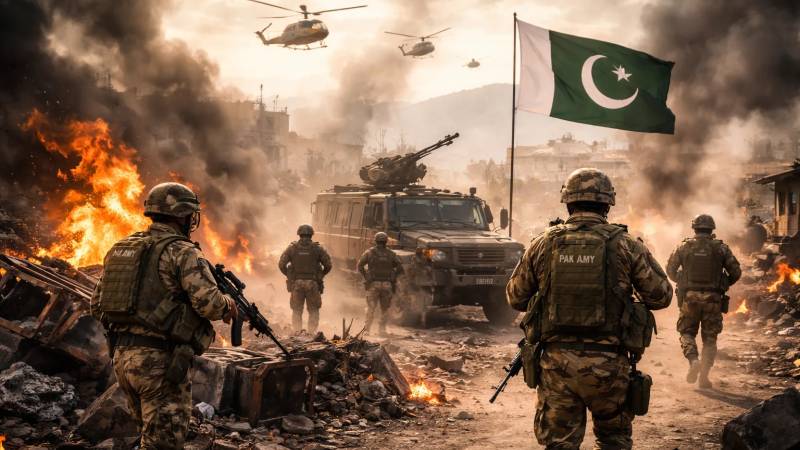
Today, however, Pakistan stands on the edge of a far more complex security crisis. With provincial authorities enforcing emergency measures across Khyber Pakhtunkhwa, the state appears resolved to launch another major offensive against resurgent networks like the Tehrik-i-Taliban Pakistan (TTP) and the Baloch Liberation Army (BLA). Over 12 districts in KP have been flagged as highly sensitive. Yet, local journalists and residents report an alarming reality on the ground. Armed elements are no longer restricted to remote border belts; they have quietly integrated into urban peripheries, operating dangerously close to the provincial capital.
War is never merely about troop deployments, airstrikes, or tactical maps. It is fundamentally defined by shattered lives, and the dignity of Internally Displaced Persons (IDPs) living in bleak relief camps. For a journalist, keeping human values at the centre of analysis reveals a clear truth: the real narrative of war exists far beyond military briefings and official press releases.
At the same time, the nature of the threat itself has evolved in alarming ways. In Balochistan, the growing alignment of educated young Baloch youth with the BLA presents a profound socio-political challenge that kinetic force alone cannot solve. Meanwhile in Khyber Pakhtunkhwa, securing public buy-in for a new military operation remains a formidable hurdle. If local tribal jirgas in KP insist that the state should pursue dialogue with the Taliban instead of kinetic action, how will the state convince them otherwise? No war can ever be fought or won without the willing support of its public, and alienating local communities will only undermine the state's mission.
This internal resurgence cannot be viewed separately from recent policy miscalculations. Following the Taliban’s takeover of Kabul, the assumption in Islamabad was that regional dynamics would automatically stabilize. Under the former PTI-led government, a controversial resettlement policy was initiated. While officials claimed that only a few thousand fighters were to be disarmed and integrated, substantial public resources were allocated toward the endeavor. Crucially, questions regarding how these individuals were vetted, monitored, or institutionalized remain entirely unanswered to this day.
While political critics often label the PTI as "pro-Taliban," attributing this policy failure solely to one political party ignores institutional reality. The military establishment of that era was an equal architect of those resettlement decisions. Fast forward to the present: former Prime Minister Imran Khan remains incarcerated, his party stands largely dismantled, and the current political and military leadership holds a unified, hard-line anti-TTP stance. Managing a severe internal counter-insurgency campaign becomes exponentially harder when a state faces diplomatic friction on its foreign borders. For a nation positioned at a geopolitical crossroads, reducing external fronts is not a luxury; it is a strategic necessity to prevent multi-front polarization.
After years of quiet institutional work, foreign policy back-channels and diplomatic tools, ranging from Track 1.5 engagements to behind-the-scenes dialogues, had recently brought Pakistan and India remarkably close to a functional baseline. Yet, maintaining such delicate, hard-won momentum requires immense restraint. When high-level public statements, such as the hard-line tone in official addresses around August 14, are driven by momentary emotion rather than calculated diplomacy, the setback is devastating. Allowing public rhetoric to overtake quietly negotiated ground effectively torpedoed a rare diplomatic opening, squandering years of strategic investment overnight and leaving external fronts tense precisely when internal security demands undivided focus.
This strategic misstep directly exacerbates our domestic vulnerabilities. When external diplomacy fails, the burden inevitably shifts back onto our internal security apparatus, and ultimately, onto our citizens. As Pakistan prepares for another round of counter-terrorism operations, strategic planners must prioritize one principle above all: the human cost of security. For over two decades, Pakistan’s armed forces, front-line police officers, border security personnel, and millions of ordinary citizens, including women, children, elders, and young men, have rendered unimaginable sacrifices and laid down their lives. Having paid such a devastating human price, any new strategic framework must be deeply sensitized to citizen protection. Security cannot be quantified merely by kinetic victories, diplomatic posturing, or political expediency. True national security must be evaluated by how effectively we protect the sacred lives of our people, win over local communities, and prevent another generation of Pakistanis from being consumed by war.