

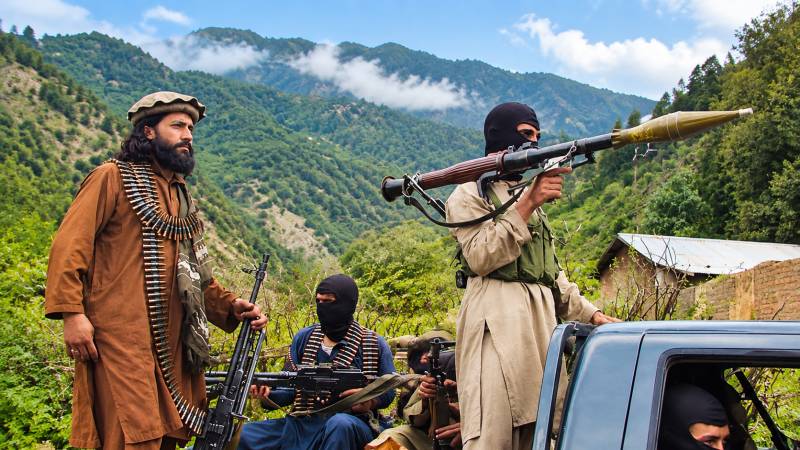
Tribalism, personal feuds, and the code of badal, or blood for blood, are hardly novel phenomena in Pashtun society. Historically, from sociological and political perspectives, these localized manifestations of violence functioned as crude, self-preserving defense mechanisms operating in spaces where the writ of the state was either fragile or altogether absent. In recent years, however, this traditional framework of retribution in Khyber Pakhtunkhwa has taken a sinister, degenerate turn. Private rivalries are no longer governed even by informal tribal boundaries; instead, they have devolved into an unregulated, hyper-violent culture that has paralyzed civic values, eroded traditional moral checks, and hollowed out the rule of law.
For generations, informal dispute-resolution mechanisms, mainly the jirga, the authority of elders (masharan), and communal moral pressure, served to regulate conflicts. While these institutions rarely delivered absolute peace, they imposed clear socio-moral boundaries against unchecked criminality. Today, the decay of these traditional institutions, coupled with the systemic impotence of the state’s formal justice system, has created a dangerous legal vacuum. Within this void, criminal acts are no longer merely tolerated; they are glorified as potent symbols of status, power, and masculinity.
This societal breakdown is exacerbated by the glamorization of crime across digital platforms, particularly TikTok. Classical political philosophy asserts that the primary function of the state is to maintain a legitimate monopoly on the use of violence, transforming systemic fear into the rule of law. When a culture begins to idolize criminals, treating illegal weaponry, coercive influence, and lawlessness as badges of honor, it shatters the foundational social contract between the citizen and the state.
A chilling case study of this systemic rot unfolded recently in Malakand. The arrested suspects in the murder of Advocate Khalid Khan, President of the Dargai Bar Association and a respected community leader, were photographed and filmed while in Malakand Levies custody. Far from appearing subdued, the accused proudly brandished smartphones and recorded TikTok videos while being escorted to a local court. According to local accounts, the suspects routinely used Levies officials’ mobile phones from behind bars to intimidate citizens and issue operational directives to their alleged criminal accomplices. The tragic consequences of this institutional complicity became starkly apparent when 70-year-old Mir Hassan, who was actively pursuing murder cases against the same gang for the killing of his two young sons, was gunned down on his way back from court on July 27.
That suspects under state custody can broadcast their impunity to the world via social media is not merely a technical security lapse; it is a brazen mockery of state authority. It reveals that dangerous suspects may come to view law enforcement not as a deterrent, but as an accommodating partner.
Authentic Pashtun identity was historically anchored in protecting the vulnerable, upholding justice, and resisting oppression not in terrorizing communities or intimidating law-enforcement authorities. The true mark of strength lies not in shedding blood, but in upholding justice.
These are not ordinary criminals. According to local accounts, the Malakand Levies had been reluctant to take action against them, while they were later arrested by the Counter-Terrorism Department (CTD). The incident exposes deeply troubling structural contradictions. While specialized units like the Counter-Terrorism Department (CTD) expend resources to apprehend high-profile offenders, local custodians of law enforcement provide these same detainees with illicit luxuries that reinforce their influence.
When prisons and detention centers transform into transactional hubs where illicit privileges, ranging from smartphones and narcotics to unauthorized visits, are traded for minor bribes, the issue ceases to be about individual officer corruption. It signals the comprehensive decay of state institutions. When a victim sees an alleged perpetrator living in luxury in jail and running a criminal network from a prison cell, public trust in the judiciary and law enforcement is shattered, cementing lawlessness as an acceptable path to power.
Criminology teaches us that when a violent offender feels immune within state custody, that confidence does not stem from personal bravado. It is nurtured by a corrupt nexus of complicit officials, administrative apathy, and influential facilitators. Crime thrives only when the state projects weakness, compromises its integrity, and renders the law negotiable.
Reversing this trajectory requires immediate, dual-track reform spanning both the state apparatus and societal norms. The state must reassert its legal writ through uncompromising institutional reform, using Malakand as a decisive case study and precedent. Levies personnel and administrators who facilitated these suspects should face criminal prosecution for aiding and abetting, rather than merely routine administrative suspensions. At the same time, high-profile murder cases must be removed from perpetual judicial delays and resolved swiftly through fast-track proceedings, thereby restoring public confidence and the deterrent effect of the law.
Concurrently, society must dismantle the toxic fallacy equating violence and coercion with true bravery. Authentic Pashtun identity (Pashtunwali) was historically anchored in protecting the vulnerable, upholding justice, and resisting oppression, not in terrorizing communities or intimidating law-enforcement authorities. Social networks must actively ostracize, rather than shelter, criminal elements under the guise of tribal or political loyalty.
The murder of a citizen does not merely end a single life; it destabilizes entire families and fractures the moral architecture of a society. If the state and Pashtun society fail to sever this nexus between unchecked criminality and institutional corruption, future generations will inherit a normative order where power is dictated by the gun. The time has come to confront this culture of glorified violence and reassert a fundamental truth: the true mark of strength lies not in shedding blood, but in upholding justice.