

Historians make poor seirs and, perhaps, even poorer partisans, specifically in the context of Pukhtunkhwa. Whether a decision of the state is right or wrong is to be decided by Parliament, the courts and, finally, the electorate. A student of history may, however, place a present event within a longer sequence of events and see what the past suggests about the road ahead. The following lines are written in this limited sense and not in support of any party to the event.
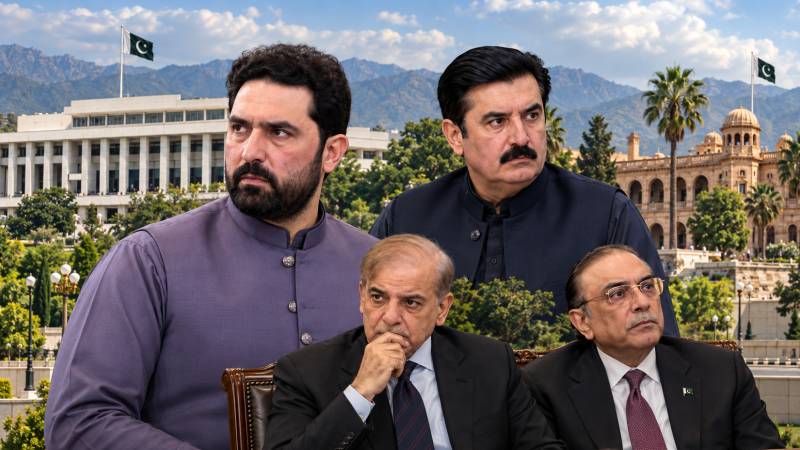
On 11 October 2026, the President, on the advice of the Prime Minister, invoked Articles 232 and 234 of the Constitution. An emergency was declared in twelve districts, i.e. the eight merged districts together with Dera Ismail Khan, Tank, Bannu and Lakki Marwat. The Hazara and Mardan divisions were kept outside it. The provincial government was suspended, and Governor Faisal Karim Kundi was entrusted with the affairs of the province with the assistance of an advisory council.
The federal government has its own reasons, and these must be stated first. The Federal Law Minister, Azam Nazeer Tarar, has cited a rise of 196 per cent in terrorist incidents in the province during the last two to two-and-a-half years. The proclamation refers to attacks on government installations and to a report of the Governor that the province could not be run in accordance with the Constitution. No doubt, the law and order situation in Bannu, Lakki Marwat and Waziristan is serious, and the people of these areas have paid with their lives. It is also true that relations between Peshawar and Islamabad had been tense for a long time, and both sides contributed to it. The question for a historian is, however, different. What kind of instrument has been chosen, what were its results in the past, and how has it behaved once applied?
Carl Schmitt, the German jurist, opened his Political Theology (1922) with the well-known statement that the sovereign is he who decides on the exception. Schmitt was not a democrat, but his argument is still discussed, as every constitution that provides for emergency also shows where the final authority lies. Giorgio Agamben, in State of Exception (2003), argued that in many modern states the exception, which was meant to be temporary, gradually became a normal technique of government. Applying these theories to Pakistan has its limits, as both were developed in a different environment. They are, however, thought-provoking. I do not suggest that this is happening in Khyber Pakhtunkhwa. It is pertinent to note that our own Constitution, by requiring parliamentary approval within fixed periods, also recognises this danger.
Articles 232 to 236 have a colonial background. Their roots are found in section 93 of the Government of India Act 1935, under which a provincial Governor could take over the powers of a ministry in case of a ‘failure of constitutional machinery’. The North-West Frontier Province experienced it when the ministry of Dr Khan Sahib resigned in November 1939, and the Governor ruled the province directly until May 1943. The instrument was introduced by a colonial state that governed subjects and was not answerable to citizens. Its use in a sovereign Pakistan is not illegitimate for this reason, but an inherited instrument carries something of the purpose for which it was first made.
For a student of the Afghan borderland, the most important feature of the proclamation is its geography. The districts under emergency are, more or less, the former ‘tribal’ areas and the southern districts adjoining them, i.e. the zone which the British treated as a ‘frontier’ and not as a province. Benjamin Hopkins, in Ruling the Savage Periphery (2020), calls this ‘frontier governmentality’, a mode of rule through exceptional laws, collective responsibility and the discretion of officials over people considered not yet fit for ordinary government. The Frontier Crimes Regulation of 1901 was its most familiar form. Ranajit Guha described the colonial state as ‘dominance without hegemony’, as it could command but could not persuade.
The 25th Amendment of 2018 was meant to end this division and bring the people of these districts into the same constitutional order as the rest of the country. Whether an emergency confined to the same districts would advance that promise or delay it is left to the readers. It is, however, difficult for a historian to ignore that the map of the exception in 2026 resembles the map of 1901. Owen Lattimore suggested that the maps of security should be read along with the maps of resources, and the merged districts are rich in minerals. The federal government has not linked the emergency with these resources, and I do not claim any such link. Still, transparency is the best friend of the state in a ‘frontier’, as suspicion grows where explanation is missing.
The history of the province is not encouraging in this regard. Within days after the creation of Pakistan, the ministry of Dr Khan Sahib, which still had a majority in the Assembly, was dismissed. In 1973, the ministry of Mufti Mahmud resigned in protest against the dismissal of the Balochistan government. In 1975, after the assassination of Hayat Muhammad Khan Sherpao, the National Awami Party was banned and governor's rule was imposed. In 1994, the federal government moved against the ministry of Pir Sabir Shah, and after October 1999 the province was run by military governors until 2002. Each of these steps might have been justified for apparent reasons, and each had its defenders. But it is difficult to name one which, on its own, resolved the political problem it was meant to address. In most cases, the electorate responded at the next opportunity and changed the political scene in ways not intended by those who took these measures. A student of Pakistan's history cannot forget the tragedy of 1971 either. The circumstances are different society at large wants the province as a federating unit of Pakistan. No comparison is intended, but that experience has taught us that the relations between the Centre and the provinces cannot be managed by command alone.
Max Weber differentiated between power, i.e. the ability to get obedience, and legitimate authority, which people obey because they consider it rightful. Antonio Gramsci argued that a lasting rule depends on both coercion and consent, and a state relying mainly on coercion gradually loses consent. Albert Hirschman reminded us that when the channels of voice are closed, people do not simply remain silent; they find other, less predictable ways of expression.
My own study of the Jihad Movement of Sayyid Ahmad Barailvi in the region points to a similar lesson from a different century. His imarat, declared in 1827, had high objectives and initially enjoyed considerable local support. When his measures were imposed from above without considering the customs, interests and consent of the Pukhtun chiefs and the wider society, the support of Pukhtanah declined rapidly. Some of the chiefs viewed him as a competitor, similar to previous invaders, who wanted to replace the traditional institutions. Authority among Pukhtanah has always been negotiated through the jarga, kinship and a careful balance of honour and interest. Any order, however good its intentions, which ignores these local dynamics may find its foundations weaker than expected.
Whether the threshold of Article 232, i.e. an ‘internal disturbance beyond the power of a Provincial Government to control’, was met or not is to be decided by Parliament and, if needed, by the courts. A historian may, however, raise a few questions. Will Parliament debate the proclamation on merit or along party lines? What conditions must be met for the emergency to end, and who will assess them? A federal official has stated that governor's rule will remain ‘as long as necessary’, perhaps until the elections. History shows that measures without a clear exit usually find reasons to continue. Lastly, how will the root causes of violence be addressed? These include a police force in need of training and resources, intelligence sharing between the province and the Centre, the unfulfilled financial commitments to the merged districts, and the share of the province in national resources. This pattern may be broken this time. If the present measure brings peace to Bannu and Waziristan and the province returns soon to an elected government, no one will be happier than those of us who live in Peshawar and teach its history. In any case, the people of Khyber Pakhtunkhwa deserve to be governed as citizens with their consent, and not merely administered as a ‘frontier’.