

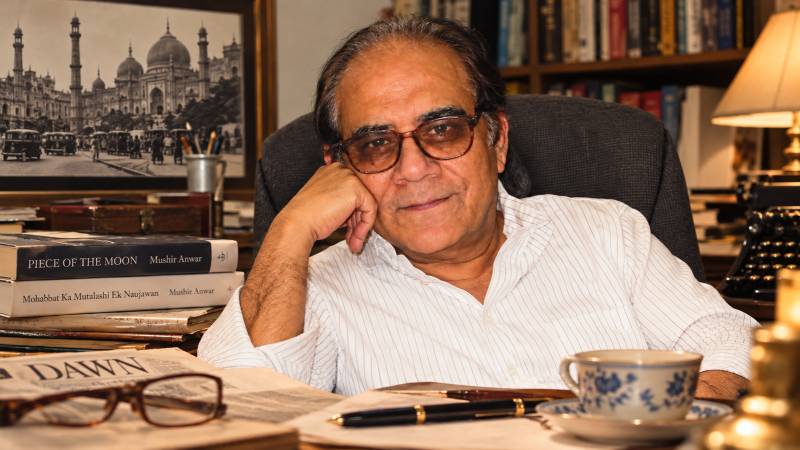
Whenever Mushir Anwar Uncle was leaving our home after dinner, he would gently put his arms around me and give me a warm hug. Then, in his soft, affectionate voice, he would say, “You are my daughter, my darling daughter.” Those words, spoken with such love and sincerity, remain among the most precious memories of my life. My relationship with Mushir Uncle was not one that began in childhood, nor was it one that lasted a lifetime. Yet, in the years we knew each other, he became one of the most beloved people in my life. Some relationships are measured by the depth of kindness and guidance they leave behind. Ours was one of those rare relationships.
When my family moved to Islamabad in 2006, we knew very few people. Among them were Mushir Uncle and Malika Aunty. We first met them through our dear friend, Farman Ali, the former editor of Dawn, who introduced us to them. At the time, they lived in a modest rented house in Islamabad's F-7 sector. From the very first visit, we felt completely at home in their house. Whatever formality usually exists between new acquaintances disappeared the moment we stepped through their door. We were welcomed as family. Soon, visiting them became a cherished part of our lives. Whenever my husband, our three daughters, and I happened to be in Super Market or Jinnah Super, our first thought was always, “Let's call Mushir Uncle and Malika Aunty.” Their reply was always the same. "Come over. This is your home."
There was never a moment when we wondered whether we might be disturbing them. Their door was always open, and so were their hearts. In time, what began as a friendship grew into something far deeper. Their home became a place of warmth and laughter. Our long conversations over tea and shared meals became countless unforgettable memories that I will cherish for the rest of my life.
When I first met Mushir Uncle, I knew him as a distinguished writer of English, a respected columnist for Dawn and served at the Ministry of Finance. But above all, he was a gentleman whose quiet grace left a lasting impression on everyone he met. Over time, however, I came to know the man behind those achievements —a man whose greatest strength was a rare blend of intellect and Gentleness. Whether he was writing or speaking, every word was carefully chosen, thoughtful and elegant. His articles reflected his knowledge and wisdom and also humility and compassion. Listening to him speak Urdu was a pure and effortless pleasure. He often reminded us that words are more than a means of communication—they carry culture and identity.
His remarkable command of both Urdu and English made him an exceptional translator. One of his finest literary achievements was his beautiful Urdu translation of Isaac Bashevis Singer’s A Young Man in Search of Love, published under the title Mohabbat Ka Mutalashi Ek Naujawan. The translation captured far more than the author’s words. Mushir Uncle beautifully conveyed the spirit, emotions, subtle nuances and above all literary texture of the original work. It reflected his rare gift for building a bridge between two languages while preserving the beauty and depth of the text. His translation was not merely a rendering of one language into another; it was a sensitive recreation of the original, carrying its emotional resonance and literary grace into Urdu.
Then came 2010. One day, I found the courage to write for the first time. I had always been an avid reader, but I had never dared to put my own thoughts on paper. I wrote my first article in English and showed it to my husband. He smiled and said, “If you truly want an honest opinion, give it to Mushir Uncle . You won't find a kinder editor or a better mentor.” With great hesitation, I handed him my manuscript and said, “Uncle, if you find any mistakes or weaknesses, please correct them.” As always, he smiled warmly. “Leave it with me, beta. I'll read it carefully.” That was who he was. He never did anything casually. He polished the language and clarified ideas where they needed strength.
He edited my articles wherever necessary, but he gave me something far more valuable. He believed in my ability, encouraged me to keep writing, and gave me the confidence to realise that I truly could write. I submitted that article to Express Tribune. It was about the birth of my three daughters and my journey into motherhood. When it was published, I was overjoyed. But today, when I look back, I know that the achievement was as much his as it was mine. The first door that opened in my writing life was unlocked by Mushir Anwar Uncle.
He was a man of few words, but his silence carried kindness. He left us far too soon—so much sooner than our hearts were prepared for. Yet some people never truly leave.
Born and raised in Moradabad, India, Mushir Uncle carried the spirit of his birthplace with him throughout his life. Although he settled in Rawalpindi after Partition, Moradabad never truly left him. It lived in his memories, in the stories he shared, in the language he spoke so beautifully, and even in the food he lovingly prepared. Many of these memories, conversations and experiences eventually found their way into Mushir Uncle's English novel Piece of the Moon, which was published after his death. The novel offers a refreshing and realistic portrayal of a South Asian family, moving away from the familiar stereotypes often found in fiction. As I read it, I could recognise the depth of his observations, and the world he had shared with us over countless conversations.
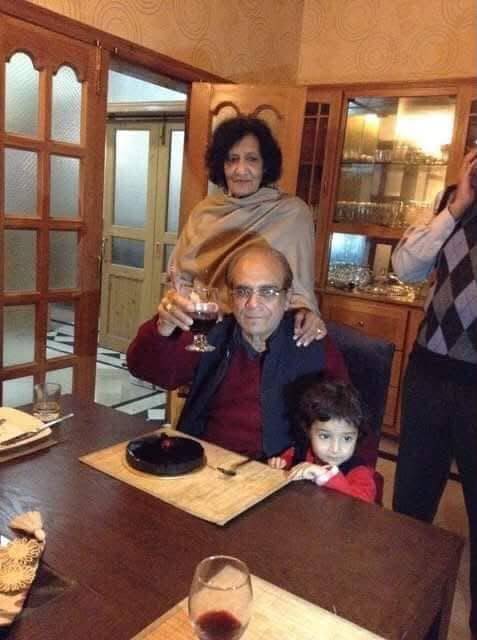
Another beautiful side of Mushir Uncle was his love for cooking. Preparing traditional Moradabadi dishes brought him immense joy. His comforting Moradabadi Khichri and his famous Gobhi Gosht were family favourites. Every meal he cooked carried the flavours of his childhood and the memories of a city he never stopped loving.
One of Mushir Uncle’s signature dishes was undercut beef. He seasoned it with whole cloves, salt, and vinegar, then cooked it with great care. Afterward, he sliced it into very thin pieces—and once we started eating, none of us could stop.
Malika Aunty was equally gifted in the kitchen. Most of the delicious meals we enjoyed came from her hands. Even the simplest dishes tasted extraordinary because they were prepared with love. I still remember her unforgettable tomato chutney—a perfect blend of ripe tomatoes, garlic, cumin, and a few secret spices known only to her. Just before serving, she would add a chicken cube, giving it a flavour unlike anything I have ever tasted. Whenever Mushir Uncle's Moradabadi dishes, Malika Aunty's tomato chutney, fresh chapatis, and steaming rice were served together, the dining table became more than a place to eat. It became a place where stories were shared, laughter echoed through the house.
Looking back now, I realise that we were experiencing a way of life built on generosity and unconditional hospitality—a way of life that is becoming increasingly rare. There is an old Urdu saying that grandchildren are even dearer than one's own children, and if ever there was a couple who proved it true, it was Mushir Uncle and Malika Aunty. Their greatest joy was spending time with their grandsons, Daniyal and Shehryar. Every day, Mushir Uncle would drive from F-7 to I-8 to take Daniyal to his piano lessons. While the lesson was in progress, he would either wait patiently in the car or sit quietly inside until it was over.
Since I also lived in I-8, he would often call me to say, "I'm here." Sometimes he came alone, and sometimes Malika Aunty accompanied him. Those one- or two-hour visits became some of the most meaningful conversations of our friendship. I was endlessly curious about their lives, and Mushir Uncle was always generous with his memories. I would ask him about everything. But the question I loved asking most was, "How did you and Malika Aunty meet?" The answer never changed, yet I never grew tired of hearing it. He would smile gently and tell me that when he moved to Rawalpindi, he happened to see Malika Aunty one day in Balgian embassy. She immediately caught his attention. Their friendship grew naturally, and before long, that friendship blossomed into love. In time, they were married.
Whenever Mushir Uncle shared this story, I would glance at Malika Aunty. Even after so many years of marriage, I could still see a blush on her face. It was a beautiful reminder that some love stories never lose their magic. Although they had very different personalities, they shared an exceptionally strong and loving marriage. Mushir Uncle always encouraged Malika Aunty to follow her own interests and never expected her to limit herself to household responsibilities alone. Malika Aunty, in turn, never tried to control or restrict him. Looking at them, I often felt that they were each other's closest friends. One day, Mushir Uncle called us and said, “Come over. Tonight, we’ll watch my favourite film together, and then we’ll have dinner.” We said yes without a second thought. When we arrived, his son Khayyam set up the projector and played The Pink Panther. There was a song in the film, "Meglio Stasera," and I can still picture the joy on his face. It seemed as if he could barely resist getting up and dancing just like the actor on the screen. He adored that song—truly and wholeheartedly. Before long, it became a little tradition. Whenever we visited, he would make sure to play his favourite songs for us.
His love for cinema was as timeless as his taste. Among the actresses he admired most were Sophia Loren, Ingrid Bergman, and Audrey Hepburn. He often spoke of Meryl Streep with great respect, considering her one of the finest actresses of modern cinema. He was equally enchanted by Madhubala. And if there was one Indian song that held a special place in his heart, it was "Taqdeer Se Bigri Hui Taqdeer Bana Le," sung by Geeta Dutt. He believed Geeta Dutt possessed one of the most extraordinary voices of her time, and this song, above all others, was one he loved beyond words. Over time, I realised that the foundation of our friendship was our shared love of books, poetry history, thoughtful conversation and shared appreciation of great cinema.Our mutual love for films brought us closer and strengthened our bond.
When Mushir Uncle had to leave the house where he had lived for many years. On the surface, it was only a change of residence, but I knew it meant much more to him. It felt like the end of a chapter of his life. At that time, both Mushir Uncle and Malika Aunty were in good health, yet sometimes life begins to change long before we realise it. We continued to visit them in their new rented home, but something had changed. The warmth was still there, yet there was a quiet sadness in the air. Before long, Malika Aunty's health began to decline. Day by day, illness took more of her strength until, one day, before we could truly prepare ourselves, she quietly left us all, as if she had simply disappeared from that home forever. Malika Aunty's passing was the greatest heartbreak of Mushir Uncle's life.
It seemed as if half of Mushir Uncle's own life had left with her. From that day onward, he slowly began to fade. He was still the same gentle and dignified man, but there was a silence in his eyes that words could never fully describe. I vividly remember the evening we were sitting in his house when his son, Khayyam Mushir, quietly told us, "Abbu has prostate cancer." I could not hold back my tears. In such a short time, Mushir Uncle had become so much more than a family friend. His warmth, and kindness had found a permanent place in my heart, and the news was simply too painful to bear.
Only one month after Malika Aunty's passing, he too began slipping away. Every time I visited him, I found him in severe pain. He would often lie face down, gently rubbing his legs, trying to hide his suffering so that it would not show on his face. Yet whenever I asked how he was feeling, the same gentle smile would appear, and he would softly say, "I am all right, beta." That was who he was. He never allowed his pain to become someone else's burden. Then, on 30 September 2015, he quietly left this world and began the journey from which no one returns.
One thing I will always consider myself fortunate for is that I celebrated Mushir Uncle's last birthday at my home. We sat together with a few close friends, shared laughter, and celebrated the day with love. I never imagined that such a small, simple gathering would become one of my most precious memories. I never knew that this would be the last time I would celebrate his birthday at my home. I never imagined that by the following year, they would both be gone. His passing was a profound loss for all of us. It felt as though we had not only lost a beloved person but also a home and a place filled with unconditional love. The house was still standing, but it was no longer the home we had known. The feeling of belonging had gone with him.
Even today, when I think of Mushir Uncle,. the first image that comes to my mind is his gentle smile and his whisper " میری پیاری بیٹی. It was warm and deeply reassuring. Sometimes I find myself wishing he were still sitting before us, speaking softly while we listened with quiet admiration. He was a man of few words but his silence carried kindness. He left us far too soon—so much sooner than our hearts were prepared for. Yet some people never truly leave. They continue to live in our memories, in the values they taught us, and in the love they quietly gave without ever asking for anything in return.