

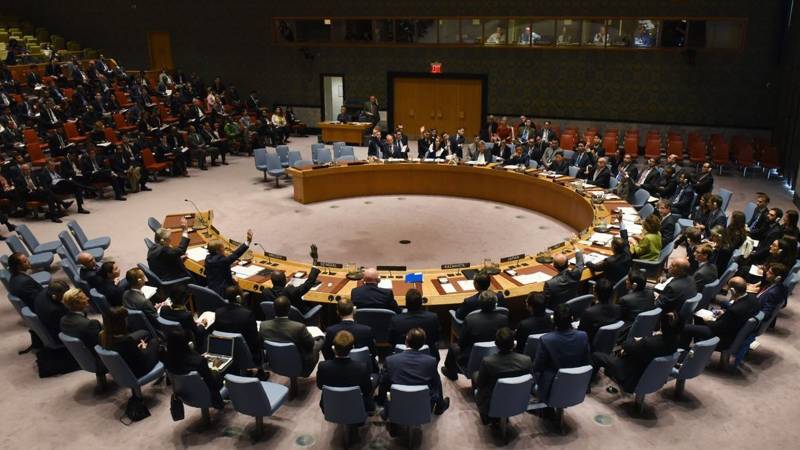
The United Nations was founded on a simple but powerful principle: all nations, regardless of size or strength, are equal members of the international community. Yet at the heart of the UN system exists one of the greatest contradictions in global governance. Five countries (the P5)—the United States, Russia, China, France, and the United Kingdom—hold permanent seats on the UN Security Council and possess the power to veto decisions affecting war, peace, sanctions, humanitarian action, and international accountability. This is the real and uncontested “Choke Point” for Global Peace and Security!
This arrangement was created in 1945 to ensure that the world’s most powerful states remained committed to maintaining peace. Nearly eight decades later, however, the same structure has become one of the greatest challenges to the legitimacy and effectiveness of the international system. The problem is not simply that the Security Council is often paralysed. The deeper problem is that it is structurally unequal.
The Three Fundamental Deficits
The General Assembly represents all 193 UN member states, but its decisions are largely political rather than binding. The Security Council has the authority to act, but that authority is concentrated in the hands of the P5, whose interests do not always reflect the wider international community. This creates three fundamental deficits:
First, a representation deficit: The Council reflects the geopolitical realities of 1945 rather than those of today. Africa, despite being central to global peacekeeping and humanitarian action, has no permanent seat. Latin America and the Middle East also remain excluded from permanent representation.
Second, a legitimacy deficit: Decisions affecting global security are shaped by a small group of countries whose privileged status was inherited from the aftermath of World War II.
Third, an accountability deficit: The veto allows permanent members to block collective action when their own interests, or those of their allies, are at stake.
The consequences are visible in conflicts from Ukraine and Gaza to Syria, Sudan, and Yemen. When great powers disagree, the Security Council often becomes paralysed, leaving civilians to bear the cost of geopolitical rivalry. The question is, therefore, not whether reform is needed. It clearly is.
The real question is: what kind of reform can create a Security Council that is fair, representative, and capable of action?
The African Union Proposal
One of the strongest reform proposals comes from the African Union through the Ezulwini Consensus (2005). The AU argues that Africa has been historically excluded from global decision-making despite being one of the regions most affected by Security Council decisions. Many African countries were still under colonial rule when the UN system was created, and the continent had little influence in shaping the post-war order.
The UN was founded on a simple but powerful principle: all nations are equal members of the international community. Yet at the heart of the UN system exists one of the greatest contradictions in global governance
The AU proposal calls for at least two permanent African seats, additional non-permanent seats, and veto rights for any new permanent members. Its strength is clear: it addresses a historic imbalance and recognises Africa’s central role in global security. However, it also raises difficult questions. Expanding permanent membership without addressing the veto could simply create more privileged actors rather than a more democratic system. Some critics argue that adding new veto holders could make an already slow and divided Council even more ineffective. The AU proposal addresses exclusion—but not necessarily the deeper problem of concentrated power.
The G4 Model
The G4 group—Brazil, Germany, India, and Japan—proposes another model. It argues that the Security Council must reflect contemporary political and economic realities. The case is compelling. India is the world’s most populous country. Brazil represents a major region of the Global South. Germany and Japan are among the world’s largest economies and significant contributors to international institutions.
The G4 proposal would add these countries as permanent members, alongside greater African representation. However, critics argue that it risks replacing one elite group with a larger elite group. Adding more permanent members may improve representation among powerful states, but it does not necessarily address the democratic deficit facing smaller and less influential countries. Regional opposition also remains significant: Pakistan opposes permanent membership for India, China has concerns about Japan, and some Latin American countries question whether Brazil should represent the region. The G4 improves representation among major powers, but it does not fully resolve the question of equality.
The "Coffee Club" and Uniting for Consensus
The opposing approach to the G4 comes from the informal coalition known as the “Coffee Club,” later organised under the Uniting for Consensus (UfC) movement. Countries such as Italy, Pakistan, Mexico, South Korea, and others argue that creating more permanent seats would reproduce the same inequality that exists today. Instead, they support expanding non-permanent membership and creating longer-term elected seats without granting permanent privileges.
The strength of this proposal is that it challenges the assumption that the solution to inequality is simply creating more powerful countries. However, critics argue that it does not go far enough. If permanent members continue to hold veto power, expanding elected seats may increase participation but not influence. More voices at the table do not necessarily mean more power.
The Ultimate Hurdle: The Veto
Ultimately, every reform debate returns to the same issue: the veto. Representation matters, but the veto is where power truly lies. Proposals to restrict the veto’s use in cases of genocide, crimes against humanity, and mass atrocities have gained support. France and Mexico have promoted voluntary restraint, and many states and civil society organisations advocate similar measures. Yet meaningful veto reform remains unlikely because it requires approval from the very countries that benefit most from the existing system. The gatekeepers control the gates!
No reform proposal is perfect. The AU proposal addresses historical exclusion but may increase institutional paralysis. The G4 improves representation among major powers but risks creating a larger club of privileged states. The Coffee Club prevents new permanent hierarchies but may leave the existing power structure untouched.
A Delicate Balance
The challenge is finding a balance between legitimacy and effectiveness. A Security Council that is powerful but unrepresentative will continue to lose credibility. Similarly, a Security Council that is representative but unable to act will fail when the world needs it most. The future of global peace depends on whether the Security Council can evolve beyond the power structures of 1945 and reflect the realities of the twenty-first century.
The world does not need a Security Council controlled by the P5. It needs one trusted by all countries. Until that happens, the institution created to protect global peace will remain constrained by the very inequality it was designed to overcome.